Search our website
Key in a search term below to search our website.
Key in a search term below to search our website.
East Fortune Airfield is the UK's best-preserved Second World War airfield. Discover its history from its beginnings in the First World War to its transformation to a national museum.
With the outbreak of the First World War in 1914, the Admiralty was tasked with establishing a string of home defence airfields along the south eastern of the United Kingdom, from Edinburgh to the south coast of England.
In September 1915 the Director of Naval Air Services gave approval for an air station to be opened at East Fortune and, due to its proximity to stretches of the North Sea, the Admiralty decided to station airships for carrying out sea-lane patrols there.
The first aircraft arrived in September 1915: two Sopwith two-seat Scouts and a Maurice Fairman from the air station in Montrose. Over the following months more types arrived; Avro 504s and B.E.2c and the first airships, midway through 1916, for which two large hangars were erected.
The air defences at East Fortune were put to the test on the night of 2 April 1916, when two German Navy Zeppelins attacked Edinburgh. One of them was spotted over the coast near St Abbs and East Fortune was notified. At 21:40 hours Flight Sub-Lieutenant Cox took off in an Avro 504C single-seat fighter to intercept the raider but was unable to find it. He returned to East Fortune only to crash his machine on landing and he was badly injured.
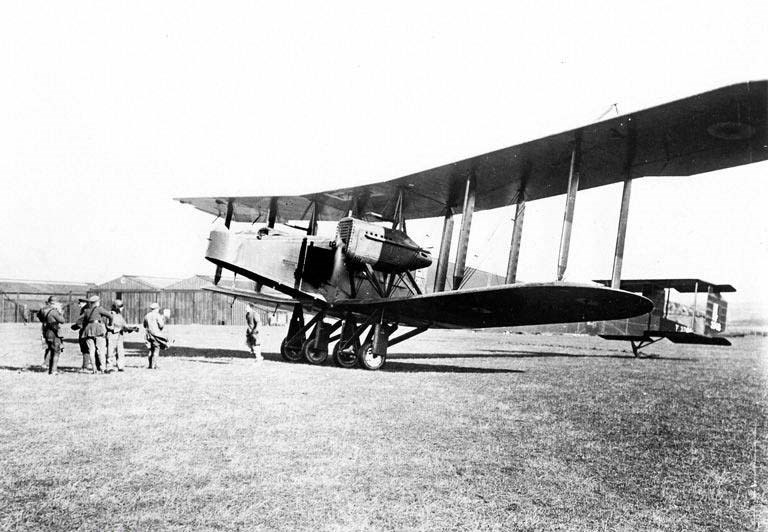
Aircraft visiting East Fortune Airfield during the First World War.
The Royal Naval Air Station, East Fortune, was officially commissioned on 23 August 1916 and by May 1917 a third airship shed was constructed to house rigid airships.
This enormous structure was some 200 metres long and over 45 metres high. Throughout the First World War the British airship effort was predominantly defensive by nature, carrying out anti-submarine patrols around the coast and escorting convoys from their gathering point at Methil on the Firth of Forth.
During 1917 further aeroplane types arrived as East Fortune was used as a depot for ship-based aeroplanes, and a training school was set up for pilots stationed with the Battle Cruiser squadron at Rosyth.
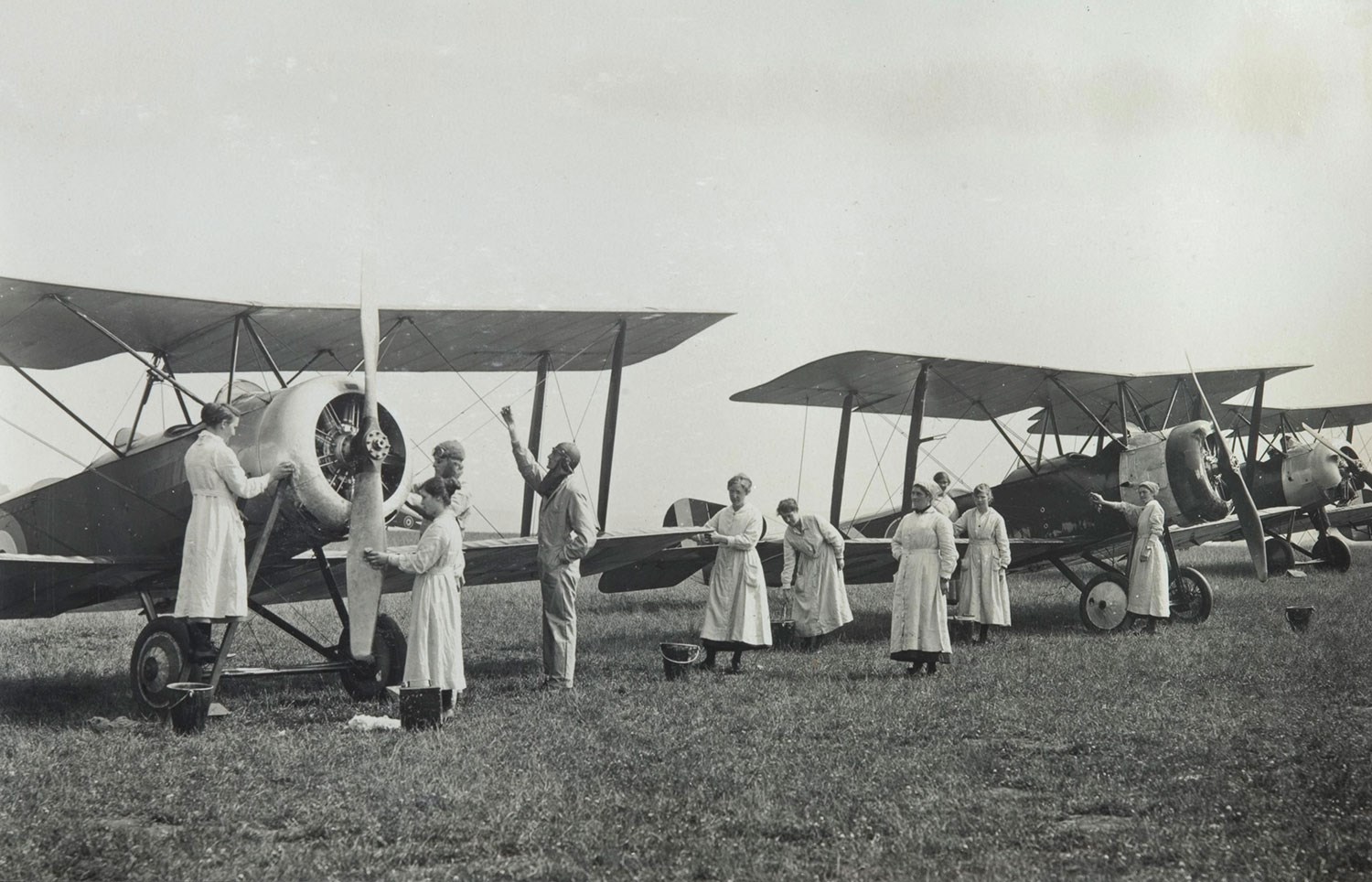
Female aircraft fitters at East Fortune during the First World War
The most influential type of aeroplane to serve at East Fortune in the First World War was the Sopwith Cuckoo, the first aircraft carrier based torpedo dropping plane.
By July 1918, crews were being trained for a daring mission proposed by Admiral of the Fleet Sir David Beatty. The aircraft carrier HMS Angus would launch her Cuckoos against the German High Seas fleet at anchor in the Jade River at Wilhelmshaven. To train crews in torpedo bombing technique, No.1 Torpedo Training School was set up and re-numbered 201 Training Squadron in August 1918.
World War 1 ended before the risky operation could take place. The Royal Naval Air Service merged with the Army controlled Royal Flying Corps on 1 April 1918.
The fighting of the First World War ended on 11 November 1918. When the surrendered German Fleet sullenly sailed into the Firth of Forth, East Fortune’s aircraft photographed and filmed the event.
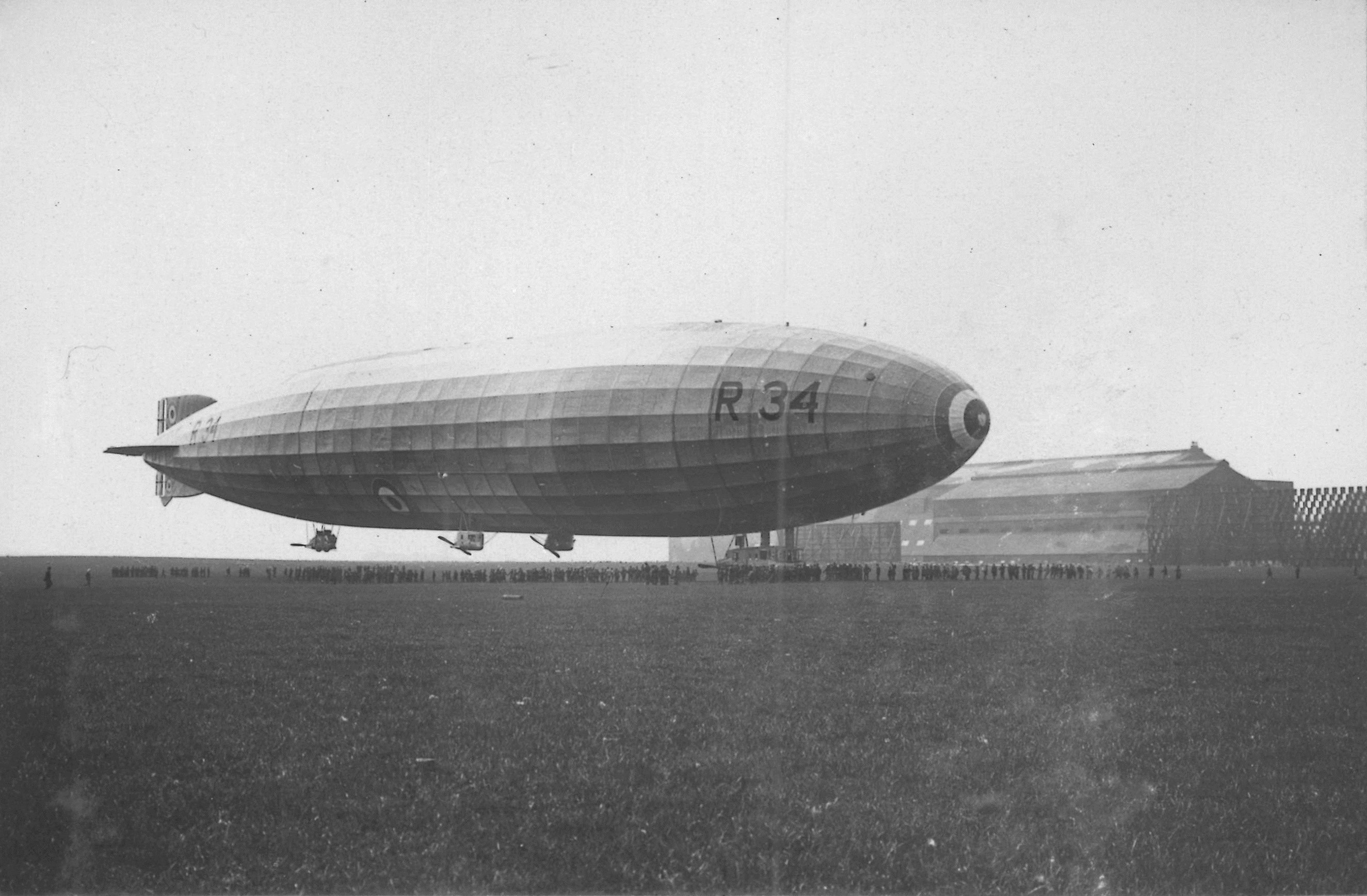
Airship R.34 at East Fortune Airfield in 1919.
Of all the airships stationed at East Fortune, the most famous was Airship R.34, which arrived at East Fortune on 30 May 1919. On a cold misty 2 July 1919, at 1.42am, R.34 and her intrepid crew of eight officers and 22 men, one stowaway, two carrier pigeons and a kitten set off on the first direct flight between Britain and the United States.
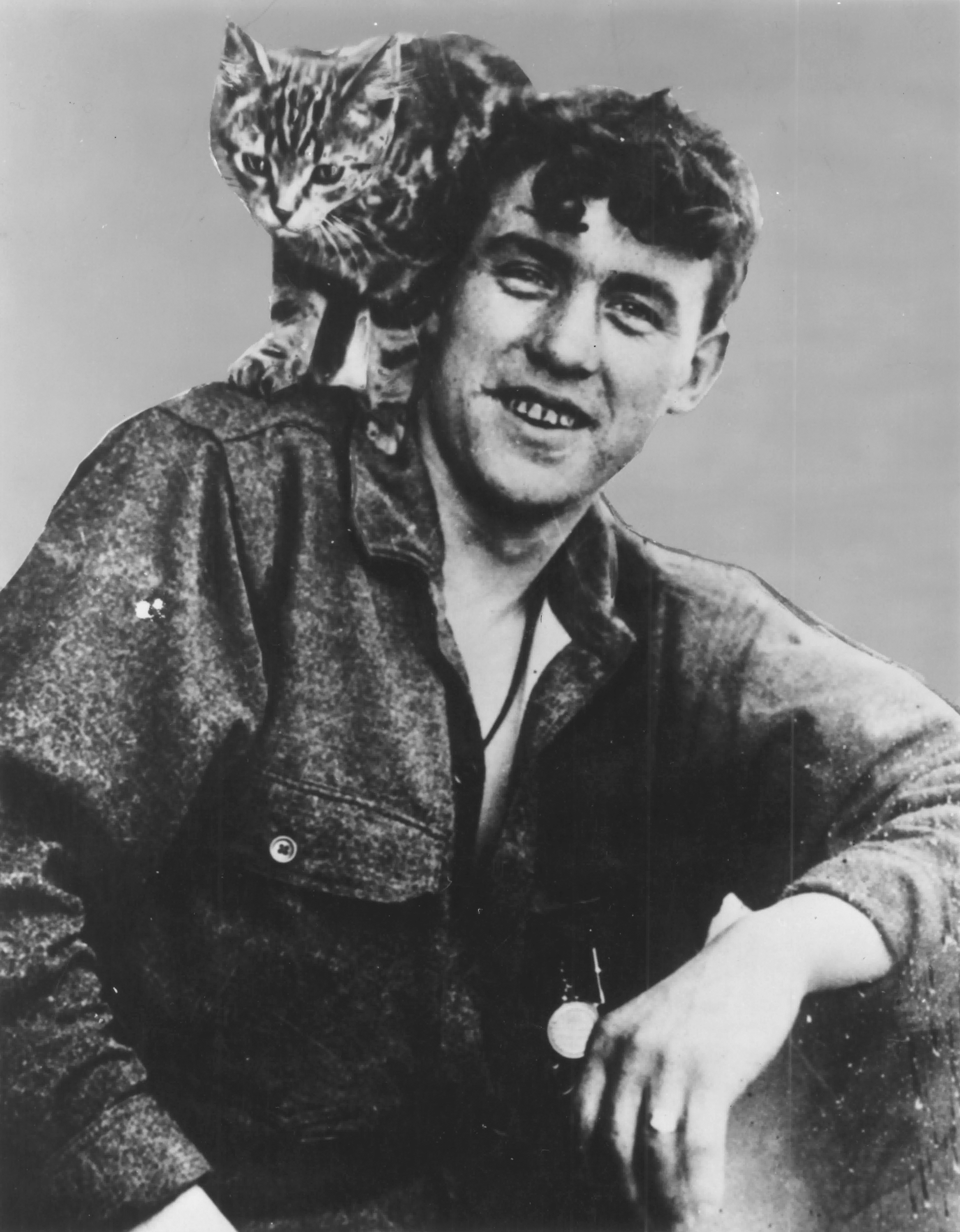
William ‘Billy’ Ballantyne and a tabby kitten called ‘Wopsie’.
On board were two carrier pigeons and two stowaways: Aircraftsman Second Class William ‘Billy’ Ballantyne and a tabby kitten called ‘Wopsie’. Billy was a regular member of the crew who hid aboard the night before departure. Wopsie was smuggled aboard by one of the engineering crew, and became the ship’s unofficial mascot for the journey, returning aboard R.34 as the first feline to fly across the Atlantic!
R.34’s flight from East Fortune to Long Island, New York and back were the longest journeys flown by an aircraft at the time. When she returned to her home station, little flying was carried out from then on. She and the non-rigid NS.7 were the last airships to fly from East Fortune, departing on 4 February 1920, after which the airship station closed. Find out more about Airship R.34's journey in more detail here.
During the National Coal Miner’s Strike of 1921, East Fortune was inhabited by the Royal Navy once again, while naval personnel assisted in the operating of equipment at local pits.
Some 350 acres of land was eventually sold to the South East Counties of Scotland Joint Sanatorium Board, who established a tuberculosis hospital in the former air station buildings.
Soon after the coal strike the three airship sheds were used for the storage of small arms ammunition, which was broken down for the recovery of metals for manufacturing purposes. Midway through 1922, the gigantic airship sheds were dismantled.
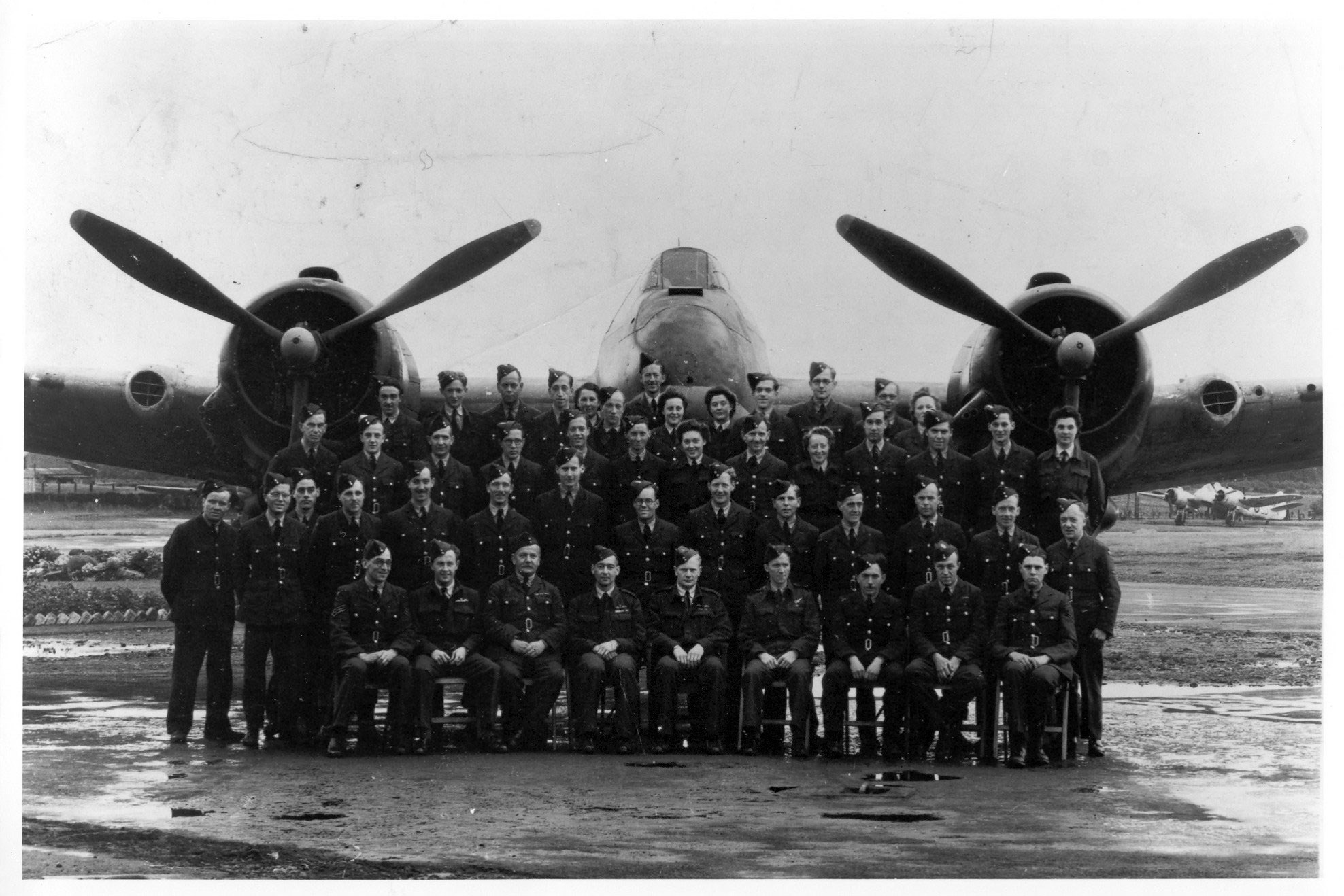
In June 1940, the site was requisitioned by the Air Ministry as a satellite field for nearby RAF Drem. Throughout the Second World War, the Royal Air Force Station, East Fortune served as an operational training base. The first crews to pass through were of Australian, Canadian, New Zealand and Polish origin. Accidents were frequent, often fatal, and the surrounding countryside became littered with aeroplane crash sites. From 4 June 1941, the Air Defence Cadet Corps became the Air Training Corps and they often held camps locally for young cadets which provided them with their first flying experience, in the de Havilland Dominies based at the airfield.
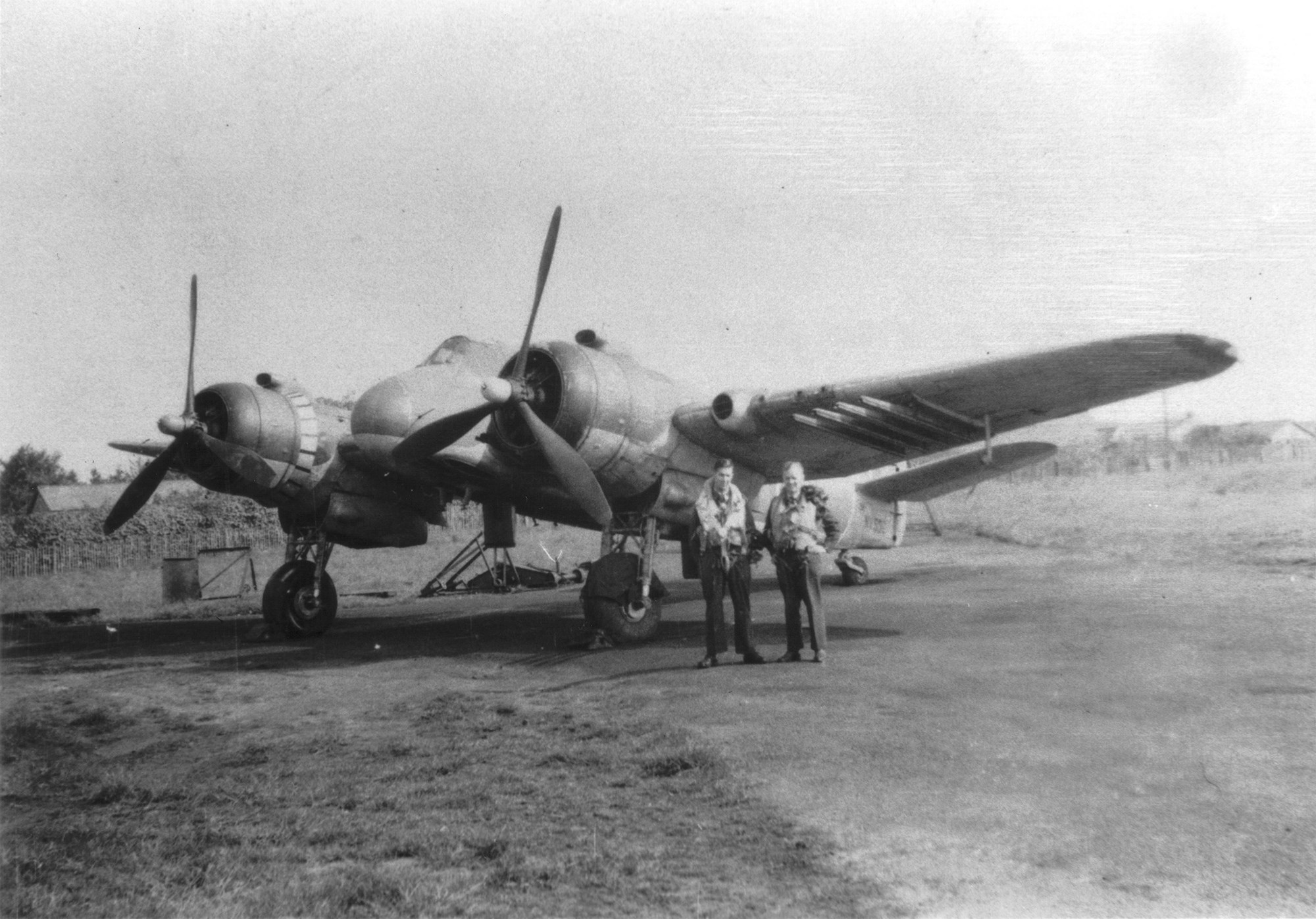
Beaufighter aircraft and crew at East Fortune Airfield during the Second World War.
On 24 November 1942, the airfield was transferred to No.17 Group Coastal Command and became an anti-shipping-strike training unit with the Bristol Beaufort and Beaufighter as its principal machines. Training commenced over Aberlady Bay in the art of torpedo bombing and unguided rocket attacks, and once again a Torpedo Training School was opened on site.
In April 1944, the first de Havilland Mosquitoes began to supplement the Beauforts and Beaufighters. To accommodate the new arrivals, a new hangar was built, adding a fourth to the south side complex. East Fortune began to receive the odd visitor on their way back from night operations over Europe. During one week in December 1944, 22 Handley Page Halifaxes and 18 Avro Lancasters were diverted from their home bases on return from raids on Germany.
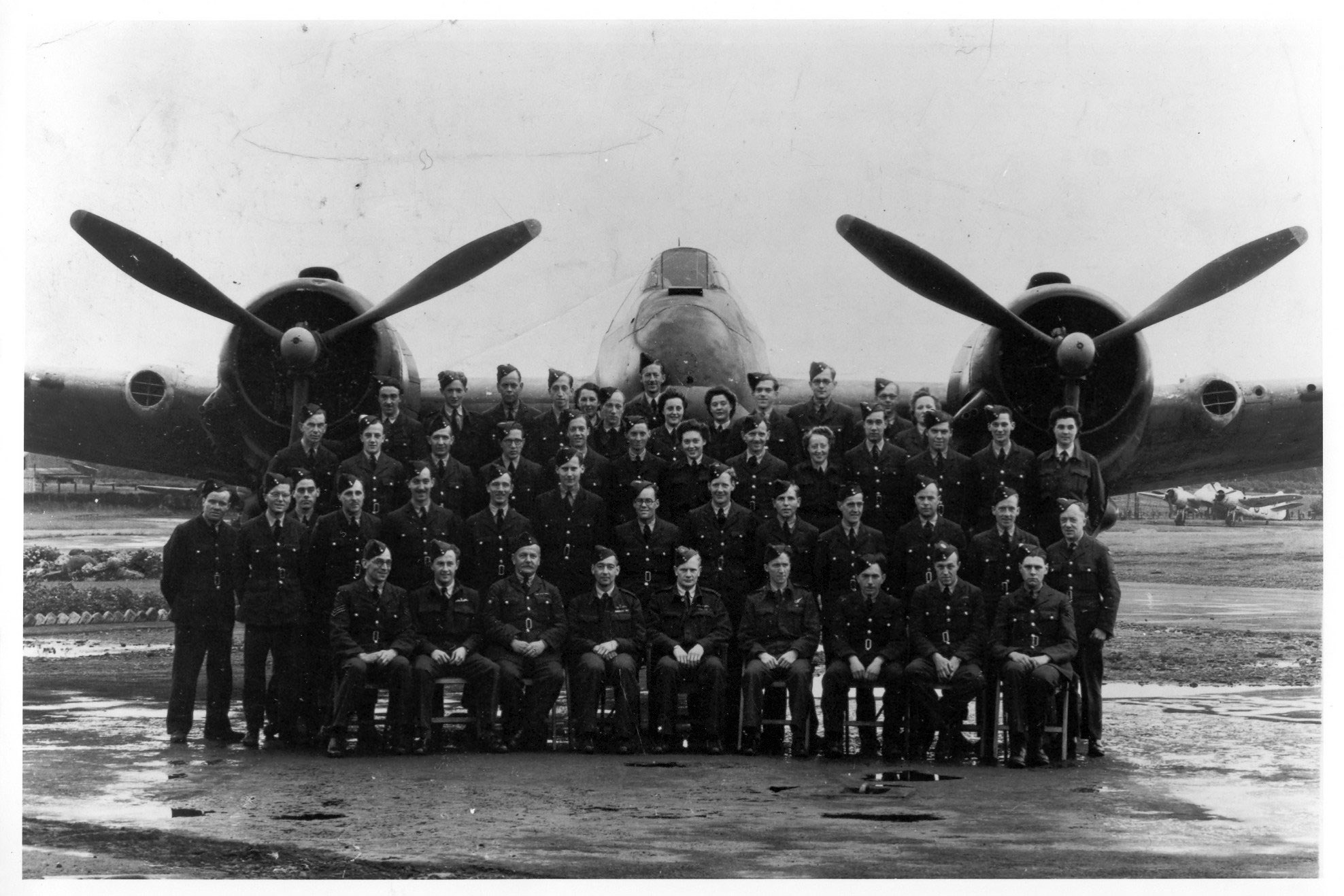
Aircrew at East Fortune Airfield during the Second World War.
With the war in Europe drawing to an end, the intensity of flying training decreased, but continued until the end of 1945. Yet flying activity actually intensified after the end of the Second World War as East Fortune was used as a staging post for the transportation of personnel to and from Scandinavia, using Short Stirlings, Halifaxes and Mosquitoes. From 30 September 1946, Fighter Command took over the site but only stayed until the end of the year with the departure of the RAF.
After the War, the land requisitioned from the Santatorium was returned and the tuberculosis hospital was set up again. The East Fortune Hospital remained open until 1997, occupying the northern side of the site, the dilapidated buildings still standing today.
After the Second World War the East Fortune Airfield ceased to be used by the RAF. The runway was extended across the B1347 to take American bombers during the Cold War but was never used for this purpose.
By the mid-1950s, the Scottish Home and Health Department had requisitioned sections of the south side of the former aerodrome for storage of civil defence equipment in anticipation of hostilities erupting between East and West. Emergency service vehicles were stored in hangars, in particular Green Goddess fire tenders.
After tensions slackened, the Ministry for Agriculture and Fisheries took over the south site, and hangars and buildings were filled to the brim with foodstuffs.
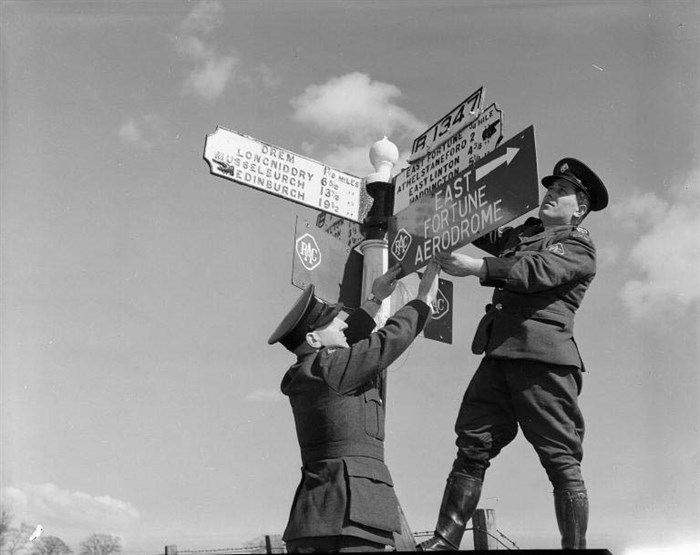
The Royal Automobile Club personnel erecting a sign for East Fortune Airport in 1961.
Flying had not completely ceased at East Fortune. From April to August 1961 the main runway was opened while Edinburgh’s International Airport at Turnhouse was being redeveloped. A prefab village was opened on one of the cross-runways as the terminal and the wartime control tower was refurbished. Over the four month period some 99,800 passenger movements were recorded, though it was not without incident. A Vickers Viscount overshot the runway and on a separate occasion a Percival Pembroke crashed after take off near the coastal town of North Berwick – neither accident experienced any fatalities.
In 1971, the Ministry of Defence donated a Supermarine Spitfire to the Royal Museum, Edinburgh. Due to lack of space to accommodate the aeroplane, permission was granted for the Museum to acquire one of the hangars on the former south side of RAF East Fortune as a storehouse for their aeronautical exhibits, and so the seeds were sown for the development of the National Museum of Flight. The museum officially opened to the public on 7 July 1975.