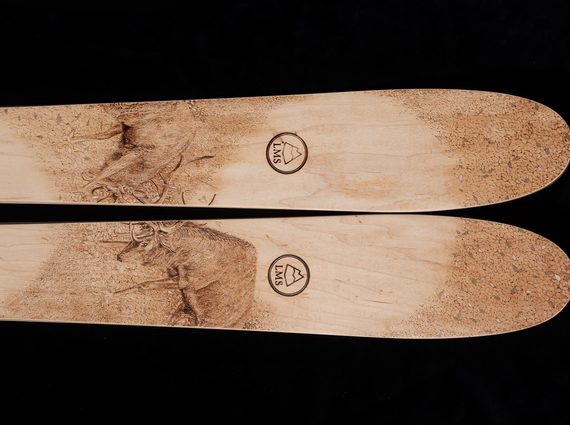
Modern and Contemporary History
Our Modern and Contemporary History collections represent cultural, social, political, military and rural history in Scotland from c.1750 right up to the present day.
The collections document the impact and legacies of Enlightenment, industry and empire that marked the transformation of Scotland during the later-eighteenth and nineteenth centuries. They chart a line through the major international conflicts and profound social shifts of the twentieth century, telling stories about continuity and change in Scottish life right up to the present day.
Notable collections include: Scottish decorative arts, from precious jewellery to glass and ceramics; unrivalled bagpiping collections and the material culture of working life, from ploughs to weavers’ tools. We hold extensive material representing military history and rural life, reflecting the strength of the foundational collections of the National War Museum and National Museum of Rural Life.
Our innovative contemporary collecting programme is focused on representing the twenty-first century with an emphasis on what is distinctive about Scotland in a globalised world, and of the regional and cultural differences within the country. We also actively collect objects that shed light on how the past continually shapes the present.
Meet the team

Dr Sarah Laurenson
Principal Curator of Modern and Contemporary History
Dr Calum Robertson
Senior Curator, Modern & Military History
Dr Ailsa Hutton
Curator, Modern and Rural History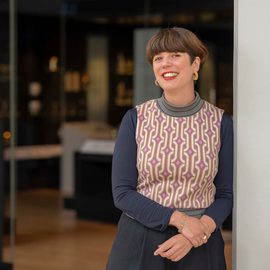
Dr Mhairi Maxwell
Curator, Modern and Contemporary History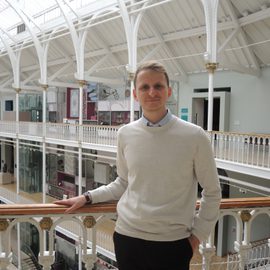
Oliver Taylor
Assistant Curator, Modern and Contemporary History
Dr Julie Holder
Assistant Curator, Modern and Contemporary History
Modern and Contemporary History stories
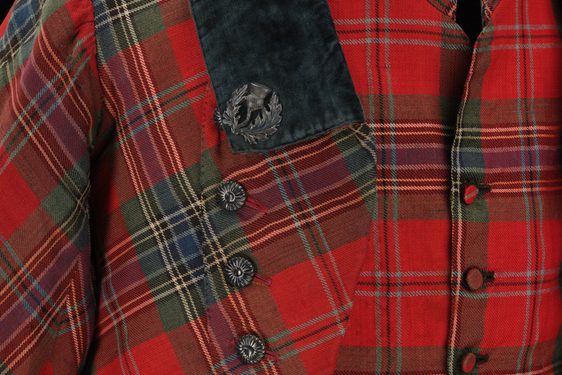
Six kilt suits from Georgian Scotland
Fashion and textiles, Scotland
Our collections contain a rich array of Highland dress costume and tartan fashion from the Georgian era. Discover a range of kilt suits from 1790 to 1830.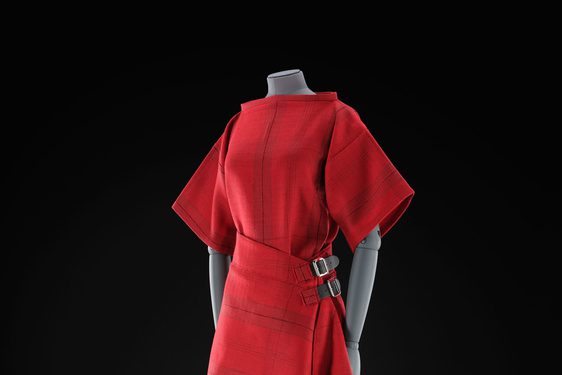
Prickly Thistle Scotland: A sustainable tartan mill
Fashion and textiles, Scotland
'Fire' was woven by Prickly Thistle Scotland for use in its sustainable clothing line. It represents an unconventional approach to tartan design and manufacturing in the 21st century. Unlike most tartans available in Scotland today, it has…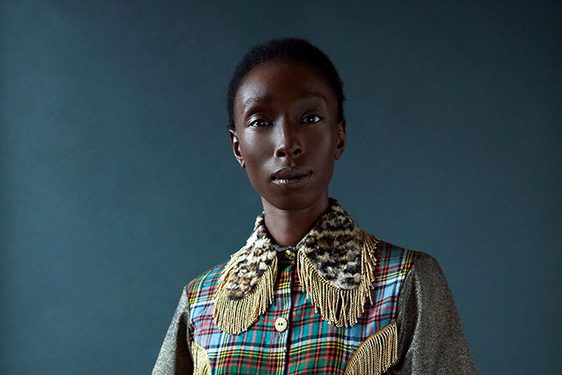
Eunice Olumide, MBE: Her story in objects
Scotland
Eunice reflects on her personal journey, and on feeling conflicted about accepting an award that celebrates the British Empire.