Tartan cloaks from the Georgian period
News Story
Beyond the realms of Highland dress tailoring, Scottish tartan emerged as a popular fashion fabric in Georgian Britain. The cloth found its way into a variety of everyday and occasional garments, such as women’s cloaks, gowns and children’s clothing. Discover two tartan cloaks in our collection.
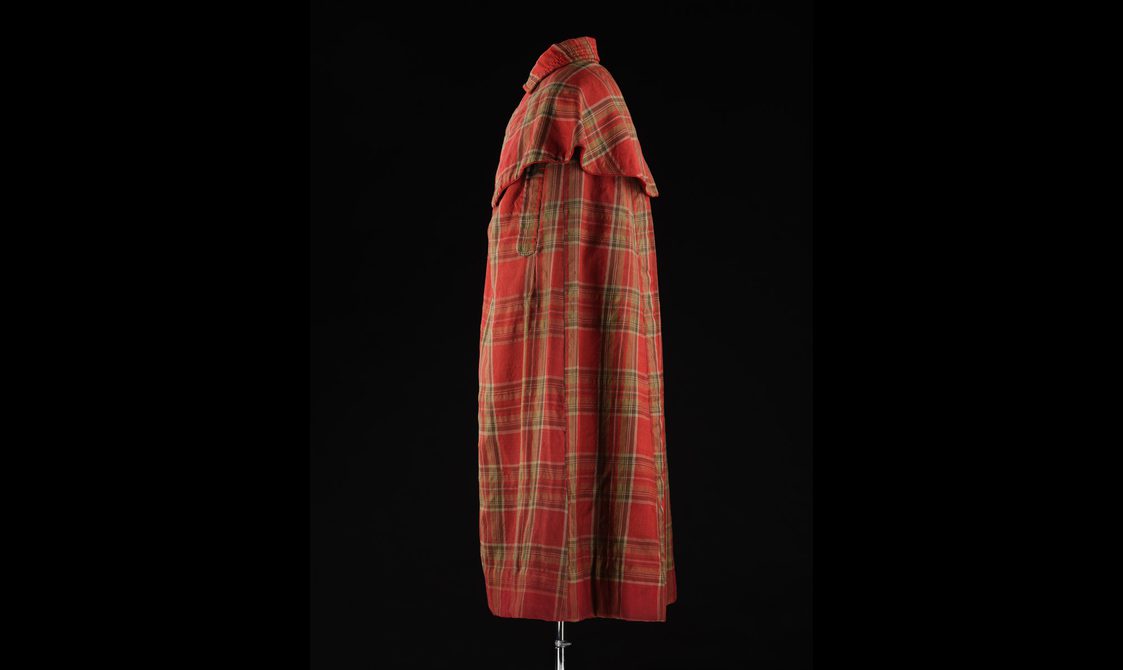
Tartan cloak, c.1800-1810 (M.1930.272)
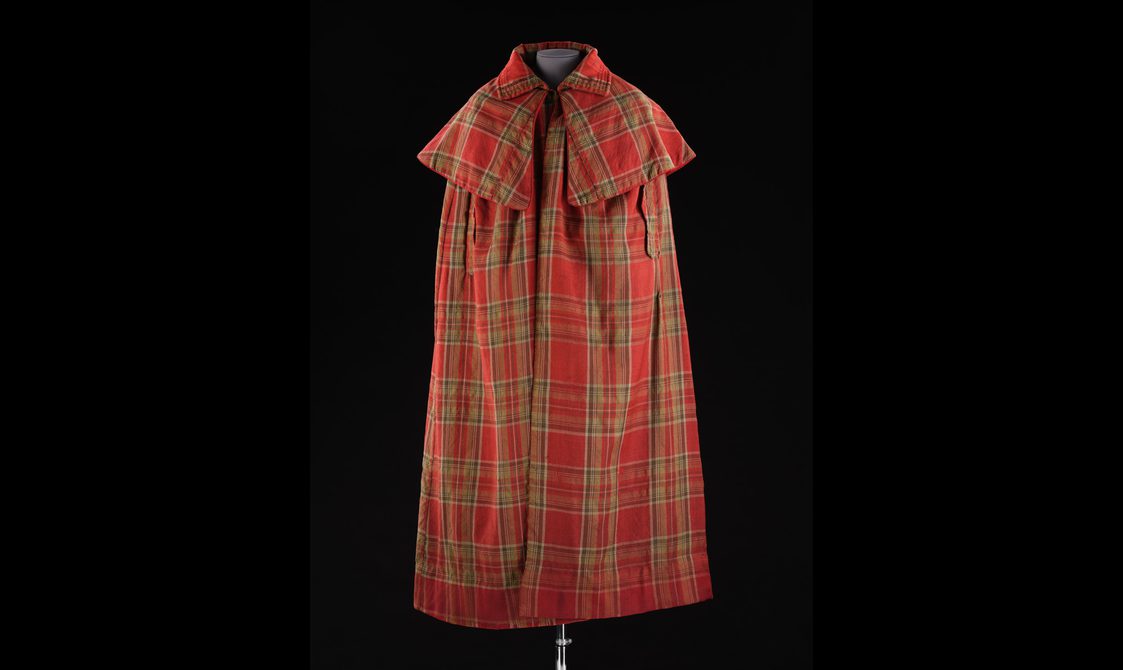
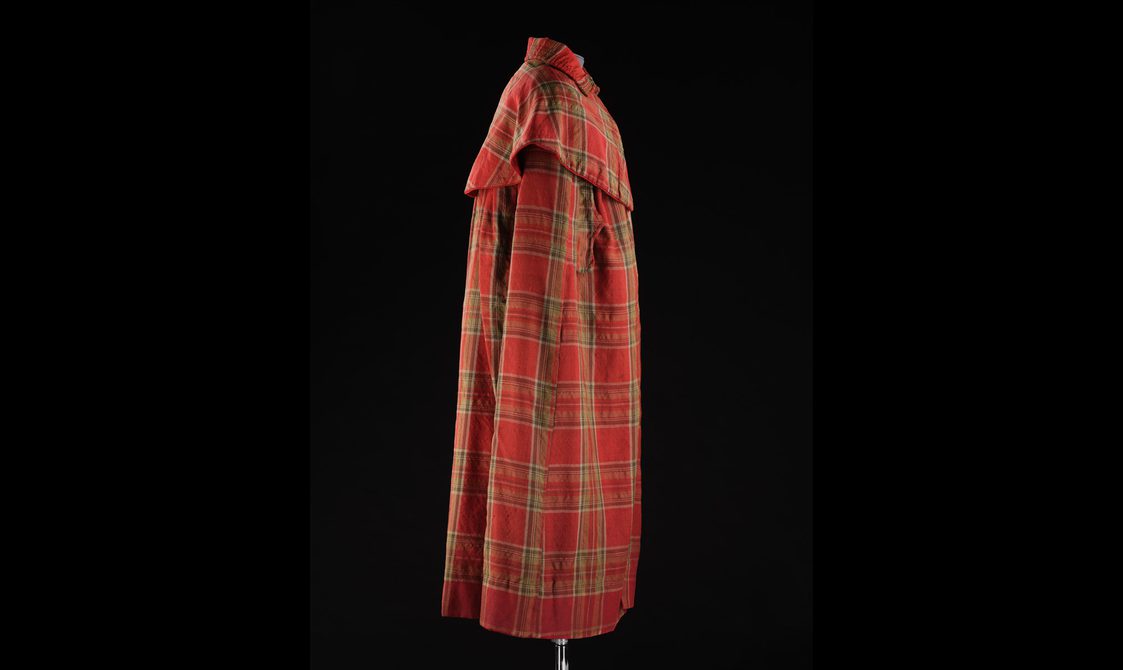
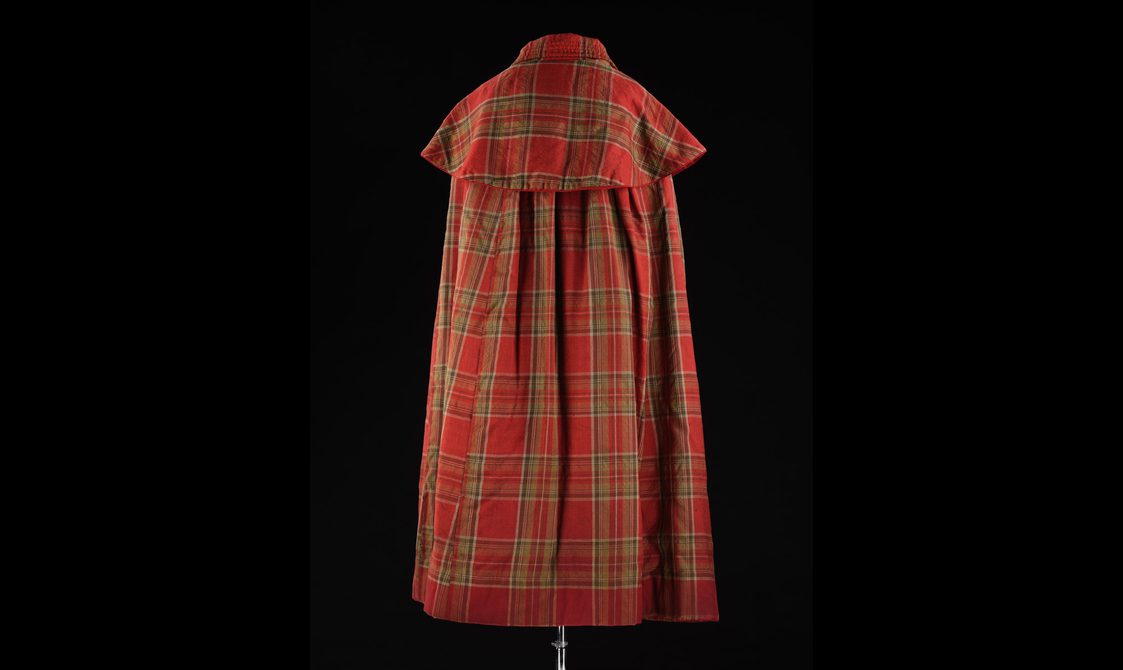
During the early 1800s, tartan was in vogue as cloaking fabric. The cloth was a popular option for outdoor wear, as the tight twill structure of the weave and natural water-repellent qualities of the wool provided excellent protection from the elements. This particular cloak has a thick shoulder cape and a high turned-down collar, offering the wearer an increased level of comfort.
Image gallery
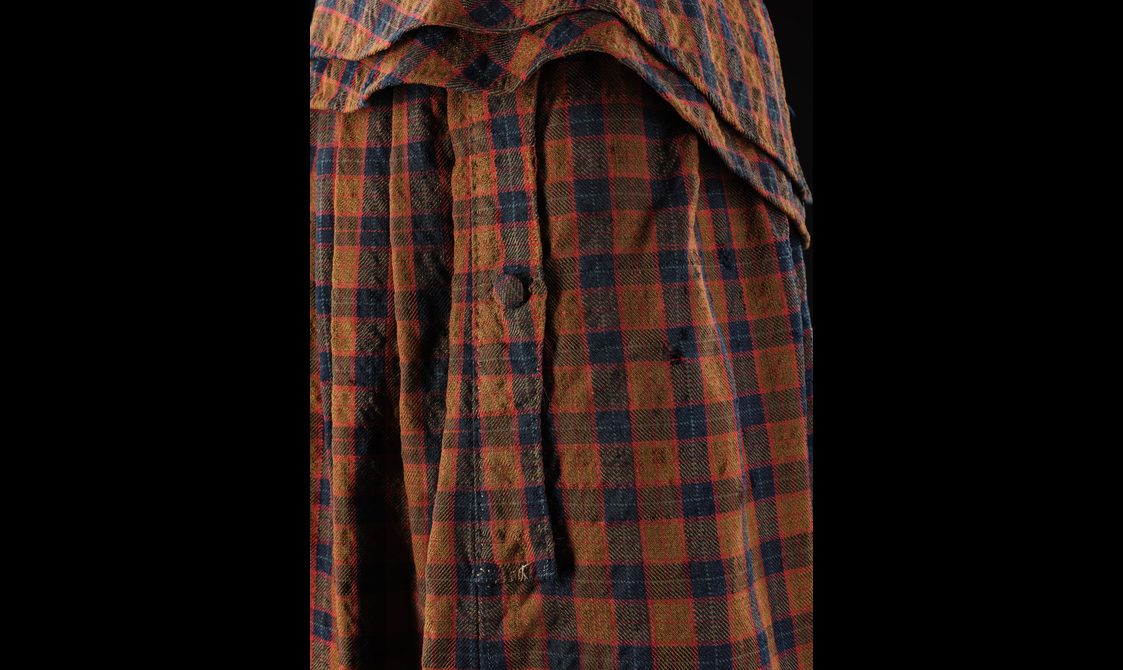
The armholes of this cloak can be fastened closed for extra warmth. Tartan cloak, c.1800-1810. Museum reference M.1930.272.
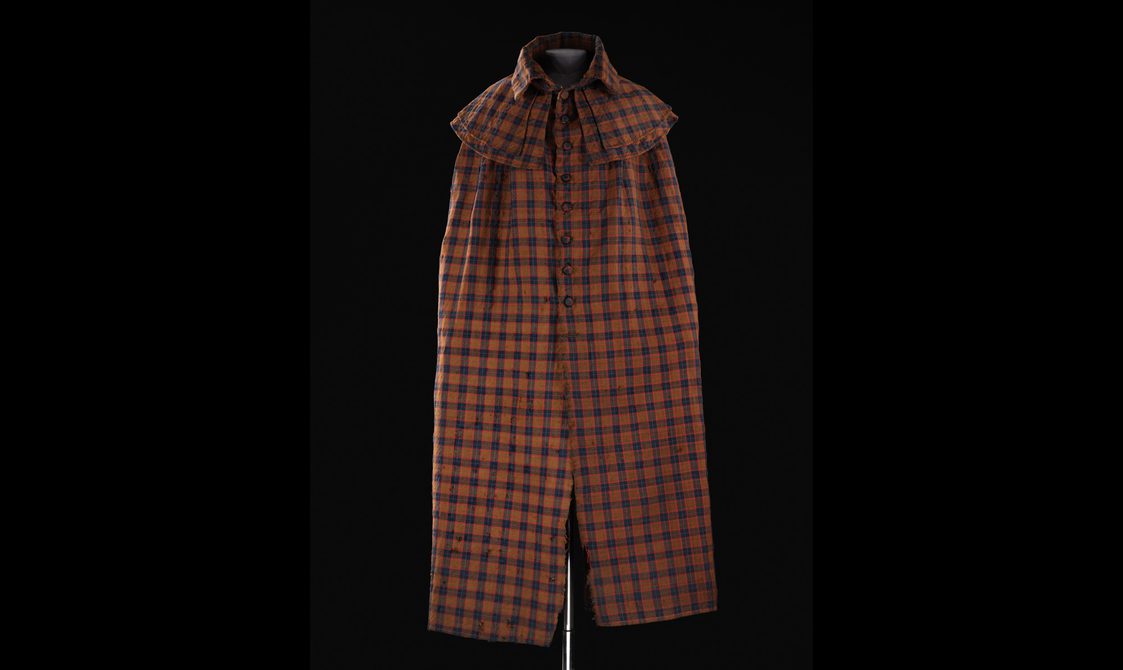
Tartan cloak, c.1800-1810. Museum reference M.1930.272.
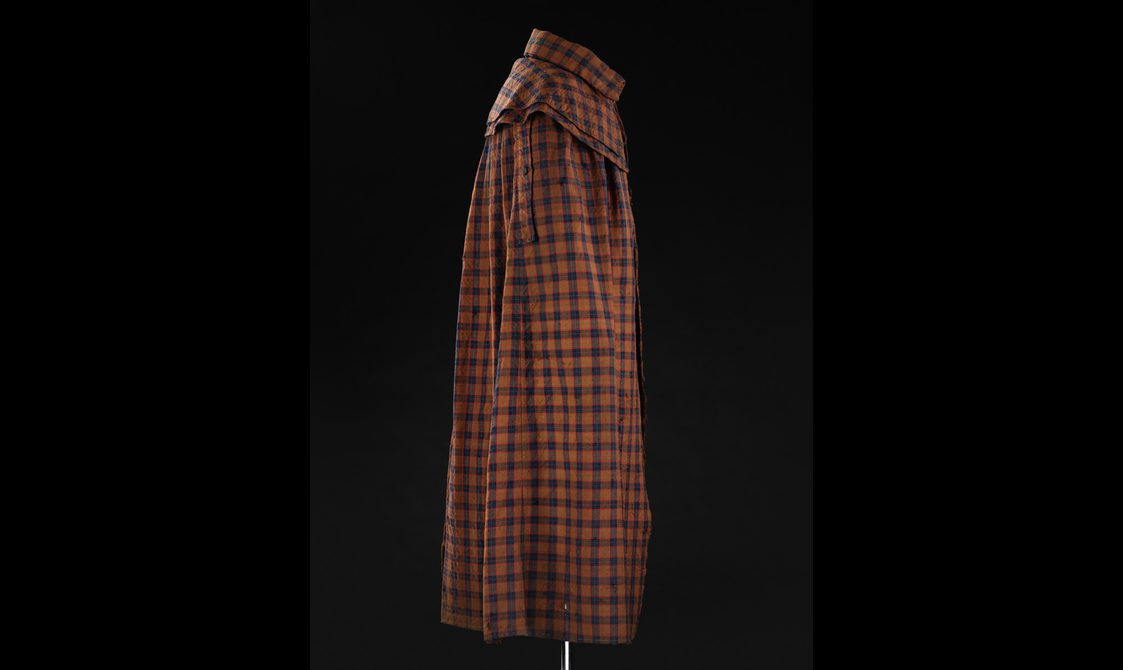
Tartan cloak, c.1800-1810. Museum reference M.1930.272.
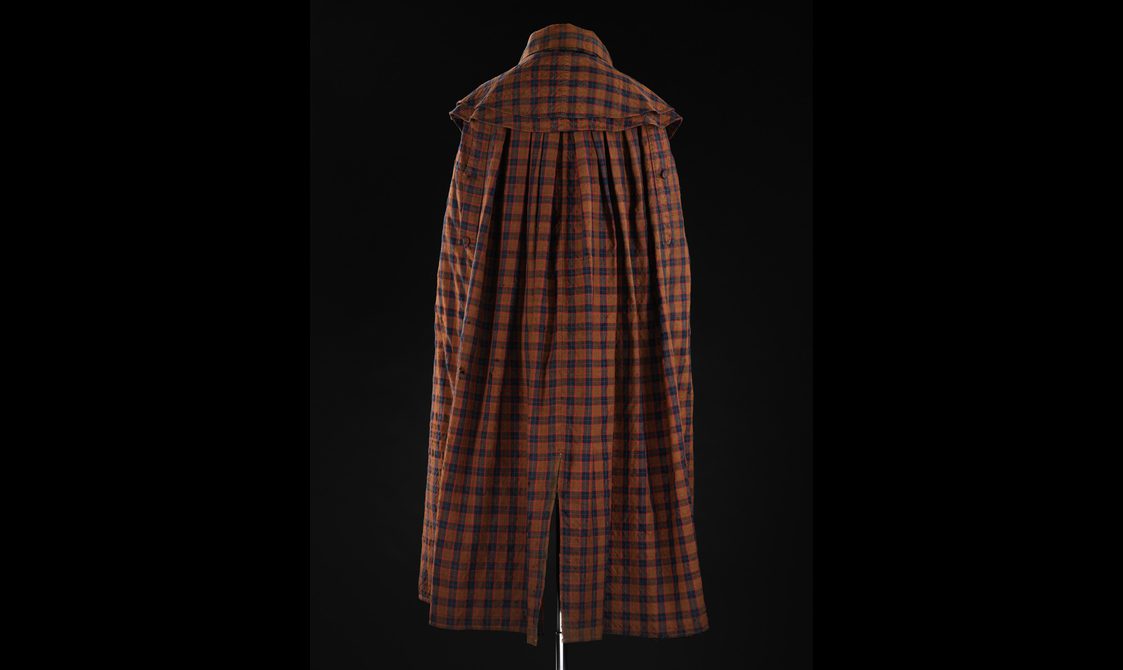
Tartan cloak, c.1800-1810. Museum reference M.1930.272.
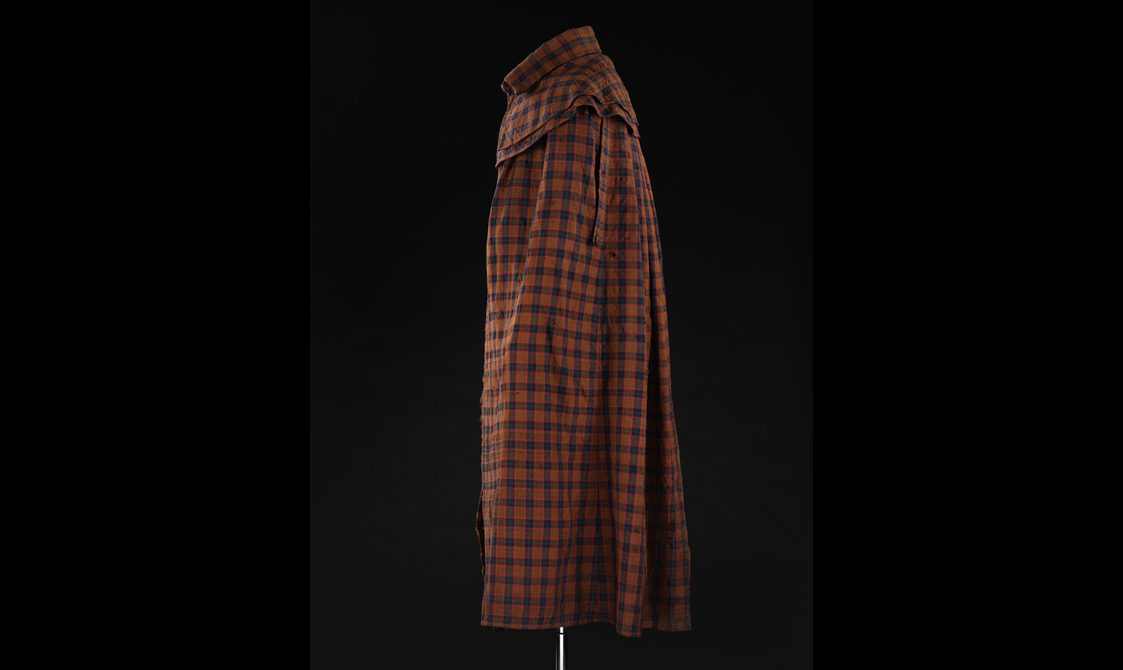
Tartan cloak, c.1800-1810. Museum reference M.1930.272.
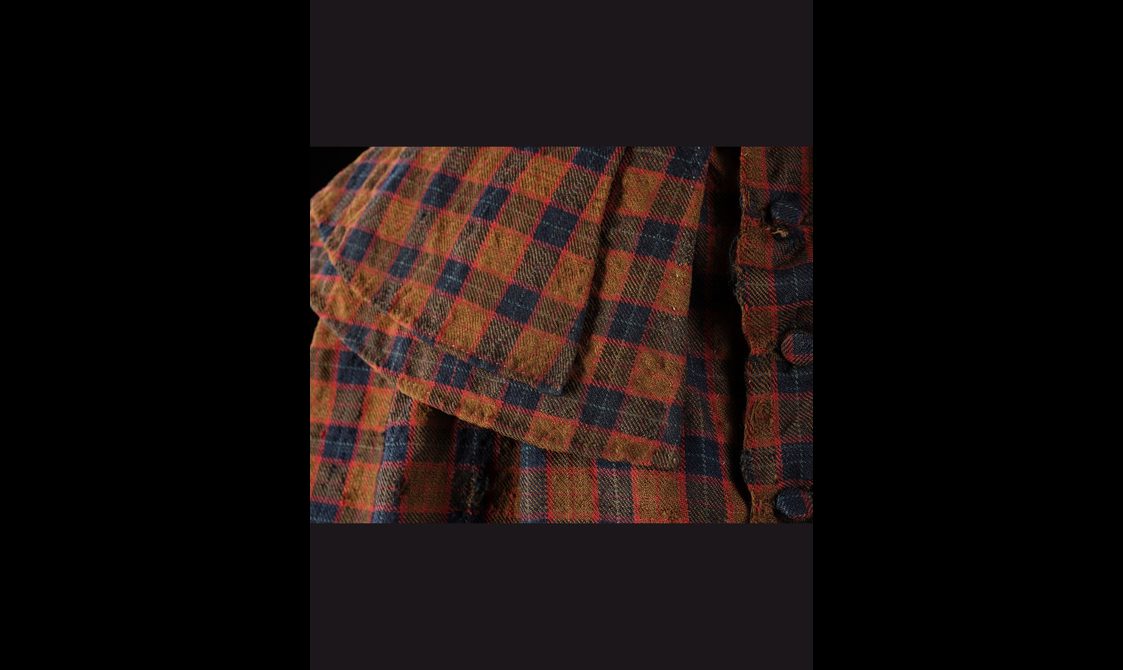
Detail of double cape, tartan cloak c.1800-1810. Museum reference M.1930.272.
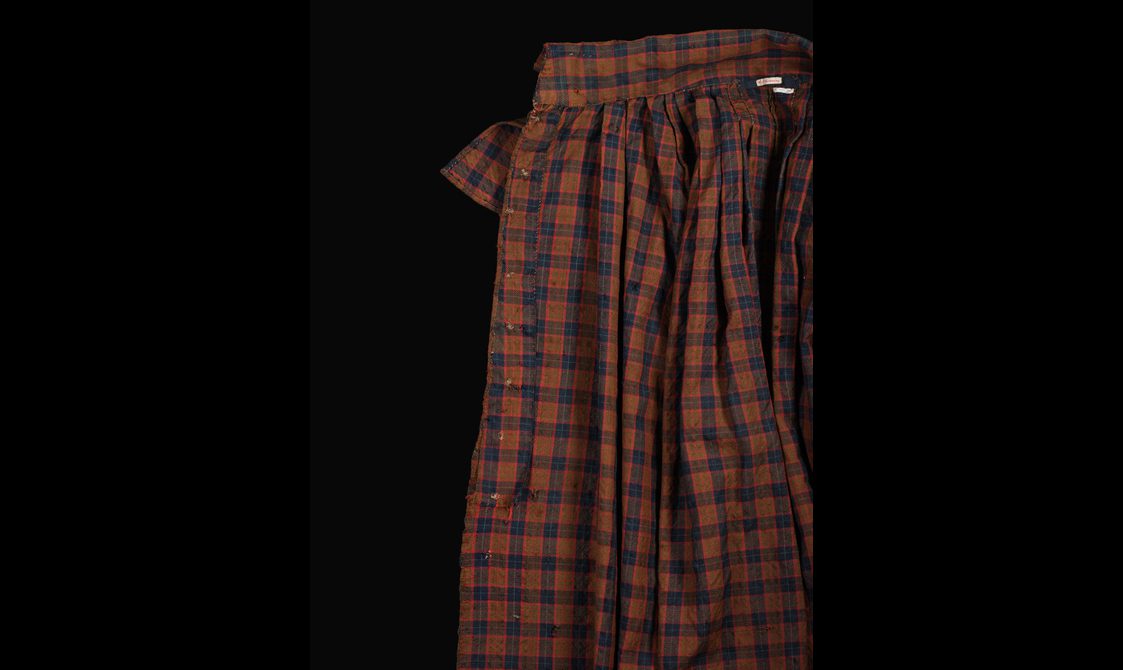
Inside of tartan cloak, c.1800-1810. Museum reference M.1930.272.
Royal Stewart tartan cloak, c.1830 (A.1993.209)
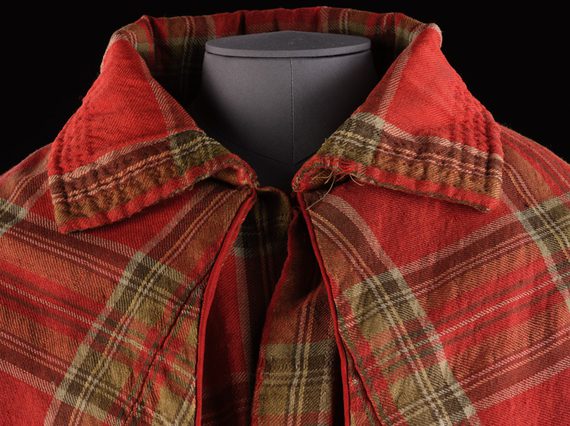
Due to its high-profile adoption by Scottish regiments and members of the British royal family since the early decades of the 19th century, the Royal Stewart pattern has become one of the most popular and widely recognised tartans in the world.
It was a common fashion fabric in the Georgian and Victorian periods and is often seen in surviving cloaks of the era. Such cloaks often betray their practical function, the bright fabrics soiled by mud and accumulated damp. The fact that the hem is badly stained and has been turned up at a later date indicates that this cloak had a long and useful life, well past the point of stylishness.
Image gallery
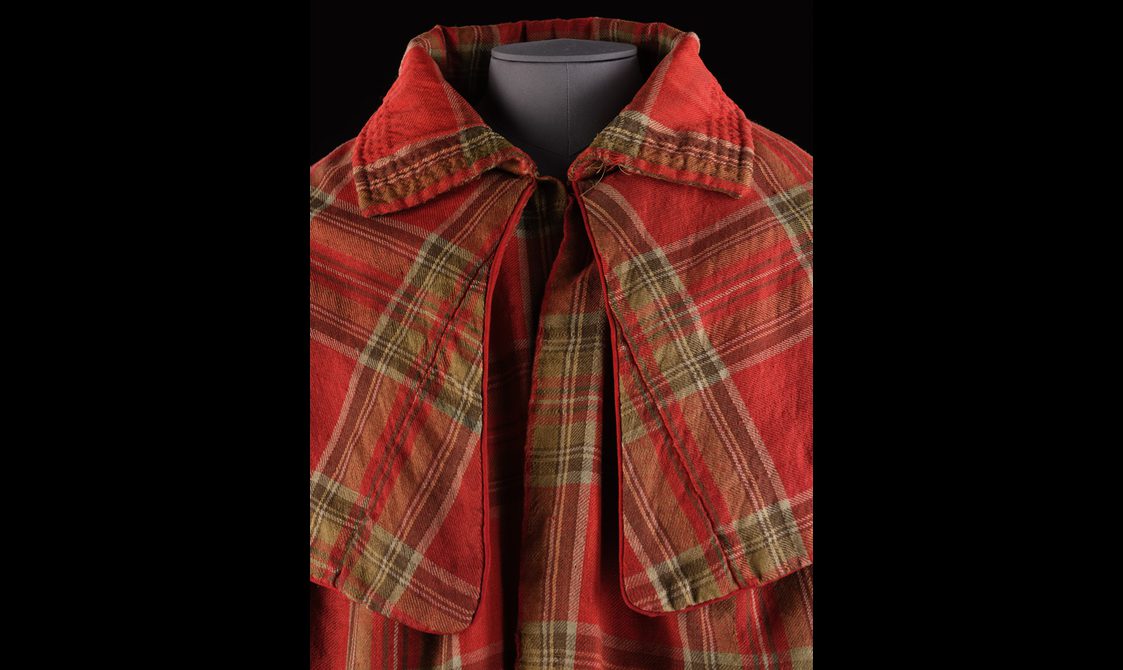
The cloak has an interlined collar, deeply pleated neck and shoulder cape. It would certainly have been a warm and serviceable piece of outerwear. Royal Stewart tartan cloak, c.1830. Museum reference A.1993.209.
Royal Stewart tartan cloak, c.1830. Museum reference A.1993.209.
Royal Stewart tartan cloak, c.1830. Museum reference A.1993.209.
Royal Stewart tartan cloak, c.1830. Museum reference A.1993.209.
Royal Stewart tartan cloak, c.1830. Museum reference A.1993.209.
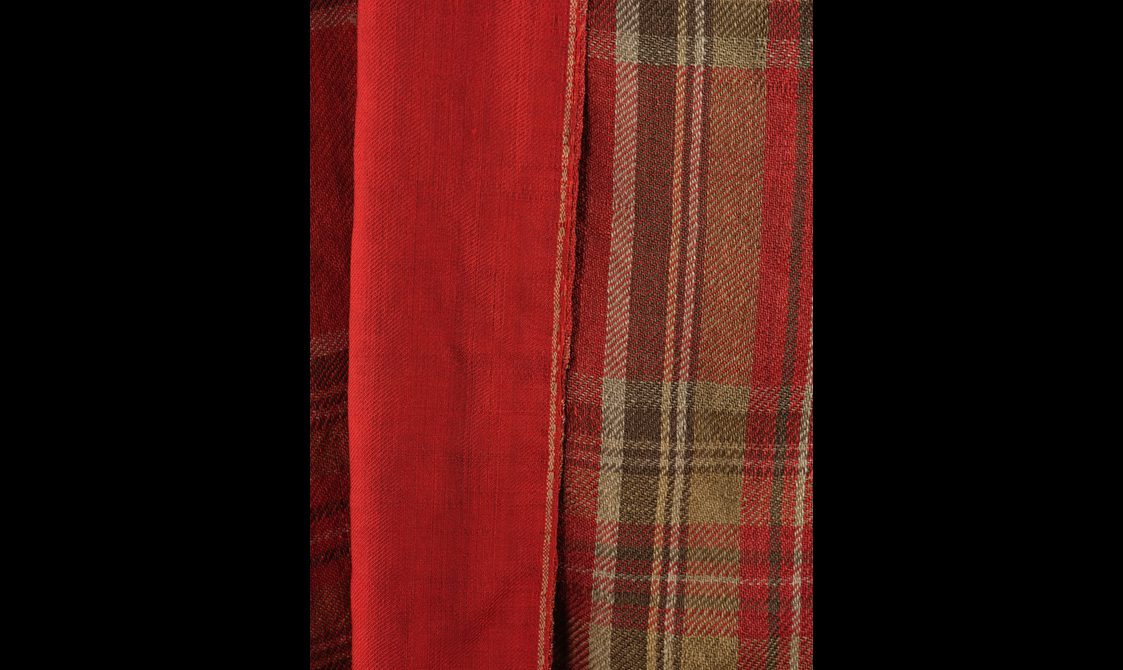
The cloak is lined with red twill. Royal Stewart tartan cloak, c.1830. Museum reference A.1993.209.
You might also like
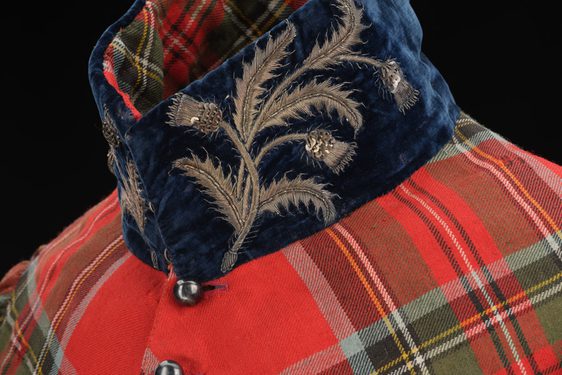
Three tartan coats from the Georgian period
Fashion and textiles, Scotland
From military style jackets to informal housecoats, three tartan coats in our collection demonstrate the range of styles and uses of these garments in Georgian Britain.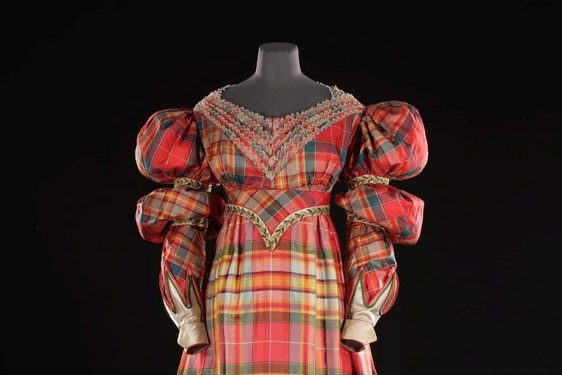
Highland Style: Tartan trends in Georgian Britain
Fashion and textiles, History and cultures, Scotland
Highland dress is among the most recognisable symbols of Scotland. It has historical roots in the display culture of medieval Gaelic society. During the 18th and 19th centuries this living tradition was reinvented to suit the social,…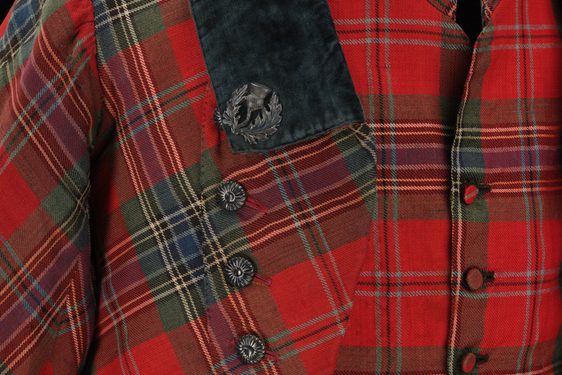
Six kilt suits from Georgian Scotland
Fashion and textiles, Scotland
Our collections contain a rich array of Highland dress costume and tartan fashion from the Georgian era. Discover a range of kilt suits from 1790 to 1830.