The first ever colour television
News Story
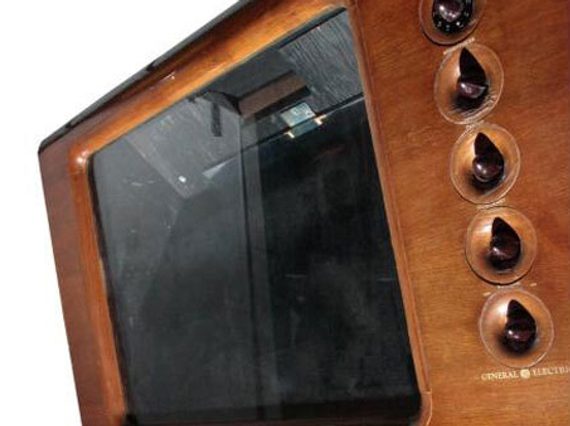
The oldest known surviving colour television in the world is held in the National Museum of Scotland collection. It was manufactured in 1946 by General Electric in the USA for the Columbia Broadcasting Service (CBS) and is the only one of its kind.
It uses a colour system invented in 1937 by Scottish engineer John Logie Baird. He was ahead of his time, and many of his inventions only reached the market years after his death.
A man of many 'firsts'
Inventor and engineer John Logie Baird was born in Helensburgh, Scotland, in 1888. To call him a prolific and driven pioneer of television technology would be an understatement. By his mid-to-late-thirties, he had already achieved numerous 'firsts'.
In 1922, he started experimenting with television using available objects including: an old tea chest, darning needles, scissors, bicycle lenses stuck together with glue and sealing wax, and took out his first television patent a year later.
He demonstrated the first prototype television in March 1925 at Selfridges in London, followed by his first public demonstration at the Royal Institution in January 1926. We can only imagine how spectacular the sight of moving images of real people must have seemed to his audience.
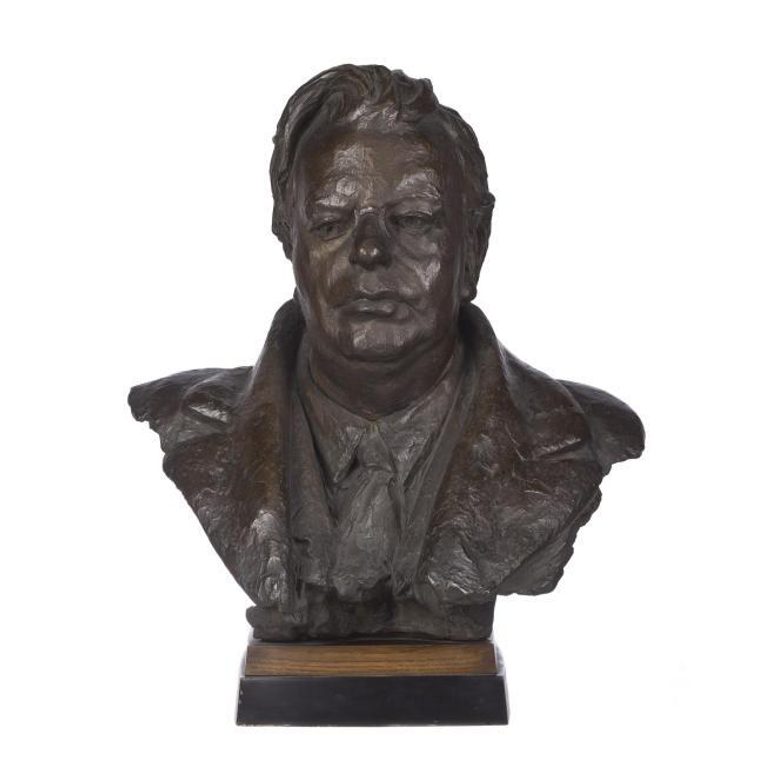
Bust of John Logie Baird by sculptor Donald Gilbert in the Traditions in Sculpture gallery. Museum reference T.2012.29.
The following year, he transmitted the world's first long-distance television picture between London and Glasgow, far beating the distance of an earlier US telecast method between New York and Washington DC.
In 1928, he demonstrated the world's first mechanical colour television transmission system and followed this with the first electronic colour system in 1941.
Between 1926 and 1928, he created a non-working prototype for a ‘phonovision’, a device intended to record video. In 1928, he also demonstrated his ‘stereoscopic’ television, an early form of what we now know as 3D television.
From 1928 onwards, he continued with more 'firsts'. Via his own company, the Baird Television Development Company, he made the first transatlantic television transmission, from London to New York. In the following year, the first television programmes officially transmitted on the BBC. He establishing France's first television company and the first live outside broadcast.
He continued to invent, iterate and patent inventions throughout his life, including developments in fibre-optics, infra-red night viewing, and radio wave and radio direction detection technologies.
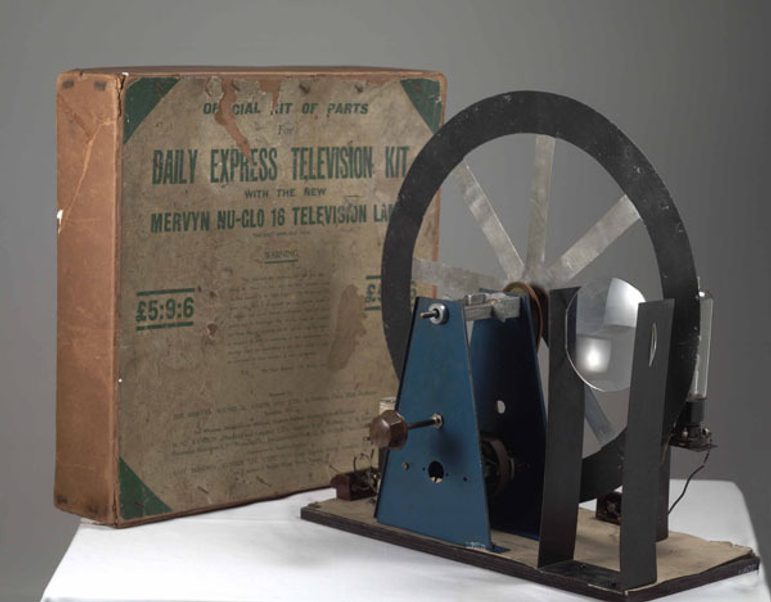
This early home-build television kit, which used the system invented by Logie Baird, was marketed by the Daily Express. It sold for £5 9 shillings and 6 pence in 1934.
The first colour television: too ahead of its time
Baird did not live to see the commercialisation of his colour television system. He died suddenly of a stroke in 1948, just as CBS began advertising the first colour television produced for the consumer market — the GE 950. The company had been experimenting with Baird’s ideas for some time, and by that same year, were confident of obtaining a broadcasting licence.
Unfortunately, on 30 January 1947, the Federal Communications Commission (FCC) refused CBS a licence. The FCC had technical concerns about the new colour system. It was untested and wasn't compatible with existing black and white systems and required the use of an adaptor. CBS's rival RCA were developing a colour system that would work with black and white TVs.
Our GE 950 set comes complete with a handbook, schematic and wiring diagram, printed warranty and 90-day guarantee for parts and labour, so this model was clearly intended for sale. With no regular transmissions available, the GE 950 could not be sold. If it was used at all, it would only have been to receive demonstration broadcasts.
In 1950, the FCC briefly approved the CBS system as the U.S. colour standard, but it soon became clear that it wasn’t practical for mass use. By 1953, it reversed its decision again in favour of Radio Corporation America (RCA)'s new system, which was compatible with existing TV sets.
The GE 950 is a rare reminder of an ambitious but short-lived chapter in the race to bring colour television into people’s homes.
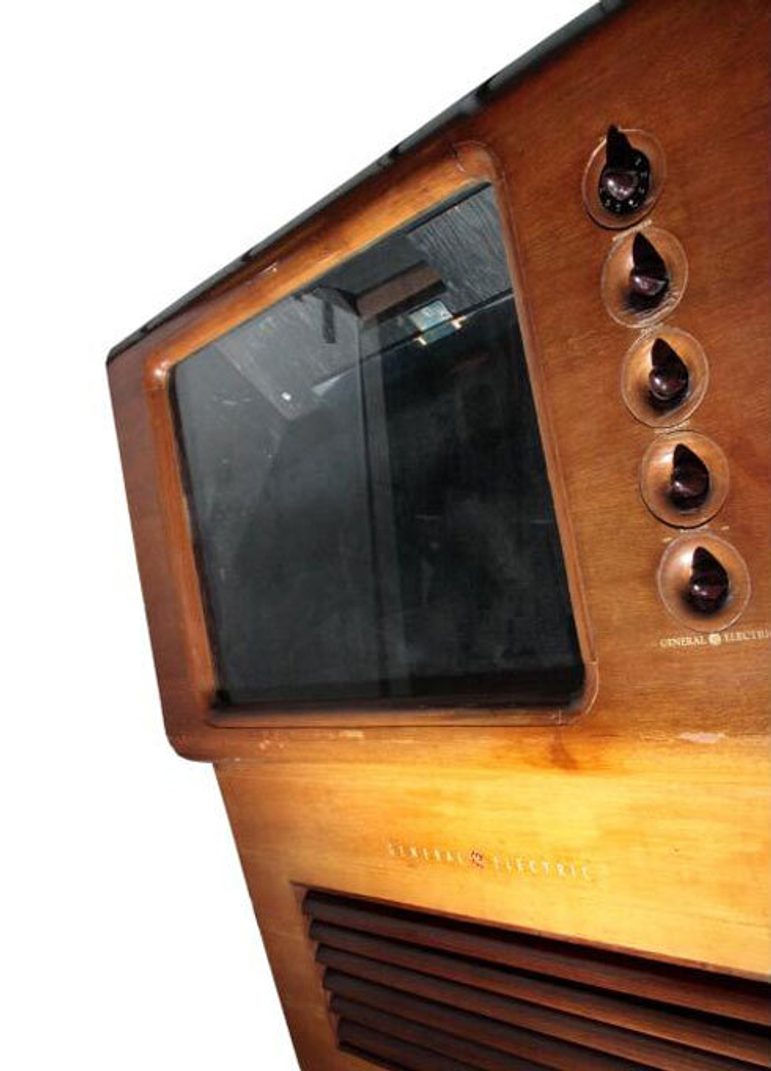
The GE 950 television, the oldest known surviving colour television in the world.
The GE 950 system
The GE 950 used a system based on Baird’s principles, whereby a monochrome camera filmed scenes through a rotating colour wheel with red, green, and blue filters. When played back, the television projected each frame through matching coloured filters, and the brain combined the three into a single full-colour image — in the same way it merges still frames of a film into moving pictures.
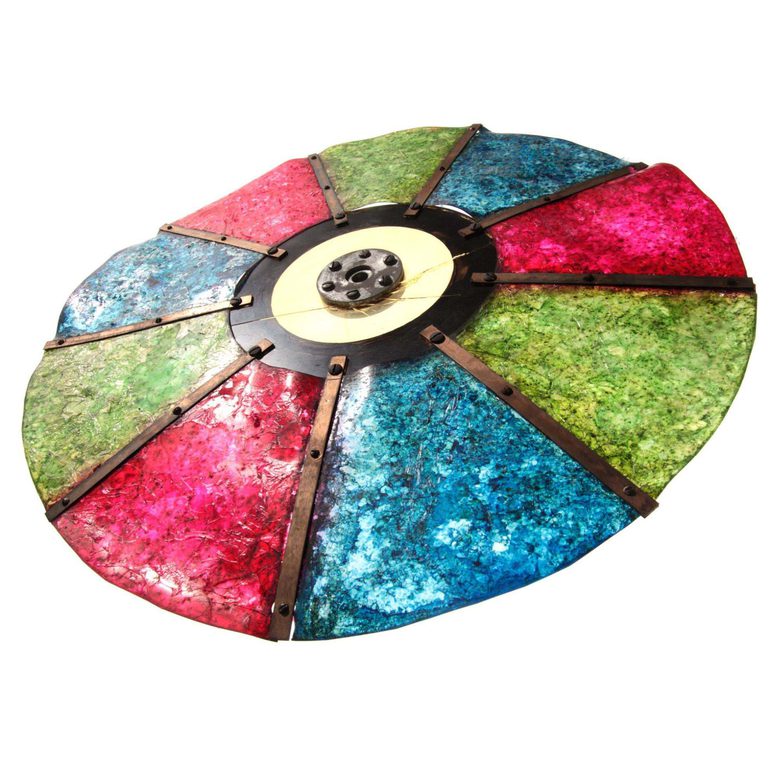
The GE 950 television receiver wheel. Museum reference T.2004.8.1.
The slow adoption of colour television
Colour television made little commercial impact in the USA until the 1960s. The TV sets were very expensive, RCA's first television set cost $1000, about $11,000 in today's value. There were very few colour programmes to begin with as there were very few colour TVs. It wasn't until 1965, that all TV networks started actively promoting and producing colour schedules.
The UK was physically and financially rebuilding itself after World War Two and colour television was seen as a luxury that few could afford. The BBC were testing a technically superior system to the US one, which delayed the roll out. Colour television wasn't introduced in Britain until 1967, slowly and intermittently, 21 years after Baird’s death.
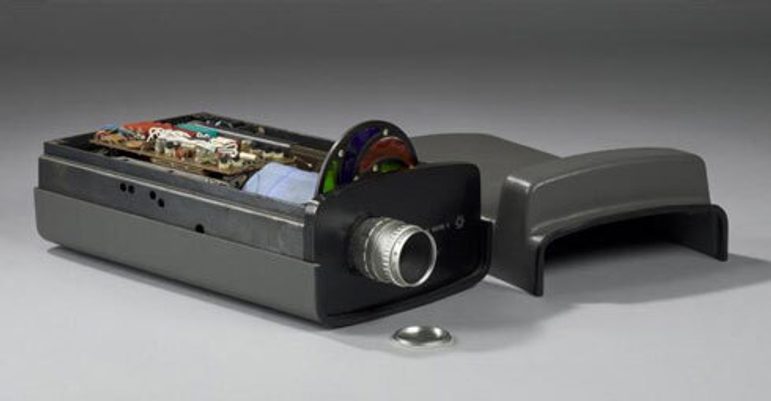
Mark V field sequential colour television camera. A prototype of the cameras built for NASA for the Apollo Moon landing in 1969, it uses the colour sequential technology invented by John Logie Baird in 1928.
A legacy with little reward
Despite his obvious genius, Baird wasn't a businessman and struggled financially most of his life, benefitting very little from his inventions and patents. He famously built prototypes from biscuit tins and hatboxes, working on shoe string budgets, and failed to attract wealthier investors. Most of his patents and ideas were decades ahead of their time, and their commercial application didn't happen before his untimely and sudden death.
Like all great pioneers, his inventions and ideas were groundbreaking but were soon superseded by entrepreneurs with improved techniques and better materials.
However, Baird’s ideas had lasting legacy and application, and he has been posthumously awarded and globally recognised. The first pictures broadcast from the moon in 1969, were recorded and transmitted by a camera based on Baird’s colour system, developed over 30 years earlier. His inventions inspired other inventors like Philo Farnsworth and Marconi to build scanning systems.
Likewise he influenced the concept and development of video recording, 3D television, and broadcasting standards. The red, green, and blue principles of the colour wheel in this television has become the foundation of modern colour television and computer screen technology.
You might also like
- Discover
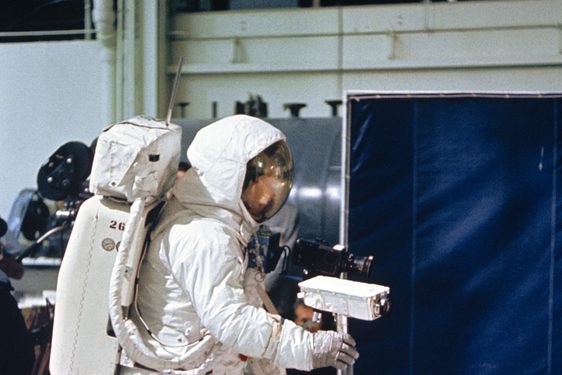
Broadcasting from the Moon: The first lunar camera
Apollo 11 was the first manned mission to land on the Moon on 20 July 1969. NASA used technology first developed in 1928 by the Scottish innovator John Logie Baird to develop a small, robust television camera that enabled the live… - Discover
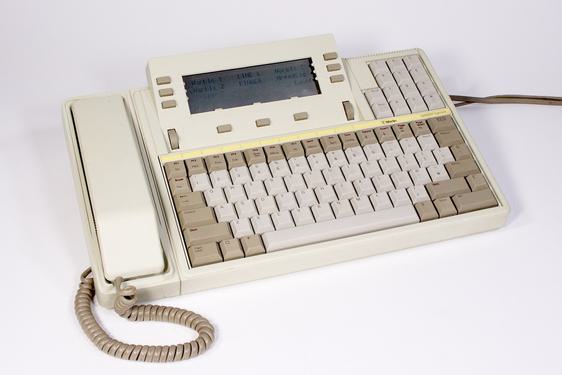
10 stories of disability history in the collections
Disability History Month begins in November each year. But all year round we care for and interpret objects connected to the lives and experiences of D/deaf, disabled and neurodivergent people, past and present. This list highlights… - Discover
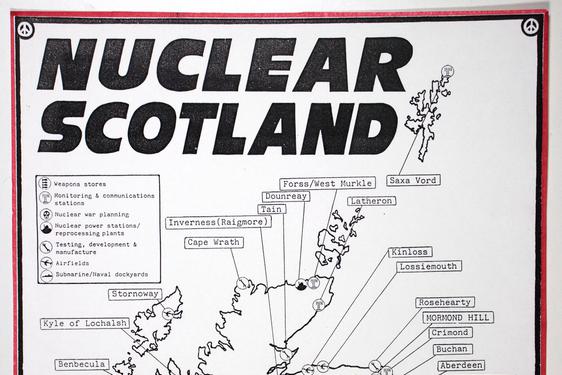
Nuclear Scotland during the Cold War
Nuclear power and nuclear weapons dominated the Scottish landscape, and people’s minds, during the Cold War. In 1959, Chapelcross, in Annan in southwest Scotland, became one of the first civil-military nuclear power stations in the world.…