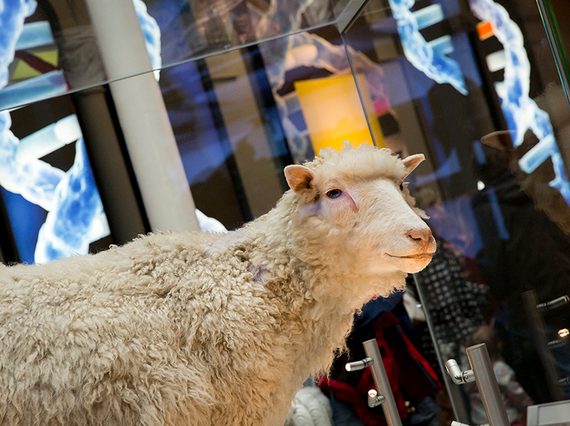
Dolly at 30: The Life and Legacy of a Cloned Sheep
Thurs 16 Jul, 18:30 - 20:30
National Museum of Scotland
Free, booking required
About Dolly at 30: The Life and Legacy of a Cloned Sheep
To coincide with her 30th birthday in July, join us for an evening exploring the history and legacy of Dolly the sheep, the first cloned mammal ever to be created from an adult cell.
Director of Edinburgh Science, Hassun El-Zafar, will chair a panel conversation exploring the scientific innovation, historic significance and continuing cultural impact of Dolly the sheep. Panellists include experts from the Roslin Institute, the University of Edinburgh, the University of Cambridge, and National Museums Scotland. The discussion will be followed by an audience Q&A.
On the night there will also be the opportunity to see the museum's recent acquisitions related to Dolly the sheep which are not usually on public display.
This event is supported by The Elizabeth Paris Endowment of the History of Science Society for 2026.
Event itinerary
- 18:30 - 20:00: Panel discussion in the Auditorium
- 20:00 - 20:30: Opportunity to view a pop-up display of newly-acquired items related to Dolly the sheep.
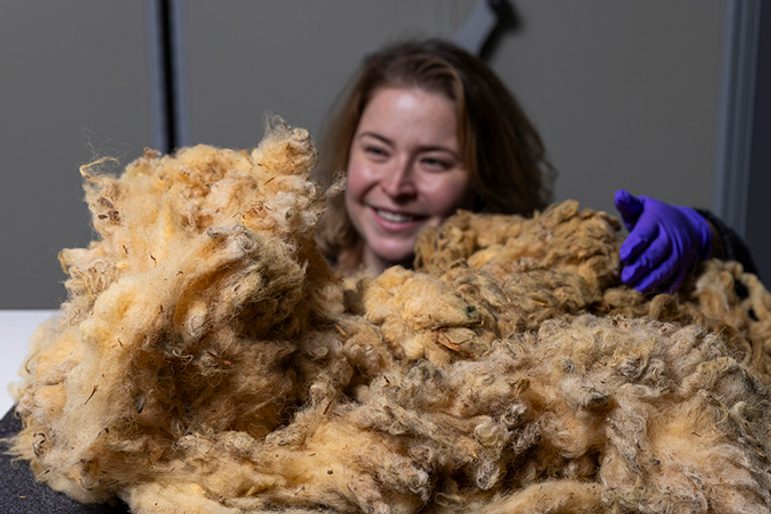
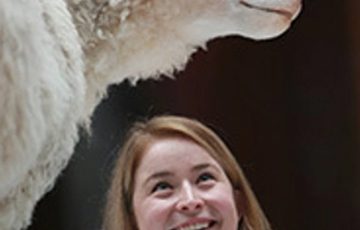
Curator Sophie Goggins with the fleece from Dolly the sheep. The fleece will feature as one of the items in the event pop-up display.
Our speakers
Our speakers
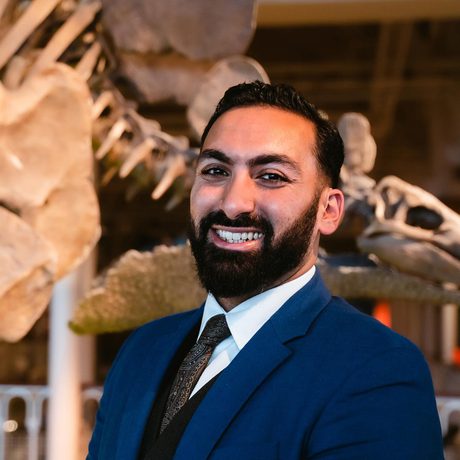
Chair: Hassun El-Zafar
Hassun El-Zafar is Chief Executive Officer of Edinburgh Science Foundation, the organisation behind Edinburgh Science Festival. A former science teacher, he works at the intersection of science, art and public engagement.
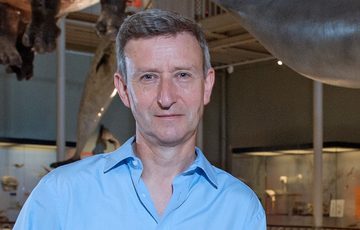
Dr Andrew Kitchener
Professor Andrew Kitchener is Principal Curator of Vertebrates at National Museums Scotland, where he is responsible for the care and development of the vertebrate collections, including Dolly the sheep.
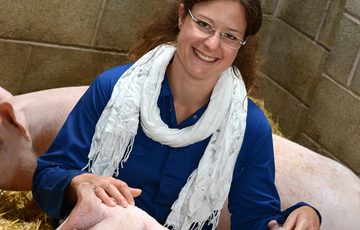
Sophie Goggins
Sophie Goggins is Senior Curator of Biomedical Science at National Museums Scotland. She is responsible for the medical collection including her particular specialism, contemporary biomedicine.
Dr Christine Tait-Burkard
Christine Tait-Burkard is a group leader at The Roslin Institute where her research builds on the institute’s legacy of pioneering animal biotechnology established through the creation of Dolly the sheep.
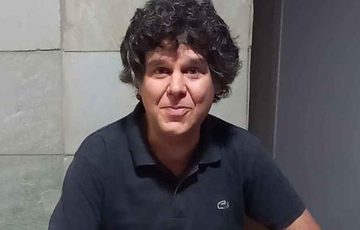
Dr Miguel García-Sancho
Miguel García-Sancho is a Senior Lecturer at the Department of Science, Technology and Innovation Studies of the University of Edinburgh. He led the project “Historicising Dolly” which placed the first cloned sheep within a broader trajectory of animal breeding research.
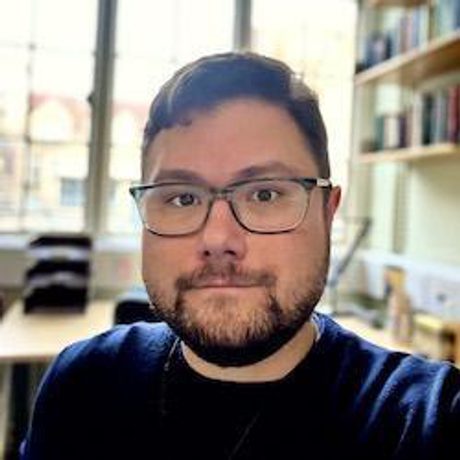
Dr Dimitry Myelnikov
Dimitry Myelnikov is a historian of biology and medicine, and a Teaching Associate at the Department of History and Philosophy of Science, University of Cambridge. As part of the “Historicising Dolly” project, he researched the history of the Roslin Institute and its transition to genetic engineering and cloning research in the 1980s.
Accessibility and facilities
We want everyone who comes to our museums to enjoy their time with us and make the most of their visit.
How to get to the space
You can make your way to the Auditorium by walking through the Lothian Entrance. There is a ramp on the left-hand side once you enter the building.
The door to the Auditorium is not automatic and cannot be opened by a push pad. During an event it may already be open or you can open it by pulling it towards you.
Wheelchair access
There are four designated spaces for wheelchairs in the Auditorium. Two are at the front on Level 1 and two are at the back on Level 2. You can access the upper spaces by taking the lift next to the Auditorium. A staff member will be available to give directions to the lift.
These spaces can be booked in advance. Please contact publicevents@nms.ac.uk to book a designated wheelchair space.
There is significant space to use a wheelchair in the Auditorium.
Please ask a member of staff if you'd like to borrow a wheelchair after you've arrived. They cannot be booked in advance.
Seating
Seats in the Auditorium are fixed and tiered. There are steps and handrails on either side of the seating rows.
The seats are cushioned and have arm rests on either side.
There is 18cm of leg room between rows.
If you require a seat at the front or near the front, please get in touch at publicevents@nms.ac.uk.
Hearing induction loops
There is an induction loop in the Auditorium.
Toilets and baby changing
The nearest toilets are on Level 1 next to the Lothian Street Entrance. There are standard toilets and an accessible toilet. A baby changing table is located in the accessible toilet.
If you require a changing places toilet, please ask a member of staff.
Visit our accessibility page for general access information for the National Museum of Scotland.
Supported by
This event is supported by the History of Science Society’s Elizabeth Paris Endowment.

You might also like
- Event
In Conversation: Understanding Prehistoric Lives Beyond Conflict
Sat 26 Sep, 14:30-16:00Tristan Hughes and Nicole DeRushie join exhibition curator Dr Matthew Knight to discuss the evidence of life beyond conflict in prehistoric Scotland.Just announced - Event
Morning Curator Tour: Giants
–Join our exhibition curator for an exclusive early-morning tour of Giants. - Event
Morning Curator Tour: Scotland's First Warriors
Wed 26 Aug and Fri 18 Sept, 09:45 - 10:30Join our exhibition curator for an exclusive early morning tour of 'Scotland’s First Warriors'.