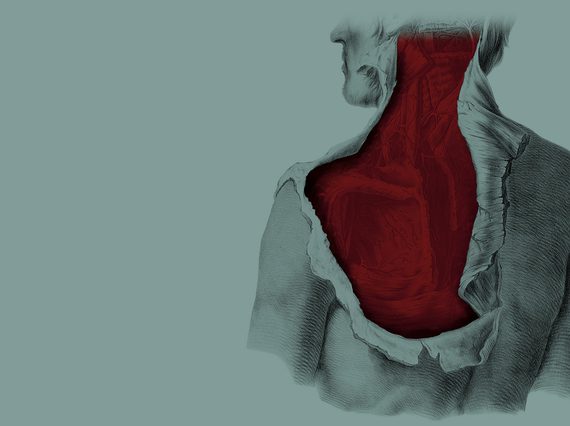
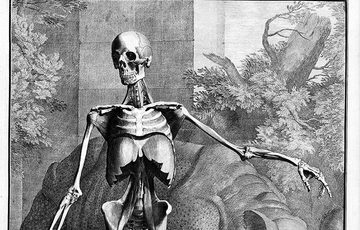
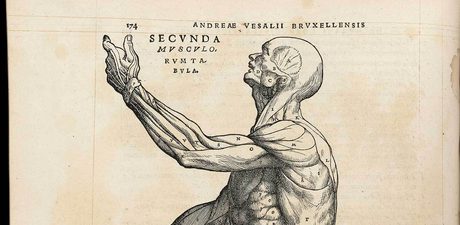
This exhibition explored the history of anatomical study, from artistic explorations by Leonardo da Vinci to the Burke and Hare murders.
"Gripping"
"...brings the whole story closer..."
"First-rate exhibition"
Charting 500 years of medical exploration, the exhibition considered the social and medical history surrounding the dissection of human bodies. The role anatomy played in the Enlightenment, the links between science and crime in the early 19th century, and the approaches to anatomical study today were also highlighted.
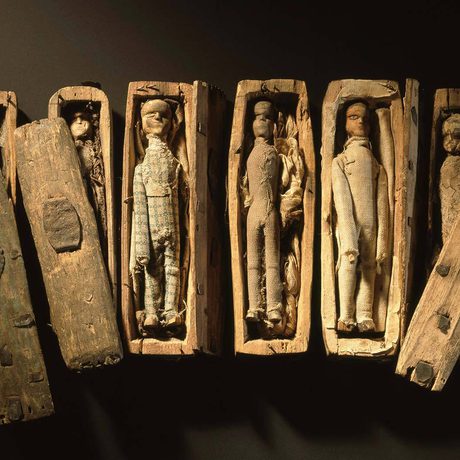
On display were early examples of anatomical art, a full-body papier-mâché model produced in the workshops of pioneering 19th century model maker Louis Auzoux, and William Burke’s skeleton and handwritten confession. National Museums Scotland’s own collections on display included a ‘mort safe’, a heavy iron box placed over a coffin to deter would-be body snatchers, and the Arthur's Seat miniature coffins.
Exhibition highlights
You might also like

Joan Faithfull's Mull pottery
Archaeology, Scotland
Written by Dr Ailsa HuttonWhat does it mean for an object to be ‘of’ a place? Joan Fathfull’s pottery in Tormore, Mull, became a fixture for visitors to the Inner Hebrides in the mid-20th century. Ailsa Hutton, Assistant Curator of Modern and Contemporary History,…
From computer screen to finished fabric: ‘Hame’ tartan
Fashion and textiles, Scotland
National Museums Scotland holds an extensive collection of 19th and 20th century tartan swatches and design ephemera. In the past, it was usual for tartan manufacturers to design patterns using gridded paper, coloured pencils, inks,…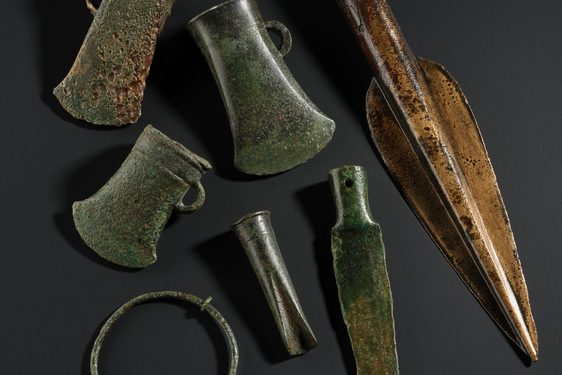
The Torran Hoard: A Bronze Age discovery
Archaeology, History and cultures, Scotland
Dr Matthew Knight, Senior Curator in Early Prehistory, uncovers how a missing ferret led to a big discovery.It was spring time in 1881 and Mr Thomas Orr Richmond had lost his ferret. In searching for it, he uncovered two bronze weapons and…