About Extinction Bell
Luke Jerram's Extinction Bell raised awareness of biodiversity loss.
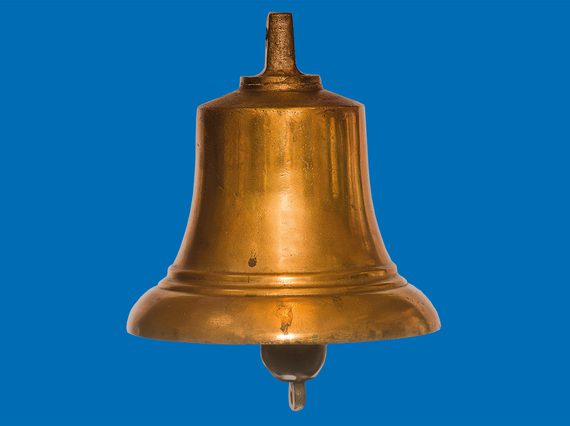
The Extinction Bell was a work by Bristol-based artist Luke Jerram. A fire engine bell from our collection was adapted to toll at random intervals 150-200 times per day. Each ring of the bell symbolised the extinction of a species, representing the number being lost every 24 hours (according to a 2007 report from the UN).
Scientists estimate that the current extinction rate of plant, fungi and animal species is nearly 1,000 times more than the ‘natural’ or ‘background’ rate.
Some biologists say this is greater than anything the world has experienced since the dinosaurs vanished around 65 million years ago. We are the main cause of these extinctions largely through habitat loss and global climate change.
By the time this display closed on 9 January 2022, the bell rang up to 21,000 times.
Why a bell?
Bells call us to action and communicate a sense of emergency.
Luke Jerram’s artwork used this universal sound to symbolise extinction events, which are happening across the world, but which we don’t see.
This Extinction Bell used a 19th-century brass fire engine bell from our collections, chosen by our curators. It was originally used on a horse-drawn fire engine from St Mary’s Isle estate near Kirkcudbright. It originally warned of danger from fire – here it alerted us all to the alarming rate of species loss caused by human activities.
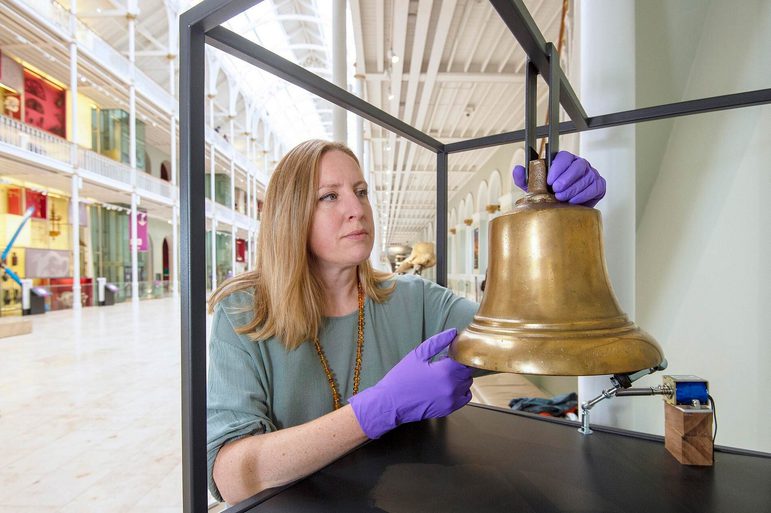
Dr Meredith Greiling, Principal Curator of Technology, installs the extinction bell in the Grand Gallery.
You might also like
Scotland's native wildlife
Natural world, Scotland
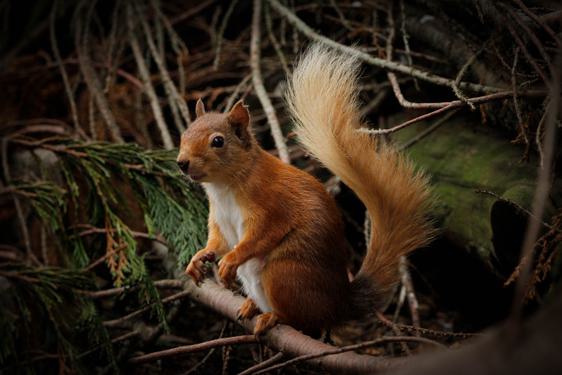
Scotland is home to a wide variety of wildlife. Among the most recognisable species are red deer, which are monarchs of the glen, standing proud and majestic against the skyline.Scotland is home to over 90,000 species. The land, seas, and…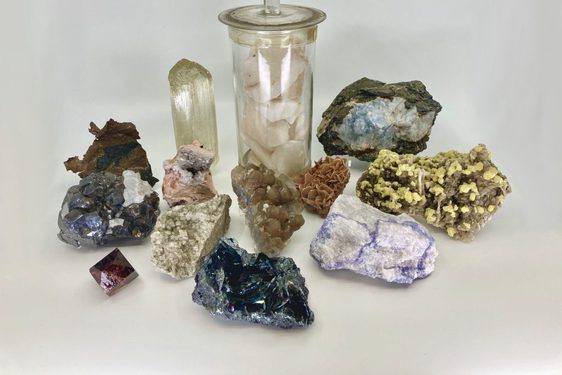
What's in a firework? Minerals that bang
Natural world
Written by Emily BrownSo, you light a firework, you stand back and WHOOSH, off it shoots into the air. A few seconds wait and then BOOM, the firework explodes in a shower of coloured sparkles raining down from the sky. To get this sequence of events, you need…
The mineral pentlandite and its Scottish connections
Natural world
The mineral Pentlandite could be named after several things with a Scottish connection, but which one? Or is it something else entirely?Pentlandite is an iron nickel sulphide with the chemical formula (Fe,Ni)₉S₈. It is found in nature as…