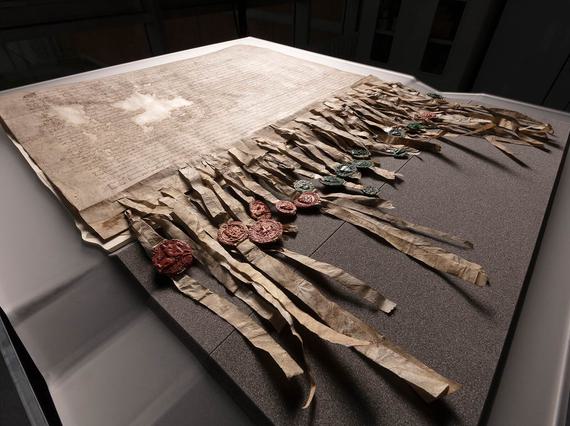
About The Declaration of Arbroath
The Declaration of Arbroath is a letter dated 6 April 1320 written by the barons and freeholders of the Kingdom of Scotland to Pope John XXII. The letter asked the pope to recognise Scotland's independence and acknowledge Robert the Bruce as the country's lawful king.
Despite the Scots' success at the Battle of Bannockburn, Robert I had not been recognised as king by either King Edward II of England or the Pope. At the time, the Pope desired peace between England and Scotland so that both kingdoms could help in a crusade to the Holy Land. The Declaration sought to influence him by offering the possibility of support from the Scots for his long-desired crusade if they no longer had to fear English invasion.
Written in Latin, it was sealed by eight earls and about 40 barons. It was authenticated by seals, as documents at that time were not signed. Only 19 seals now remain.
The surviving Declaration is a medieval copy of the letter, the original having been dispatched to the pope in Avignon. It is cared for by National Records of Scotland and is so fragile that it can only be displayed occasionally in order to ensure its long-term preservation.
Read a full transcription from The National Records of Scotland.
In partnership with

You might also like

Snow Hunter: Collecting Scotland's vanishing ice
Natural world, Scotland
Written by Dr Sarah Laurenson & Iain CameronWhat can patches of snow across Scotland tell us about the global environmental challenge?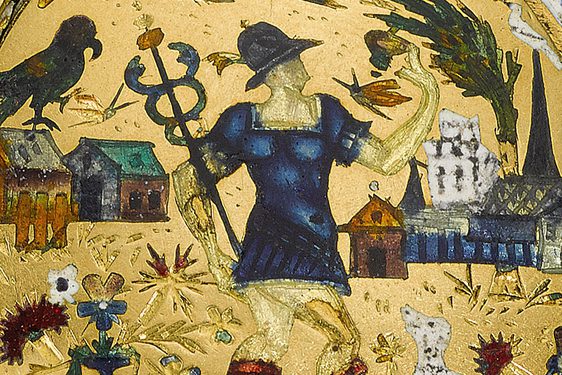
Five questions about the Fettercairn Jewel
Art and design, History and cultures, Scotland
The Fettercairn Jewel is one of a very small number of Renaissance jewels to have survived in the British Isles. Jewellery from such an early date has a very low survival rate, due to the historic recycling of precious stones and…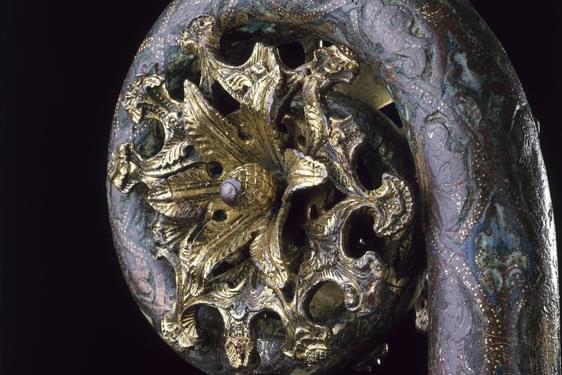
Piecing together the graves of medieval Whithorn
Archaeology, History and cultures, Scotland
Medieval Christians were buried in simple shrouds without possessions. Death was seen as a journey of the soul, leaving behind earthly things. That is, except for bishops, who were sometimes buried in their full regalia.Excavations at…