About Theravāda Buddhism
This thought-provoking display charted the history and influence of the Theravāda Buddhist tradition across the world, including its role in Scotland today.
The Theravāda tradition is one of the oldest forms of Buddhism. As one of the two main branches of the faith, it remains strong in Sri Lanka, Myanmar, Thailand, Laos, and Cambodia.
The display included a Buddha on loan from The Dhammapadipa Temple in Edinburgh. The Buddha was designed and made in Thailand in 2013, then later gifted to Temple where it is now used in their garden meditation room. The image takes inspiration from the Phra Phuttha Chinnarat (Great Victorious Buddha), one of the most revered Buddha images in Thailand.
Alongside the loan were 40 objects from the South and Southeast Asian collection, dating from the 2nd century AD to the present day. Objects included amulets, relics, statues, and votive offerings, all of which were and are used by Buddhists in their everyday religious practice.
A set of 19th century spinning gongs from Myanmar were also on display. Audio recordings of the gongs provided visitors with a sensory experience, representative of the sound of visiting a temple. The gongs are played by Ewan Millar, percussion student at The Royal Conservatoire of Scotland.
Exhibition highlights
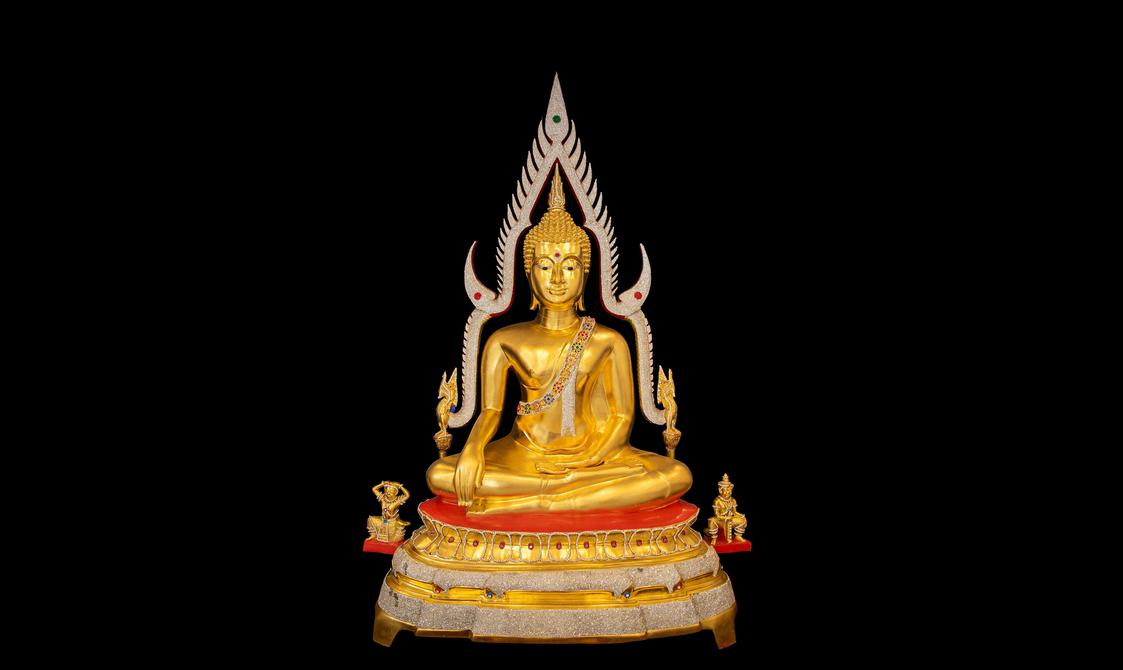
Buddha on loan from The Dhammapadipa Temple in Edinburgh.
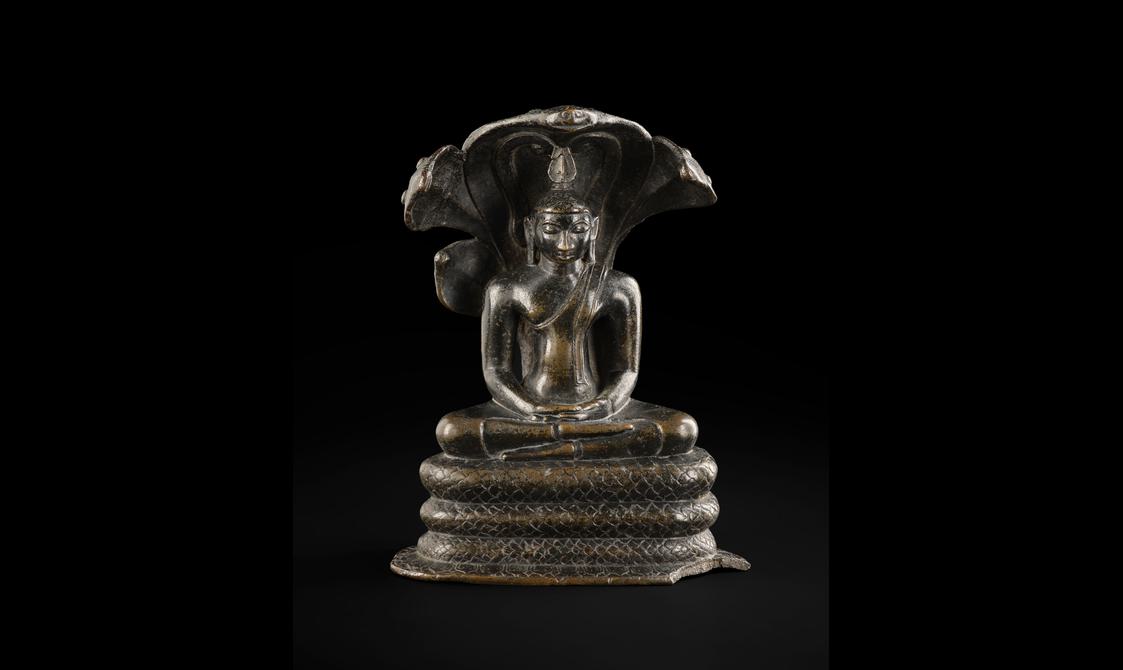
The Buddha continued to meditate for seven weeks after his awakening. In the sixth week there was a rainstorm and the nāga (serpent) king Muchalinda sheltered him with his hood. Depicted here in bronze, from Sri Lanka, 11th century. (A.1901.268.41)
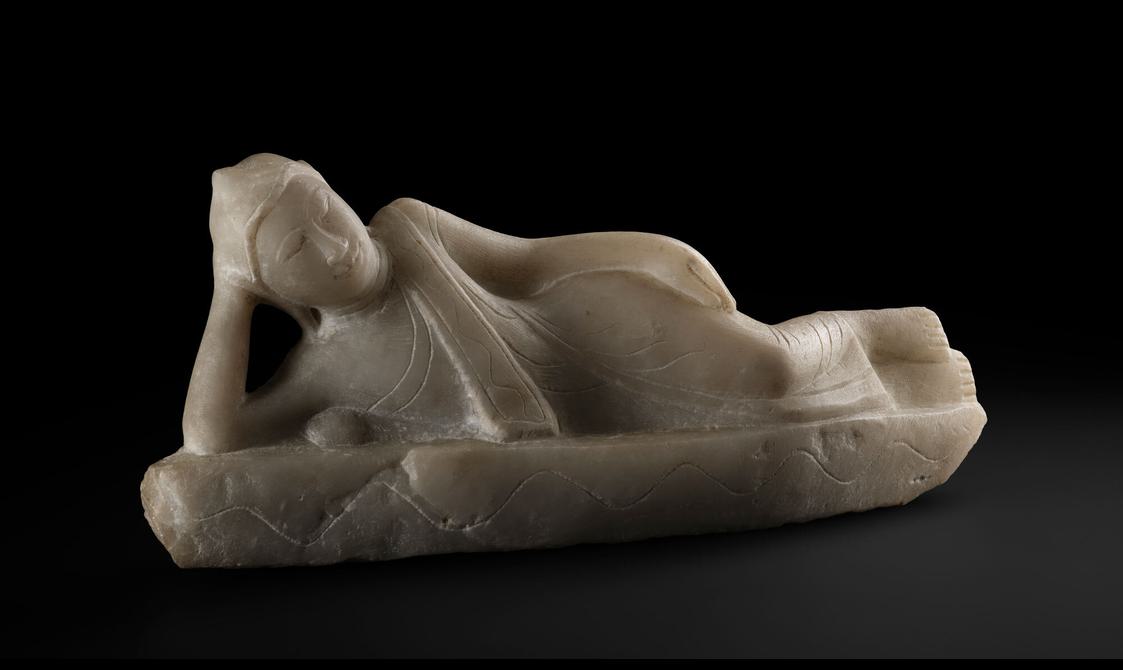
Reclining Buddha, a pose which is sometimes used to depict the death of Siddhattha Gotama. Sculptures made of alabaster became popular and were made in large quantities in mid-19th Myanmar. (A.1869.17)
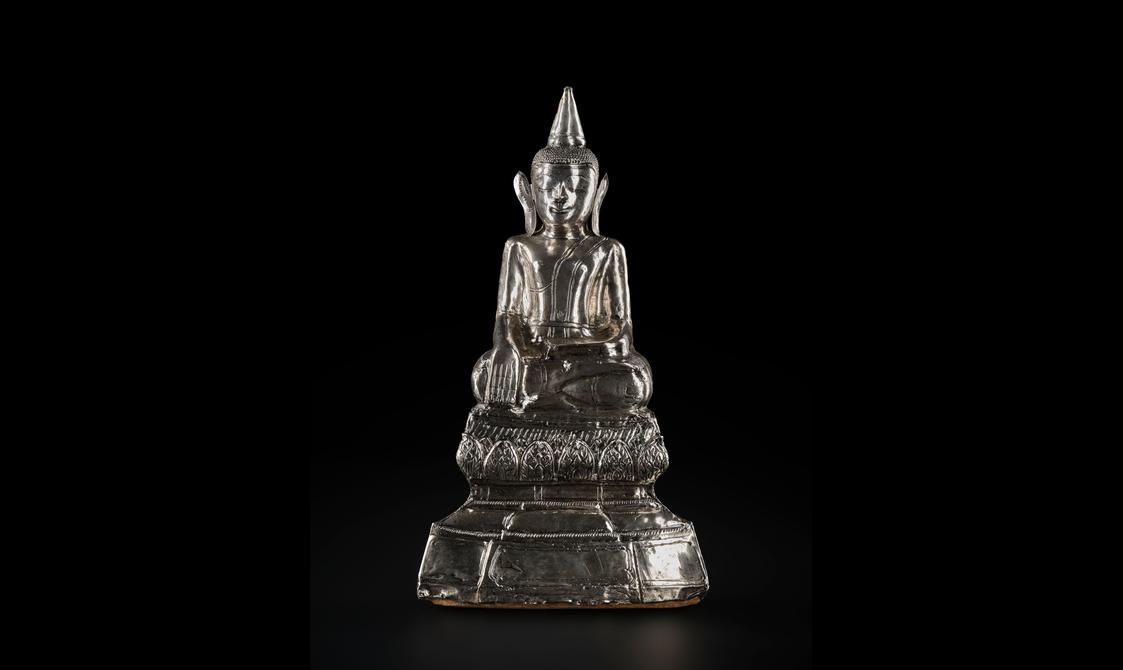
Silver Buddha seated in earth witness pose. A thin sheet of silver is wrapped around a clay core, giving the illusion of a more expensive product. The more valuable the offering, the greater the puñña (merit or virtue) accrued. Myanmar, 18th-19th century. (A.1911.478)
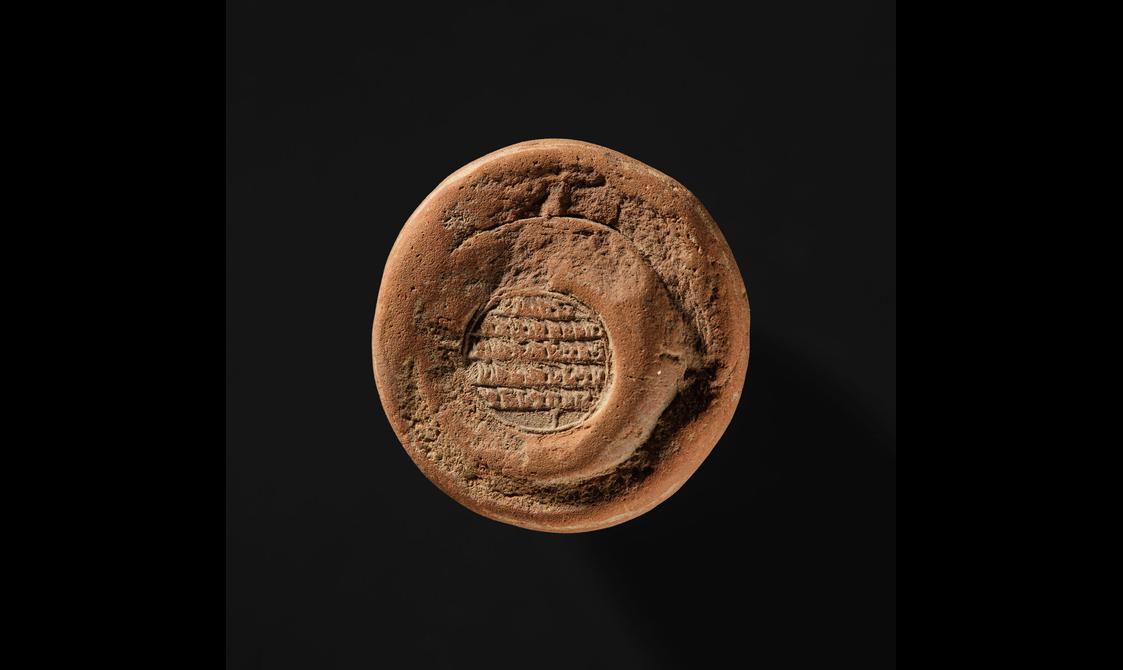
Small clay stūpa (reliquary), broken open to reveal an inscription inside. The Buddha’s words or teachings are also considered a relic. India, c12th century. (A.1934.31)
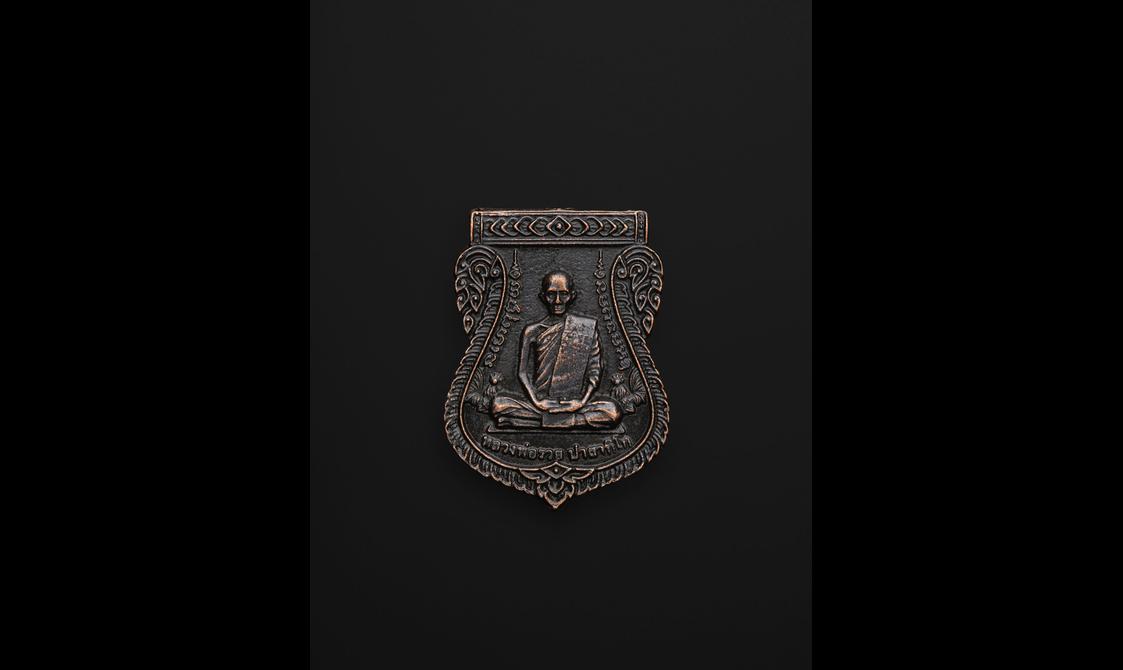
Amulet commissioned by Venerable Ruay Pasathiko to raise money for the construction of a new stūpa (reliquary). Tako Temple, Phra Nakhon Si Ayutthaya Province, Thailand, c2014. (V.2023.94)
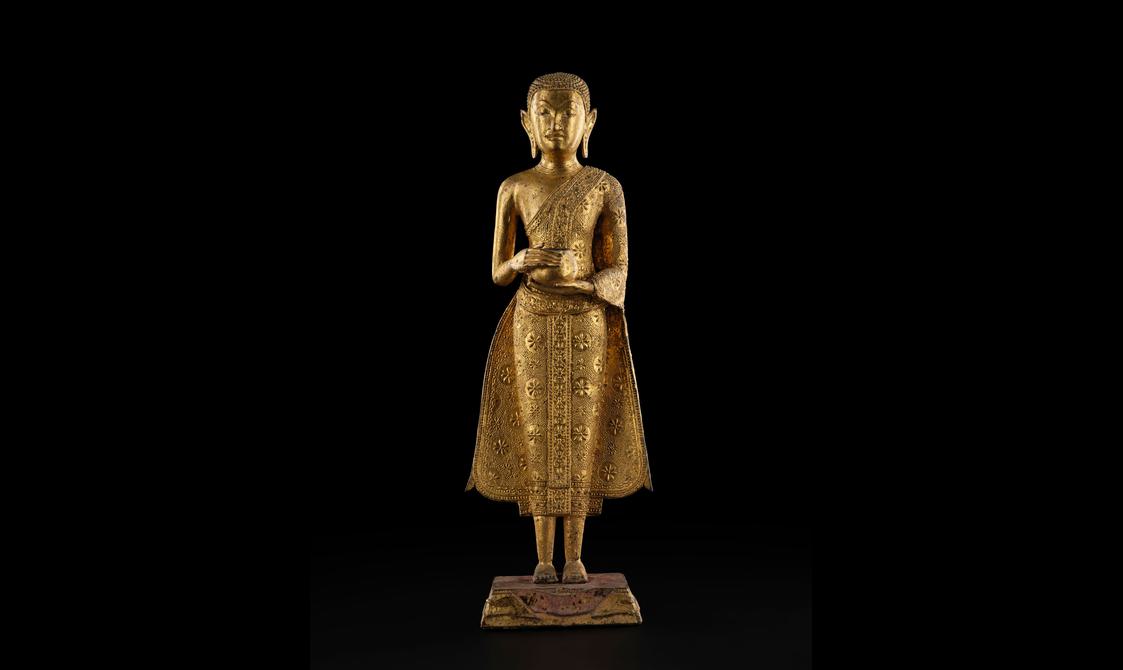
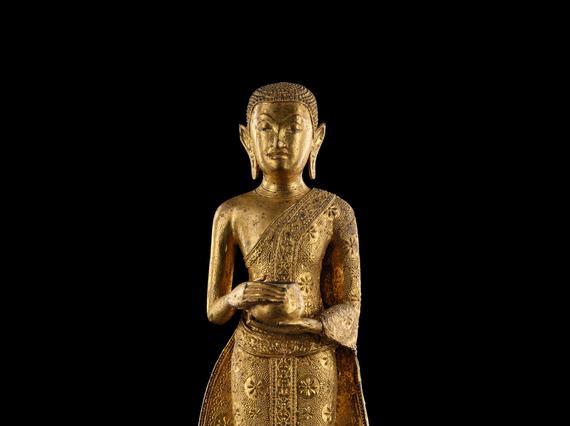
The Buddha holding an alms bowl, one of several different poses associated with the days of the week. This one is associated with a Wednesday and is inscribed on the base with the donor’s name. Bangkok, Thailand, 19th century. (A.1975.148)
You might also like
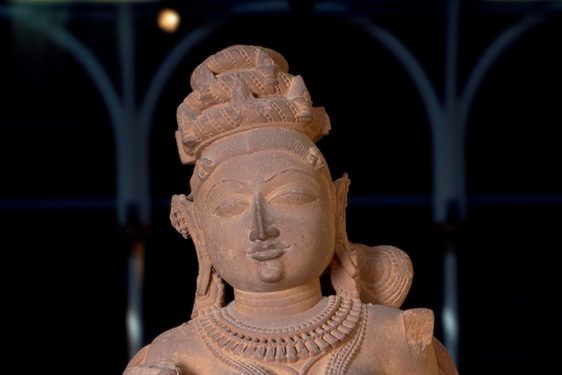
Uncovering the meaning behind the beautiful Surasundari stone sculpture
History and cultures
Written by Members of the Networking Key Services groupDemi-gods or Yakshinis {यक्षिणी (female of यक्ष)}At the museum we saw beautiful examples of artwork made from sandstone that have been prevalent in India since ancient times (circa 3200 BC). It was a popular building material at that time…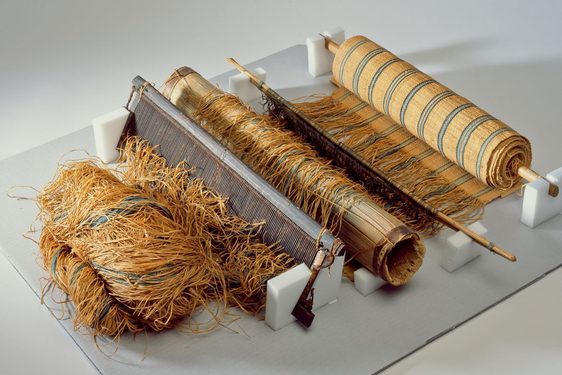
The ancient craft of barkcloth across the world
Fashion and textiles, History and cultures
Barkcloth is a type of natural cloth made by stripping, soaking, and beating or weaving lengths of the inner bark from trees such as paper mulberry, ficus, and elm. It is produced in countries located along a tropical 'barkcloth belt'.…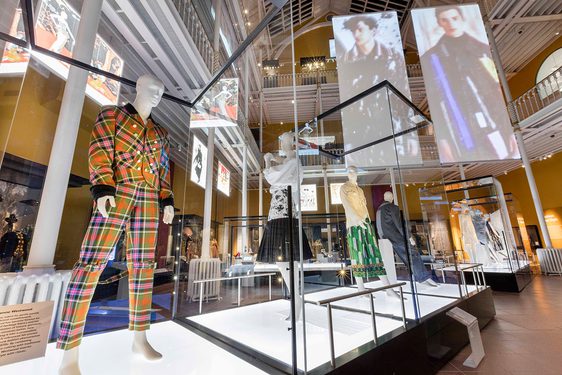
Developing new mannequins for our fashion displays
Fashion and textiles
Written by Georgina RipleyOur displays are evolving to reflect different bodies and to tell new stories. Find out more about our process and where we plan to go from here.