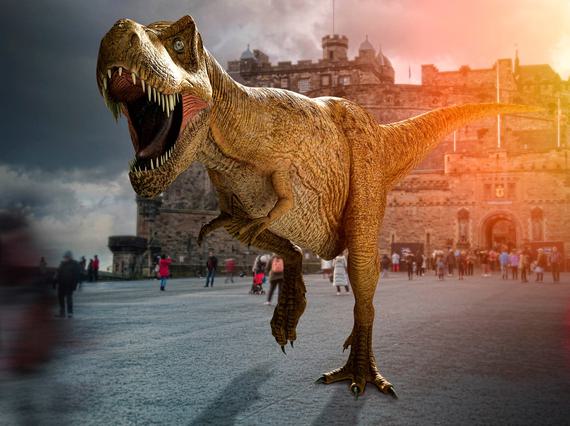
About Tyrannosaurs
Tyrannosaurs explored the most feared and revered of all dinosaurs, bringing the latest palaeontological discoveries to life and challenging preconceptions about these ferocious predators.
While the most famous of the species is the mighty T. rex, tyrannosaurs came in all shapes and sizes, and their history extends over 100 million years. The exhibition featured extremely rare fossil specimens, cast skeletons – including one of ‘Scotty’, one of the largest and most complete T. rex skeletons in the world – and incredible models of feathered dinosaurs. Visitors explored the diversity of tyrannosaur skulls and found out what variations in structure can tell us about different hunting and feeding strategies.
Tyrannosaurs used cutting-edge technology, including hands-on and multimedia experiences and an interactive augmented reality experience where visitors could play with life-sized dinosaurs in the gallery.
Despite their final demise during one of Earth’s biggest mass extinction events, tyrannosaurs live on both in popular imagination and even through to their present-day bird cousins.
Tyrannosaur research is one of the hottest areas in palaeontology – several species have been described in just the past decade – and exciting new discoveries are regularly re-drawing the family tree.
'Jurassic thrills which will have kids gasping in the greatest amazement, and which are bound to make it a guaranteed hit.'
The List
'Fascinating'
Herald Scotland
'Roarsome, jawsome, awesome!'
Primary Times
Inside the exhibition
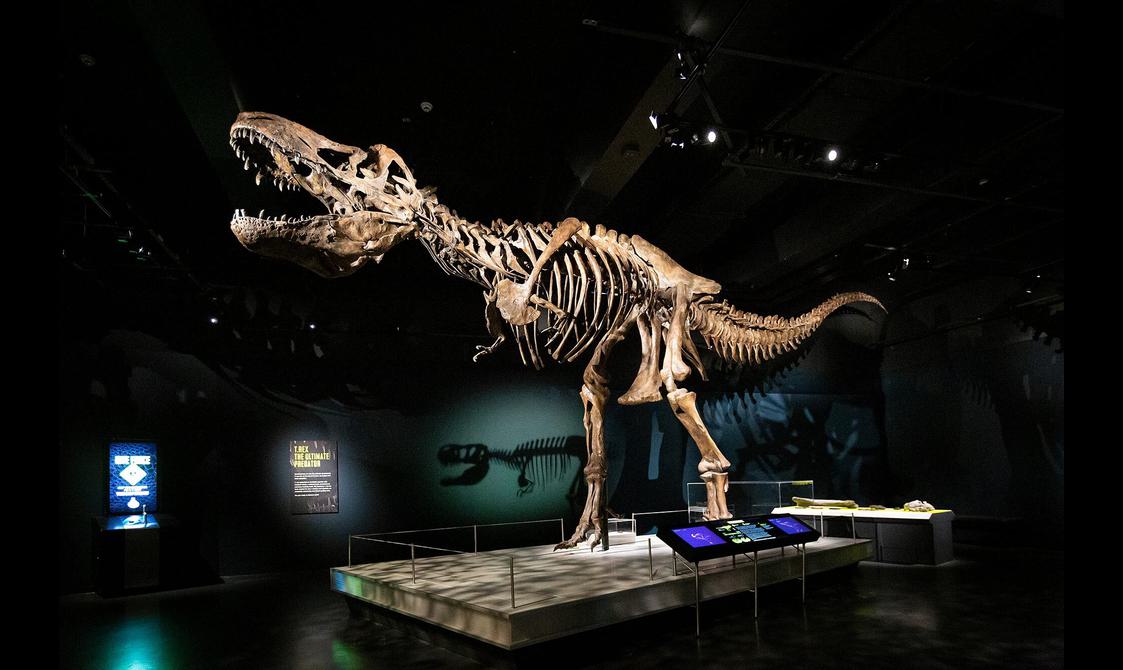
T.rex on display in the Tyrannosaurs exhibition
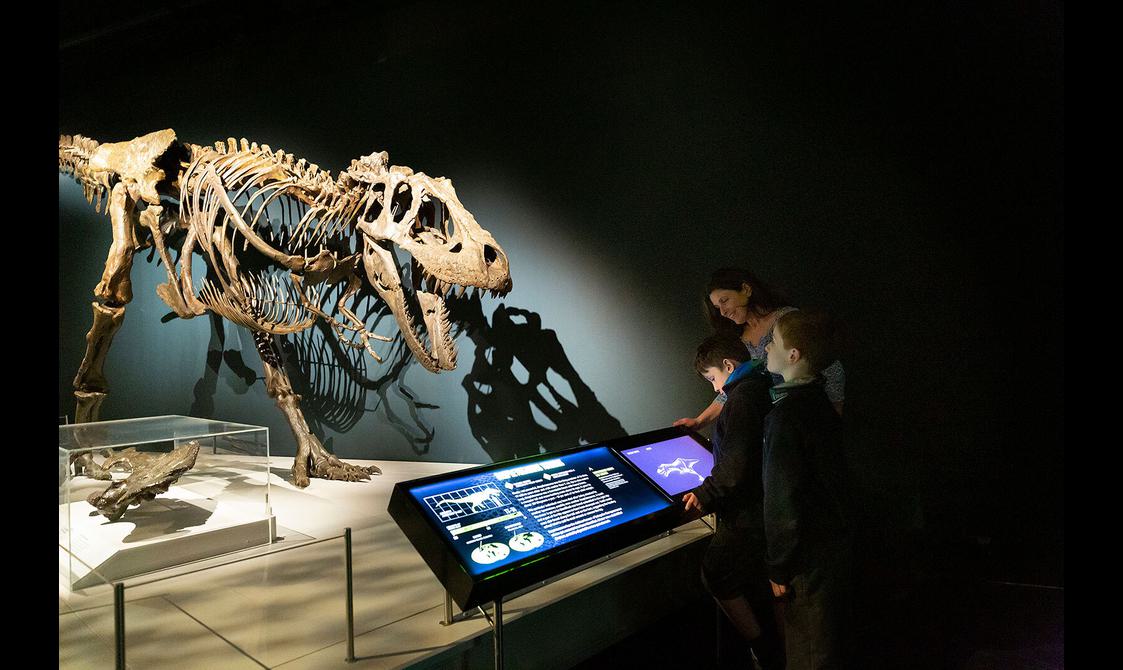
T.rex in the Tyrannosaurs exhibition, 2020
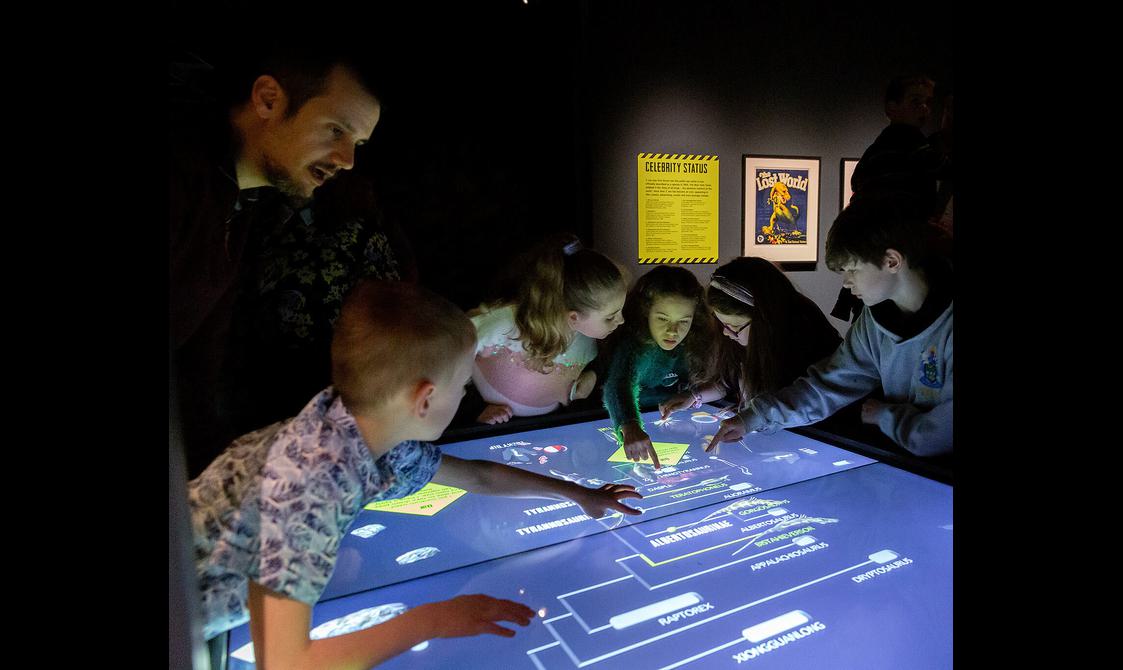
Interactive touchscreen in the Tyrannosaurs exhibition, 2020
Behind the scenes
Take a look behind the scenes and watch the construction of Scotty the T. rex.
Visitor views
Created by the Australian Museum and toured internationally by Flying Fish

Supported by players of People’s Postcode Lottery

You might also like
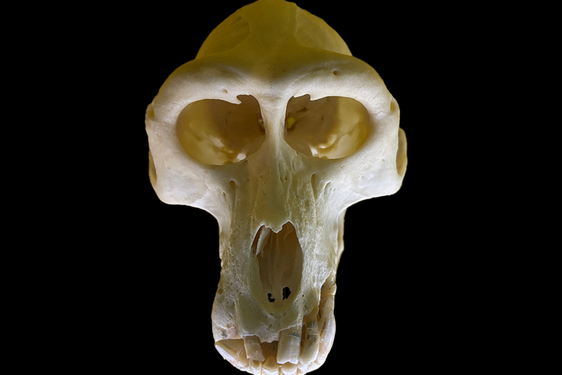
6 world-class type specimens in our stores
Natural world
Written by Professor Andrew Kitchener, Dr Rachel Walcott & Dr Andrew RossType specimens are among the most important objects in natural science collections. They are the specimens on which the scientific names of species of animals, plants or minerals are based. Animals and plants are named using the Linnaean…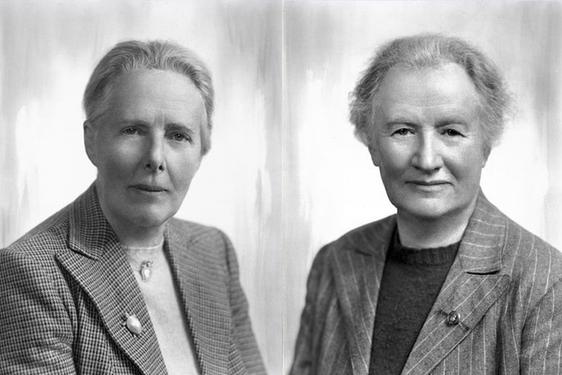
The pioneering women of ornithology
Natural world, Scotland
Known as ‘the good ladies' of bird collecting, Dr Evelyn Baxter (1879–1959) and Leonora Rintoul (1878–1953) were born one year, and just a few miles apart, in Fife. Together they devoted their lives to collecting and studying the birds of…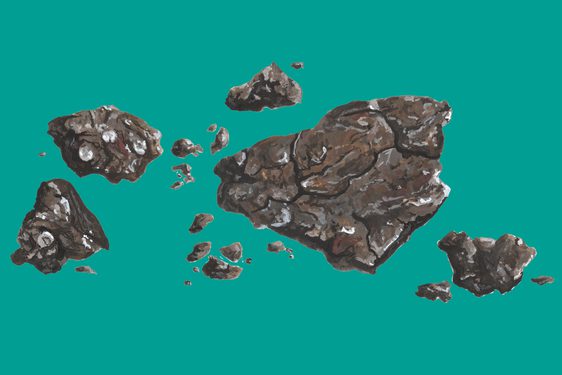
The mineral pentlandite and its Scottish connections
Natural world
The mineral Pentlandite could be named after several things with a Scottish connection, but which one? Or is it something else entirely?Pentlandite is an iron nickel sulphide with the chemical formula (Fe,Ni)₉S₈. It is found in nature as…