Search our website
Key in a search term below to search our website.
Key in a search term below to search our website.
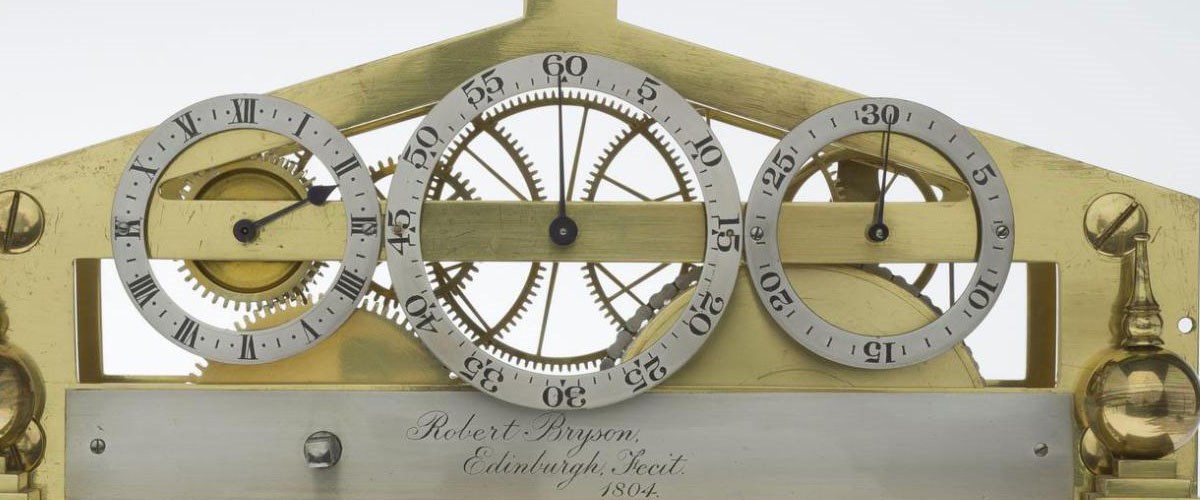
Discover a fascinating clock that kept time in a whole new way and find out how our assistant conservator of technology has strived to keep it accurate.
Date
1804
Made by
Robert Bryson
Made in
Edinburgh, Scotland
Made from
Brass
Dimensions
Height 380mm, width 280mm, depth 152mm
Museum reference
On display
Earth in Space, Level 1, National Museum of Scotland
Did you know?
Among other things, Sir William Congreve also invented a special paper for printing bank notes that couldn’t be forged and an unsuccessful perpetual motion machine.
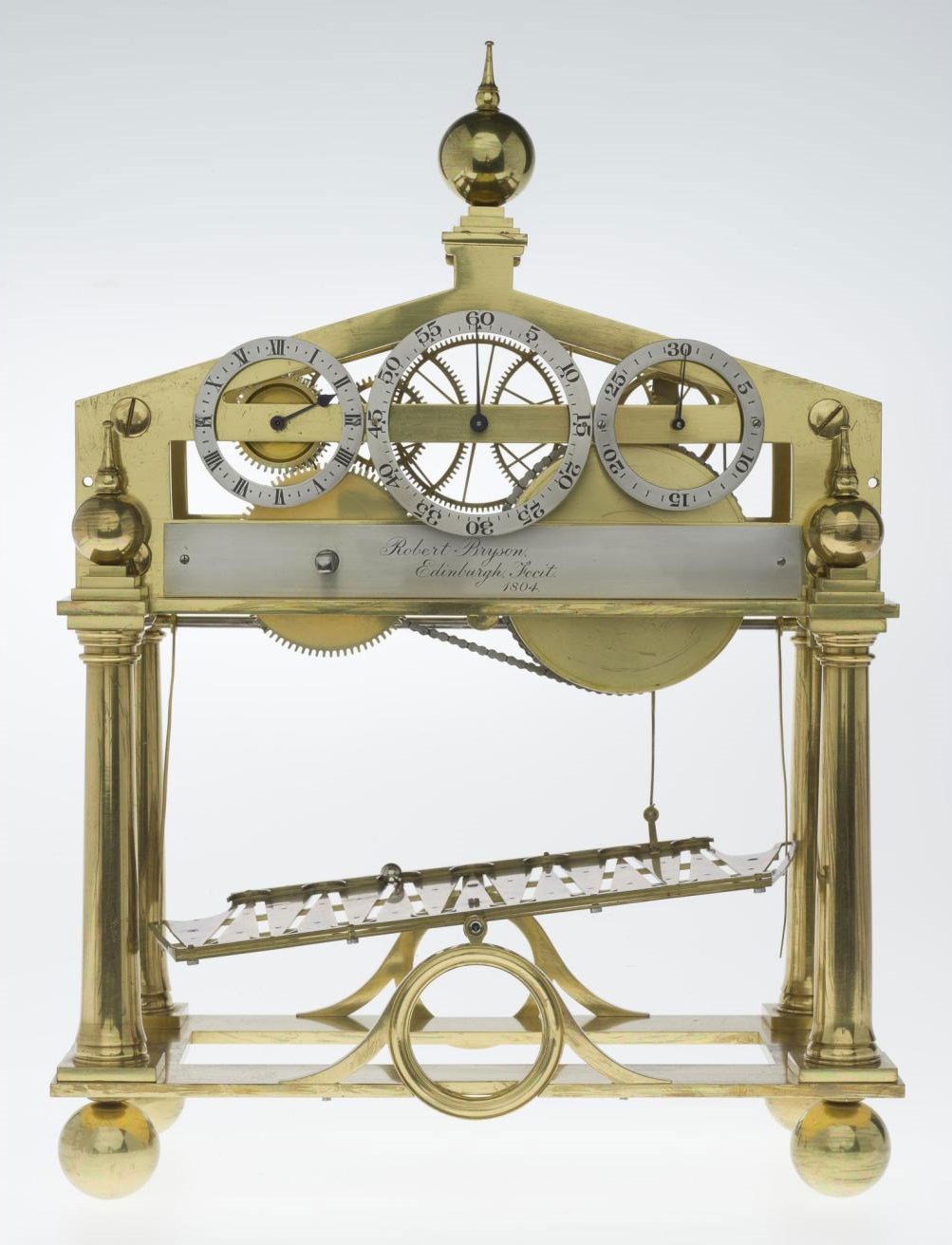
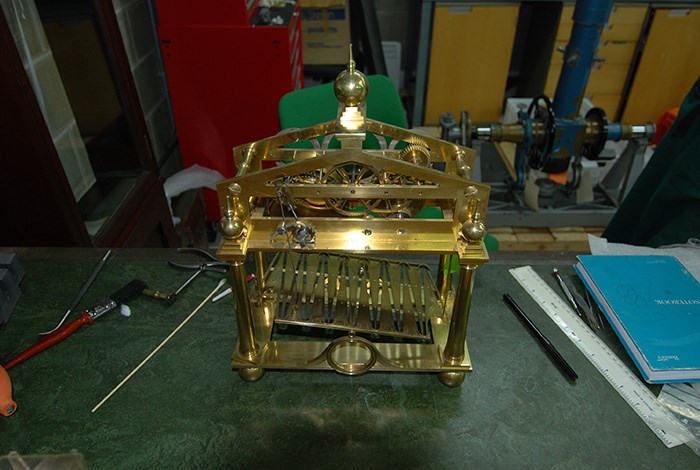
This mechanical clock was built in 1804. At this period, most clocks kept time through the regular swinging of a pendulum. However, instead of a pendulum, this clock uses a rolling ball to provide the timekeeping mechanism.
This idea sounds good in theory, but unfortunately, it doesn't work all that well in practice. Ideally, the ball would always take exactly the same amount of time to roll down the track, but it doesn't. Any trace of dust will get in the way of the ball rolling and slow it down – and even under a glass dome or in a case there is dust. In addition, the metal expands or contracts with changes in temperature, altering the length of the track and size of the ball.
Sir William Congreve (1772-1828) claimed the credit for inventing this rolling ball clock and took out a patent for the design in 1808. Interestingly, however, our clock was made by the Edinburgh clock maker Robert Bryson four years earlier, in 1804.
Most famous for designing the Congreve rocket, which was used during the Napoleonic wars and the American War of Independence, Congreve was a prolific inventor.
“A most complicated and troublesome machine…
This was how staff at Buckingham Palace described a rolling ball clock they were tasked with keeping to time in 1837.
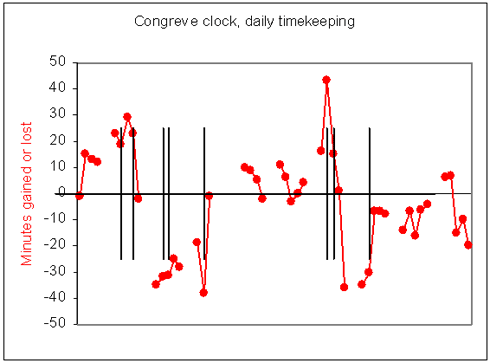
Assistant conservator of technology Darren Cox has been wrestling with our Congreve clock to try to persuade it to keep time reliably. He has reset it to the correct time every working day for two months.
The chart below shows how much time it lost or gained in that period – up to 45 minutes a day! (The vertical lines indicate adjustments to the clock's time keeping.)
Darren explains:
"The Bryson rolling ball clock is designed to last two weeks after one winding. The spring on this clock is a little weak with age, not enough to affect any other clock but a rolling ball clock needs so much energy to keep it going that on occasions it won’t last the two weeks.
"The clock and the tilting table (front and back) need to be totally level. I have found that, even with the temporary cover I have made for it to keep the dust out, the metal ball needs to be polished at least once every two weeks to remove debris.
"However, the biggest task in getting this clock to work was adjusting all the levers and the table that had been bent and twisted previously. It takes very little to stop the ball from rolling and if it doesn’t roll fast enough it will not be able to unlock the train of wheels and lift the table.
"The only other rolling ball clock I know well kept time to about 15 minutes a day in a very stable environment. Our engineering workshop is far from stable and this clock is very susceptible to temperature and humidity. This and the fact that I have not been on hand regularly to attend to the clock’s every need is reflected in the time keeping I recorded. I noted yesterday that the clock was five minutes slow; this morning it was two hours slow!
"I think if the conditions are good enough we should be able to get accuracy for this clock, give or take about 15 minutes a day, but unless the case it’s kept in is perfect at keeping the dust out, the time keeping will be a lot wilder."
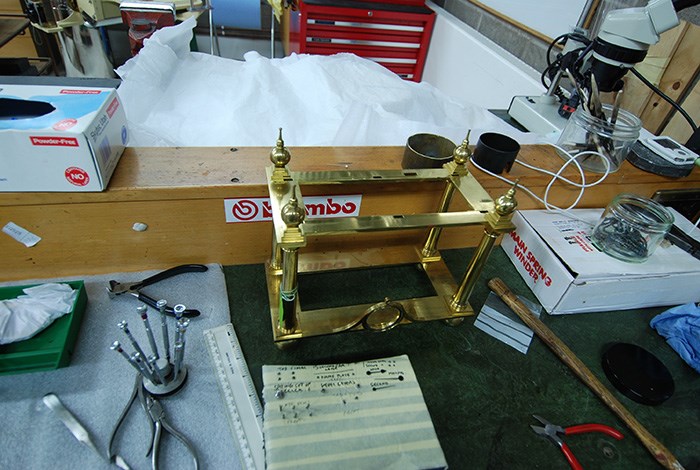
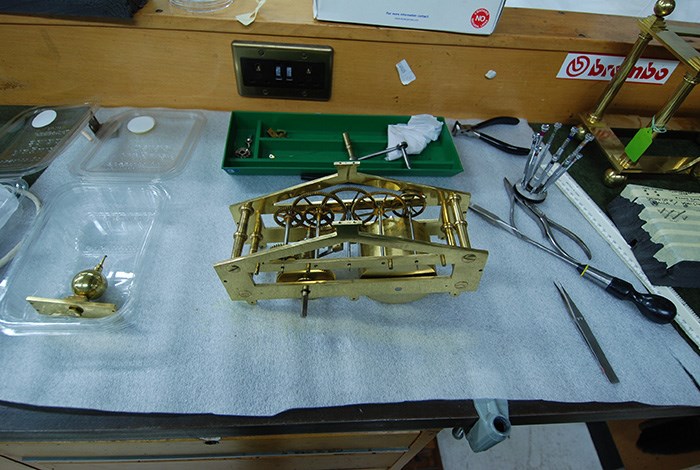
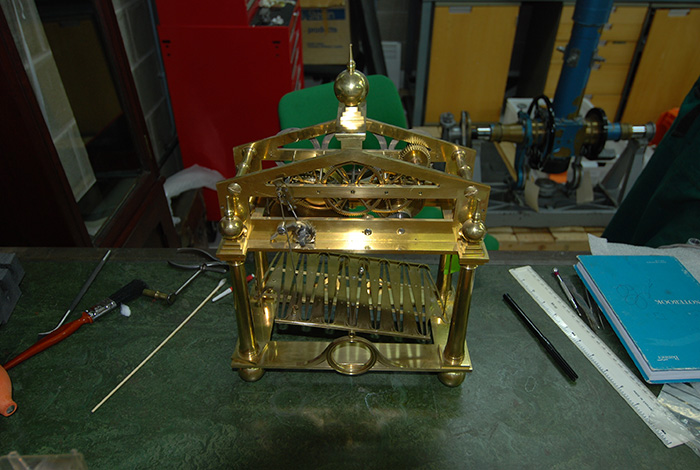
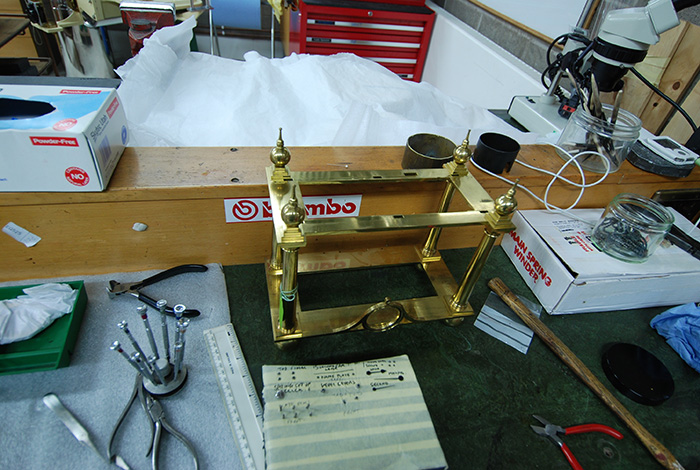
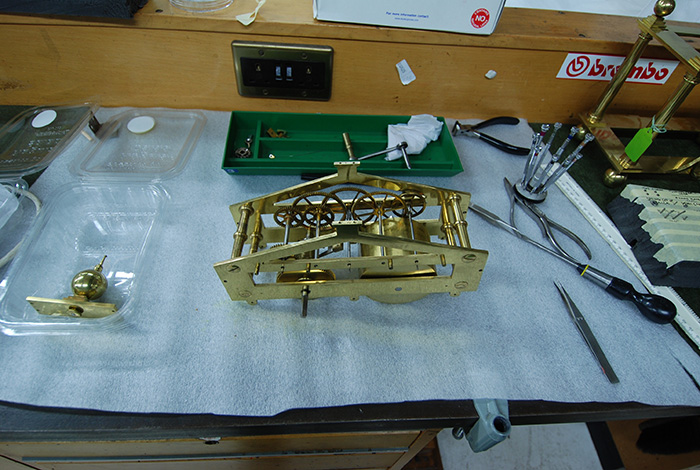
The slideshow below shows the clock in the Conservation workshop.
The Congreve clock is displayed in the Earth in Space gallery in the National Museum of Scotland. But don’t rely on it to tell you the exact time – we will only be resetting it once a week, so it may lose or gain by hours!