Search our website
Key in a search term below to search our website.
Key in a search term below to search our website.
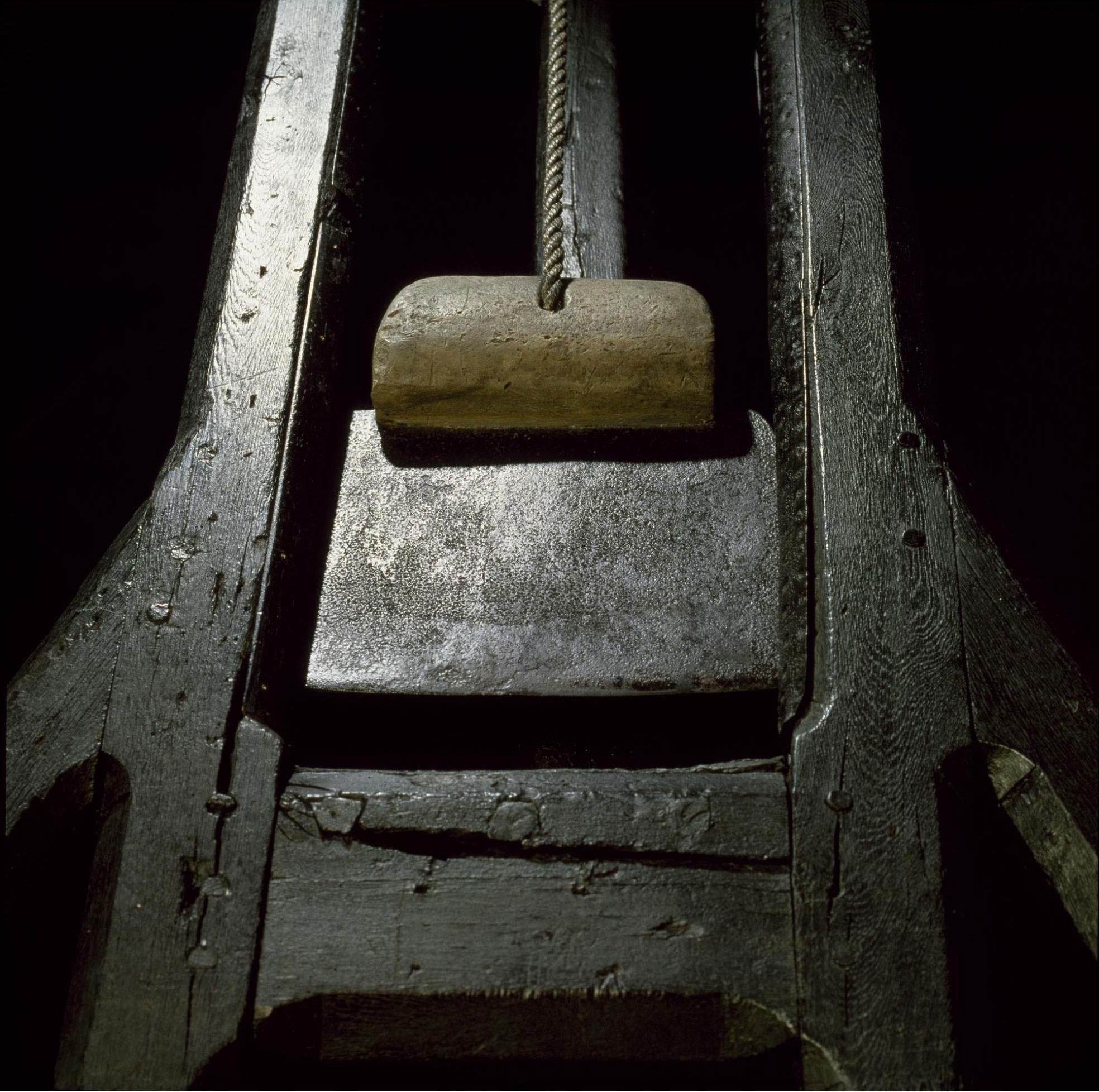
You might associate beheading machines with the guillotine, made famous during the French Revolution. But the Scots invented another solution for mechanised beheading over 200 years earlier: The Maiden. You can see this fearsome object on permanent display in the Kingdom of the Scots gallery at the National Museum of Scotland.
Date:
Used between 1564-1710
Made in:
Edinburgh, Scotland
Made from:
Primarily made of oak with a lead weight and iron blade
Dimensions:
Height 4m x length 3m x width 3m
Acquired:
Gifted by the Lord Provost and Magistrates of Edinburgh
Museum reference:
On display:
Kingdom of the Scots, Level 1, National Museum of Scotland
Did you know?
During the 145 years it was used, the Maiden claimed over 150 victims.
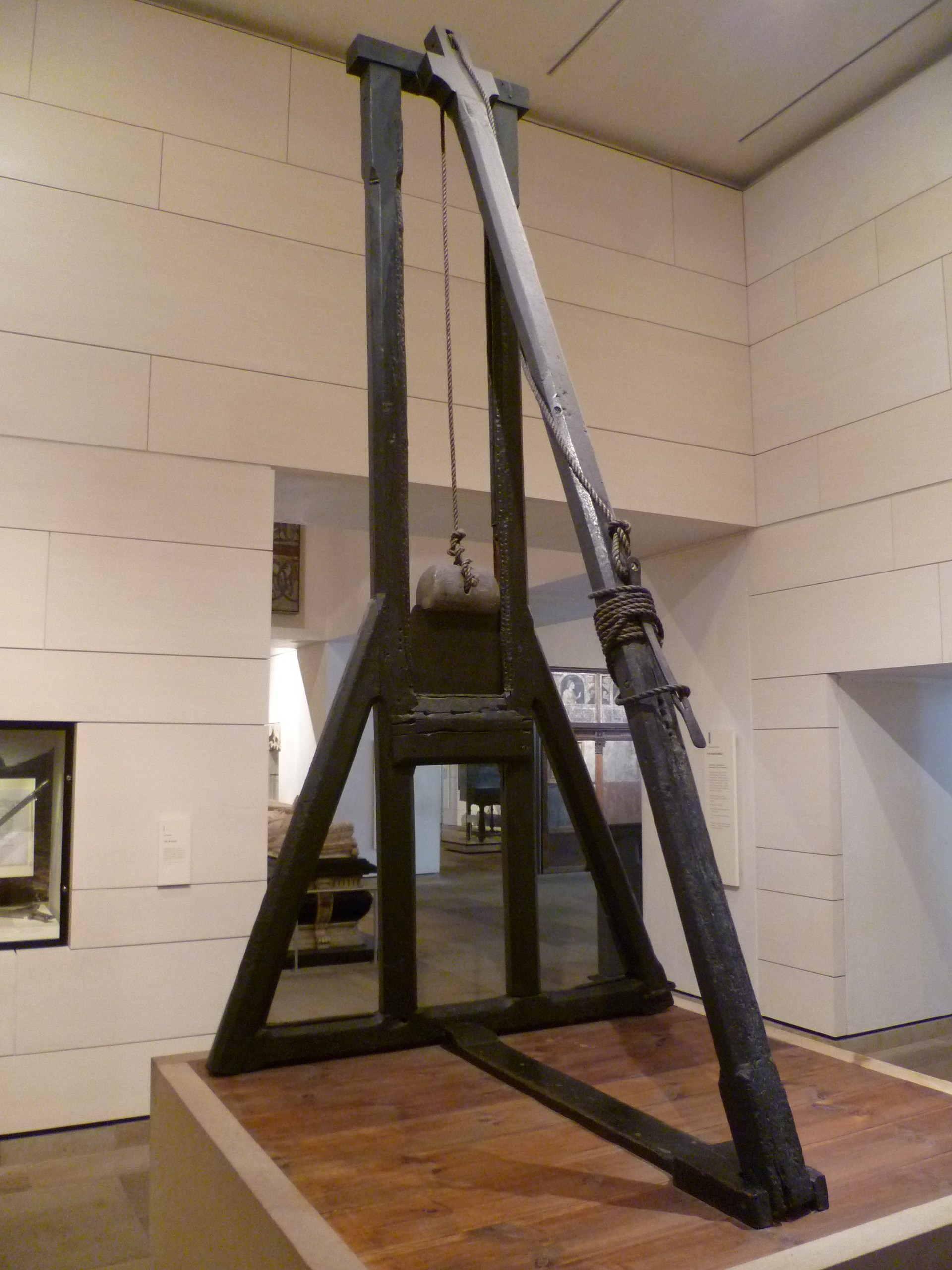
The Maiden. Image by Kim Traynor, CC BY-SA 3.0.
Between 1564 and 1710 the Maiden was used to publicly behead over 150 criminals and political opponents of the crown.
Before 1564, beheading was usually done by axe or sword in Scotland, but this could be messy. An executioner would sometimes need several attempts before he was able to successfully sever head from body. Beheading machines were more efficient in this respect, but they also must have made these executions look more modern and awe-inspiring to the public attending these spectacles.
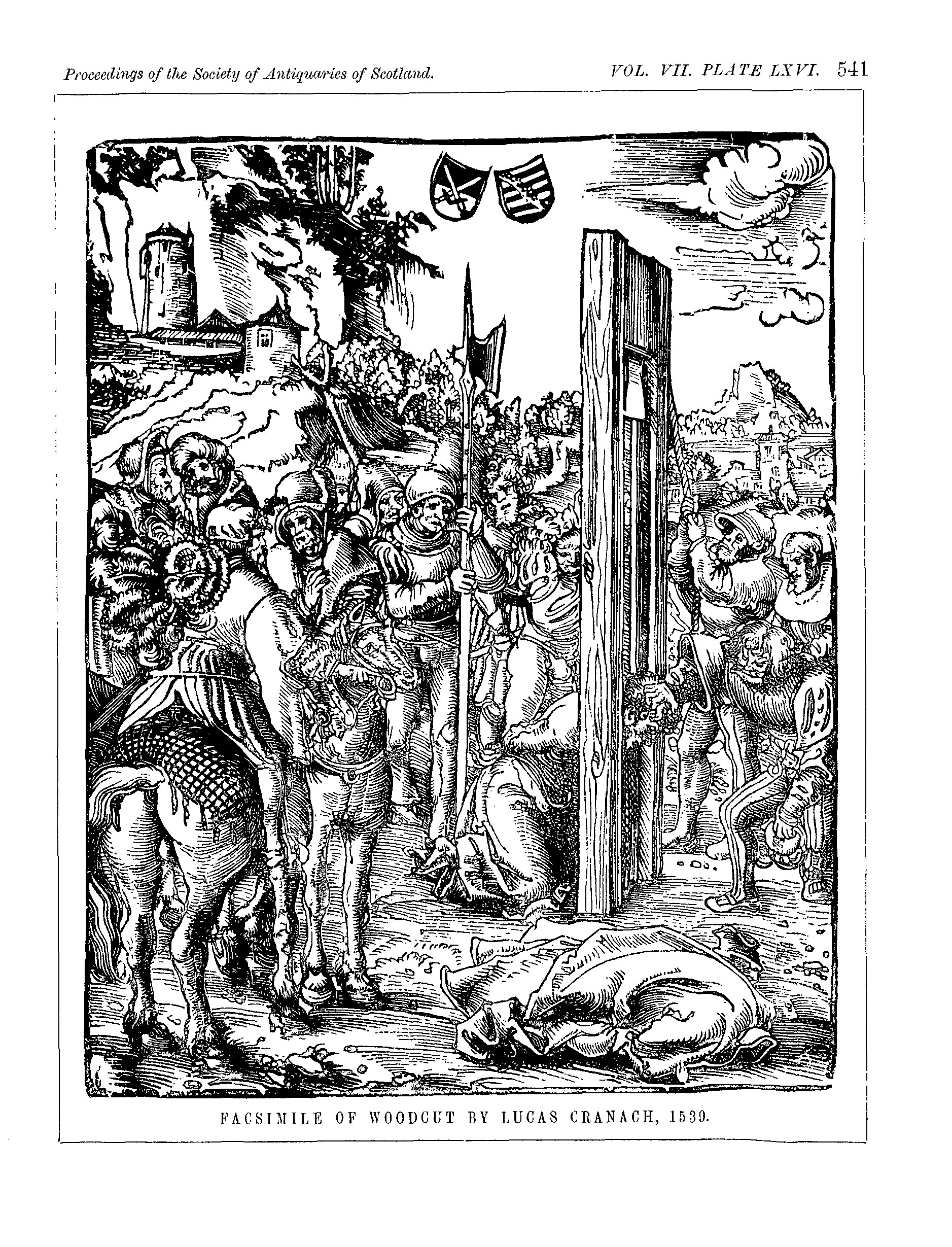
Illustration by Lucas Cranach, 1539, showing a German beheading machine.
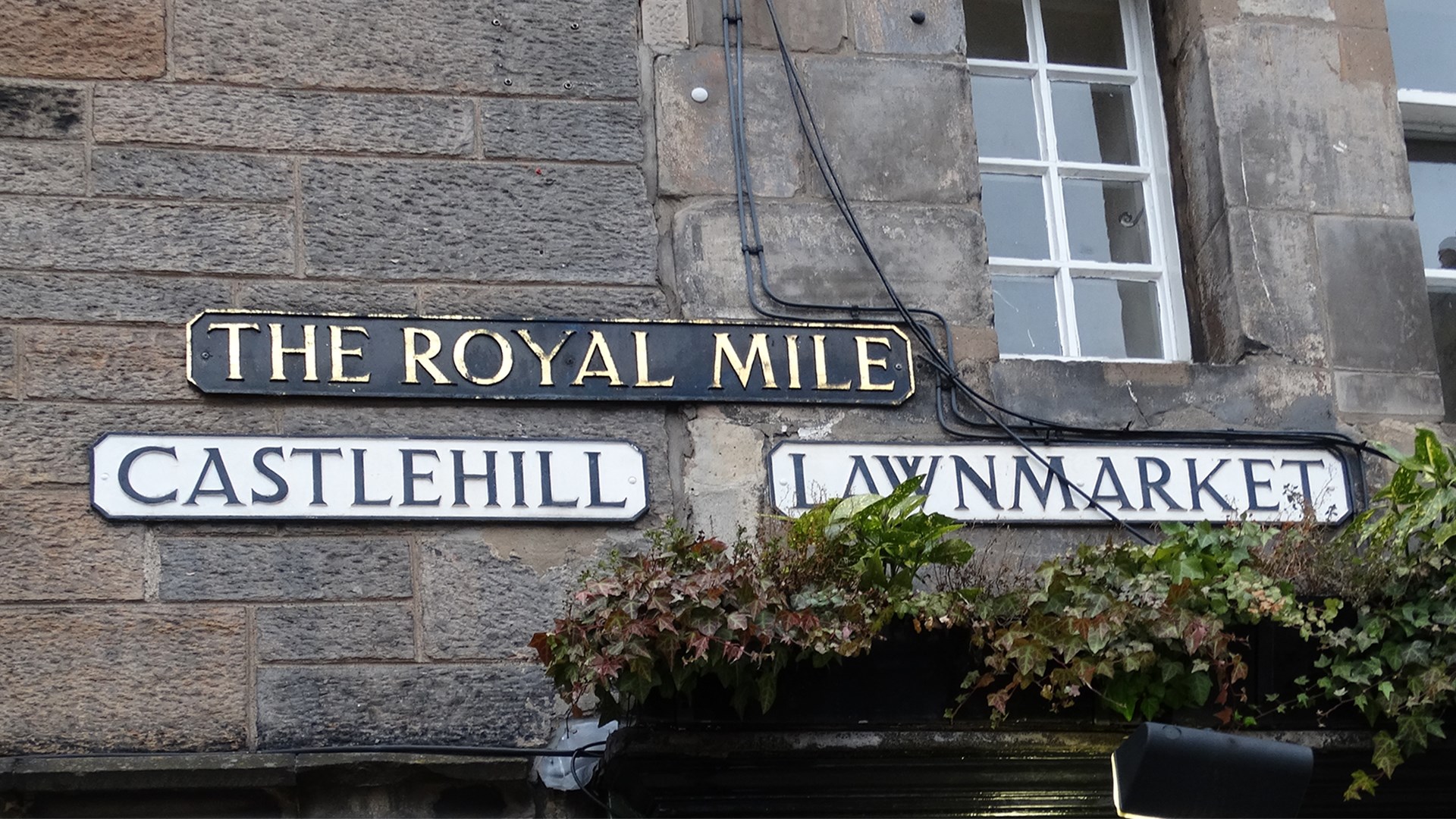
Present day street name sign for Castlehill / Lawnmarket in Edinburgh.
Executions took place in large open spaces. A platform was built for each execution so that people could see the Maiden more easily. Large crowds turned up to see others being punished for their crimes.
Executions using the Maiden are known to have taken place in Castlehill, Grassmarket and High Cross off the High Street in Edinburgh, just minutes from the site where the National Museum of Scotland now stands.
Video demonstrating the flatpack functionality of the Maiden beheading machine enabling it to be easily moved.
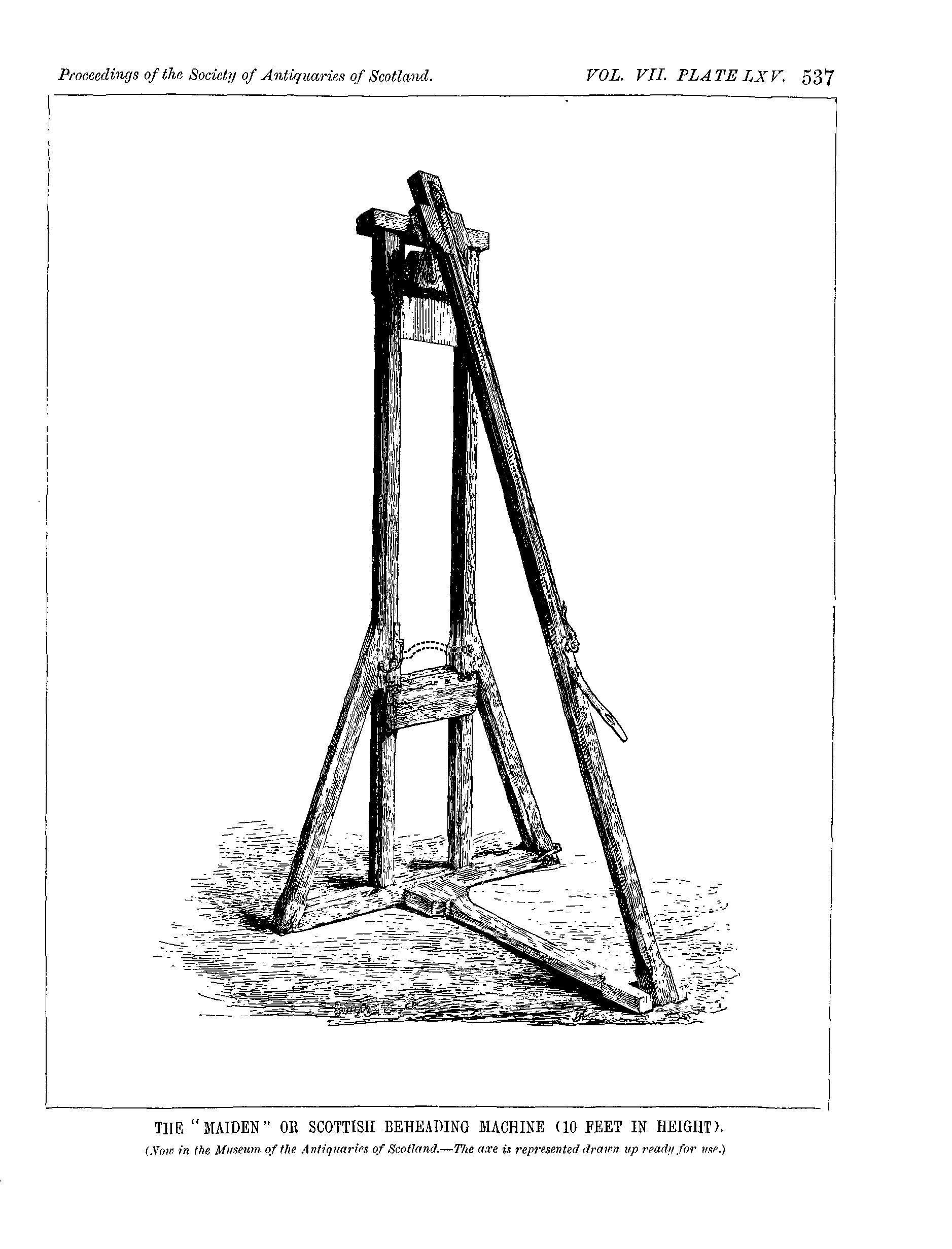
Source: Extracts from the Proceedings of the Society of Antiquaries of Scotland, Volume 7, 1866-68.
The condemned from all parts of Scotland were brought to Edinburgh to be executed. The records of the Judiciary Court of the time document various crimes that might result in a Maiden-aided beheading: these include murder, incest, stealing, treason, adultery, forgery and robbery.
Ironically, the person believed to have introduced the idea for a beheading machine to Scotland – James Douglas – was himself executed on 2 June 1581 by the Maiden. An extract from the records of the Scottish Judiciary at the time records his execution.
“1581. June 2. - James Earl of Morton - comprising the murder of King Henry (Darnley) in the year 1568. Cross. P.
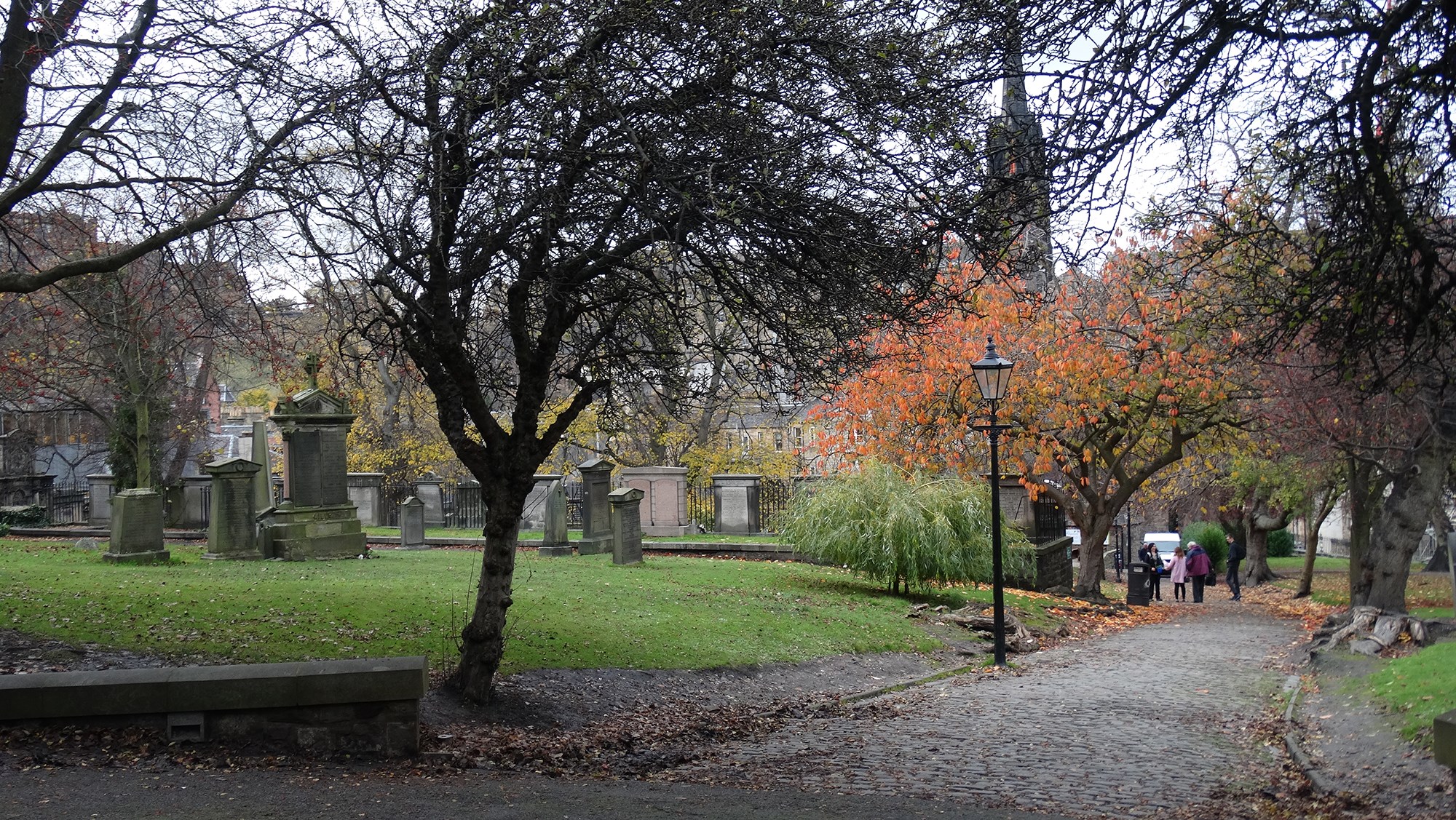
Present day Greyfriars Kirk yard, opposite the National Museum of Scotland.
James Douglas, 4th Earl of Morton, ruled Scotland from 1572 to 1578 during the minority of James VI. He worked hard to maintain a friendship with England, dealing ruthlessly with Mary, Queen of Scots' supporters.
He was implicated in the murder of Mary's second husband, Lord Darnley, but wasn’t arrested until 1580 – 13 years after Darnley's death. His trial took place at Edinburgh's Tolbooth on 1 June 1581. The jury consisted mainly of Morton's enemies, including Lord Oglivie, who had previously been imprisoned by Morton.
Unsurprisingly, Morton was found guilty and sentenced to be hanged. However, King James VI intervened and ordered execution by the Maiden.
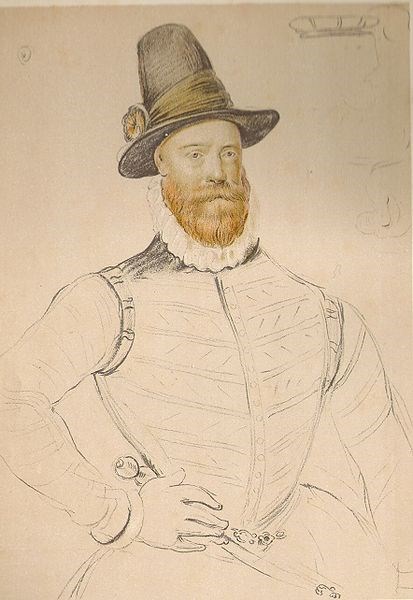
Above: James Douglas, 4th Earl of Morton.
At 16:00 the following day, Morton reached his place of execution at the Mercat Cross, Edinburgh. A great crowd gathered to see 'justice' being done. Having mounted the platform, Morton swore his innocence saying,
“King shall lose a guid servant this day.
After a short prayer, the minister of St Giles Cathedral, Morton placed his head on the block. An iron bar was pulled down across the back of his neck to stop him lifting his head. Morton cried out,
“Lord Jesus receive my soul!
Like most political prisoners, Morton's head was put on public display at the as a warning to others. His body was buried in the local churchyard of Greyfriars, 300 metres from where the execution took place.
As the Maiden was used for over 100 years, it required periodic maintenance to keep it in good working order. There were costs associated with this maintenance and here are some extracts from the records of the Treasurer, Jhoun Watsoun, with details.
Upright view of the Maiden beheading machine at National Museum of Scotland.
Source: Extracts from the Proceedings of the Society of Antiquaries of Scotland, Volume 7, 1866-68.
"From the Discharge of the compte of Mr Robert Glen, Thesaurer of the Burgh of Edinburgh begynnand at Mychaelmas in the zeir of God 1564, and ended at Mychaelmas in the zeir of God 1564."
"the Compte of the Heding Aix maid the tyme if the comptaris office, as efter followis, at command of the Provest, Baillies, & Counsale."
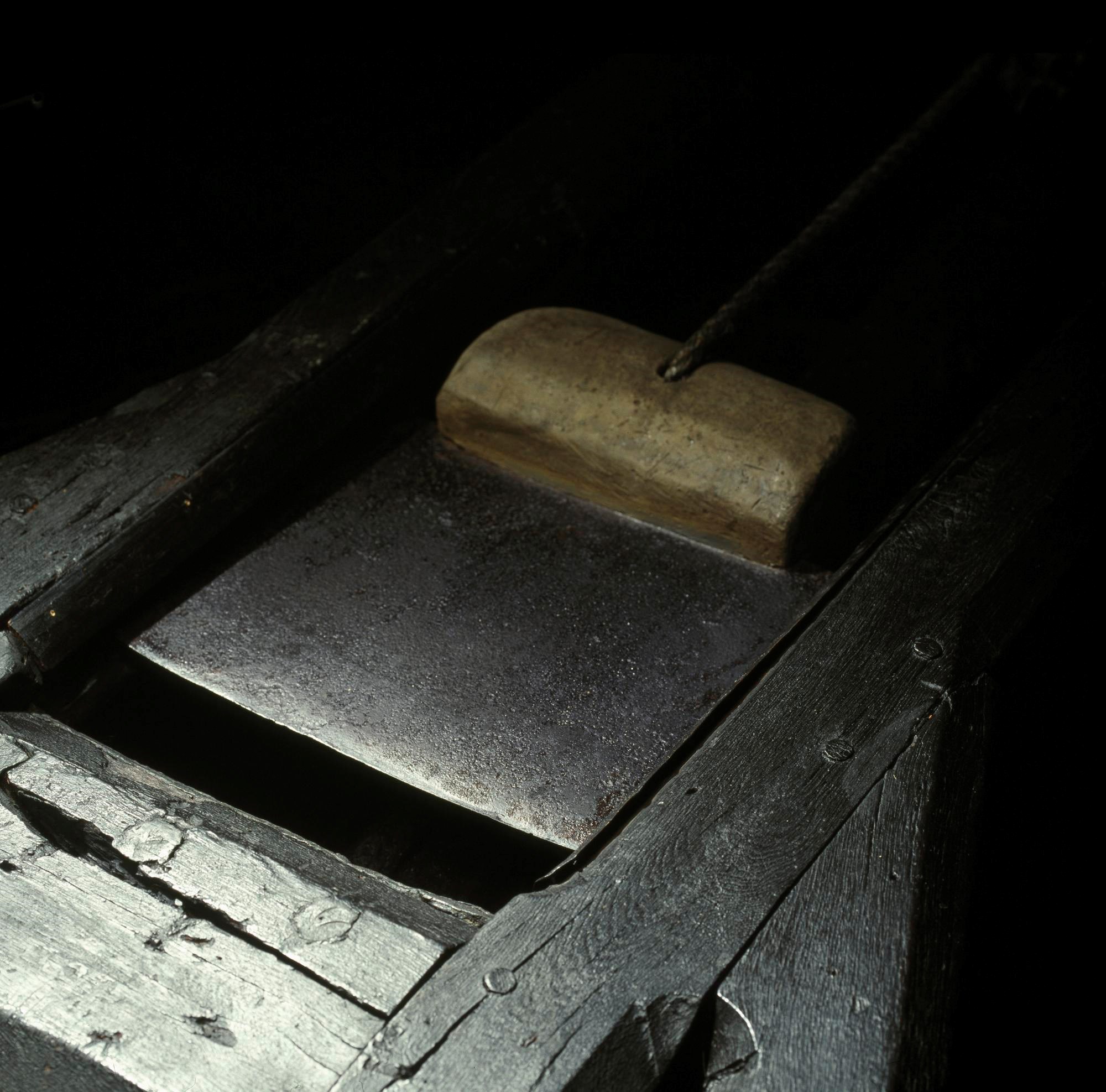
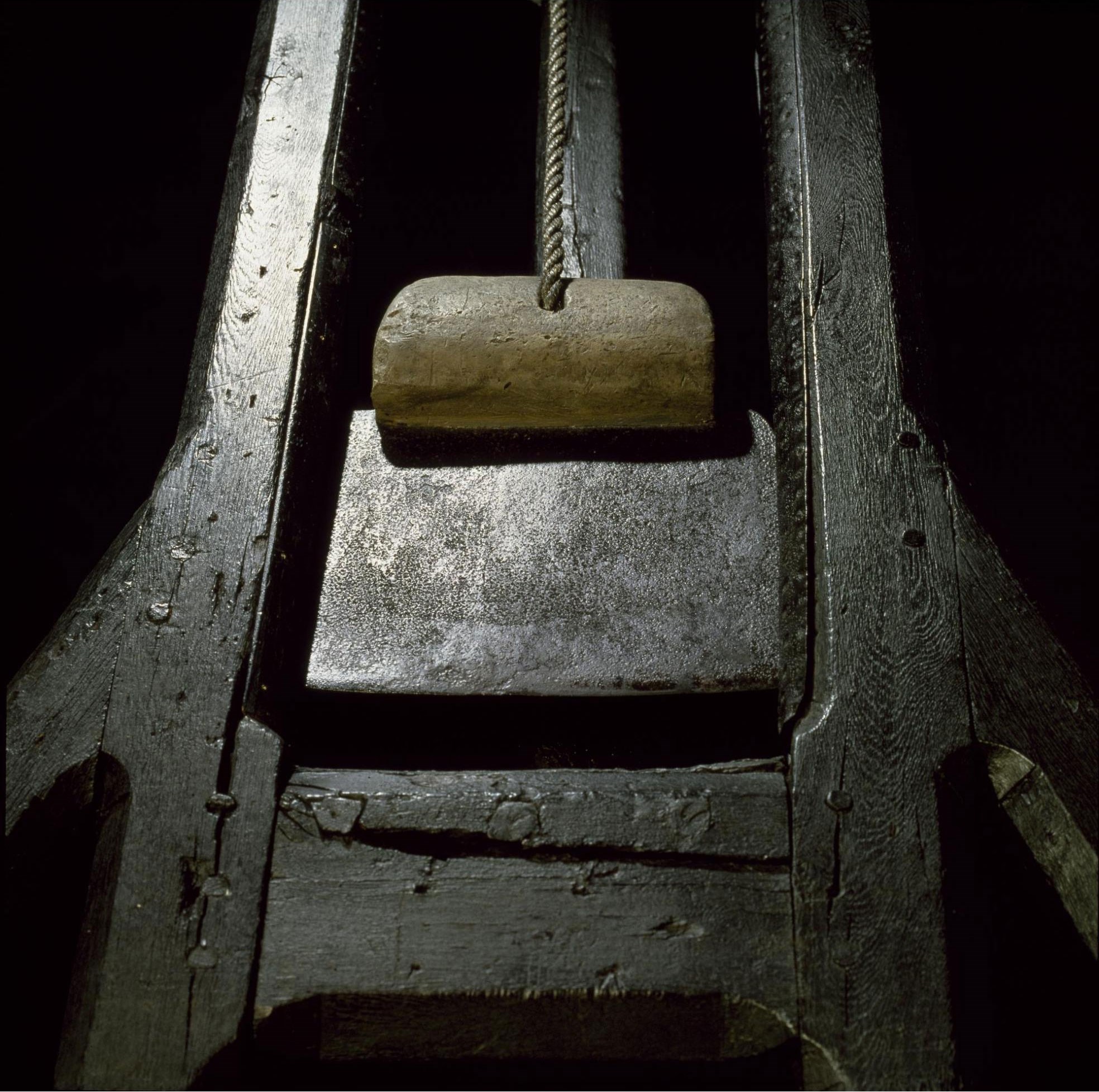
Close up of the blade of the Maiden.
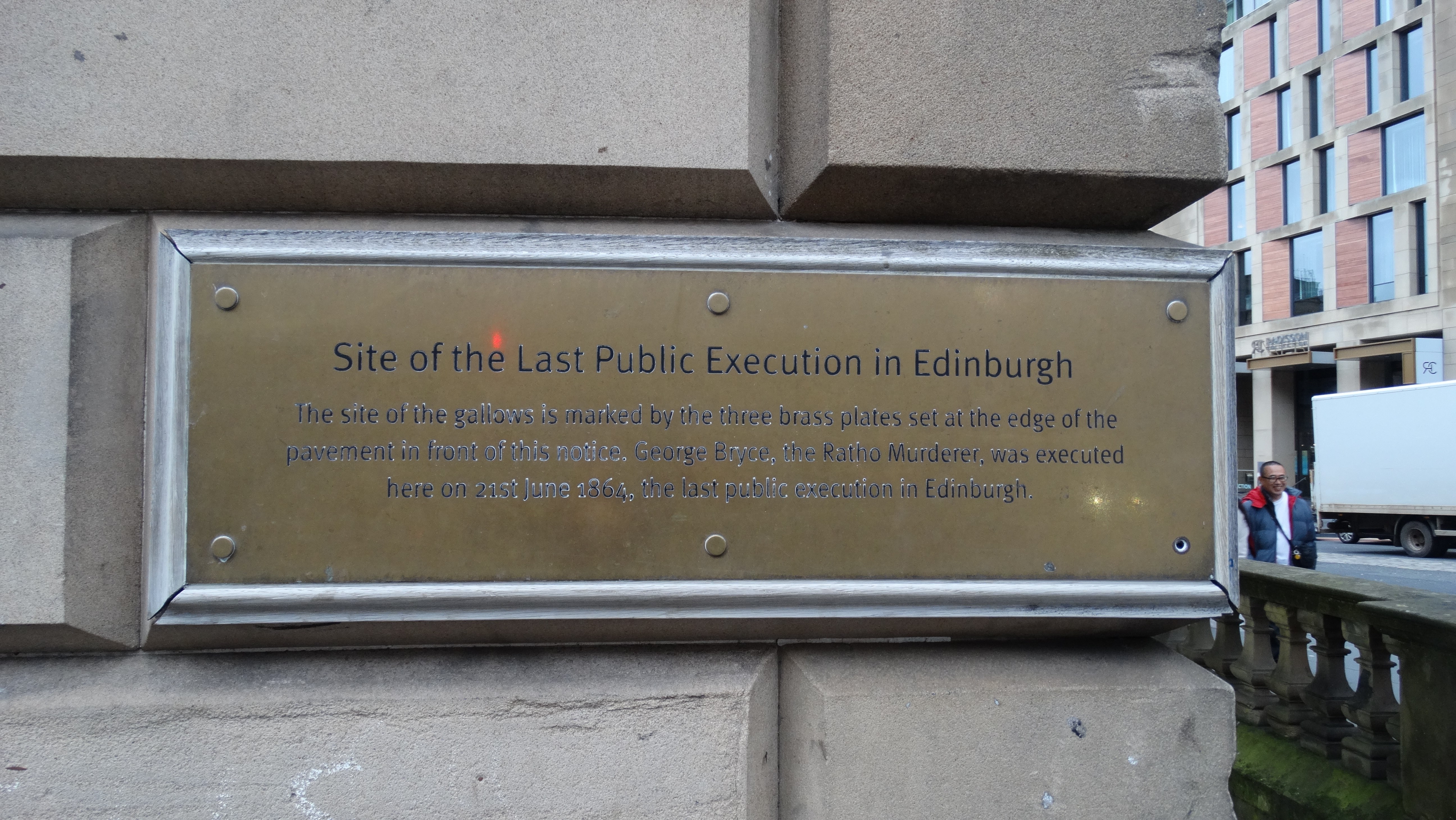
The Maiden stopped being used for public executions in 1710. However, public executions continued in Edinburgh until 1864 when George Bryce, the Ratho murderer, was executed by hanging. His execution took place on the corner of the present-day George VI bridge and Lawnmarket, now the site of the French Consulate.
View the Maiden for yourself in the Monarchy and Power display, on Level 1 of the Scotland galleries at the National Museum of Scotland.
The Maiden is part of