Entangled Knowledges
Entangled Knowledges highlighted Menang Nyungar knowledge embedded in a historical collection held at National Museums Scotland and returned this knowledge to the Menang community in Western Australia.
Last updated: 1 July 2026
About the project
Funded by the Australian Research Council through Deakin University the project undertook work between 2021-2026.
In 1841 when based in Albany, Western Australia, Edinburgh-born Assistant Commissary-General Robert Neill made a collection of fishes and mammal specimens, sketches and Menang objects that are now held at National Museums Scotland and the Natural History Museum, London.
By working across disciplines in a collaborative and Indigenous-governed team, the project aimed to enrich and re-frame the understanding of this collection in the Museum. Through cross-cultural interdisciplinary working the project revealed Indigenous taxonomic practices, produced new histories of biocultural collections and developed a model for participatory cross-cultural collaborations.
Workshops were held on Menang country throughout the course of the project to research and discuss these collections from different perspectives. This research has led to cultural revitalisation projects including the making of new waitj (emu feather ornaments), gidgee (fishing spears) and buka (kangaroo skin) cloaks. The project team also undertook contemporary collecting. The project culminated in the exhibition 'Kalyagul: Connections to Menang Country' at the Museum of the Great Southern, Albany, Western Australia from July 4 2026 to 21 February 2027.
Image gallery
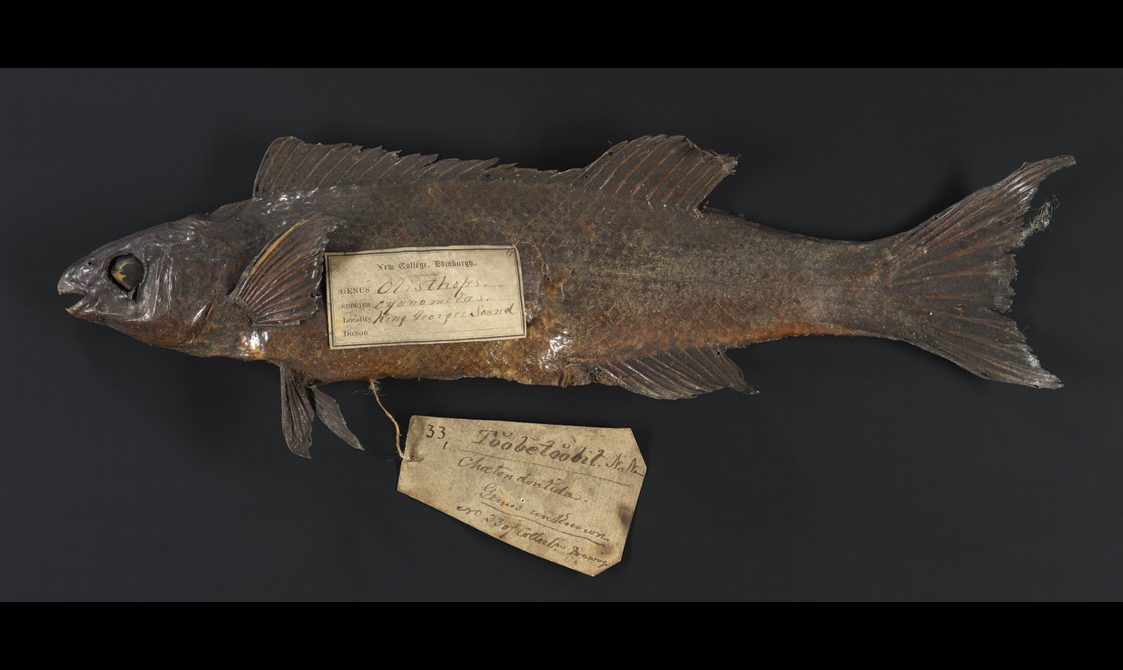
SYNTYPE of Toobetoobit or herring cale, Olisthops cyanomelas Richardson, 1850, dried skin, King George's Sound, Australia, 1841. Museum register no. Z.1980.73.1
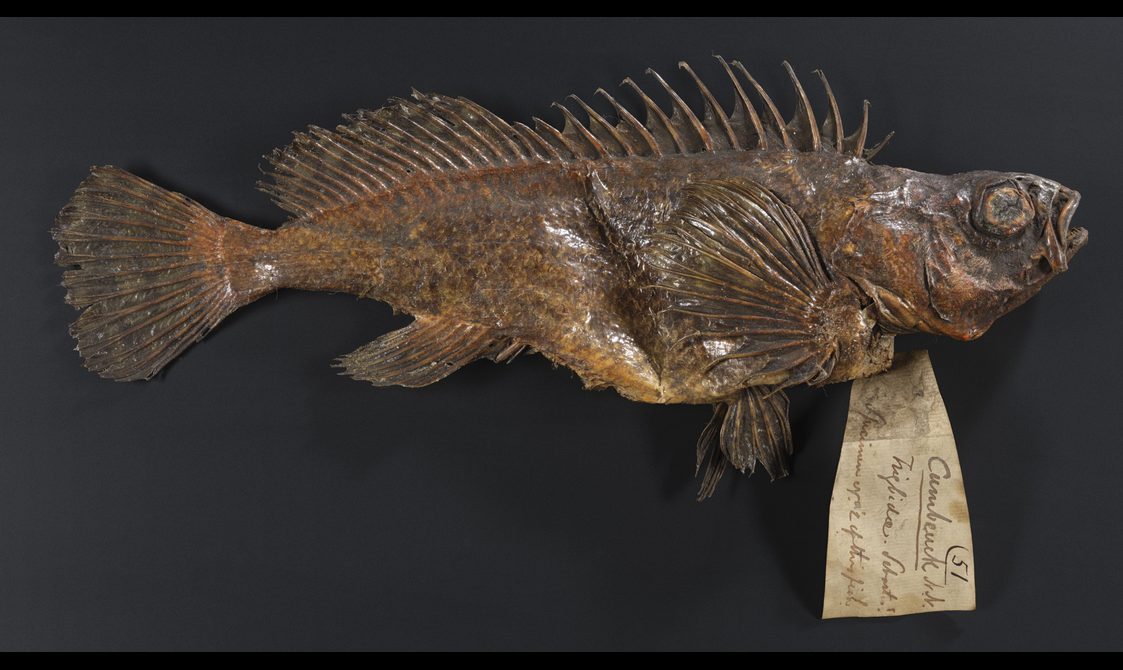
Cumbeuk or silver spot, Chironemus maculosus (Richardson, 1850). SYNTYPE of Threpterius maculosus, King George's Sound, Australia, 1841. Museum register no. Z.1980.73.4
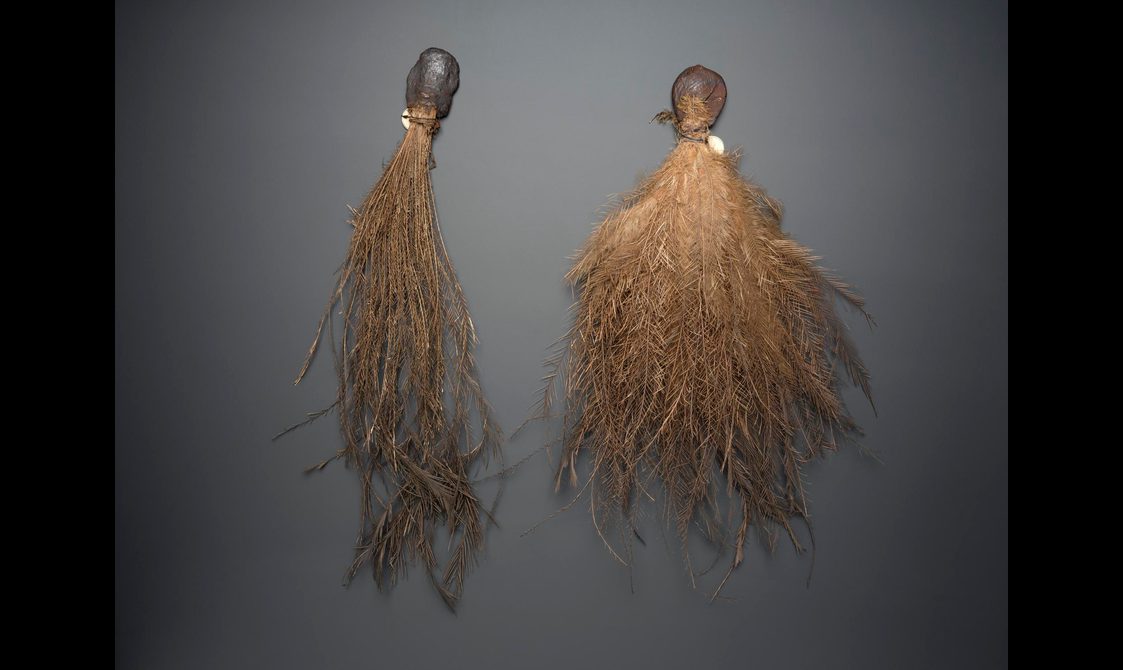
Two waitj (waist ornaments) made from a bunch of emu feathers, Dromaius novaehollandiae, fixed together with gum: Australasia, Australia, Western Australia, Albany, Menang. Museum reference A.UC.717-718
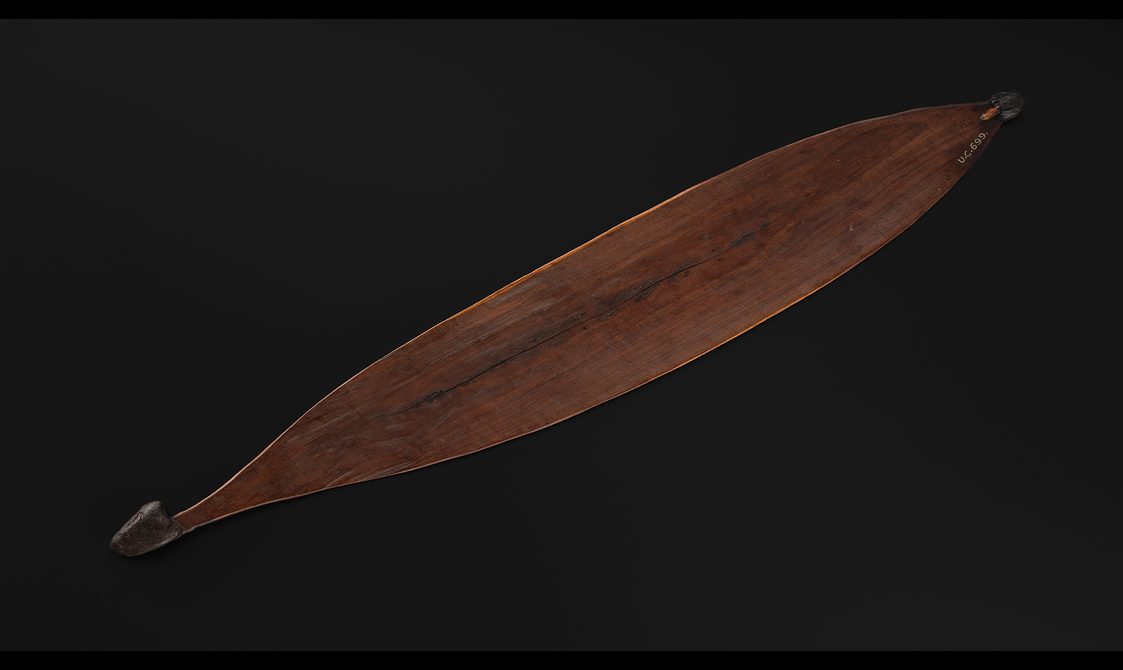
Woomera or spear thrower of dark brown wood with broad blade decorated on convex side with incised dashes, and wooden spur fixed with gum: Australasia, Australia, Western Australia, Menang. Museum reference A.UC.699
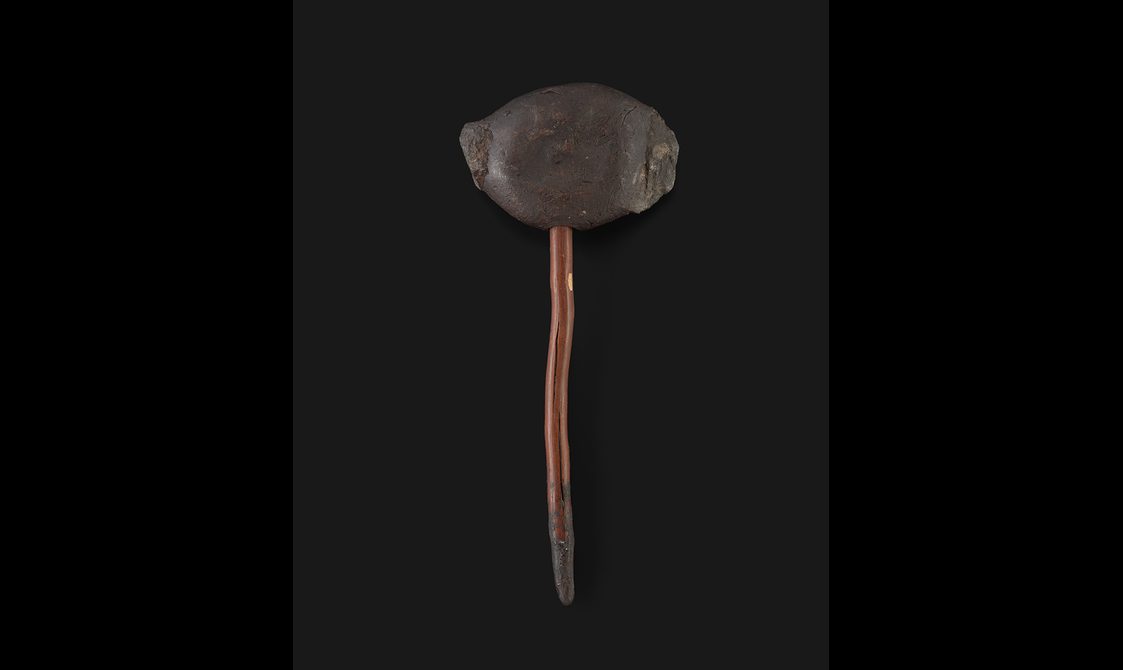
Kodj (axe) made from wood and basalt, the axe head is fixed on using a binding agent made from kangaroo dung and tree resin: Australasia, Australia, Western Australia, Menang. Museum reference A.UC.709
- Project title
Entangled Knowledges: Kaartdijin, Science and History in the Robert Neill collection
- Project active
2021 - 2026
- Research theme
Scotland's Material Heritage, Identities and Cultural Contacts, Sustainability
- Research sub-theme
Colonial histories and Legacies, Biocultural collections
- Strategic priorities
Developing, preserving and increasing access to the National Collections, Strengthening and sharing collections knowledge and research, Reaching out to people across Scotland and the world, Taking action on climate change and environmental impact
Contributors
Dr Tiffany Shellam, Chief Investigator, Deakin University
Professor Alistair Paterson, Chief Investigator, The University of Western Australia
Dr Shino Konishi, Chief Investigator, The University of Western Australia
Mr Larry Blight, Menang Noongar Educator
Dr Ross Chadwick, Partner Investigator, Western Australian Museum
Dr Ali Clark, Partner Investigator, National Museums Scotland
Dr Ian Coates, Partner Investigator, National Museum of Australia
Miss Shona Coyne, Partner Investigator, National Museum of Australia
Professor Andrew Kitchener, Partner Investigator, National Museums Scotland
Dr Glenn Moore, Partner Investigator, Western Australian Museum
The Remaking of Knowledge podcast
Listen to project members Tiffany Shellam (Deakin University) and Shona Coyne (Menang nation/National Museum of Australia) explore how working in a cross-sector, collaborative and Indigenous-governed team can enrich and re-frame the understanding of collections in Museums.
Find out more about the Remaking of Knowledge podcast series.
Revealing Knowledge
Some of the fishes and mammals that Robert Neill donated to National Museums Scotland and the Natural History Museum were caught by Menang men. Neill painted the fishes and mammals, annotating these drawings with Menang Kaartdijin (knowledge) whilst the handwritten labels on the fishes and mammals name some of the Menang men who were forming these collections. The dispersed collection is rich with Menang Kaartdijin (knowledge) about these fish, fishing practices and cultural processes surrounding the catching and eating of fish. The collection also reveals a taxonomic process which relates to Menang material culture. Workshopping these collections amongst the team, all of whom bring different perspectives, has revealed this Kaartdijin.
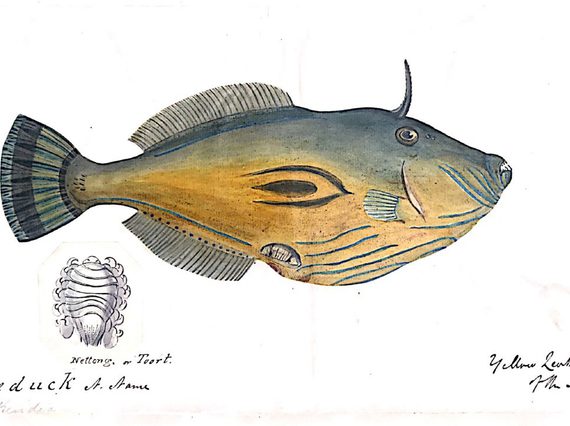
Workshops revealed that Menang names often drew links between animals and cultural objects. The tabaduck (smoothspine leatherjacket) has a serrated spine above its head. Menang knowledge holders noted a similarity between the spine and the sharp edge of the Menang taap- a wood-handled knife edged with stone flakes or glass. This may be the origin of the fish’s Menang name.
Image gallery
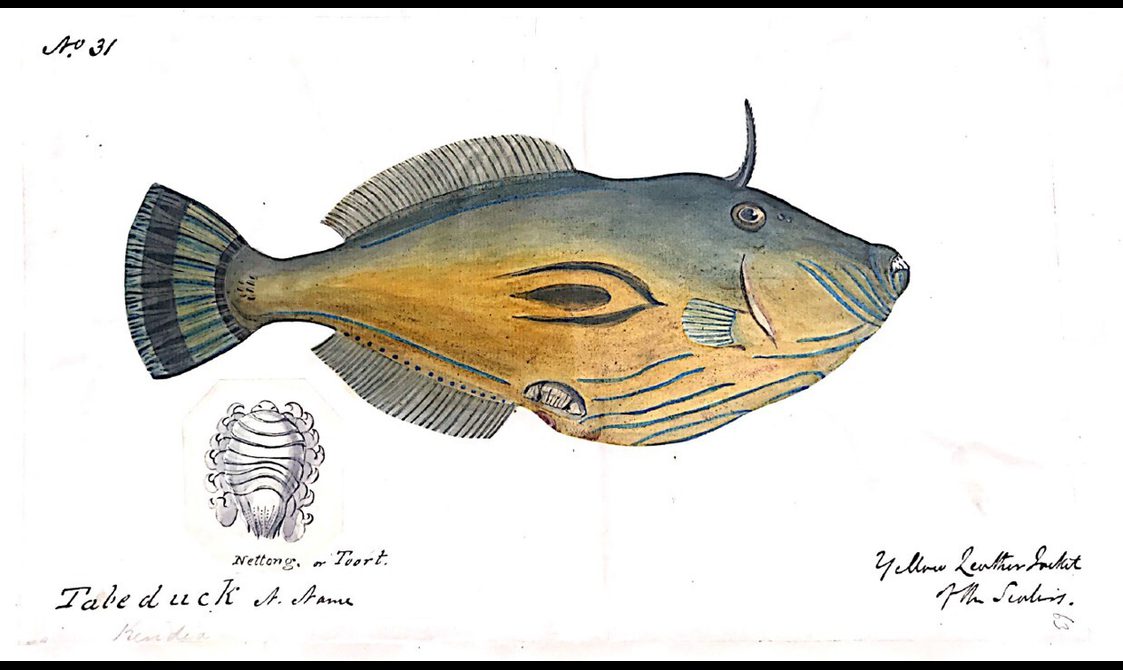
Painting no. 58 of a Tabeduck fish or horseshoe leatherjacket, Meuschenia hippocrepis, by Robert Neill. Courtesy Natural History Museum.
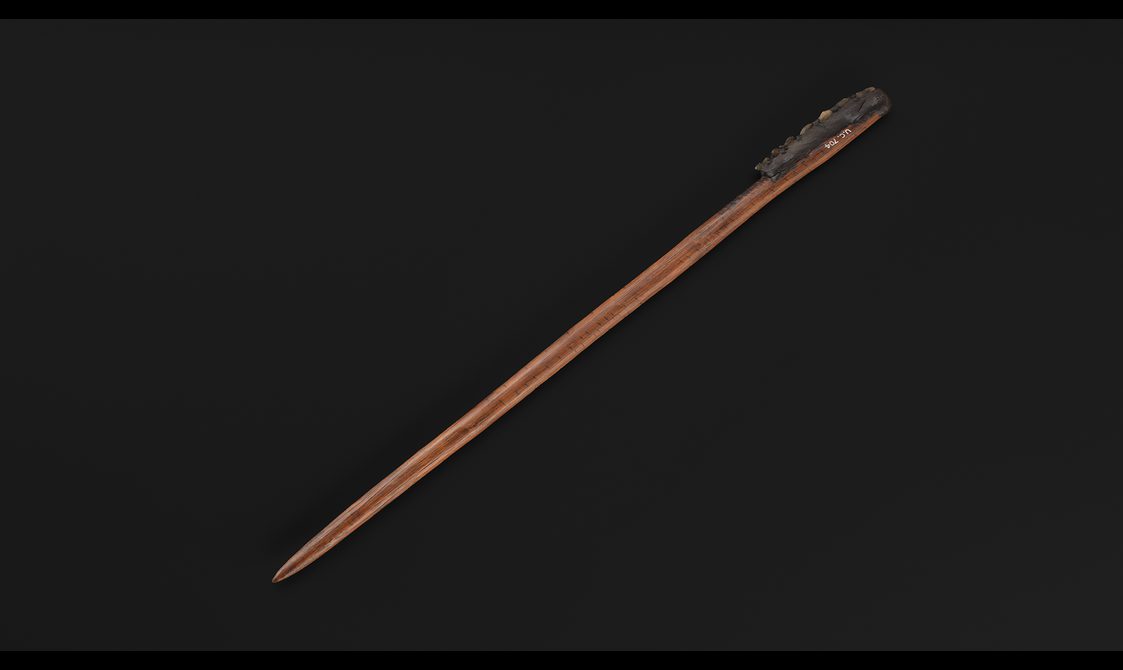
Taap (knife) made from wood with shards of glass attached using a fixing agent made from tree resin, charcoal and kangaroo droppings: Australasia, Australia, Western Australia, Menang. Museum reference A.UC.704
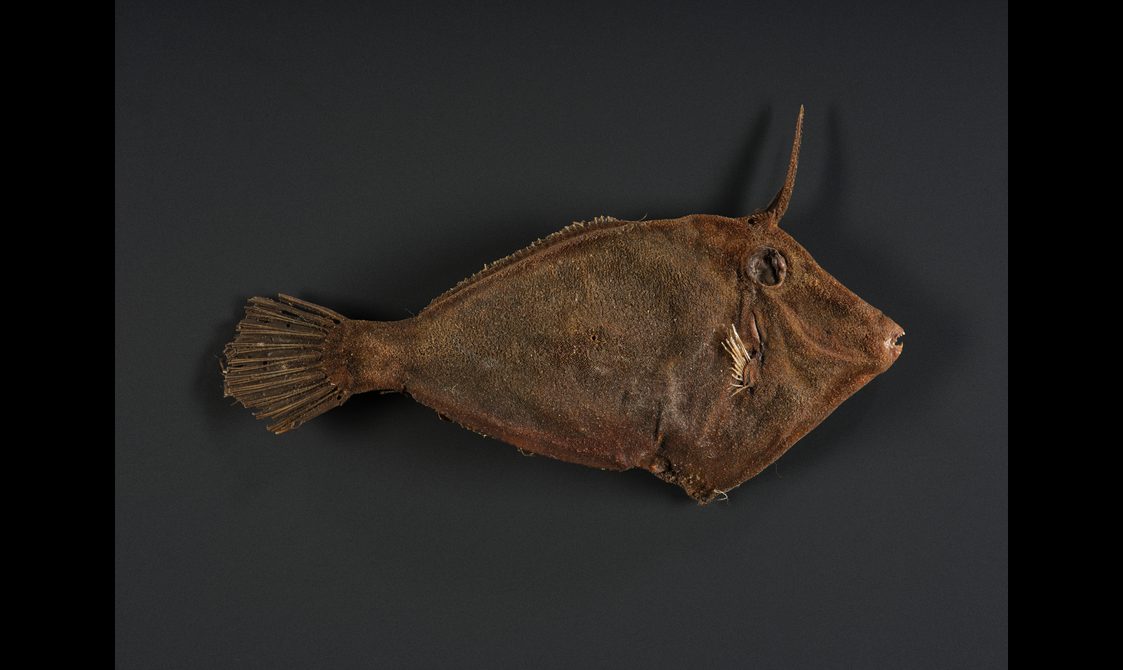
Sun-dried skin of a Tabaduck or smoothspine leatherjacket, Cantheschenia longipinnis (Fraser-Brunner, 1941), King George's Sound, Australia, 1841. Museum register no. Z.1980.73.14
Contemporary Collecting
The project team also undertook contemporary collecting, with National Museums Scotland acquiring a new set of Menang tools made by Larry Blight and a new comparative fish collection collected collaboratively on Menang country.

Fishing at Emu Point.

Larry Blight cutting a tree to make a spear.

Larry Blight making resin.

Larry Blight fixing a spear point onto a spear.

Larry Blight making a spear.

Making a spear.
Project contacts
Dr Ali Clark
Professor Andrew Kitchener
Find out more
Read a news story about the project.
Watch a video about the project produced by the Centre for Contemporary Histories at Deakin University.. The Centre has developed collaborations with Indigenous Communities and various organisations inside Australia and internationally, to reveal the story of the entaglement of Indigenous and Western Knowledges in the mid 1800s.
Read Project Researchers Dr Ali Clark and Professor Andrew Kitchener's blog about Entangled Knowledges, and how cross-cultural, cross-disciplinary working is enabling a fuller understanding of these collections.
Partners


Funded by the Australian Research Council. Governed by the Albany Heritage Reference Group Aboriginal Corporation.
You might also be interested in
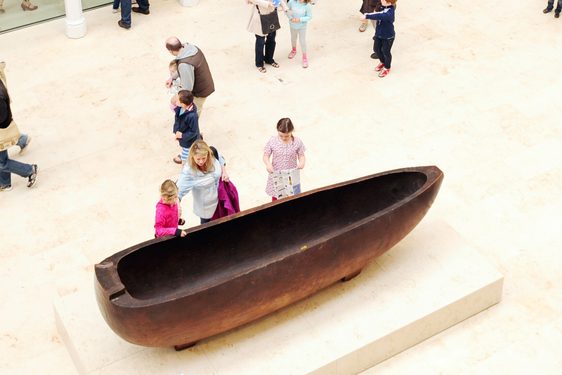
Feast bowl: From the Pacific Islands to Scotland
History and cultures
A massive feast bowl in our collection, known as an umete, comes from Atiu, one of the Cook Islands in the Pacific.Form and functionThis boat-shaped bowl is carved from a single piece of tamanu wood, also known as island mahogany. Tamanu…
The ancient craft of barkcloth across the world
Fashion and textiles, History and cultures
Barkcloth is a type of natural cloth made by stripping, soaking, and beating or weaving lengths of the inner bark from trees such as paper mulberry, ficus, and elm. It is produced in countries located along a tropical 'barkcloth belt'.…
Bringing a Māori waka taua back to life
History and cultures
Māori craftsmanship and museum conservation bring to life one of our most unusual and intriguing objects.How did the waka come into the collection?The Māori waka taua (war canoe), was first added to the museum’s collection in 1854. It was…