Loyal Exchange: the material and visual culture of Jacobite exile, 1716-60
Dr Georgia Vullinghs successfully defended her thesis in 2021 after 4 years as a PhD student at the University of Edinburgh and co-supervised by National Museums Scotland.
Last updated: 8 February 2022
About the research
From 1716, the exiled claimant to the British thrones, James Frances Edward Stuart, and his court lived in Italy, and after 1719 it settled permanently in Rome. Scottish collections reflect the significance of material and visual culture in articulating, promoting, and prolonging the Jacobite cause in exile.
Using the museum’s collections alongside letters and papers from the time, this project attempted to track the movement of objects and images between the exiled Stuart court and their supporters in Scotland. It brought a better understanding of how material culture was used by supporters to express loyalty to the cause, as well as what that loyalty was based on. Through the exchanges between court and supporters, a material and visual language of Jacobite sympathy emerged, which endured thereafter in the romantic popular culture of the post-1760 Jacobite ‘lost cause’. This research examined how that language was originally developed through networks of personal and symbolic exchange.
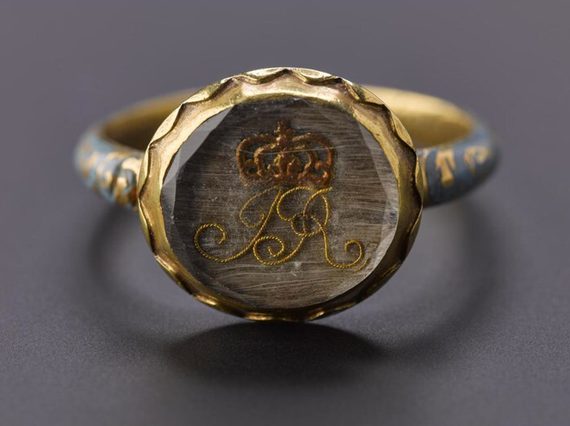
Lead image: Finger ring with crowned "JR" under crystal, given by James VII on the night he fled from London on 1688 to Sir Peter Halkett.
- Project title
Loyal Exchange: the material and visual culture of Jacobite exile, 1716-60
- Student
Dr Georgia Vullinghs
- Project active
2017 - 2021
- Funder
AHRC Scottish Cultural Heritage Consortium (SCHC) – Collaborative Doctoral Partnership
- University of Edinburgh Supervisor
Professor Viccy Coltman - History of Art
- National Museums Scotland Supervisor
Dr Stuart Allan - Scottish History & Archaeology
- Research theme
Scotland's Material Heritage
Project contact
Dr Georgia Vullinghs
Related to this project
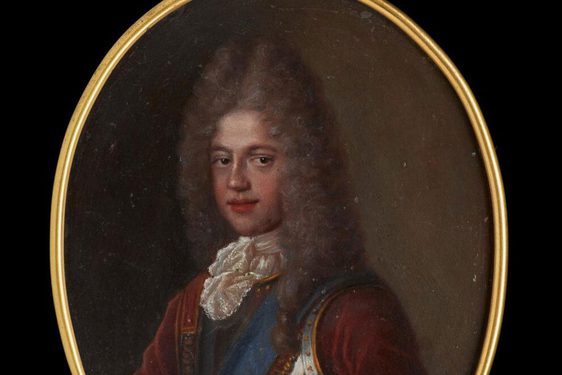
The Old Pretender: An introduction to James ‘VIII’
History and cultures, Scotland
Raised in exile, James Francis Edward Stuart (10 June 1688 – 1 January 1766) was the son of King James VII and II and his second wife, Mary of Modena. Who was James ‘VIII’?When the exiled King James VII and II died in 1701, his son James…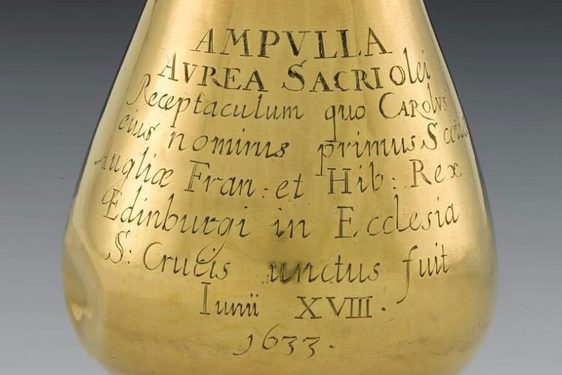
Anointed with oil: The coronation ampulla of Charles I
History and cultures, Scotland
This object is one of the earliest surviving pieces of Scottish-made gold. It was used at the Scottish coronation of Charles I, which was held in Edinburgh eight years after his coronation in London.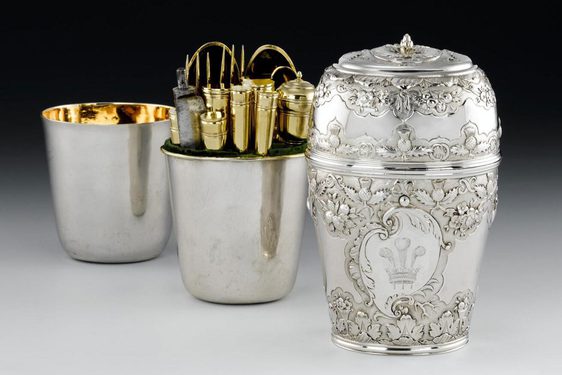
Bonnie Prince Charlie's silver travelling canteen
History and cultures, Scotland
This elaborate set of travelling cutlery and two wine beakers was made by the Edinburgh goldsmith Ebenezer Oliphant in 1740-41. It may have been a 21st birthday gift for Prince Charles Edward Stuart.Who was Bonnie Prince Charlie?Prince…