A hurried escape: Items abandoned by Bonnie Prince Charlie as he fled Culloden
News Story
After the Jacobites were defeated at the Battle of Culloden, Charles Edward Stuart fled in haste - and left a number of personal objects behind, which are now held in the National Collection.
A gift before battle
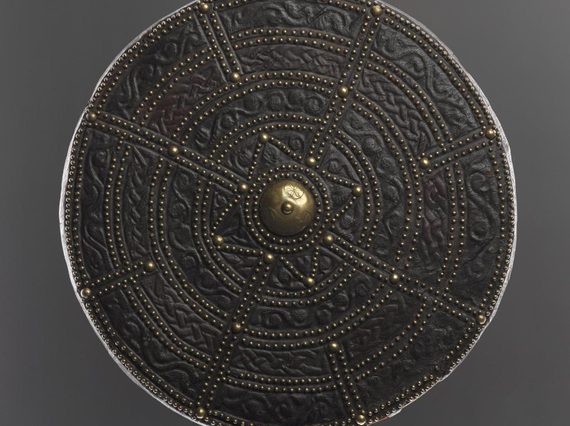
Around 1740 James Drummond, Jacobite Duke of Perth, sent a gift of Highland clothes to the Stuart prince at the exiled court in Rome. The group included a sword, targe, pistols, and a dirk. Later a similar gift was sent to Charles's brother, Henry Benedict.
Popularly known today as Bonnie Prince Charlie, the gift helped to shape Charles’ image as a Scottish prince. It was no coincidence that Charles adopted Highland dress when he landed in Scotland five years later, when he needed to win the support of Highland clans for his army.
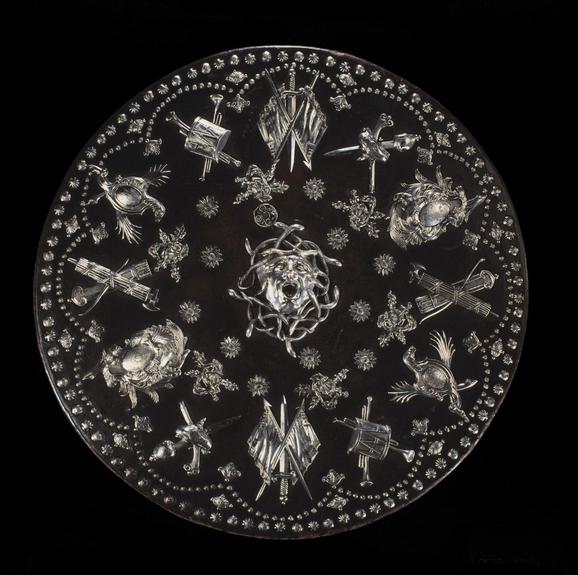
Dress targe, part of the accouterments presented to Prince Charles Edward Stuart by James, 3rd Duke of Perth. Museum reference H.LN 49.
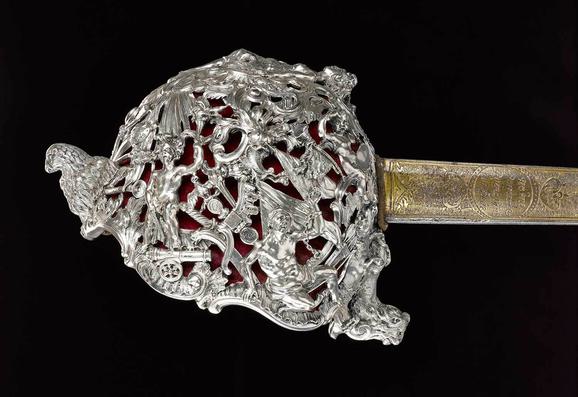
Backsword made by Charles Frederick Kandler of London, 1740 – 1741. Museum reference H.MCR 2.
These are exceptional examples of typical Highland weapons, clearly intended as symbols of power and status.
The targe is constructed in the traditional way with wooden boards covered with pigskin. Less traditionally, the back of the targe is covered in jaguar skin, while the front has been elaborately decorated with silver mounts. The central boss is a Medusa head. This figure from Classical mythology turned people to stone by looking at them, and so was a suitable protective motif for a shield. Other decoration includes flags with thistles, cartouches with emblems of military victory, and Scots bonnets. The cap badges of the bonnets are engraved with the crest and motto of the 3rd Duke of Perth and the St Andrew badge.
The basket hilt of the backsword has been made from a piece of cast silver. It is decorated with figures of warriors, one which is mounted and in classical armour. A naked boy beats a drum, and there is a prisoner and a figure of a woman as a symbol of war. The wrist guard is in the form of a crouching lion and the pommel is formed as a horned owl. The blade is engraved with two mottos in French, 'Draw me not without reason' and 'Sheath me not without honour'. On each side there is a figure of a man in armour holding a sword, above which is the name 'hanniball'. Despite all these warlike motifs, the weapons did not face battle.
What happened to the targe and sword after the battle?
Both objects are associated with the immediate aftermath of the Battle of Culloden. The sword is thought to have been taken from Charles’ baggage train and given to Cumberland. The targe was probably rescued by a Jacobite chief, Ewan MacPherson of Cluny, intended to be looked after for safe keeping.
Later, the backsword was presented to the chief and captain of Clanranald by George IV in 1820. Clanranald often appeared at court in Highland dress and George declared that 'he was happy to see you in that dress', believing that Clanranald was the 'person best' to bear the prince's sword.
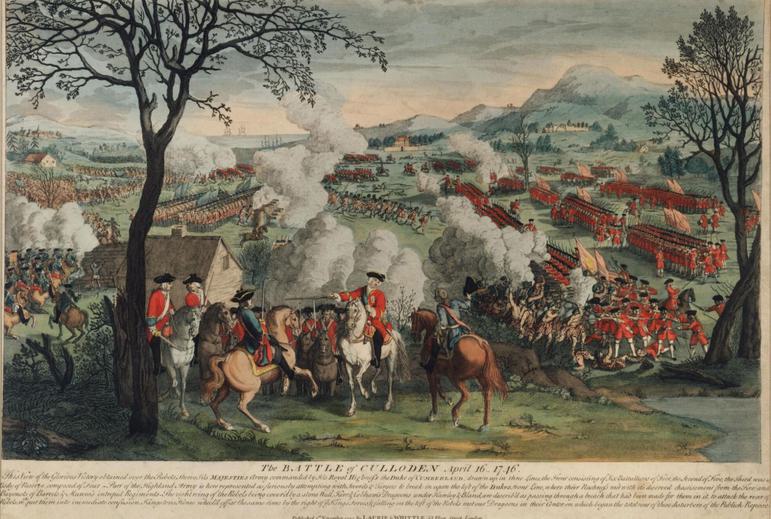
Framed, coloured print of the Battle of Culloden, published by Laurie and Whittle, 1797. Museum reference M.1933.250.1.
Who was James, 3rd Duke of Perth?
James Drummond, the 6th Earl and titular 3rd Duke of Perth, joined Prince Charles in September 1745 after escaping arrest for his Jacobite sympathies. Described as ‘bold as a lion in the field of battle’, he led the successful siege of Carlisle and commanded the left wing of the Jacobite army at the Battle of Culloden. After the rout, he escaped by ship to France, but died on board before reaching safety.
What happened to Bonnie Prince Charlie after Culloden?
When Charles Edward Stuart escaped from the battlefield at Culloden, he left almost all his personal possessions behind. During the months that followed he was hunted by government forces throughout the western Highlands and Isles. He was helped by many loyal followers, and this period gave rise to some of the most enduring myths of the rising.
He was sheltered, smuggled from hiding place to hiding place, and given clothes and other items by Gaels who risked their own safety to help him.
Charles eventually escaped to France and then Rome. Many of his followers were captured and some executed. Others were forced into exile and had their lands forfeited. The government was determined to eliminate the Jacobite cause once and for all.
The Highlands were disarmed and even Highland dress was banned for a time. The breakdown of the clan system accelerated, while improved roads and forts led to more effective government control of remoter areas.
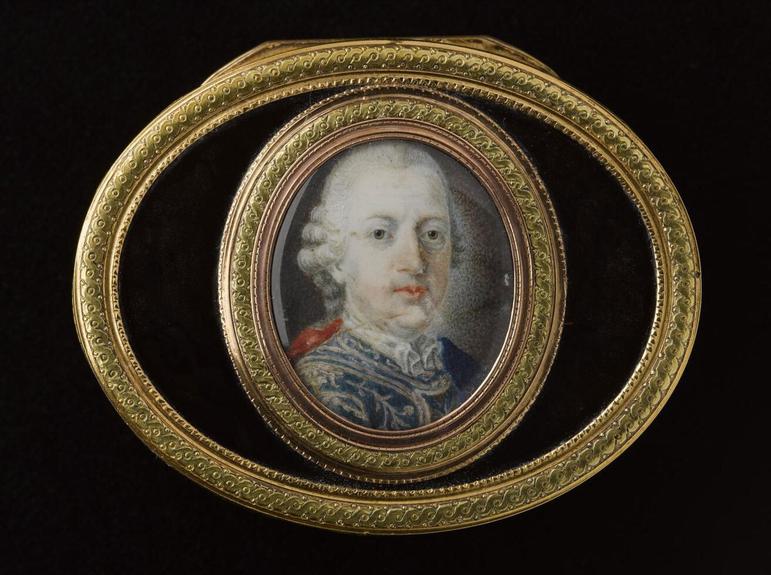
Snuffbox of dark tortoise-shell, with a miniature of Prince Charles Edward Stuart on the lid, said to have been painted at Rome in 1776, when the Prince was 56. Museum reference H.NQ 273.
Prince Charles did not return. He died a broken man, deserted by his wife and followers, in Rome on 31 January 1788.
By this time, the threat of an armed Jacobite insurrection was unthinkable. The cause soon became the subject of romantic nostalgia, expressed through poetry and song as well as objects and relics. Several mementoes of the exiled prince came into the museum collection before his death.
Image gallery
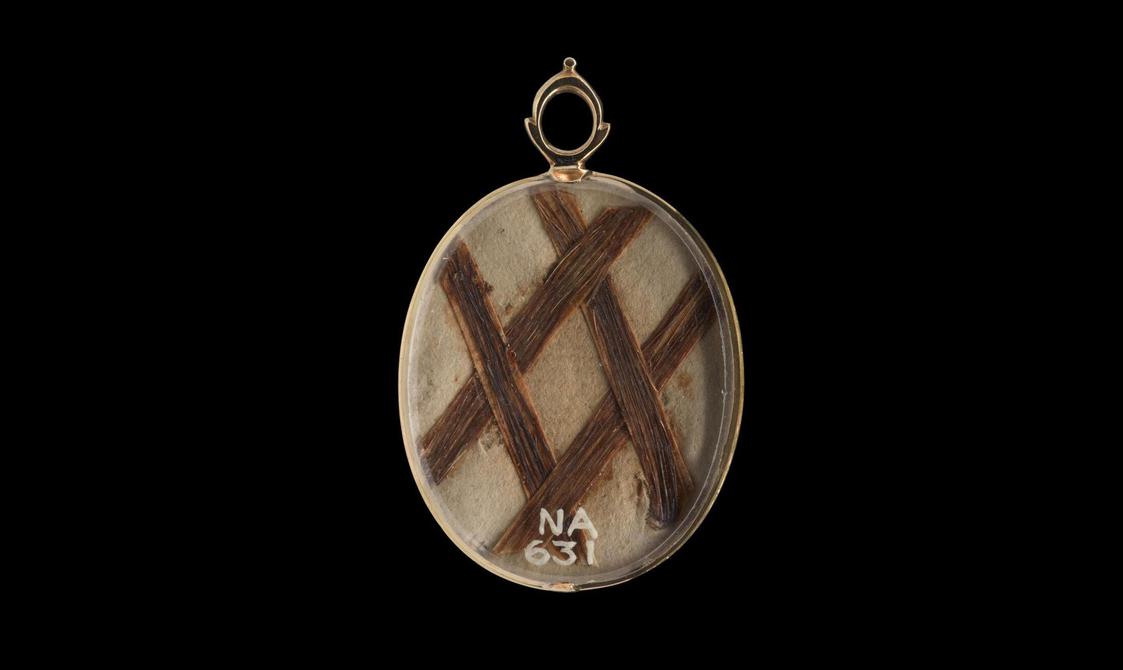
Four pieces of the prince's hair are attached to the reverse of this gold locket. Museum reference H.NA 631.
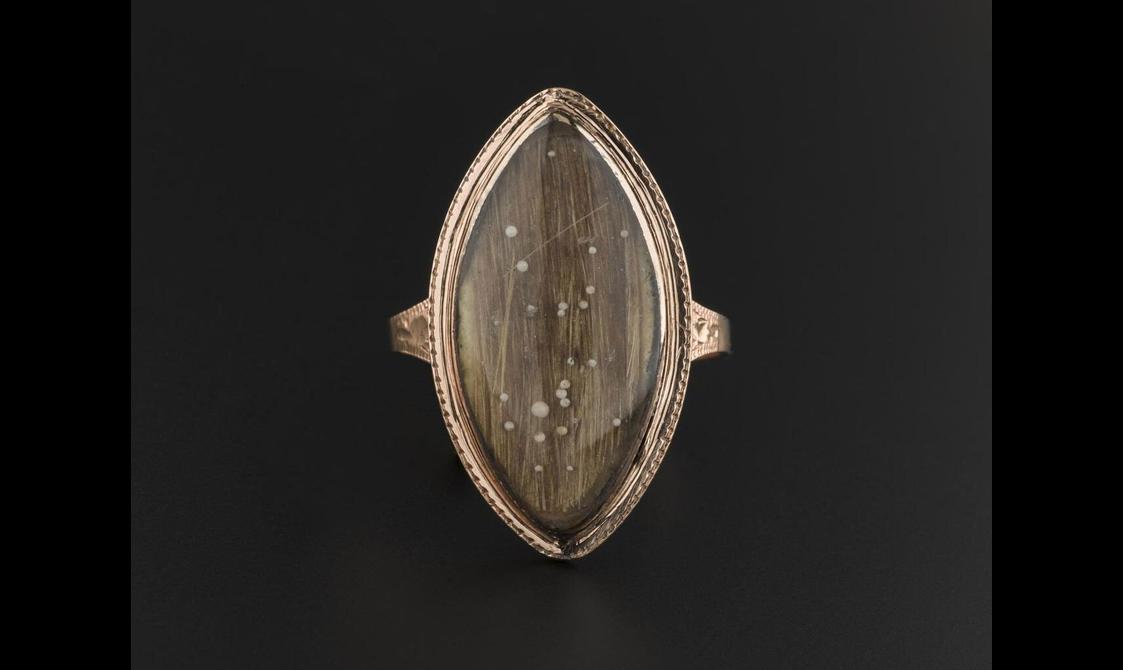
Containing a lock of Prince Charles' hair, this ring was thought to have been gifted by the Prince to Alexander Stuart of Invernayle. Museum reference H.NJ 84.
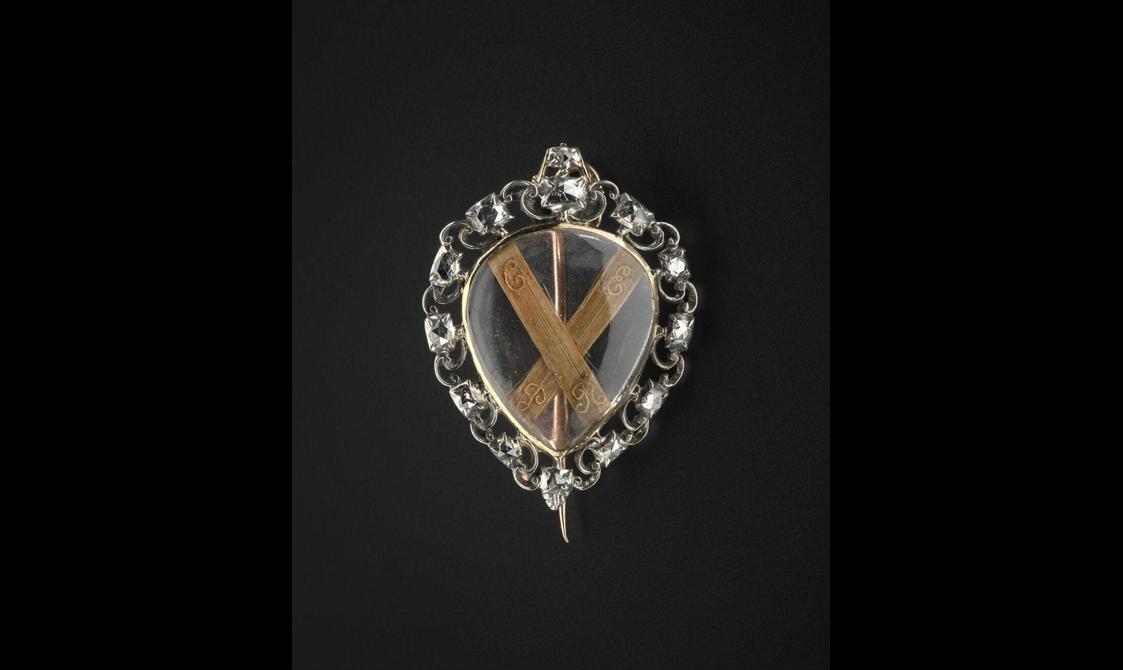
Heart-shaped brooch said to contain the hair of Prince Charles Edward Stuart and given to him by Lady Mary Clark. Museum reference H.NGB 65.
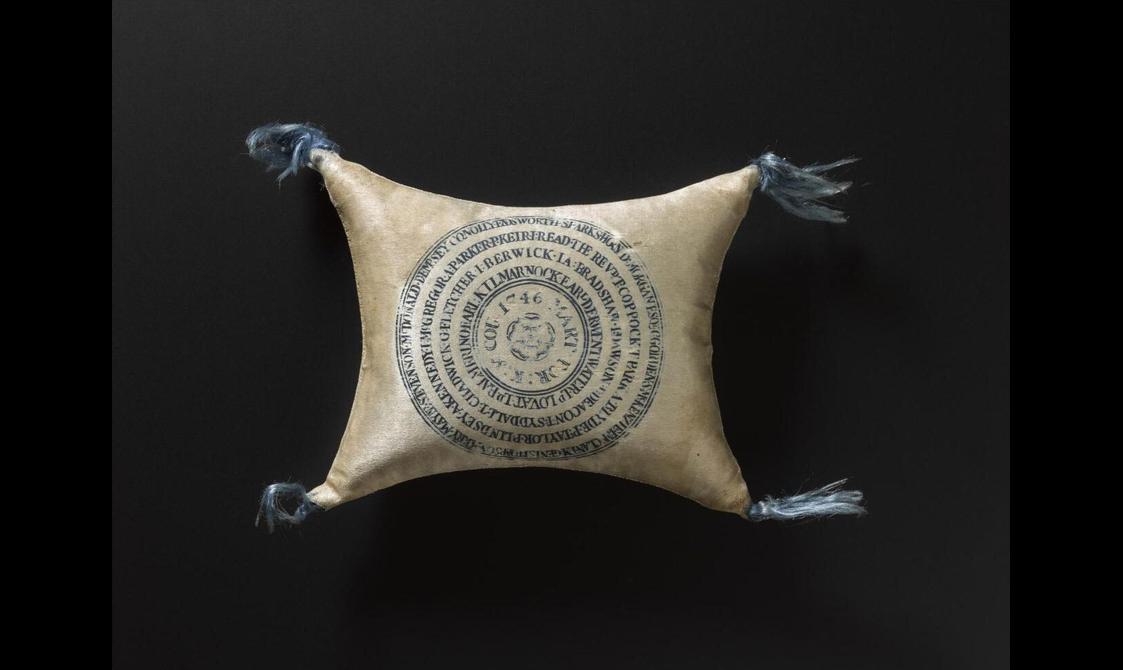
This pin cushion has 67 names are printed on it along with the words "MART: FOR:K:&COU:1746", meaning martyred for king and country 1746. Museum reference A.1987.258.
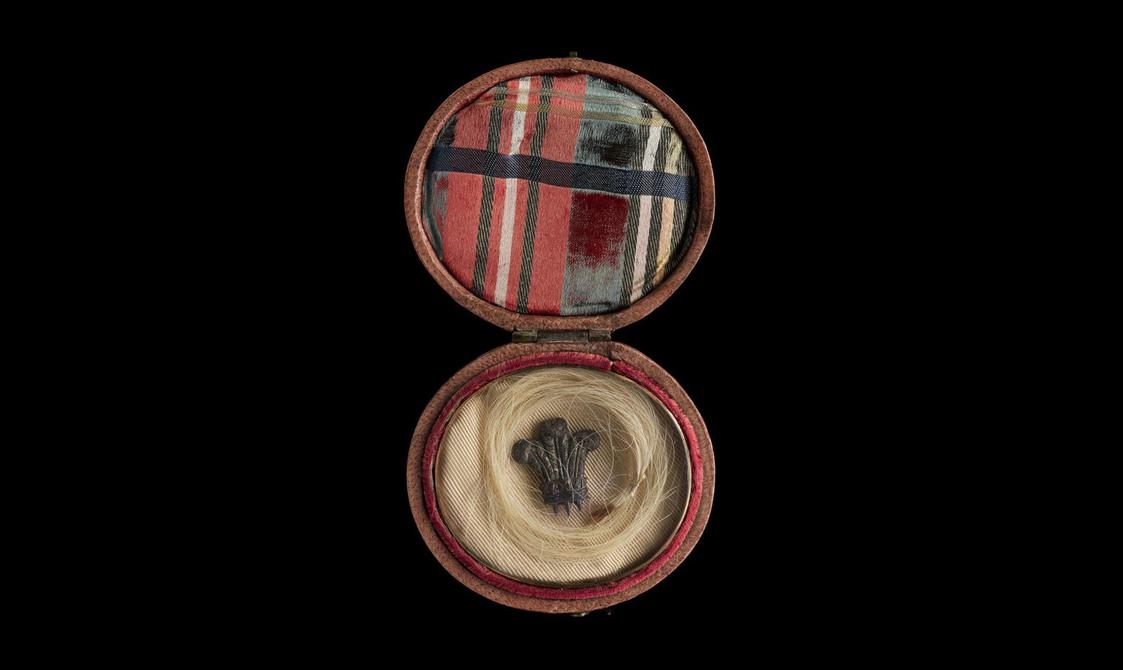
This small locket contains hair alleged to have been that of Prince Charles Edward Stuart, with Prince of Wales feathers in the centre. Museum reference H.NA 324.
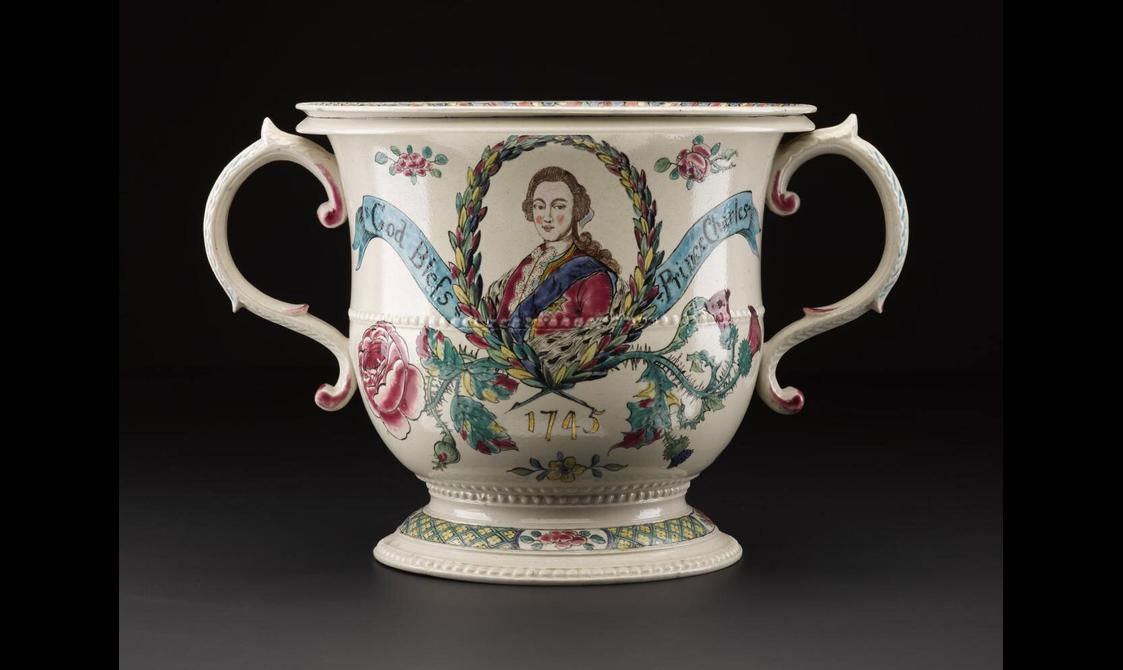
Staffordshire pottery flower vase with a portrait of Prince Charles Edward Stuart and the date 1745: English, Staffordshire, made c.1765, 20 years after Culloden. Museum reference A.1953.388.
The Targe (museum reference H.LN 49) is on display in the Scotland Transformed gallery at the National Museum of Scotland.
You might like
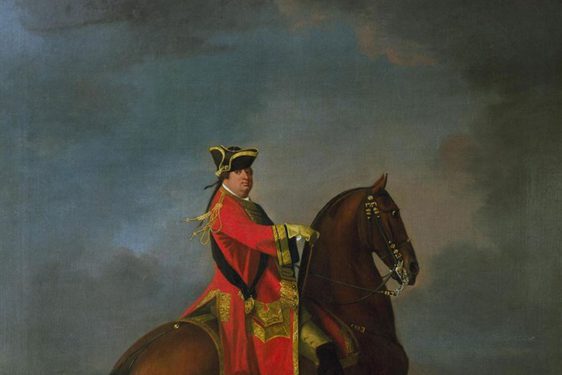
Portrait of the Duke of Cumberland at Culloden
History and cultures, Scotland
A portrait celebrating the victory of Prince William Augustus, Duke of Cumberland, commander of the British government forces at Culloden.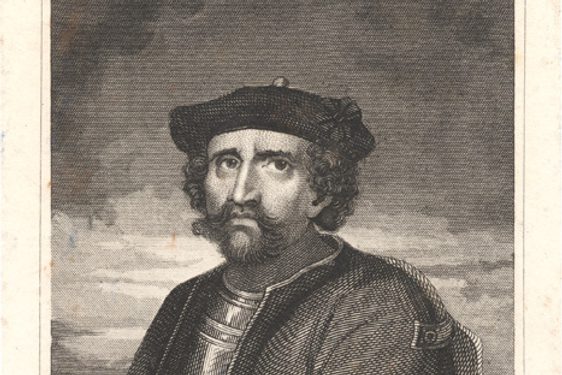
Who was Rob Roy MacGregor?
History and cultures, Scotland
Born in Glengyle in 1671, Robert McGregor would became famous as an outlaw, known as the 'Scottish Robin Hood'. McGregor's nickname ‘Rob Roy’ comes from Ruadh, which means red in Gaelic – a reference to his fiery red hair. Rob Roy the…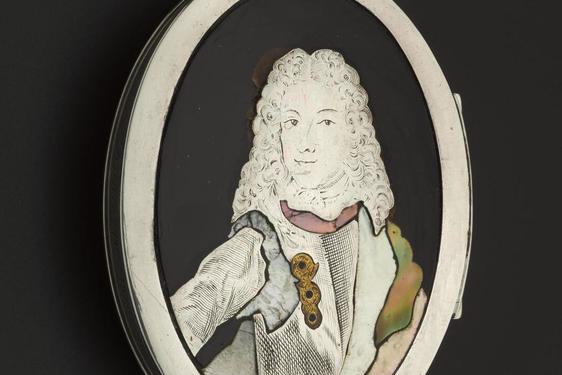
Flora MacDonald: An unlikely Jacobite heroine
History and cultures, Scotland
Flora MacDonald famously helped Charles Edward Stuart escape Scotland after the 1745 rising was crushed. A silver snuffbox, a treasured heirloom of her clan, links the romantic pair.