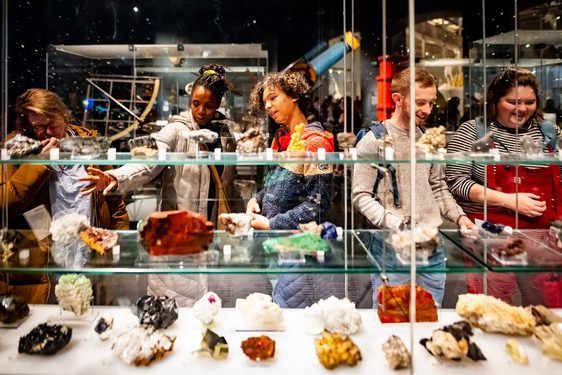
Science and Technology galleries
Explore the history of innovation in Scotland and across the world.
Communications, transport, industry, engineering, energy and medicine: how have scientific and technological inventions changed our lives? Find the answers in our Science and Technology galleries!
With 6 galleries spread over 3 levels, explore scientific ideas and discoveries through interactive games and thought-provoking displays.
Galleries to visit

Explore
Location: Level 1
Our family-friendly Explore gallery brings science to life with hands-on games and interactive exhibits. You can even try out your own genetic experiments – fancy making a glowing pig?

Making It
Location: Level 1
Making It looks at how manufacturing and engineering have changed our lives, from early industry to 3D printing. Don't forget to look up to see an aerial history of aviation stunningly suspended from the ceiling, including Percy Pilcher's record breaking Hawk glider.

Communicate
Location: Level 3
Communicate tells the story of telecommunications, from semaphore to smart phones. Will you spot your first mobile phone in a case?

Technology by Design
Location: Level 3
Scientific innovation and invention are celebrated in Technology by Design. Discover the evolution of the bicycle and design your own bike, marvel at an Apple 1 computer from 1976 and discover Edinburgh's key role in the history of prosthetics.

Energise
Location: Level 5
The Energy Tower in our Energise gallery offers you a workout! See if you can generate enough energy to light up the whole tower – and burn some calories too.

Enquire
Location: Level 5
Enquire explores how scientists have sought to answer fundamental questions. Follow in the steps of pioneers such as Sir James Black by designing a clinical drug trial, and encounter a giant copper accelerating cavity from CERN’s LEP collider. After all, who doesn’t like a dash of drama with their science history?
Object highlights


The Jacquard loom on display in the Making It gallery of the National Museum of Scotland.

Enigma machine with four rotors

Freddy the robot

"Rover" safety bicycle with solid rubber tyres, made by J.K. Starley of Starley & Sons, Coventry, c. 1888.

Iron-stand compound microscope, with separate bull's eye condenser on stand, microscope made by Powell and Lealand of London, c. 1840

The Vine Arm or Prosthetic Arm in the shape a vine worn by model Kelly Knox and created by the Alternative Limb Project, Sophie de Oliveira Barata, 2017. Museum reference T.2018.1.
Stories from the galleries

Broadcasting from the Moon: The first lunar camera
Science and technology
Apollo 11 was the first manned mission to land on the Moon on 20 July 1969. NASA used technology first developed in 1928 by the Scottish innovator John Logie Baird to develop a small, robust television camera that enabled the live…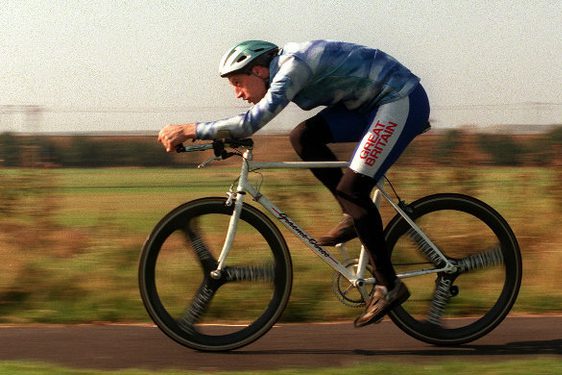
Graeme Obree: Breaking records on a homemade bicycle
Science and technology
Professional cycling is a serious (and costly) business. So how did a homemade bicycle, fashioned from scrap metal, come to break the World Hour Record in 1993?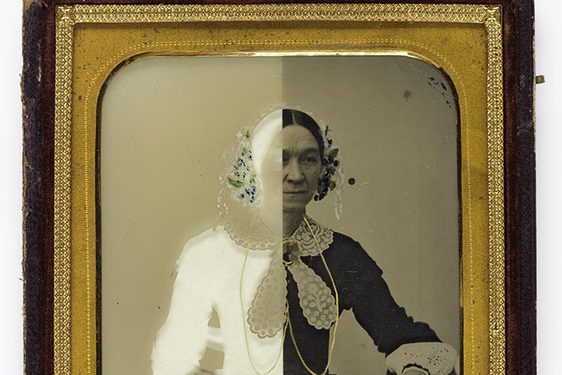
Inventors of photography: Exploring Victorian photographic techniques
Science and technology
Discover how Victorian inventors and entrepreneurs succeeded in capturing the very first images.
Forging a path - Scotland's iron industry
Science and technology, Scotland
Written by Georgina GrantIn July 2025 one of the last iron foundries in Scotland closed its doors. Ballantine Castings Ltd, based in Bo’ness, had been in operation for 200 years. The foundry supplied decorative, architectural and engineering ironwork across…
Gallery accessibility
Getting to the galleries
Lifts and escalators
Lifts are available to all floors of the museum. You can check the museum map or ask a member of the Visitor Experience team for the nearest lifts. Information on lift dimensions is available on the AccessAble website.
In the galleries
Seating
There are limited seating options in the Science and Technology galleries. Please ask a member of staff for directions to the nearest seats to you.
Lighting and noise
The lighting levels are moderate in all of the Science and Technology galleries. The levels are the brightest on Level 5 in the Enquire gallery.
The Science and Technology galleries can be busy at certain times of the day, so can be noisy.
You can check our sensory map to explore all the different sensory experiences in different parts of the museum.
Large print guides
Large print guides can be found in every gallery of the museum. Please remember to return them after use so that other visitors can use them.
Facilities
Toilets
Accessible toilets are available on Levels 0 and 3, as well as a Changing Places (U) toilet in the Entrance Hall on Level 0. You can access the museum map to find those nearest to you.
Cloakroom and storage
Self-service lockers are located in the Entrance Hall. The lockers come in three sizes which accommodate coats and small bags right up to small flight cases.
There is buggy storage available in the museum. It is located on Level 1 of the Scotland galleries, behind the Kingdom of the Scots gallery.
Quiet spaces
If at any time you or someone you are visiting with finds the visit overwhelming, a member of staff can direct you to quieter areas in the museum. The sensory map also identifies the quieter spaces.
For full access information for the National Museum of Scotland buildings, find out more on our accessibility page.
You might also like
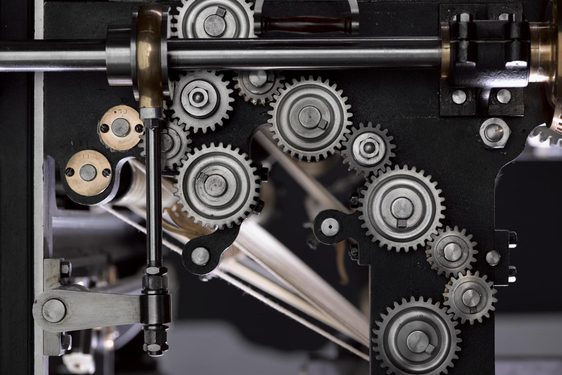
Science and Technology department
The Science and Technology collections are broad-based, ranging from scientific instruments to cutting-edge developments in renewable energy technologies.
Search the collections
Our online database contains a selection of the 12 million objects and specimens in our collections.