Origin and Evolution of Mammals: study of an exceptionally preserved skeleton from the Middle Jurassic of Skye, Scotland
Dr Elsa Panciroli successfully defended her thesis in 2019 after 3.5 years as a PhD student at the University of Edinburgh and co-supervised by National Museums Scotland.
Last updated: 8 February 2022
About the research
There are still many mysteries surrounding the origin and early radiation of mammals. They appeared at the same time as the first dinosaurs, yet remained relatively small until the dinosaur extinction 65 million years ago. Despite their size, they were clearly very successful to have survived and flourish on earth today. This project looked at what made these early mammals so successful, and the role they played in an ecosystem dominated by dinosaurs.
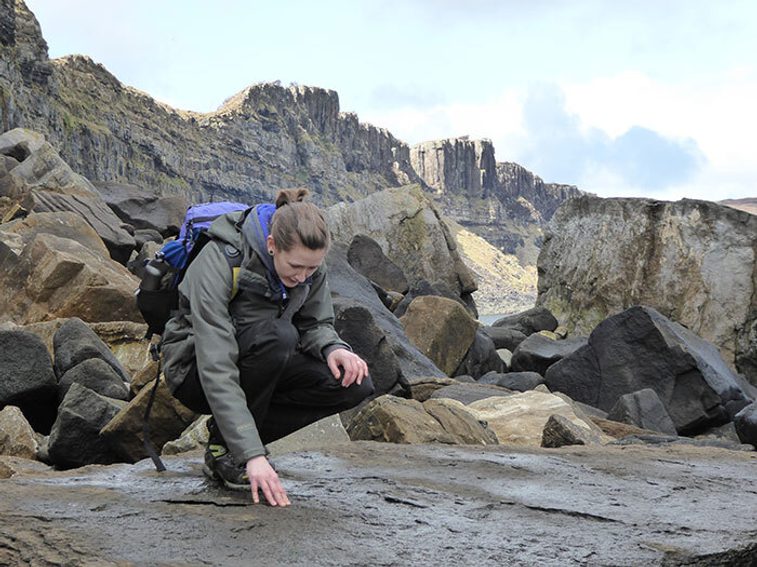
Elsa examined previously overlooked fossils from the Isle of Skye which are among the best-preserved Middle Jurassic mammals outside China. Using micro CT-scanning, Elsa reconstructed the fossils digitally in 3D and used them to study the anatomy of these creatures, helping to tell us how they lived, what they ate, and where they fit into the ecosystem of Jurassic Scotland.
Elsa has gone on to become a Research Associate at National Museums Scotland, and a Leverhulme Trust Early Career Researcher at the Oxford University Museum of Natural History. Find her on Twitter @gsciencelady.
- Project title
Origin and Evolution of Mammals: study of an exceptionally preserved skeleton from the Middle Jurassic of Skye, Scotland
- Student
Dr Elsa Panciroli
- Project active
2015 - 2019
- Funder
NERC E3 (Edinburgh Earth and Environment) Doctoral Training Partnership
- University Supervisors
Dr Stephen Brusatte - School of Geosciences, University of Edinburgh
Prof. Zhe-Xi Luo - Department of Organismal Biology and Anatomy, University of Chicago- National Museums Scotland Supervisor
Dr Stig Walsh and Dr Nick Fraser - Department of Natural Sciences
- Research theme
Sustainability
Project contact
Dr Stig Walsh
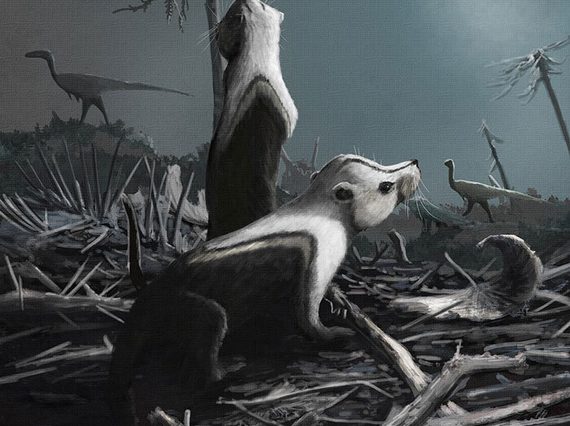
Lead image: Jurassic Coast: Stereognathus by Mark Witton (markwitton.co.uk).
Natural Sciences news and stories

Scotland in the time of Giants
Natural world, Scotland
Written by Dr Sarah StewartFollowing the extinction of dinosaurs and other animals such as marine reptiles 66 million years ago, smaller surviving animals evolved, and some became giants.
The Roaring Game: Scotland's curling stone island
Natural world
Written by Dr Bob GoodayDid you know that all curling stones are quarried on a small, uninhabited island in the Firth of Clyde called Ailsa Craig?
6 world-class type specimens in our stores
Natural world
Written by Professor Andrew Kitchener, Dr Rachel Walcott & Dr Andrew RossType specimens are among the most important objects in natural science collections. They are the specimens on which the scientific names of species of animals, plants or minerals are based. Animals and plants are named using the Linnaean…