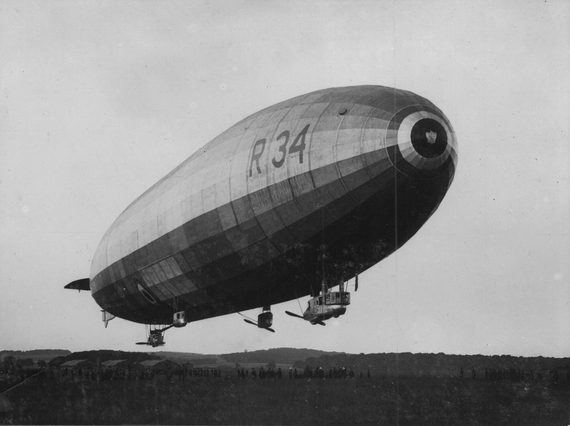
Stowaways and cats: The first transatlantic flight from Britain to the United States
News Story
On 2 July 1919 Airship R34 departed from East Fortune Airfield, landing on Long Island, New York over four days later. It was the first transatlantic flight from Britain to the United States.
An epic journey
On a cold misty morning on 2 July 1919 at 1:42am the intrepid crew of the Airship R34 set off. Eight officers, 22 men, one stowaway, two pigeons, and a kitten embarked on the first ever return flight between Britain and the United States.
The voyage began just a few weeks after Alcock and Brown’s record-breaking west-east Atlantic flight. The R34’s trip would mark the first east-west crossing by air.
Another first was marked by the airship R34 with the first arrival in the USA by air when Major Pritchard parachuted from the airship to instruct the ground crew.
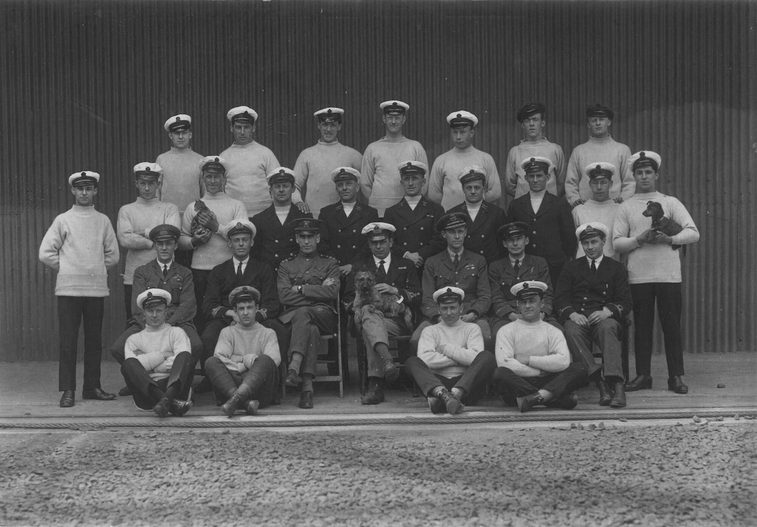
Most of the crew of the Airship R34, including their mascots Wopsie the cat and the dogs Punch and Judy.
Tiny at East Fortune
The airship R34 measured 643 ft (approx 196 m) and was nick-named Tiny. It was stationed at East Fortune, which was a Royal Naval Air Station at the time, and now is home to the National Museum of Flight. The airships came under the command of the Navy as their primary duties were convoy protection and anti-submarine activities.
The R34 arrived at East Fortune in May 1919. The airship was constructed at the William Beardmore factory at Inchinnan near Glasgow but was completed too late to see active service in World War 1. She had one operational voyage over the Baltic Sea as part of a show of strength in advance of the ratification of the Treaty of Versailles.
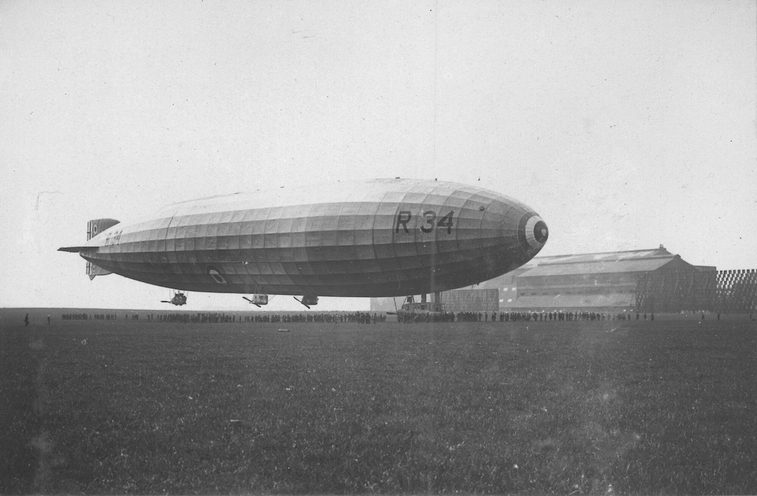
Airship R34 at East Fortune Airfield in 1919.
Departure from East Fortune
When R34 left East Fortune for the United States, no photographs were taken but a painting by British artist David Weston depicts the scene. The artistic interpretation helps demonstrate the huge scale of the airship.
The initial destination for R34 in the United States was Mineola in Long Island. Rolling grasslands and favourable winds made it a popular choice for aviators.
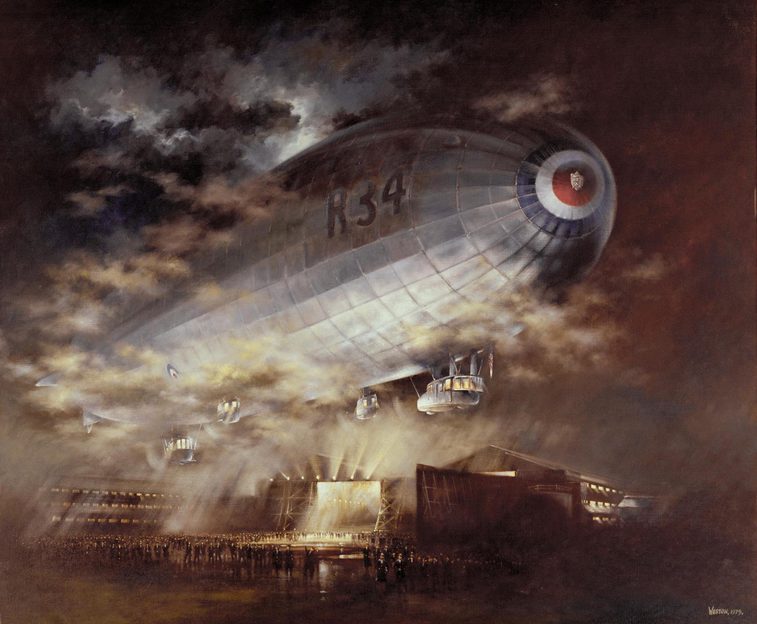
Painting depicting the departure of the British airship R34 on 2 July 1919 from East Fortune by David Weston, England, 1979. Museum reference T.1979.165.
During the crossing
We have various objects in our collection that tell individual stories of this significant journey. This includes a letter written by the chaplain at East Fortune to his sister that was carried by the R34 across the Atlantic. The envelope for the letter notes that it was dropped over Nova Scotia then found in November 1919 and posted on.
Our collection also features the bowplate from the R34, the airship’s altimeter dial, binoculars, a camera used on the flight, and a bottle of brandy that was taken on board for medicinal reasons.
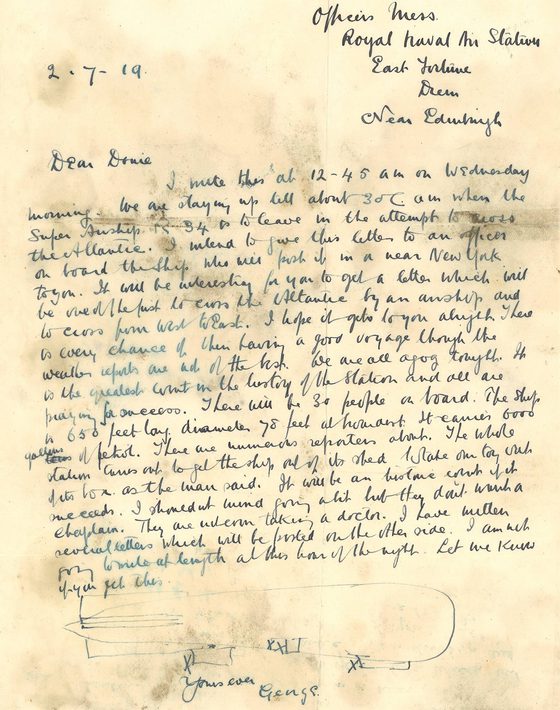
This letter was written by the chaplain at East Fortune to his sister and carried by the airship R34 across the Atlantic. Museum reference EF.2019.16.1.1.
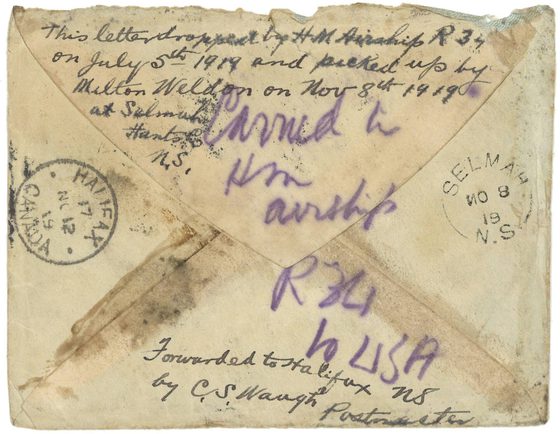
The envelope for the letter carried by the airship R34, which notes it was dropped over Nova Scotia then found in November 1919 and posted on. Museum reference EF.2019.16.1.2.
Arrival in United States
The R34 reached Mineola at 9:54am on 6 July 1919. It was 108 hours and 12 minutes after it departed East Fortune; about four and a half days. The journey was filled with adventure and near disasters. The crew contended with dwindling fuel supplies and violent squalls, as well as a leak that was repaired with the crew’s entire supply of chewing gum.
Most surprisingly the journey marked the world’s first human and feline trans-Atlantic aerial stowaways. Newcastle man, William Ballantyne who had originally been part of the crew stowed away on the voyage as well as Wopsie the cat.
The R34 returned to the UK, landing at Pulham in Norfolk.
Image gallery
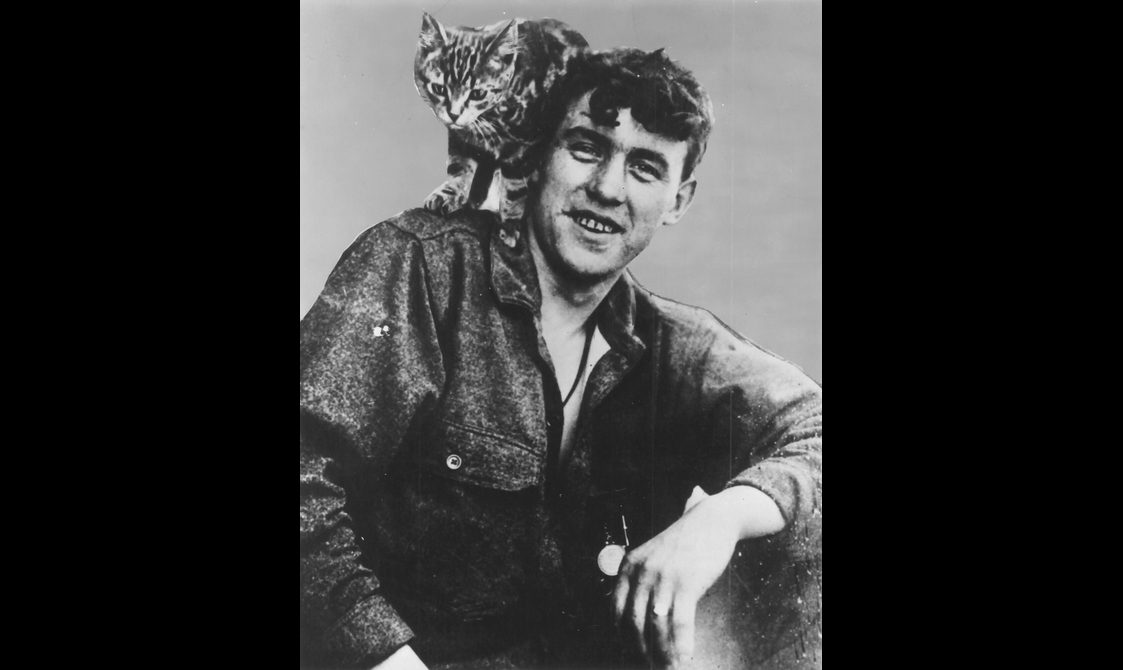
William Ballantyne with Wopsie the cat, photographed in the United States. They both stowed away on the voyage to the US.
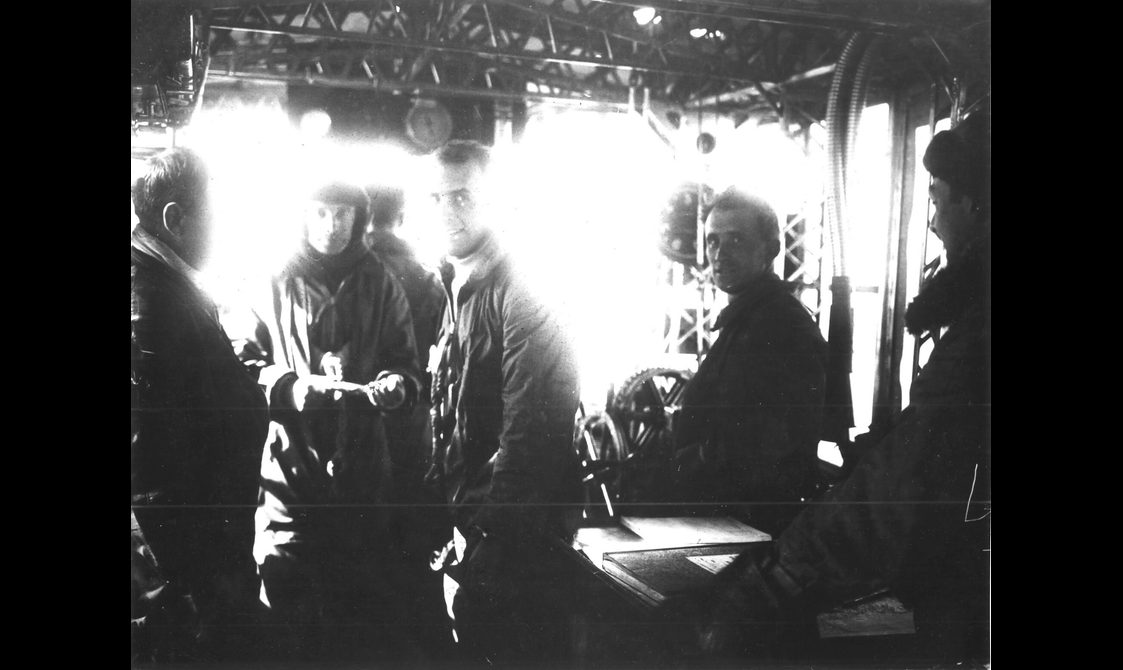
The forward control car of airship R34 taken during the transatlanticflight. The altimeter is displayed at the National Museum of Flight.
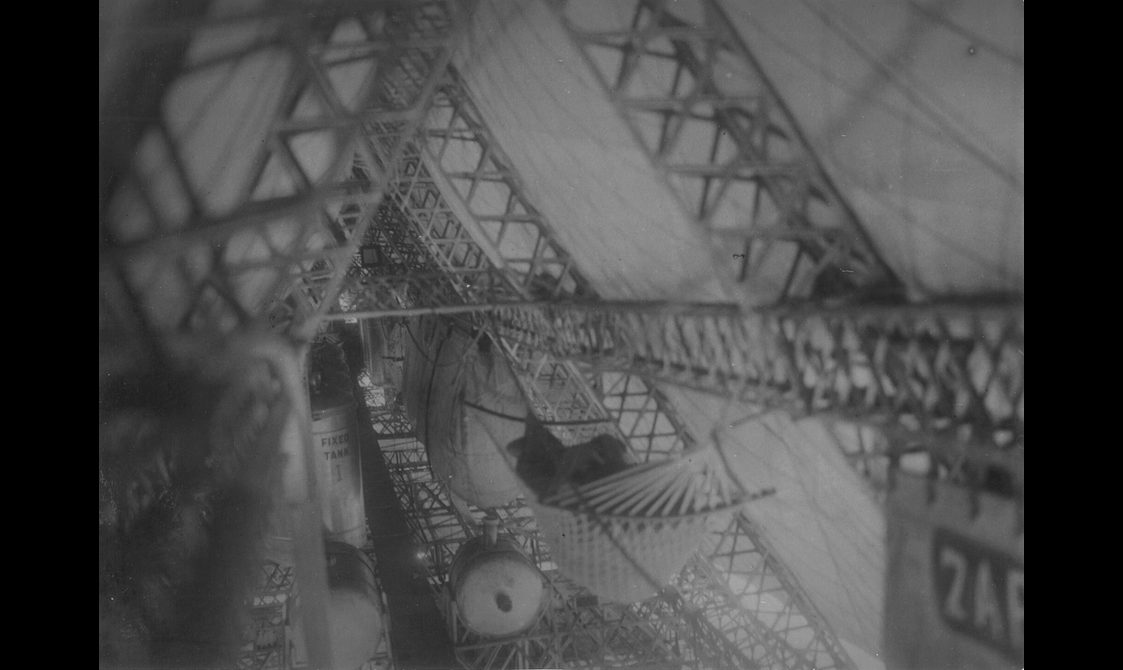
The plank walkway in the keel of airship R34 with aluminium fuel tanks to the left and canvas bags containing water ballast on the right, plus crew hammocks.
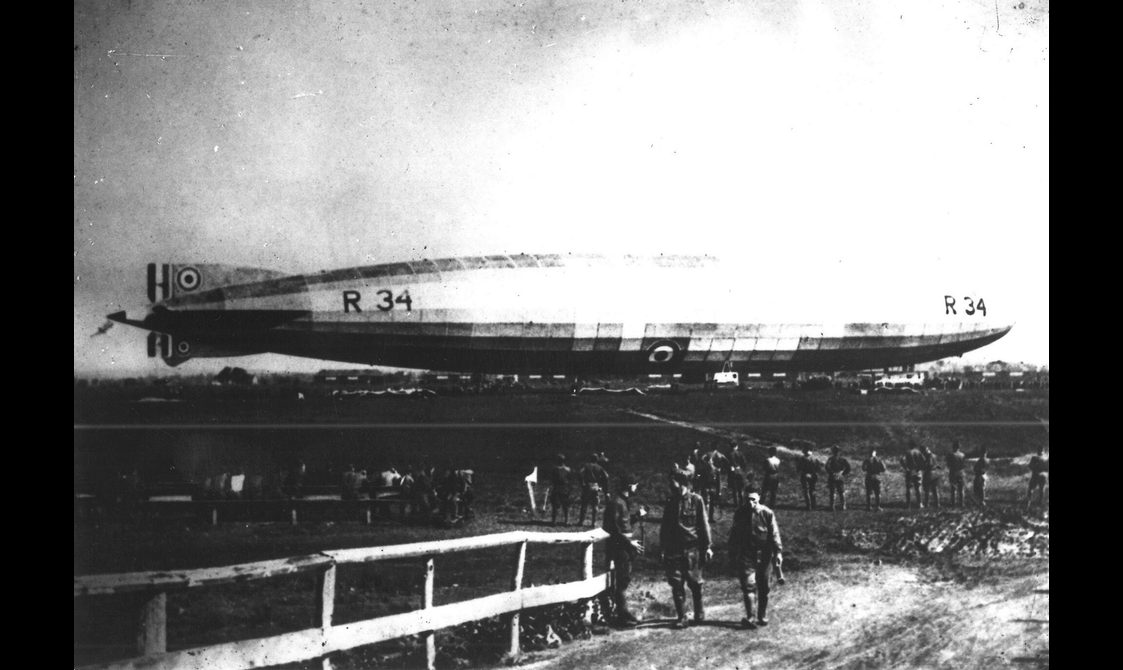
R34 at Mineola, with the White Ensign of the Royal Navy flying from the tail, as preparations are made for the return to the UK.
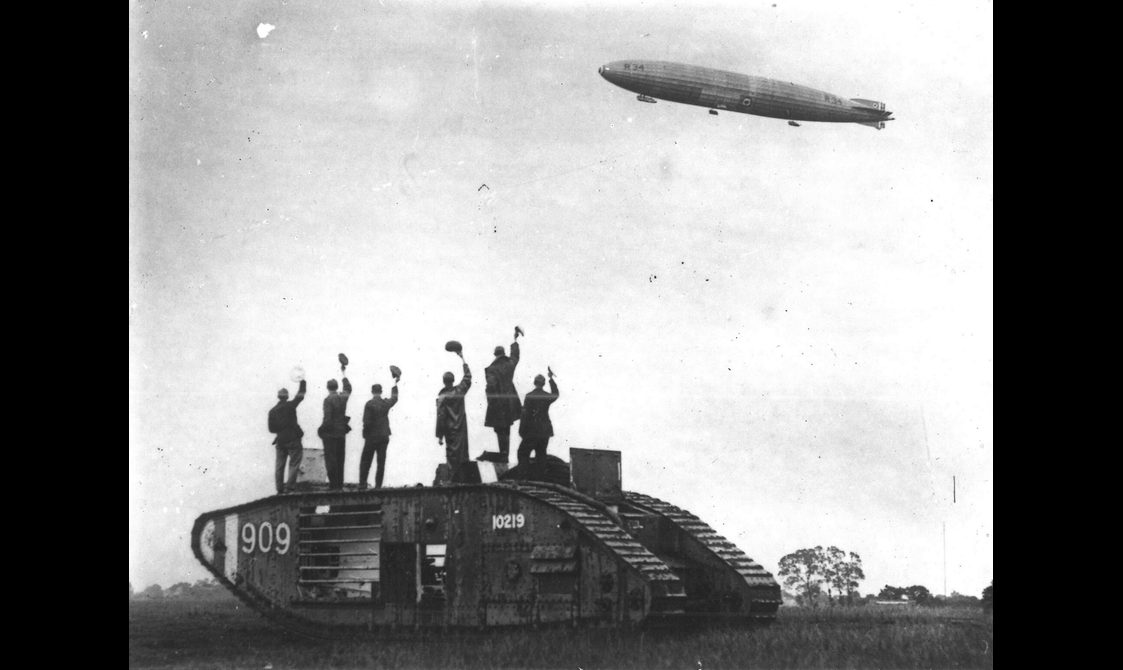
R34 returns to the UK, at Pulham in Norfolk. The tracked vehicle is a tank that was used to move the airship shed doors.
Several objects related to the airship R34 are on display at the National Museum of Flight.
You might also like
The story of the Spitfire: An iconic British combat aircraft
Science and technology
The Spitfire is the most famous of all British combat aircraft, and played a vital role in the Battle of Britain in 1940.
Concorde: The story of supersonic passenger flight
Science and technology
For almost 30 years, anyone who could afford the ticket could shoot across the globe at twice the speed of sound. How? By flying on Concorde, the world’s only successful supersonic passenger aeroplane.
An introduction to Red Arrows Hawk
Science and technology
This iconic Red Arrows Hawk T.1A was flown by the Royal Air Force (RAF) Aerobatic Team, the Red Arrows.The aircraft was donated by the Ministry of Defence through RAF Heritage. It is on permanent display at the National Museum of Flight,…