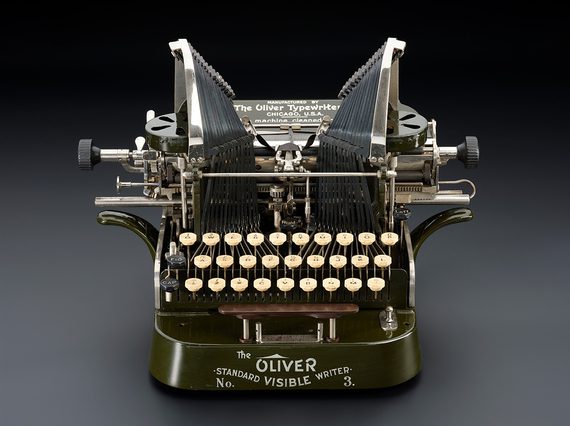
About The Typewriter Revolution
The typewriter not only revolutionised offices, but also transformed the world of work - especially for women.
This exhibition explored how these remarkable machines have helped to influence both society and technology, and why they are still popular today.
Writing a new chapter
The impact of the typewriter has been much wider than simply speeding up the way we write. It helped revolutionise the world of work and change the lives of working women in particular. Typewriters helped them launch their own businesses at a time when female employers were rare and became a vital weapon in the fight for the vote.
The typewriter's social and technological influence is revealed in this new exhibition and looks at its role in society, arts and popular culture. It traces the effect and evolution of typewriters across more than 100 years, from weighty early machines to modern style icons. And despite being erased from many offices by the rise of computers, the typewriter has remained a beloved design icon that is still in use today.
Tap into typewriters
Drawing on our outstanding typewriter collection, the exhibition featured a range of machines, including an 1876 Sholes and Glidden typewriter which was the first to have a QWERTY keyboard; a 1950s electric machine used by Whisky Galore author Sir Compton Mackenzie; and the 1970s design icon, the Olivetti Valentine.
[The typewriter] will, in course of time, do for the ink-bottle and the pen, what the sewing machine has already done for the needle.
John J Deas, 1884
Exhibition highlights
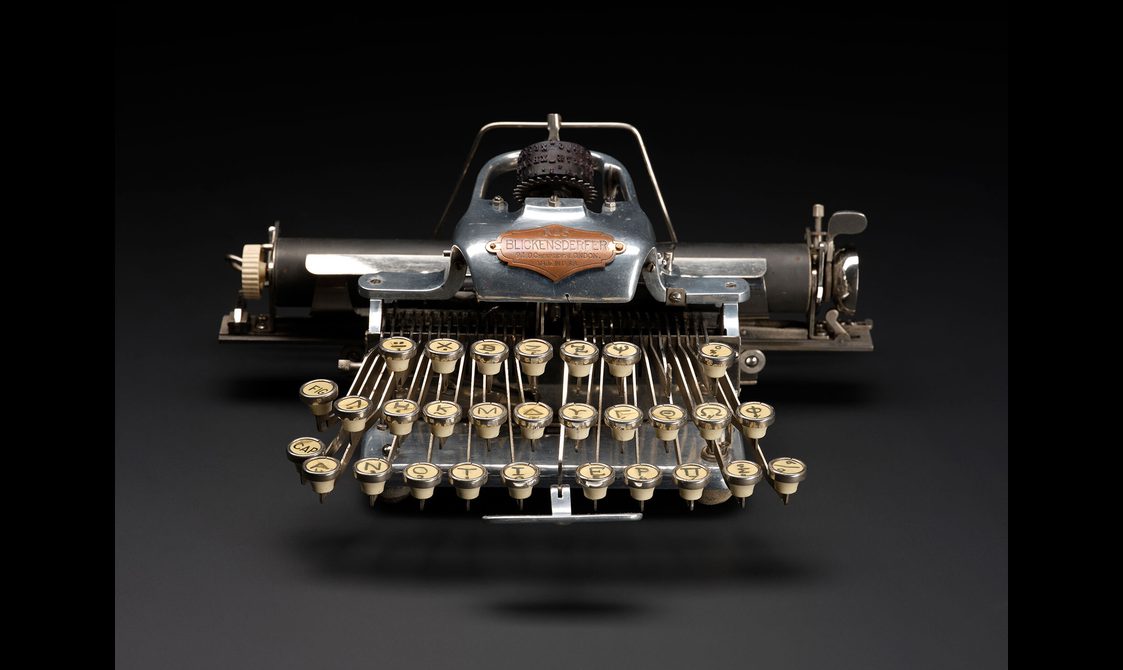
Released in 1894, the Blickensderfer No 5 was one of the first portable typewriters with a keyboard. This example – which has been adapted to type in Greek – was owned by Arthur Beattie, Professor of Greek at the University of Edinburgh. Blickensderfer No. 5 typewriter. Manufactured in Stamford, Connecticut, c. 1898 - 1909 (T.1963.69.1).
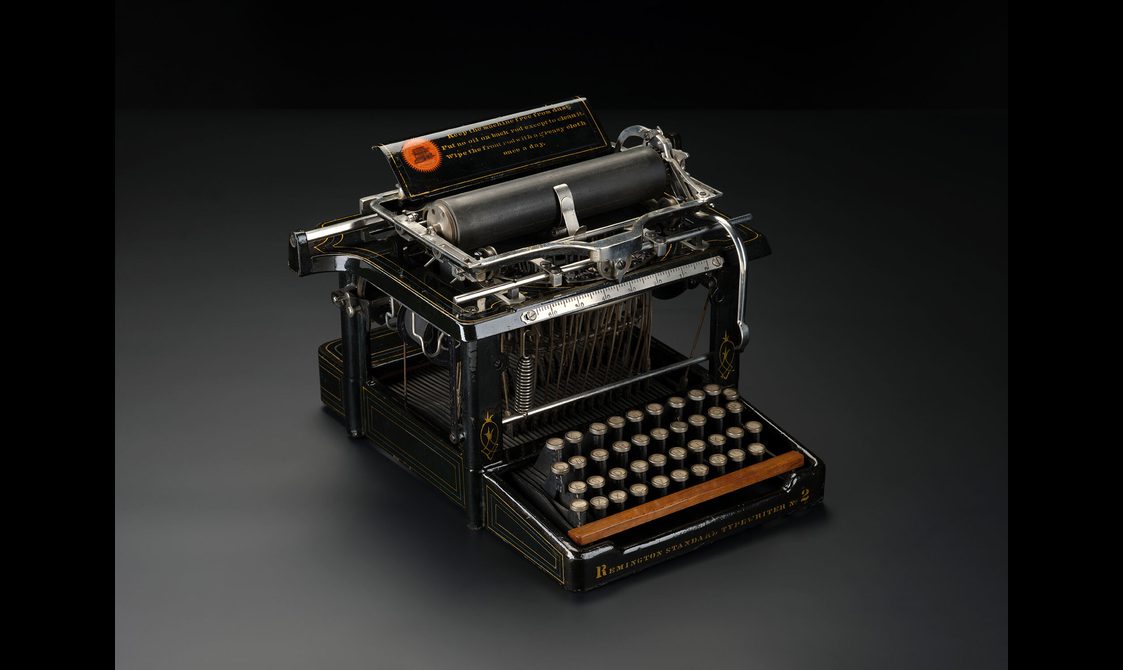
Released in 1878, the Standard No 2 featured several improvements on Remington’s first typewriter model, the Sholes & Glidden. Most important was the shift key which allowed the typist to swap between lower- and upper-case letters. Remington No. 2 typewriter, manufactured 1887 - 1888 (T.1960.34.1).

A Sholes & Glidden typewriter manufactured by Remington in 1876. Museum reference T.1904.304.
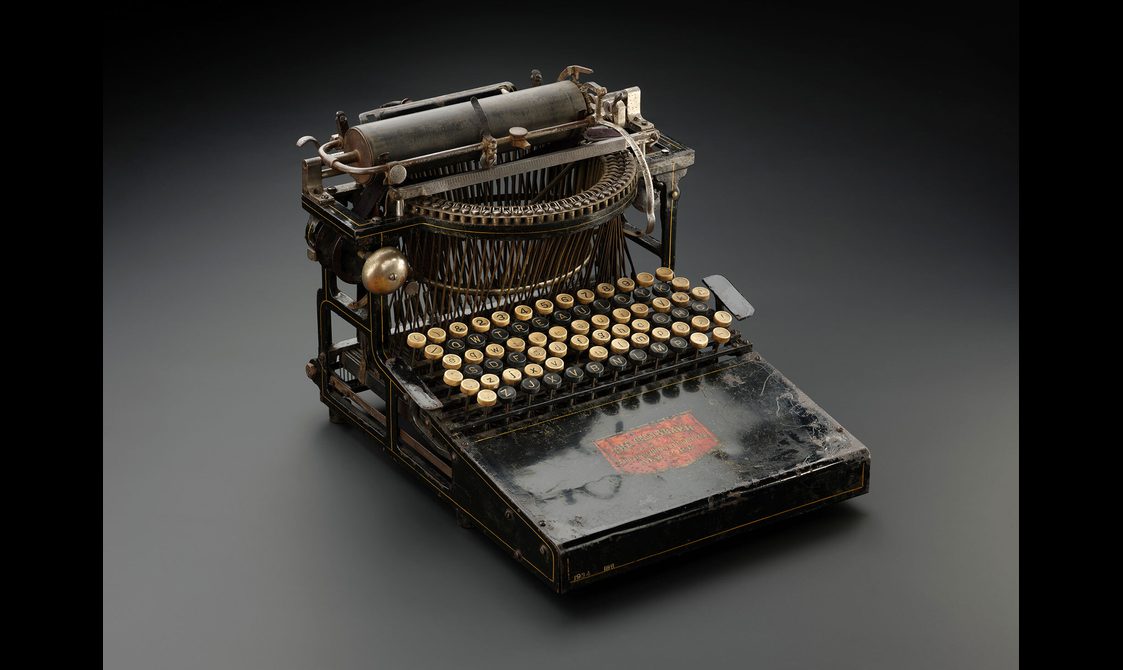
The Caligraph typewriter was the first major competitor to Remington typewriters. Instead of a shift key, from 1882 Caligraphs featured a full keyboard with separate keys for lower-case, upper-case, numbers and special characters. A Caligraph No. 4 typewriter, by the American Writing Machine Co, New York, 1895 - 1900 (T.1934.188).
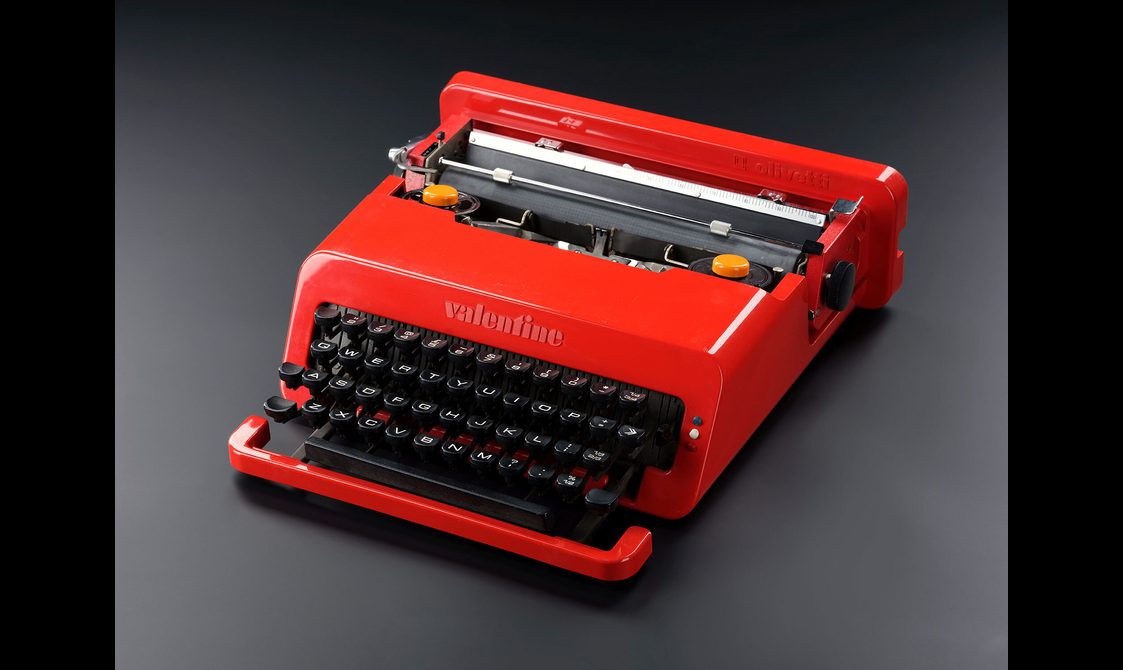
Designed by Italian architect Ettore Sottsass and British designer Perry King, this machine was marketed as a stylish accessory and was far removed from office culture. While its high price tag meant that it was not a commercial success, today it is highly prized by collectors. Olivetti Valentine typewriter manufactured in Barcelona, Spain, c. 1970 (T.1989.15.1).
You might also like
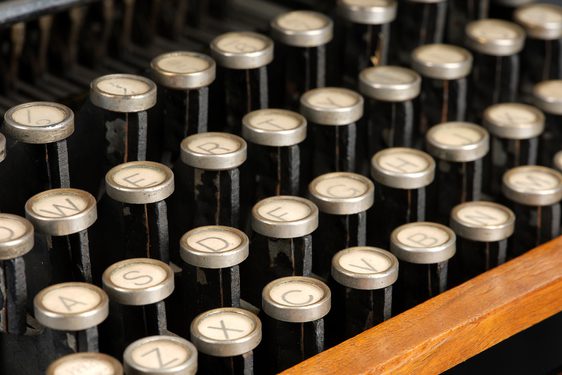
History of the typewriter
Science and technology
The typewriter helped revolutionise the world of work and change the lives of working women in particular. It helped them launch their own businesses at a time when female employers were rare and became a vital weapon in the fight for…
Sir James Black: The pioneering Scottish scientist who won the Nobel Prize
Science and technology
Sir James Black was one of the greatest Scottish scientists of the modern era. His work in medicine and pharmacology has improved the quality of life for millions of people around the world.
How a ceramic object fueled a medical breakthrough
Science and technology
A simple looking ceramic object made it possible for the first clinical trials and batch production of penicillin to take place. Its design marks a significant milestone in the history of medicine.