Increasing biodiversity on site
You might think the National Museums Collection Centre in Granton is not the type of place where nature can thrive. But over the past few years we’ve unlocked its potential for biodiversity.
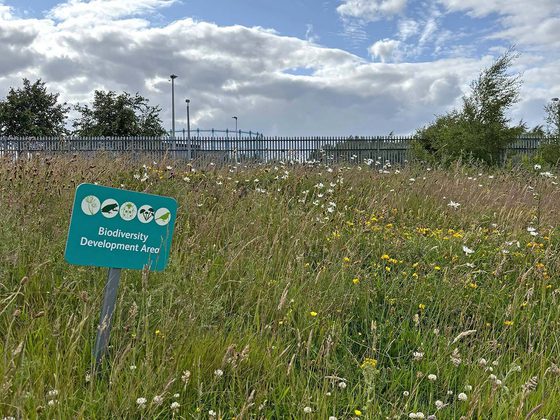
The National Museums Collection Centre is a mixture of old and new buildings with two car parks and small patches of green space laced between them. The grounds used to be managed in a very traditional way, with the grass cut short to look neat and tidy.
A growing body of research demonstrates that this is detrimental to biodiversity. If plants are allowed to grow and flower, we can hugely increase the value of the site for wildlife. So, a few years ago we put a team together including staff from across our organisation to improve the way in which the green space at Granton is maintained and used.
What we are doing
- Redesigned the grass cutting regime to develop a mixture of vegetation heights (including leaving some areas uncut over the winter)
- Regular insect and plant surveys conducted by staff, dedicated entomology volunteers, and local naturalist groups
- Hosting a BIOSCAN malaise trap for monitoring flying insects
- Installed camera traps and audio recorders to capture records of the more elusive bird and mammal visitors.
Species on site
So far we have recorded more than 400 species of plants and animals at the Collection Centre. The site is now home to over 130 species of plants, including a diversity of wildflowers and grasses which have been allowed to flourish. These in turn encourage and support a wide range of insects and other invertebrates.
- 16species of butterfly
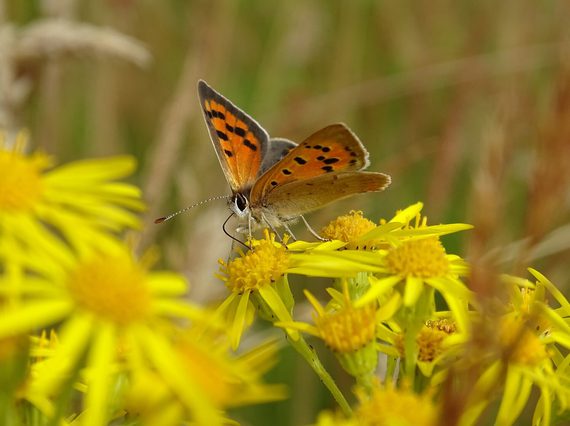
- Including Orange-tips, Speckled woods, Peacocks, Red admirals, Small coppers and the scarce Wall butterfly. We’ve found that a number of species are breeding on the site too, such as Small skippers and Painted Lady butterflies.
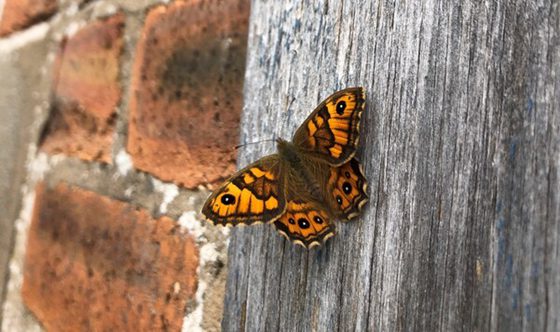
A Wall butterfly (Lasiommata megera).
- 44species of birds
- Including Goldfinches, Chiffchaffs, Redwings, Song Thrush, Pied Wagtails, Bullfinches, Swallows, and Common Kestrels. Blue-tits and House sparrows have been recorded nesting on site.
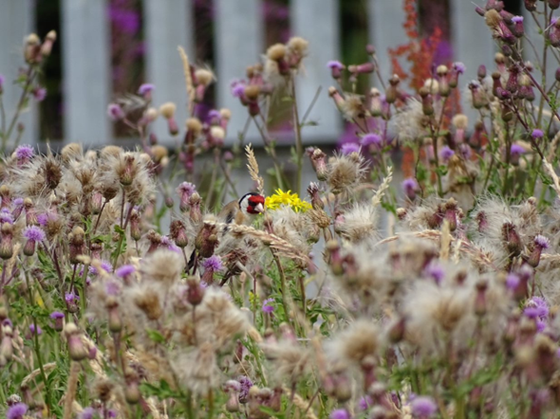
A Goldfinch feeding on the seeds of Creeping thistle.
- 140species of moths
- From Poplar hawk moths and Garden tigers to Canary-shouldered thorns and the striking red and black day-flying Burnet moths. Many moth caterpillars have been recorded too, such as Cinnabars, Buff-tips, Miller moths, Dot moths and Grey daggers, to name a few.
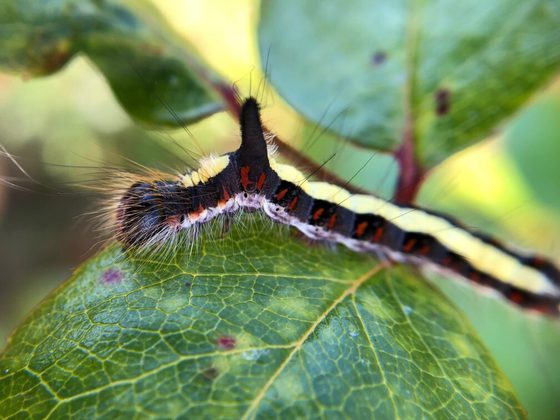
Caterpillar of a Grey Dagger moth (Acronicta psi).
iRecord
We use a wildlife recording platform called iRecord for logging most of our sightings. This not only helps us to monitor the species found on our site and any changes over time, but it also means our wildlife data is shared nationally and can contribute to wider conservation efforts. You can explore a summary of what we've recorded on our site.
Recording urban wildlife is something anyone can get involved with, whether it's in your own garden, local park, or on your way to the shop! Create a free iRecord account and once set up, you can take photos and upload your observations. By doing this, you turn a simple sighting into a scientific record that will contribute to a national biodiversity database, and support conservation.
Read more about this work and find tips for how to get involved with the No Mow movement.
