Egypt: Past and Present
A project connecting Egyptian communities in Scotland with Egyptian collections and creating space for dialogue around the display and interpretation of Egyptian heritage.
Last updated: 23 June 2026
About the project
Unequal power dynamics between UK museums and Egyptian communities are rooted in colonial histories that enabled foreign collectors and institutions to acquire, interpret, and display Egyptian heritage with little to no Egyptian input.
In the 19th and early 20th centuries, museums collected ancient Egyptian objects that appealed to European audiences, but these collections do not accurately reflect the relationship between Egypt past and present. Furthermore, the disconnection of ‘ancient Egypt’ from the rest of Egyptian history and the commodification of Egyptian antiquities have often served to alienate Egyptians from their own ancient heritage.
Today, National Museums Scotland, home to the largest Egyptian collection in Scotland, is working to address these legacies by creating opportunities for dialogue, collaboration, and shared understanding with the communities whose heritage is represented in our collections.
This project forms part of our ongoing efforts to foster meaningful conversation around the Egyptian collections, to research and communicate their colonial histories and legacies, and to provide space for consultation and co-creation with Egyptian communities in Scotland.
A series of community workshops were designed in collaboration with:
- Lama Said, Egyptian PhD candidate at University of Edinburgh
- Mohamed Tonsy, Edinburgh-based Egyptian writer and ceramicist.
The project aimed to ensure that the voices and perspectives of Egyptians are represented in our understanding of Egyptian heritage.
- Project title
Egypt: Past and Present
- Project active
2026
- Research themes
Colonial Histories and Legacies, Scotland's Material Heritage, Identities and Cultural Contacts
- Strategic priorities
Developing, preserving and increasing access to the National Collection, Reaching out to people across Scotland and the world
Contributors
Margaret Maitland - Principal Curator, Ancient Mediterranean, National Museums Scotland
Lama Said - PhD candidate and project intern
Mohamed Tonsy - writer/ceramicist
Reconnecting Egyptian heritage and communities
Historically little attention has been paid to the impact of colonial legacies on modern Egyptian communities. Nevertheless, National Museums Scotland has been researching these histories and exploring ways to share more information about its collections with Egyptian community members.
In 2019-2022, National Museums Scotland partnered with the AHRC-funded project Egypt’s Dispersed Heritage: views from Egypt, which sought to share the history of the dispersal of Egyptian artefacts and to foster dialogue with Egyptian communities.
We continue to explore ways in which Egyptian perspectives, frequently underrepresented in traditional museum displays, might be more effectively incorporated into the interpretation and presentation of Egyptian heritage and collections.
This project aligns with the National Museums Scotland Approach to Participatory Practice; as such, participants are recognised as experts based on their lived experience and are remunerated for their time. Participants were provided with Participant Information Sheets in advance to ensure that they fully understood the project and their rights, as well as completing Consent forms at each of the workshops, in which they could choose to consent to their contributions being used or not, either credited or anonymised, as well as being free to withdraw their consent at any time.
Workshops
As the museum’s first direct collaboration with the Egyptian community in Scotland, the 'Egypt: Past and Present' community workshops aimed to foster connections, share collections and learn about community perceptions of Egyptian heritage.
At all three workshops, participants engaged directly with our collections outside of glass display cases. This included not only antiquities, but also historic and contemporary objects, reflecting the breadth of collections at National Museums Scotland and highlighting continuities in Egyptian culture and identity.
Sharing leadership and co-design of the project with Lama Said and Mohamed Tonsy was essential to ensuring that Egyptian perspectives were represented in its conception and delivery. To avoid being extractive, participants were able to input into the workshop planning across the series through feedback forms, and each session included enjoyable creative activities.
Critical discussion of displaying Egyptian heritage
The first workshop took place at the National Museum of Scotland on 7 February 2026, and was designed as an open and welcoming gathering for members of the Egyptian community living in Scotland.
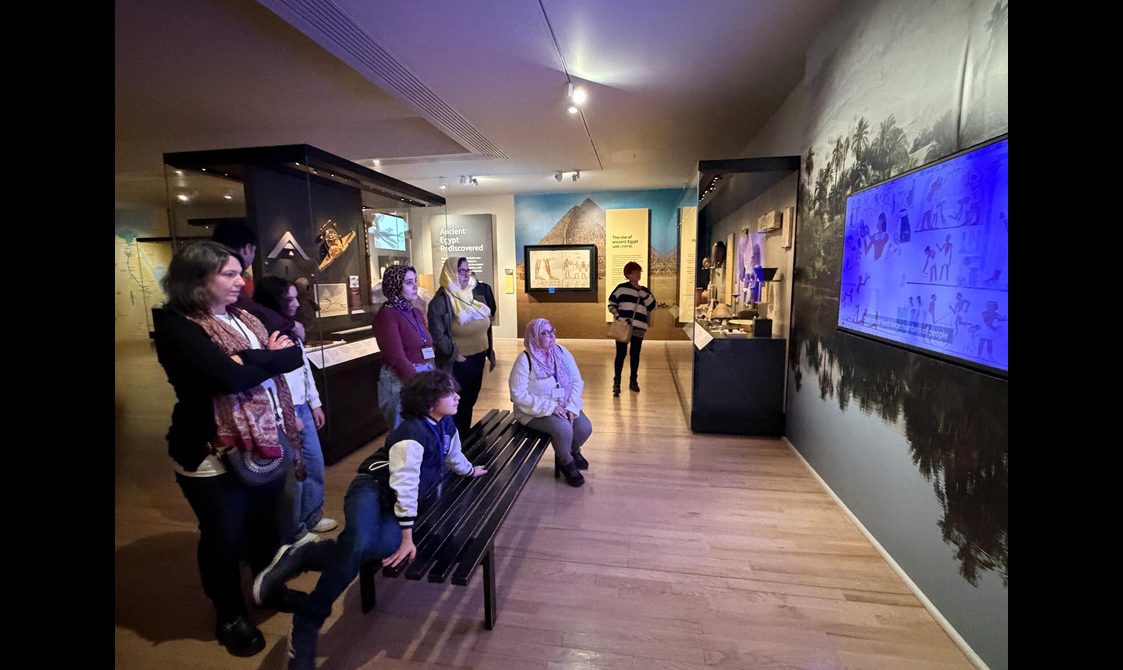
‘Whenever I come to the gallery, I sit and watch this video and I see my country.’ - Hala Eladany
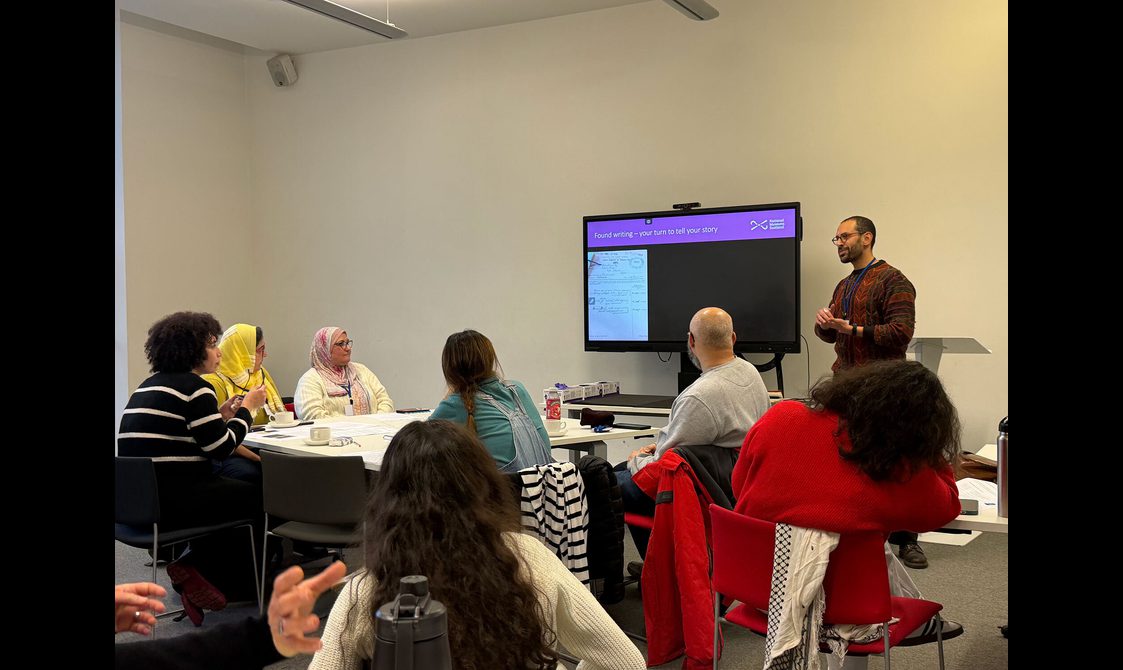
Mohamed Tonsy leading the found writing exercise.
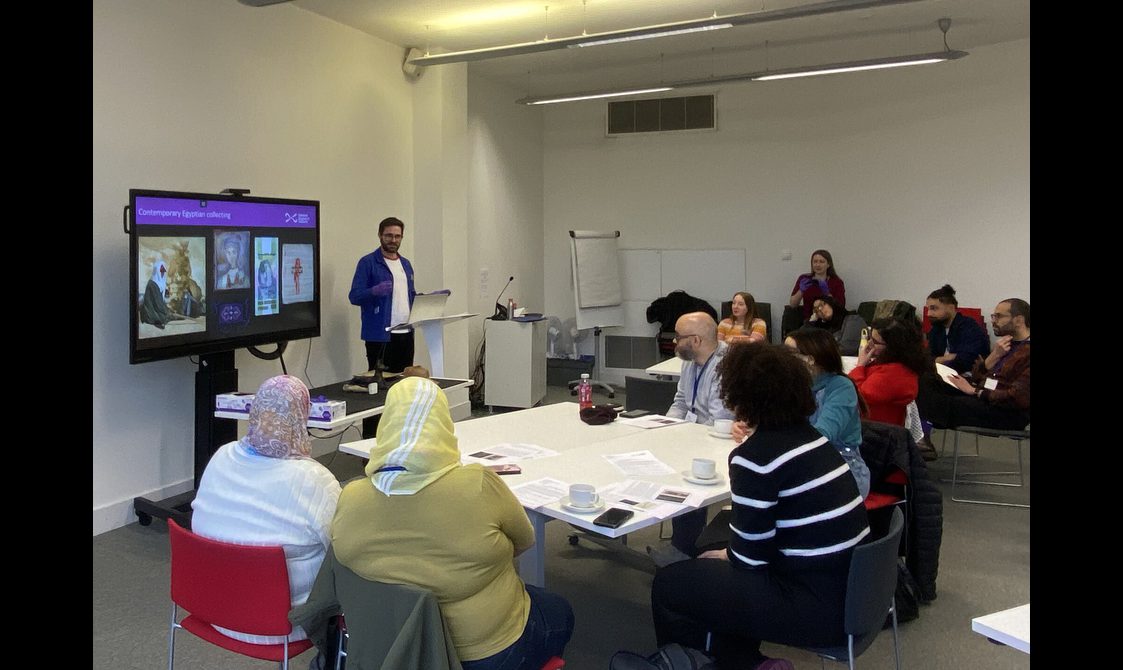
Dan Potter sharing some of the museum’s recent contemporary collecting.
Fifteen participants from Edinburgh, Glasgow, and Aberdeen visited the Ancient Egypt Rediscovered gallery and shared their perspectives on how Egyptian heritage is represented. A ‘found writing’ activity led by Mohamed Tonsy provided an opportunity for creative responses to the museum collections.
For Hala Eladany, visiting the gallery stirred different emotions in her:
I feel sad that they [the artefacts] are far away from home, but I also feel pride that everyone can see our heritage.
Hala Eladany
Another participant, noting that the final case in the gallery focuses on the Roman and Late Antique periods (30 BC – AD 641), felt that the displays made it seem that Egyptian history just ended with the pharaonic era, disregarding everything that came afterwards. Abeer Eladany added, ‘We are the same people - there was no population displacement’.
While it is typical for Egyptian galleries to display only the pharaonic era, this can suggest a complete separation between Egypt’s past and present. Ancient Egypt did not just suddenly end; rather Egyptian culture transformed over time, and many ancient traditions still endure. The final display in the 'Ancient Egypt Rediscovered' gallery is currently under review and participants’ contributions will be considered as part of this work.
Engaging with ancient, historic, and contemporary collections
The second workshop was held at the National Museums Collection Centre on 27 March 2026, and invited participants to share their thoughts on a wide range of Egyptian objects currently in storage.
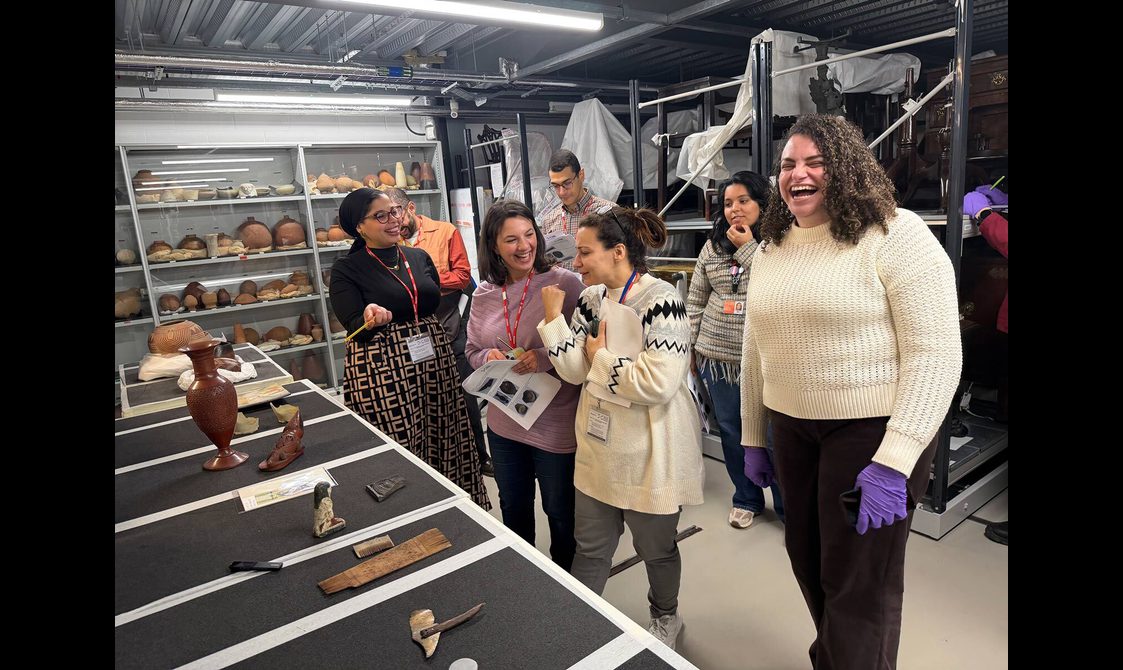
Viewing objects in the store (right to left): Lama Said, Zainab Imran, anonymous, Mohamed AboelEla, Soha El Hindawi, Mohamed Tonsy, anonymous.
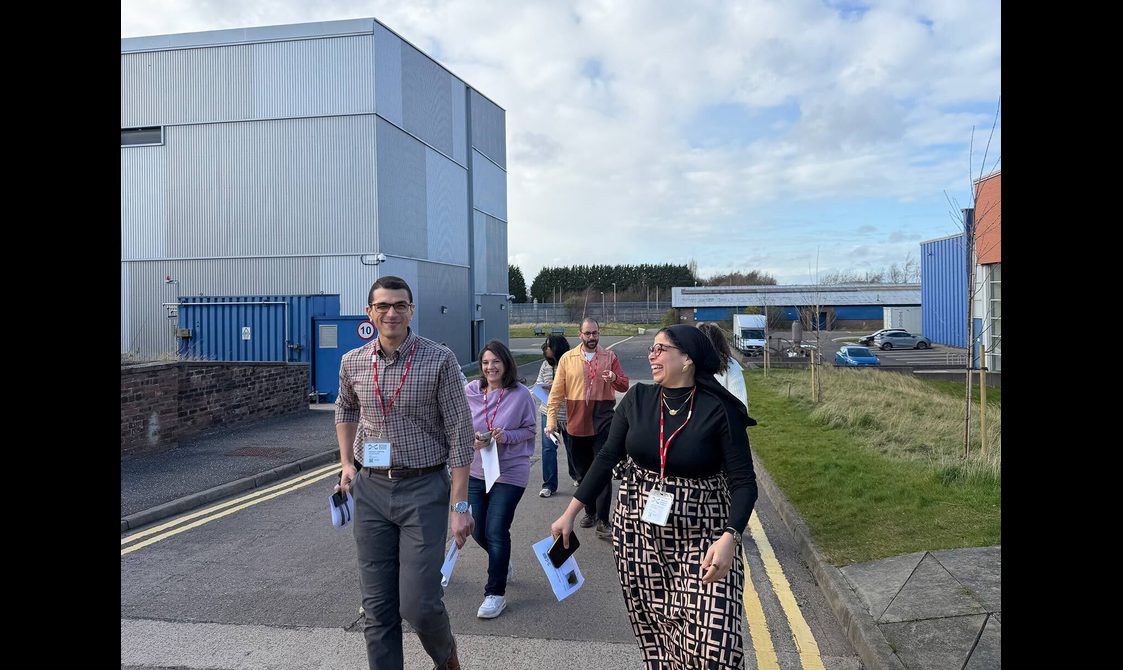
Walking between buildings at the National Museums Collection Centre at Granton.
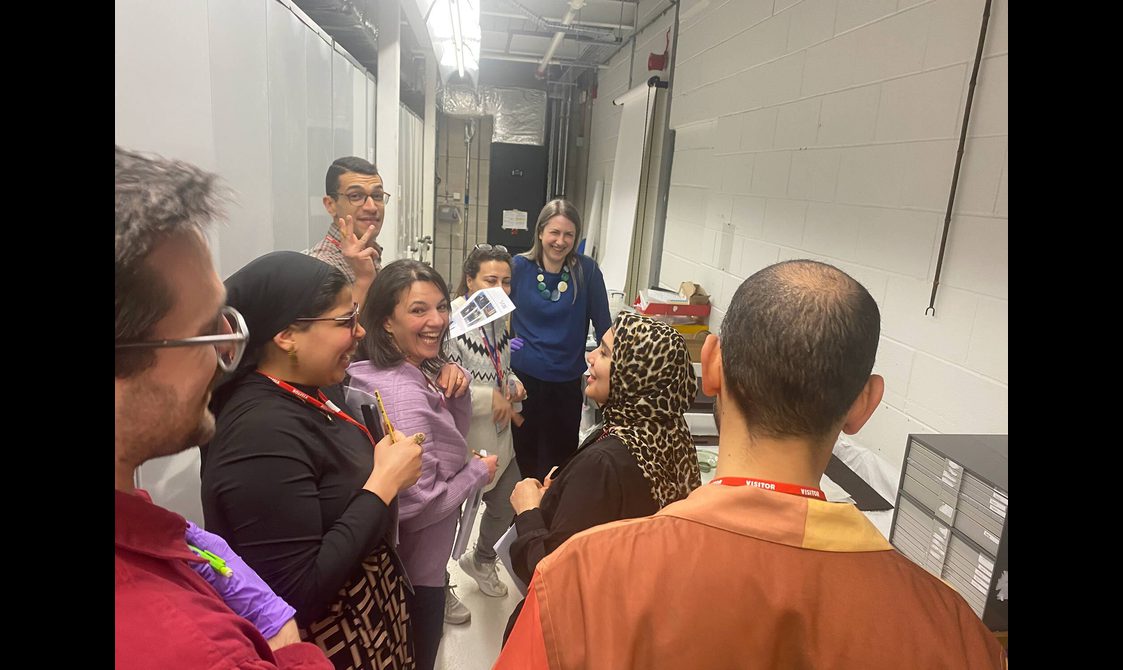
Participants in the store.
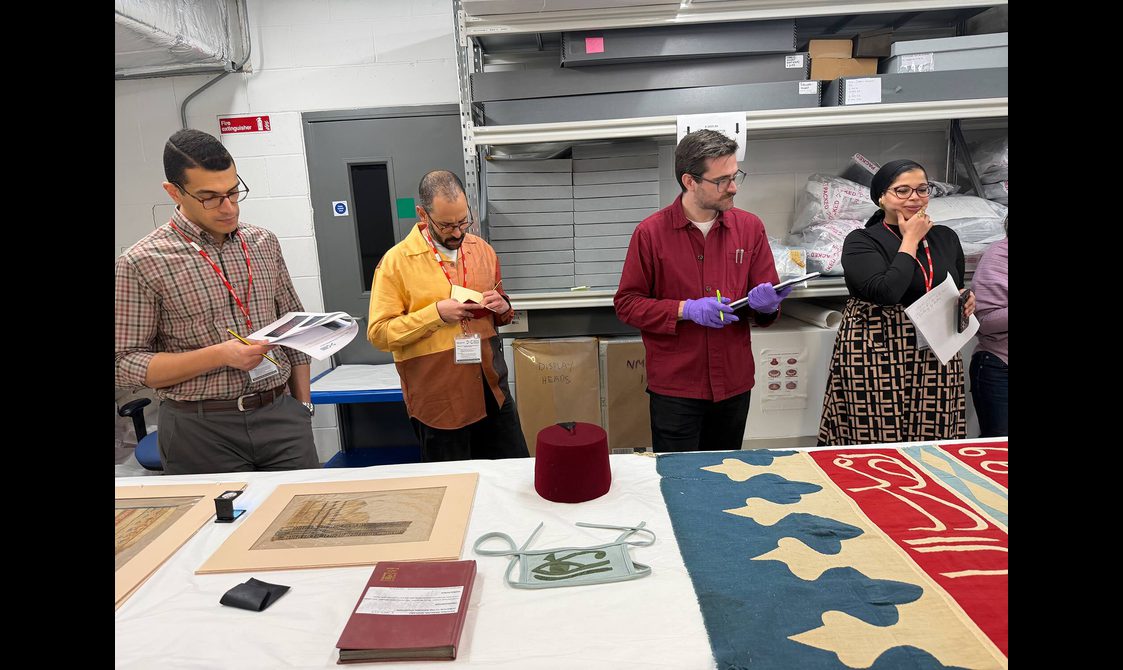
Examining Late Antique, historic, and contemporary textiles from Egypt.

‘A lot of people actually, non-Egyptians, they consider that Egypt is just only a desert ... And... never knew that ...history started from the Nile Valley there.’ - workshop participant. Historic postcard entitled ‘Cairo. The Pyramid of King Cheops seen from the valley of the Nile’, early 20th century (T.2024.1).
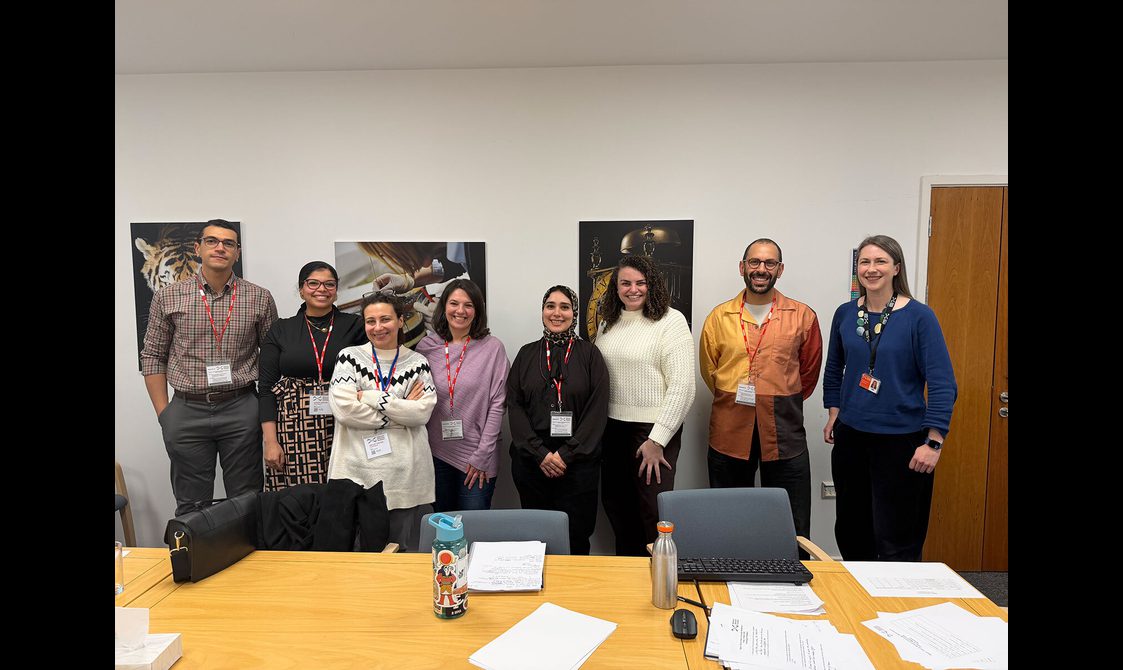
Left to Right: Mohamed AboelEla, anonymous, anonymous, Soha El Hindawi, Eman Abualfadl, Lama Said, Mohamed Tonsy, Margaret Maitland.
The participants’ responses revealed the enduring significance of these collections, not as relics of a distant past, but as items that continue to hold meaning for Egyptians today.
Objects of daily life from antiquity in particular sparked emotional connections, for example one stated of the kohl jars: ‘now I know from where I got my love for it 💗 My ancestors’.
Participants identified an ancient Egyptian comb as similar to those that are still used today to remove lice: a detail not widely recognised in museum collections.
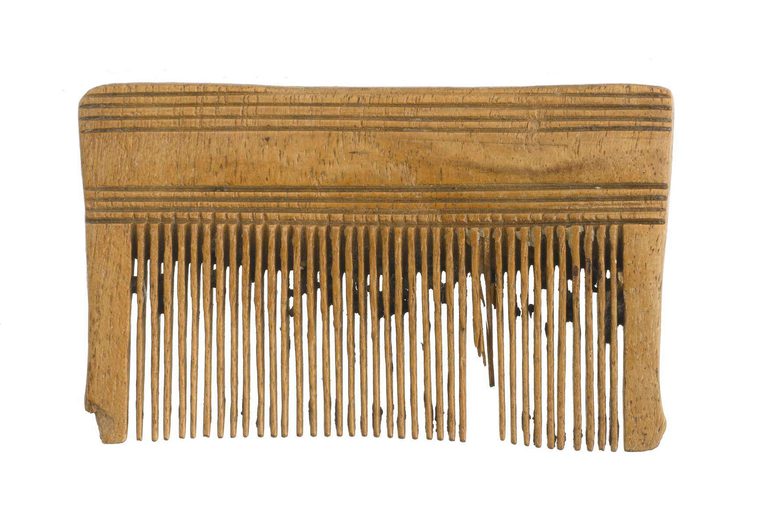
Wooden lice comb with thirty-nine fine teeth: Ancient Egyptian, probably Roman Period (A.1921.898).
'I mean, it’s hard to say [exactly how it was used] because we don’t actually have the people to talk to and ask about it...’
Curator Margaret Maitland
‘You don’t have the people? We are the people - you have us! We have this at home! We still have things like this at home!’
Workshop participant
Historic and contemporary objects and artworks featuring calligraphy were especially engaging, as were those related to popular culture.
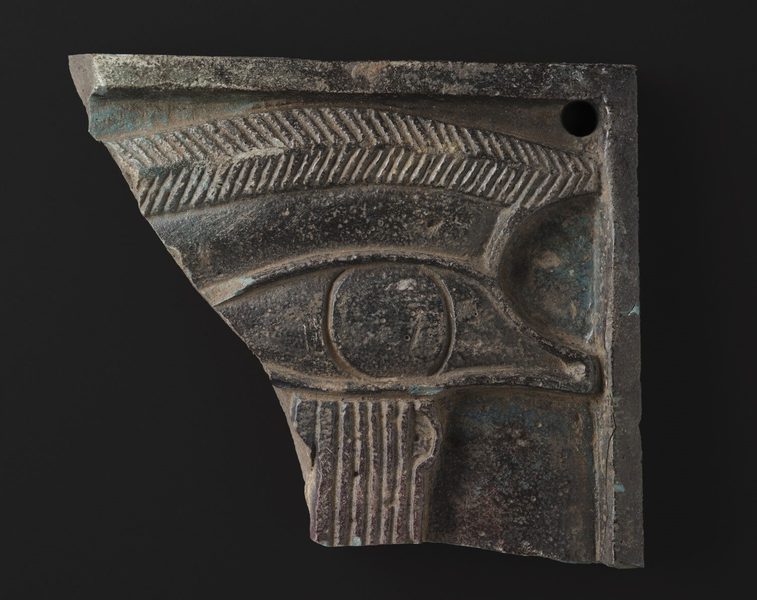
Votive faience plaque depicting the Eye of Horus: Ancient Egyptian, Ptolemaic Period or Roman, excavated at Melville House in Fife (A.1985.211 B).
The workshop also featured a creative writing exercise led by Mohamed Tonsy, in which participants crafted creative and personal labels for objects that they had viewed, in English or Arabic.
Soha El Hindawi wrote about a protective Eye of Horus amulet that had been excavated in Fife, probably collected by the Balgonie family who visited Egypt in 1856. Soha said that she felt a strong connection to the object and its journey from Egypt to Scotland. She addressed her label to her late grandfather, an orthopedic surgeon who had traveled to the UK:
I wanted my late grandfather to know that I saw this piece. It definitely had a story to tell. He would’ve wanted to be here to witness its journey that brought it to Scotland. It felt as if it’s saying “I’m here, watching over you” (Masr [Egypt] and him). Time has its signs over it, not the magic of it though!
Soha El Hindawi
Crafting personal responses to Egyptian heritage
The third and final workshop in this series took place at National Museum Scotland on 25 April 2026. The focus of this workshop was on the participants themselves and their perceptions of Egyptian heritage beyond the museum and its collections. They were invited to share aspects of Egyptian heritage including stories, memories, objects, places that held meaning for them.
The lively discussions that followed were wide-ranging. Community and social life emerged as a thread common to almost all of the discussions spanning food, everyday objects, festivals, traditions, places, and crafts, among others.
For example, participants highlighted deeply personal connections to kahk (cookies made to celebrate Eid) that mothers and grandmothers would bake at home together with their children, the smell of them baking filling the house, as well as the traditions woven around their making. Islam Noaman described the colourful foul medames (Egyptian broad bean stew) carts, where people from all walks of life stop to eat breakfast in the morning.
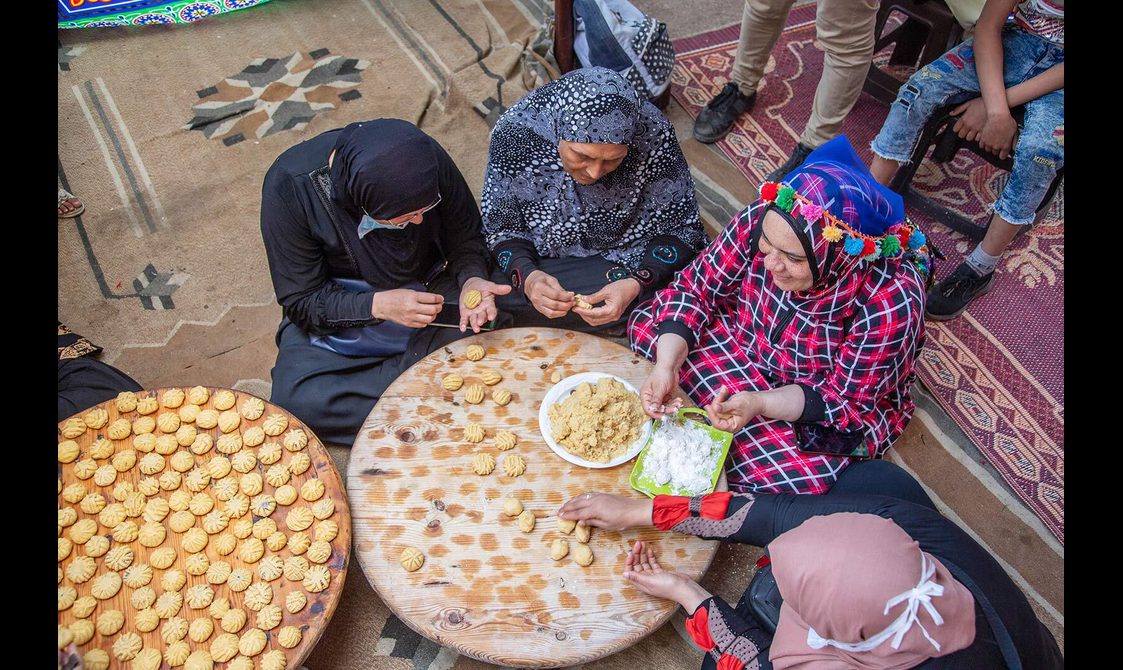
Photograph of women making kahk by Adelbayoumi licensed under the Creative CommonsAttribution-Share Alike 4.0 International license.
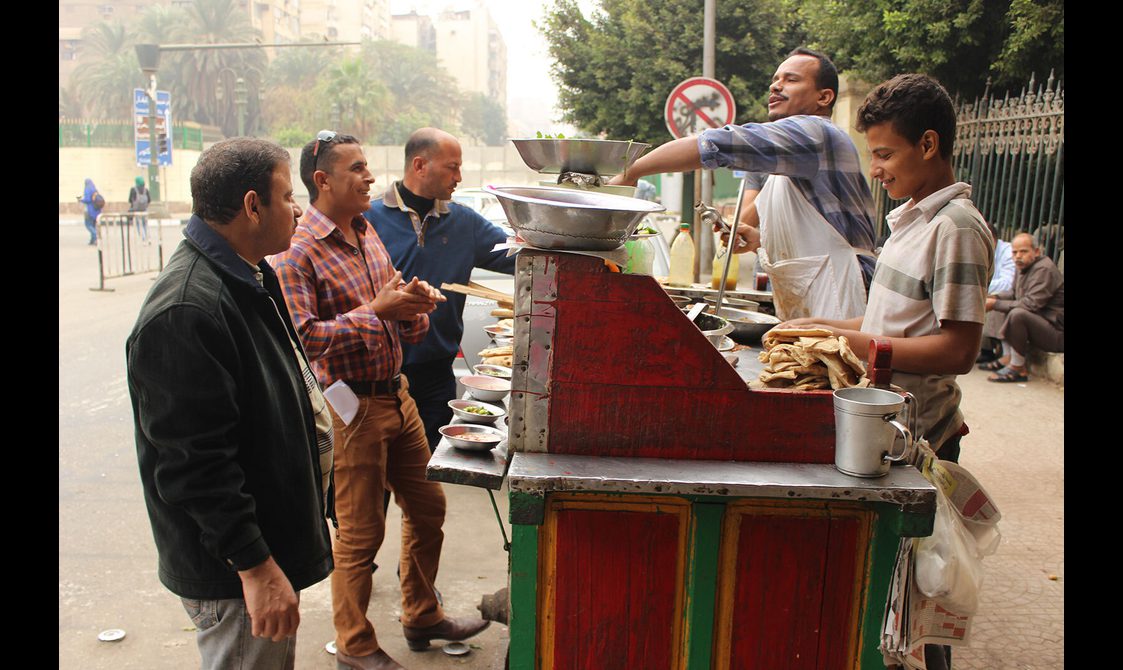
Photograph of a foul cart by Mohanad5ayman licensed under the Creative CommonsAttribution-Share Alike 4.0 International license.

‘We use these kinds of chairs in weddings and funerals. So really, it's purely Egyptian.’ - workshop participant. Photograph of an ahwa with distinctive ahwa chairs in Khan al-Khalili, Cairo.
Image gallery
Drawing from childhood memories, Sara Shaltout spoke of celebrating both Muslim and Christian moulids with her family in Assiut, reflecting the ways in which these festivals, while rooted in different traditions, form part of Egypt’s shared cultural fabric.
Khaled El Messiry fondly remembered long hours spent at the ahwa (street cafe), where people of different backgrounds would gather to play cards and backgammon or to simply talk about sports, politics and the everyday happenings of life.
The son of two participants contributed a PowerPoint presentation on his favourite things about Egypt, including the Pyramids of Giza, Cairo Tower, Siwa, upbeat Egyptian songs, and Friday morning breakfasts.
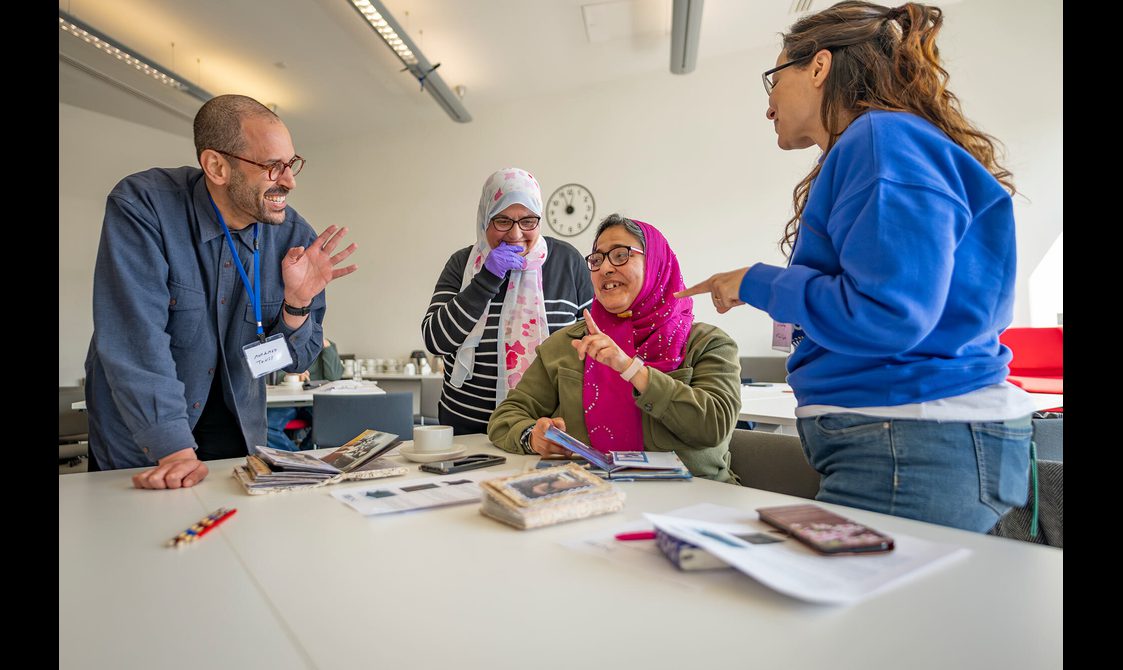
Workshop discussion (left to right): Mohamed Tonsy, Hala Eladany, Abeer Eladany, anonymous.
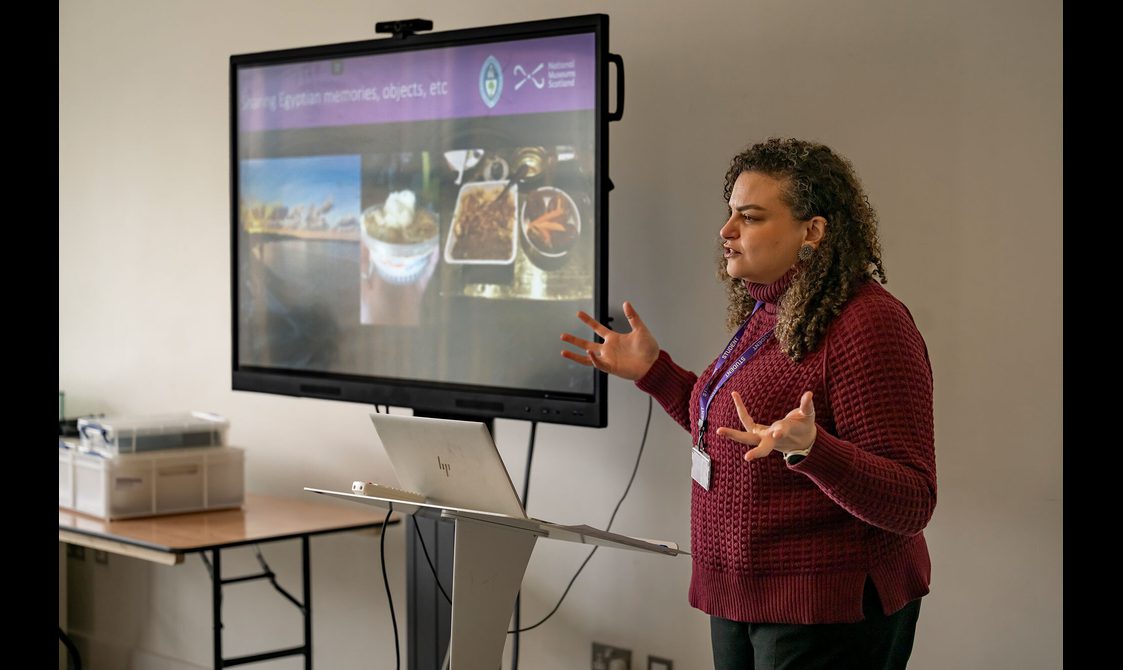
Lama Said leading the discussion.
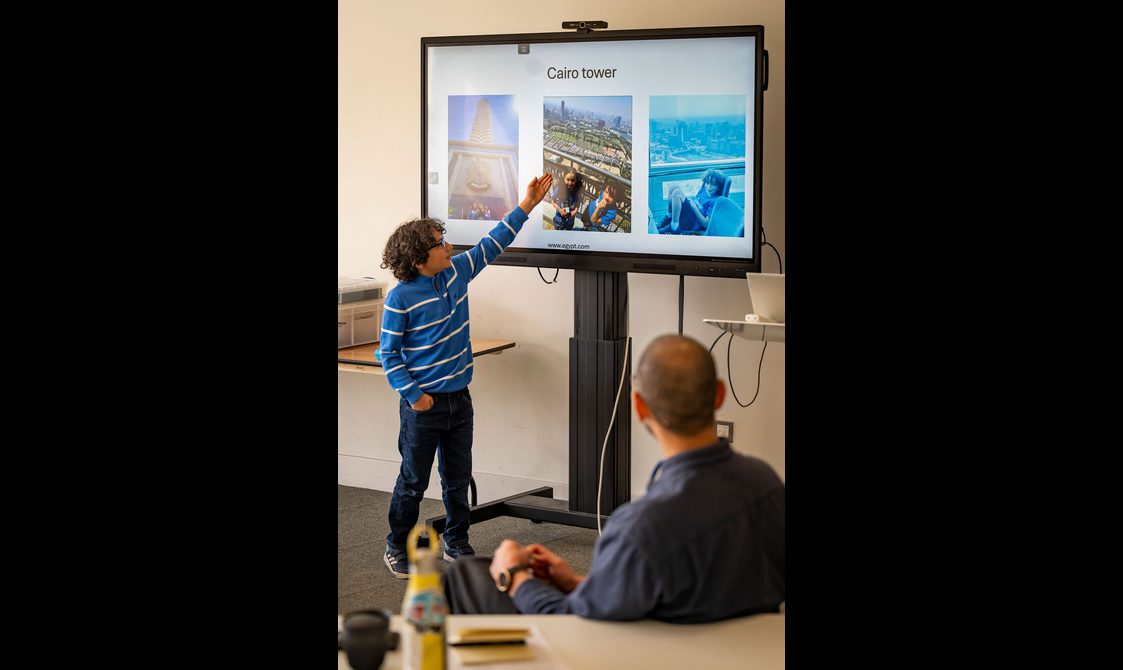
A child participant giving a presentation on his favourite things about Egypt.
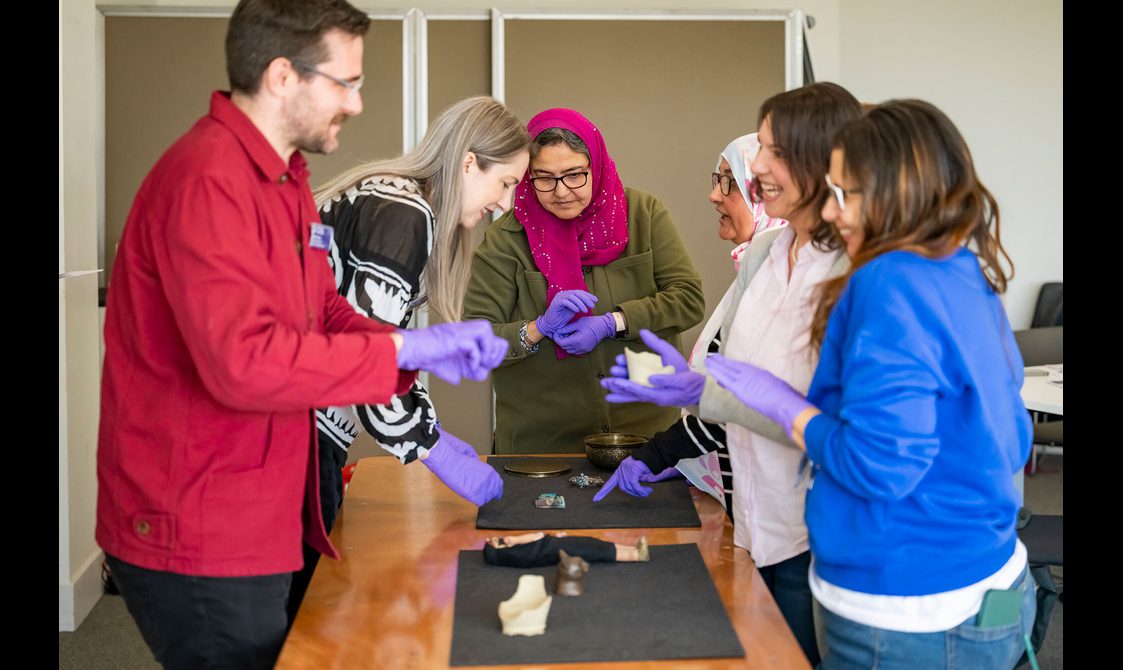
Sharing ancient, historic, and contemporary Egyptian objects from the National Collection with participants.
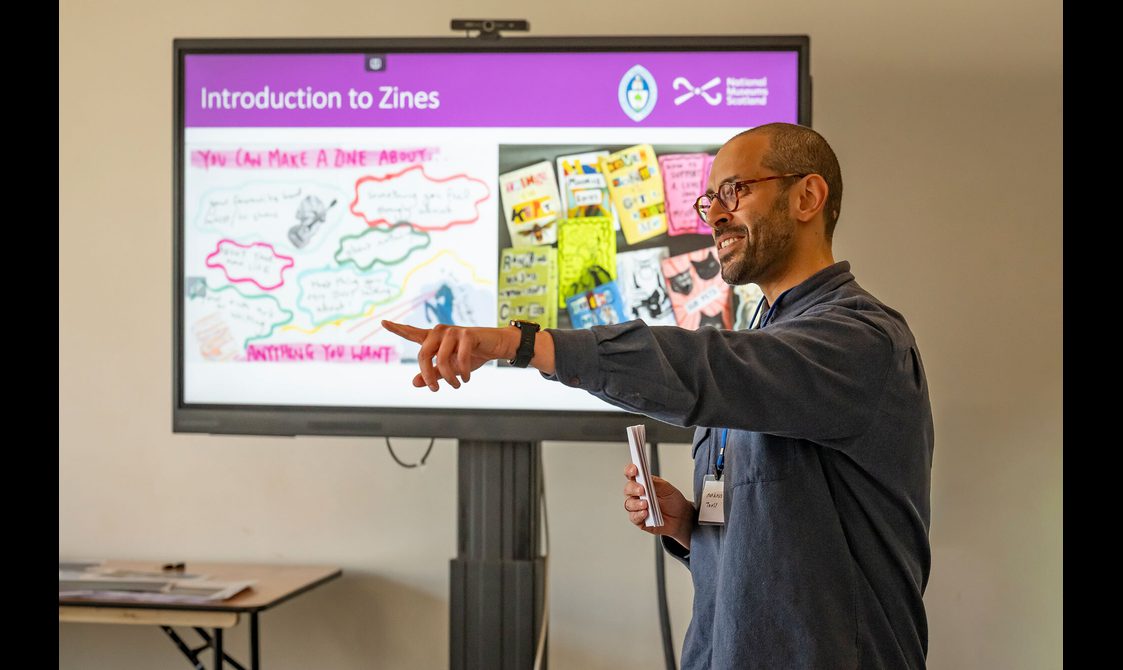
Mohamed Tonsy introducing the zine-making creative activity.
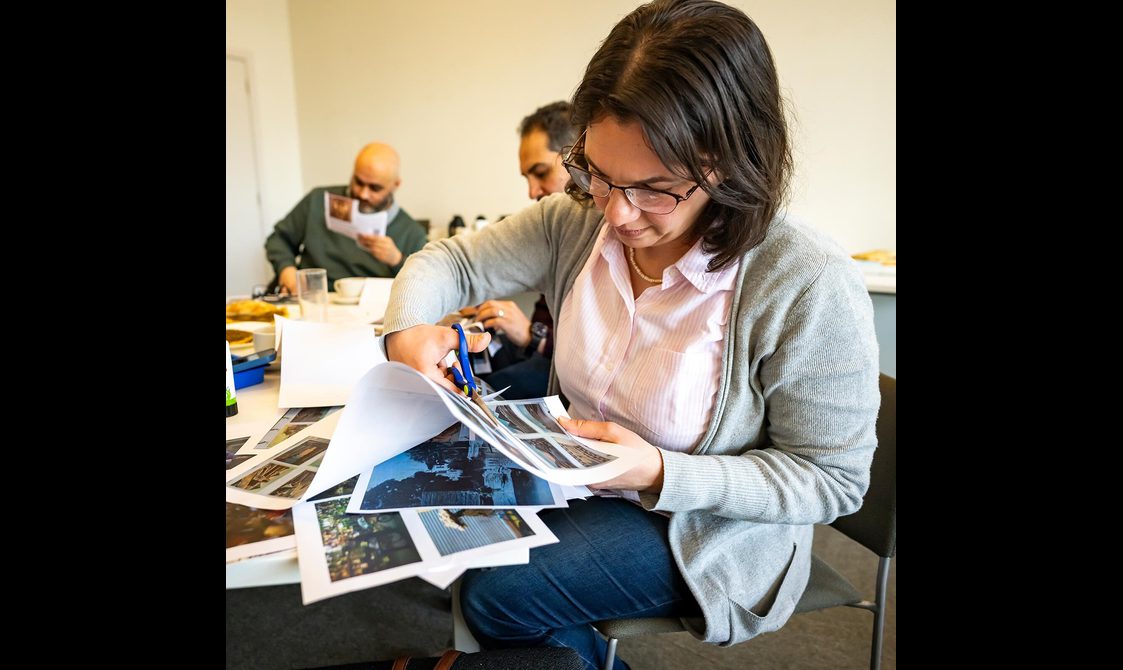
Soha El Hindawi zine-making.
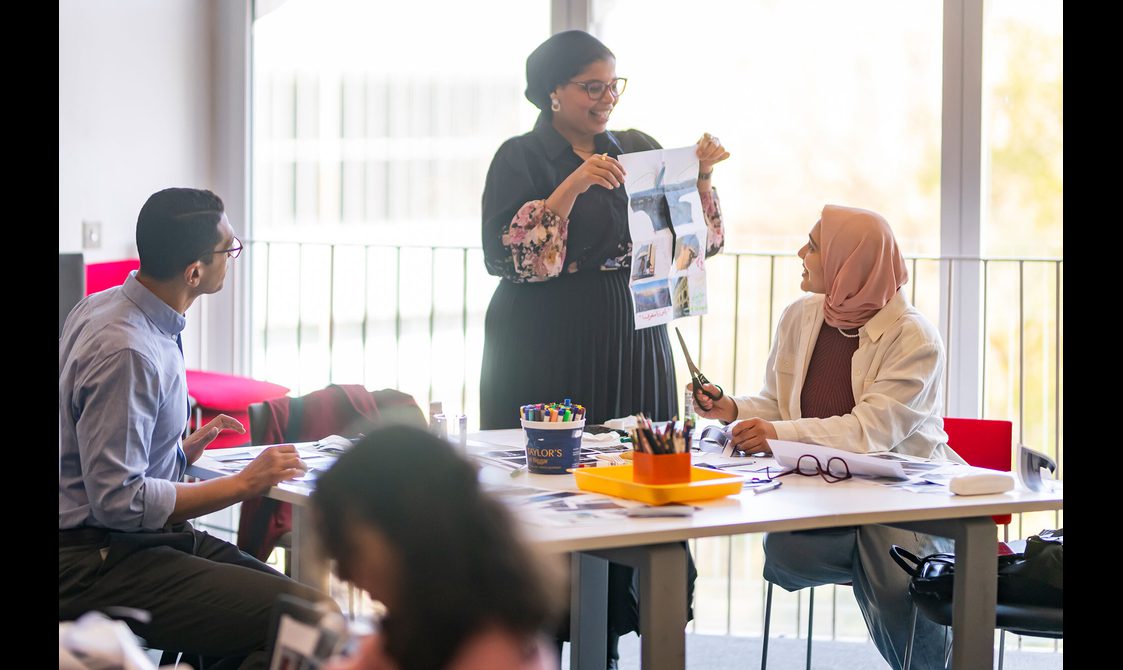
Participants sharing their zines.
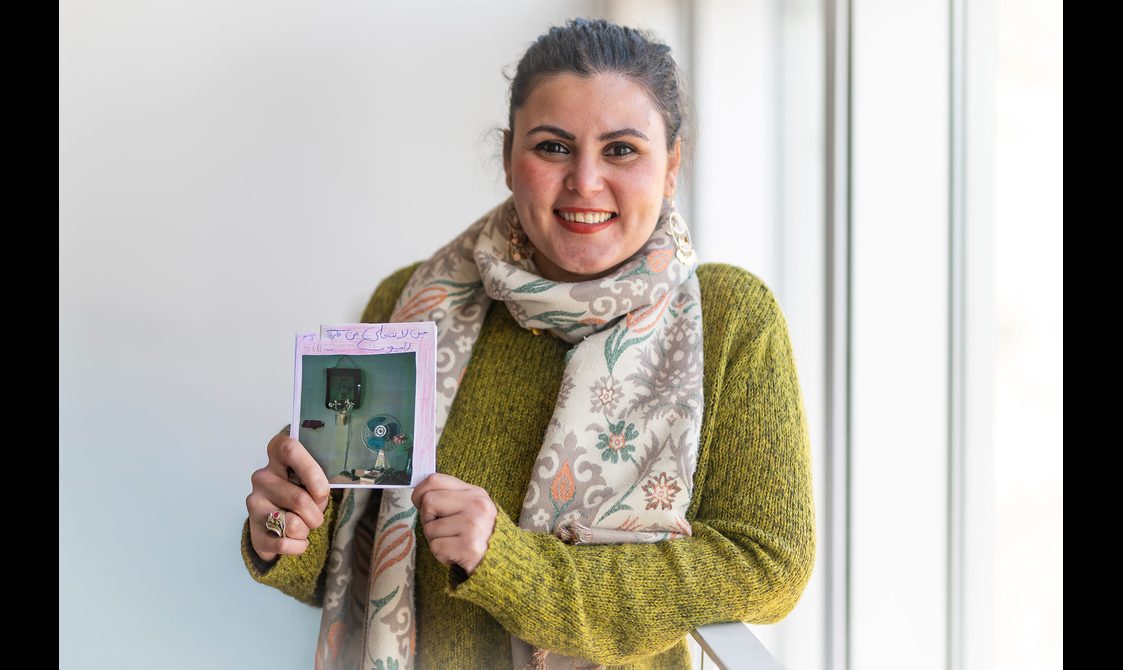
Sara Shaltout and her zine.
The workshop included a zine-making activity led by Mohamed Tonsy which offered a space for participants to express their own perceptions and understanding of Egyptian heritage. Participants created individual zines (homemade magazines) for themselves, as well as contributing to two collective zines.
The collaged zines drew on a combination of objects from the museum’s collection as well as images, places and objects chosen by the participants themselves. They brought together the different voices and perspectives of the group and reflected the journey across all three workshops.
Image gallery
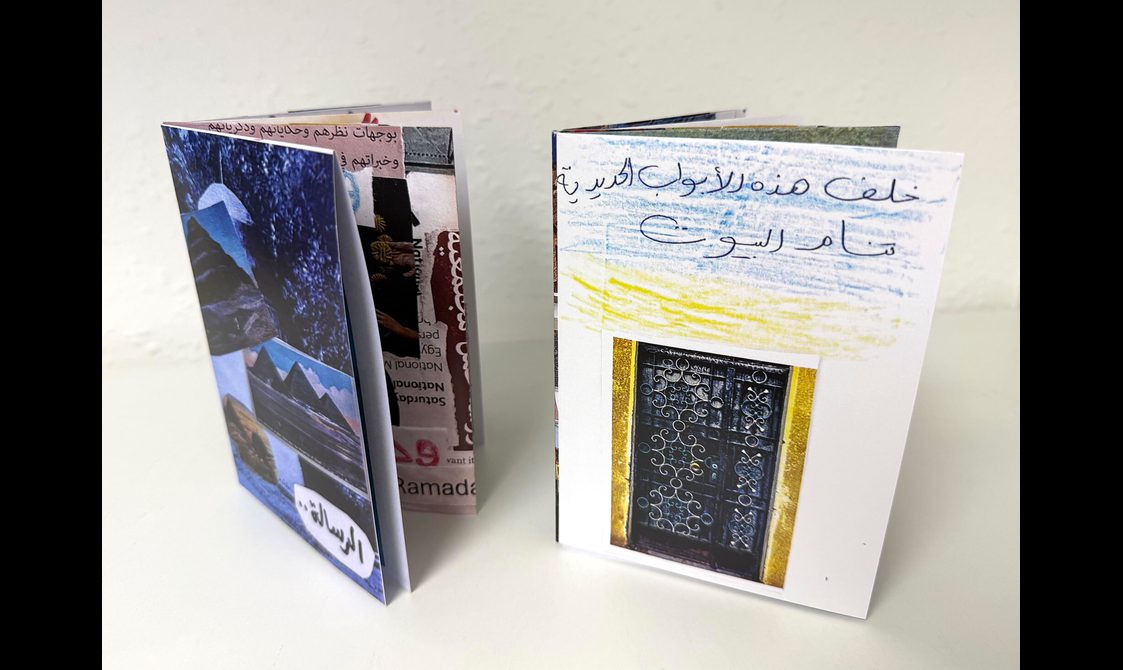
Two collective zines made by Mohamed AboelEla, Eman Abualfadl, Abeer Eladany, Hala Eladany, Soha El Hindawi, Khaled El Messiry, Islam Noaman, Sara Shaltout, Lama Said, Mohamed Tonsy, and anonymous participants.
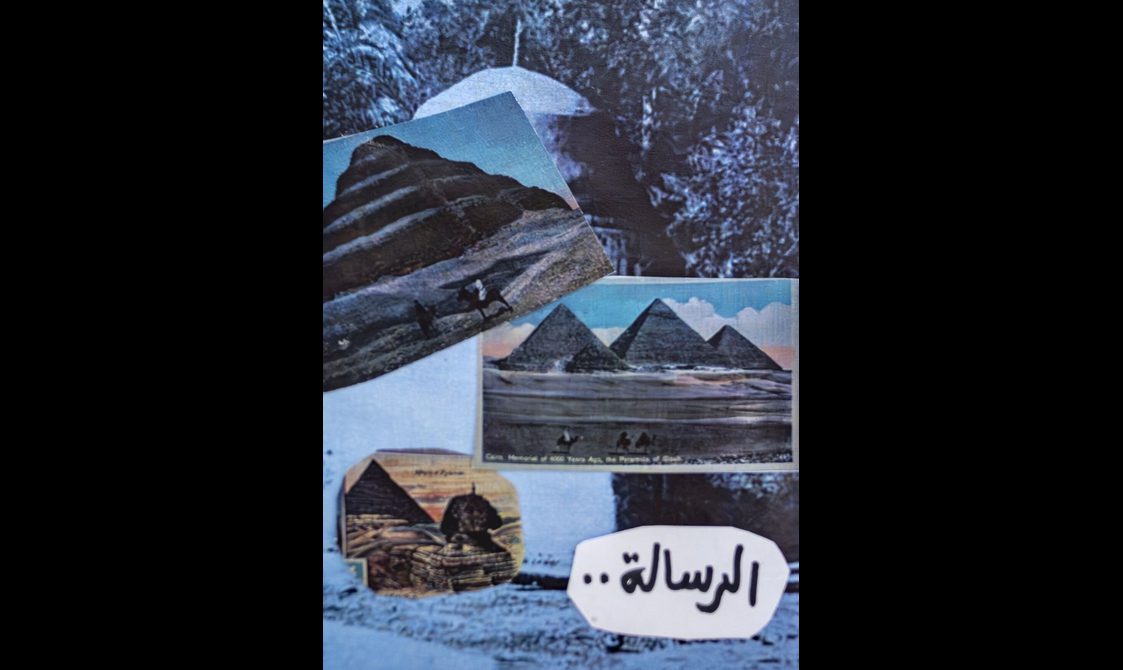
Collective Zine One cover
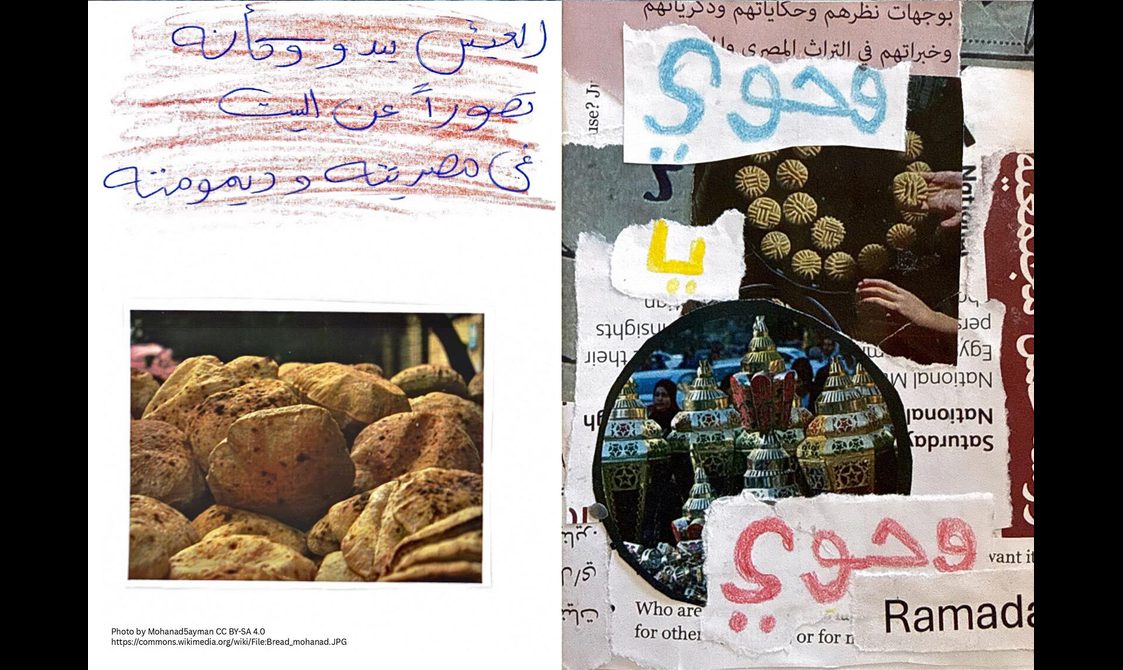
Collective Zine One pages 2-3
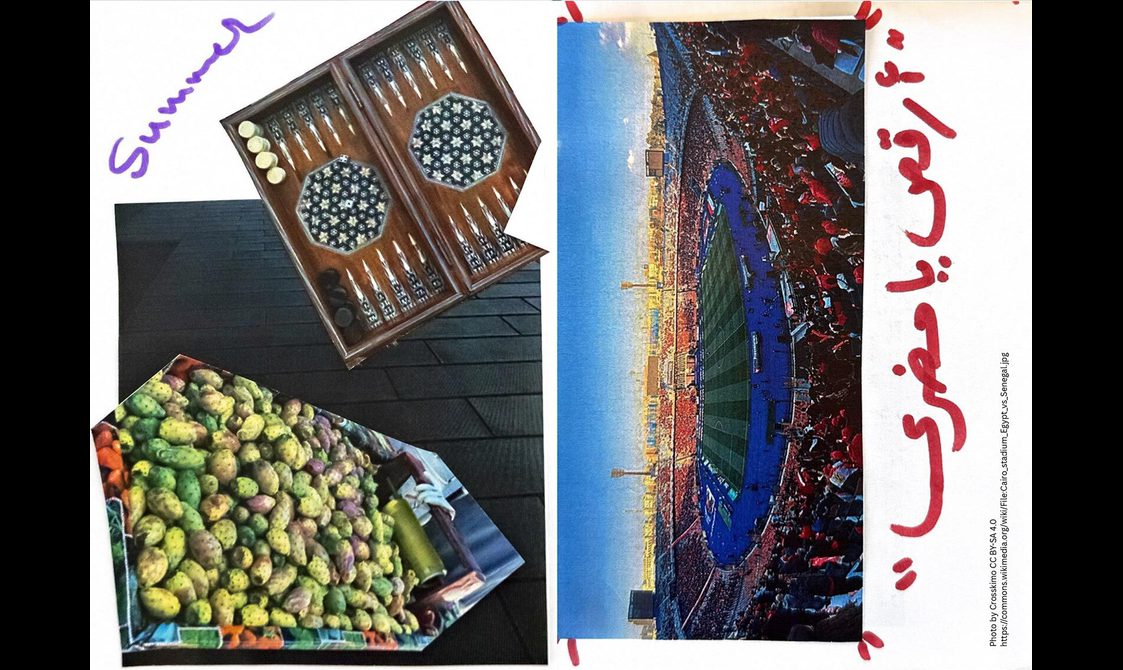
Collective Zine One pages 4-5

Collective Zine One pages 6-7
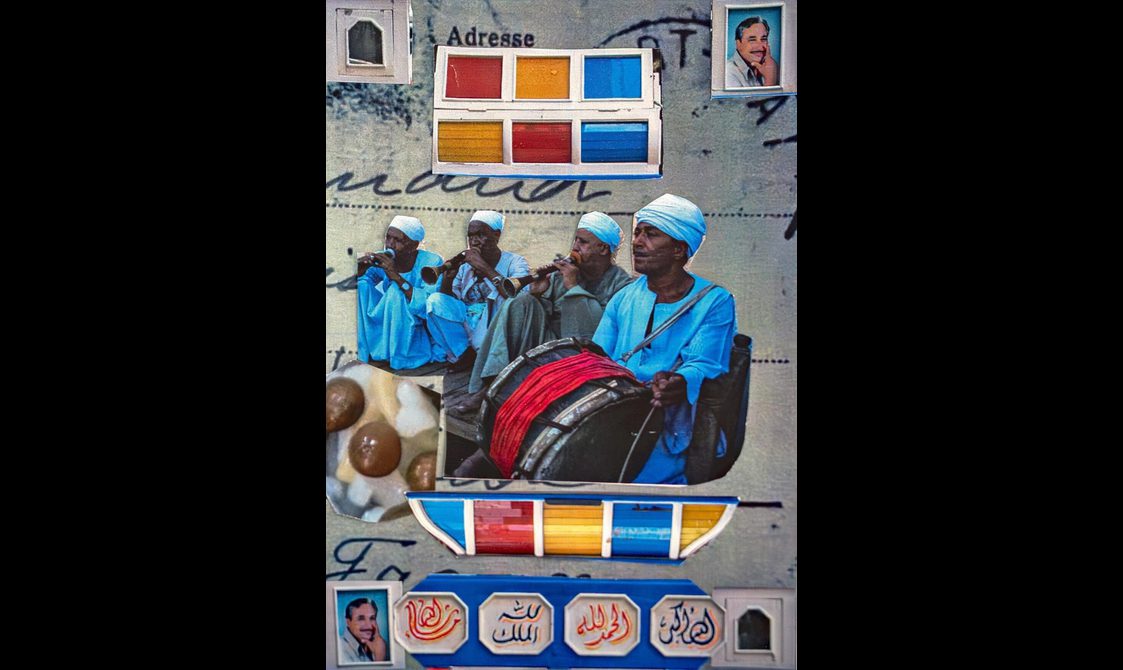
Collective Zine One back cover
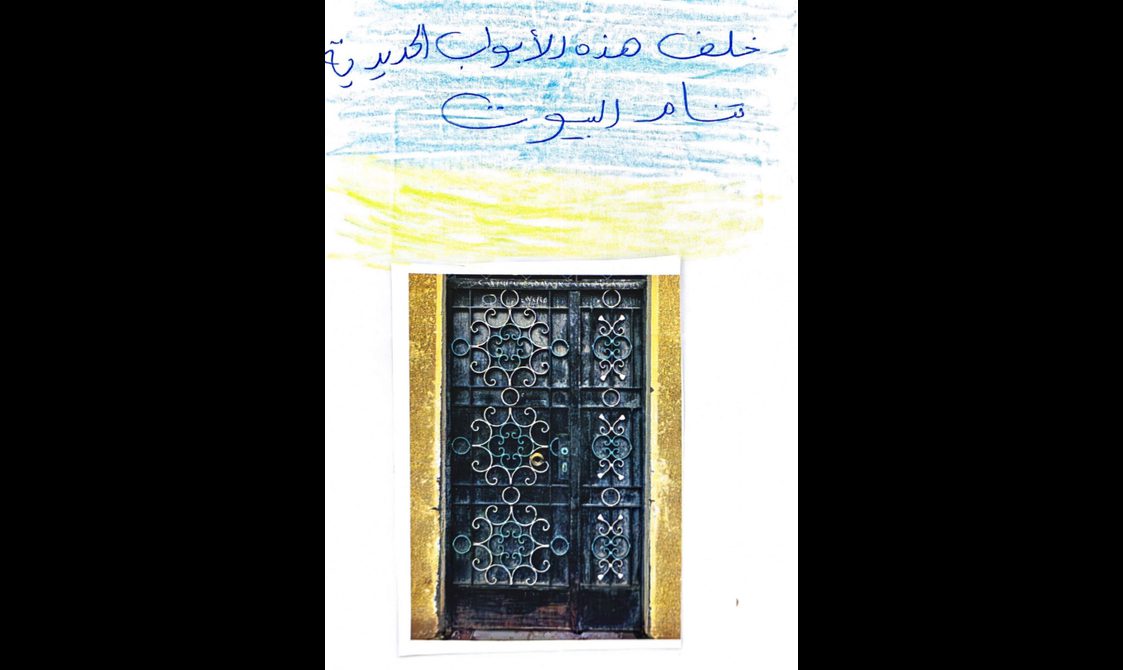
Collective Zine Two cover
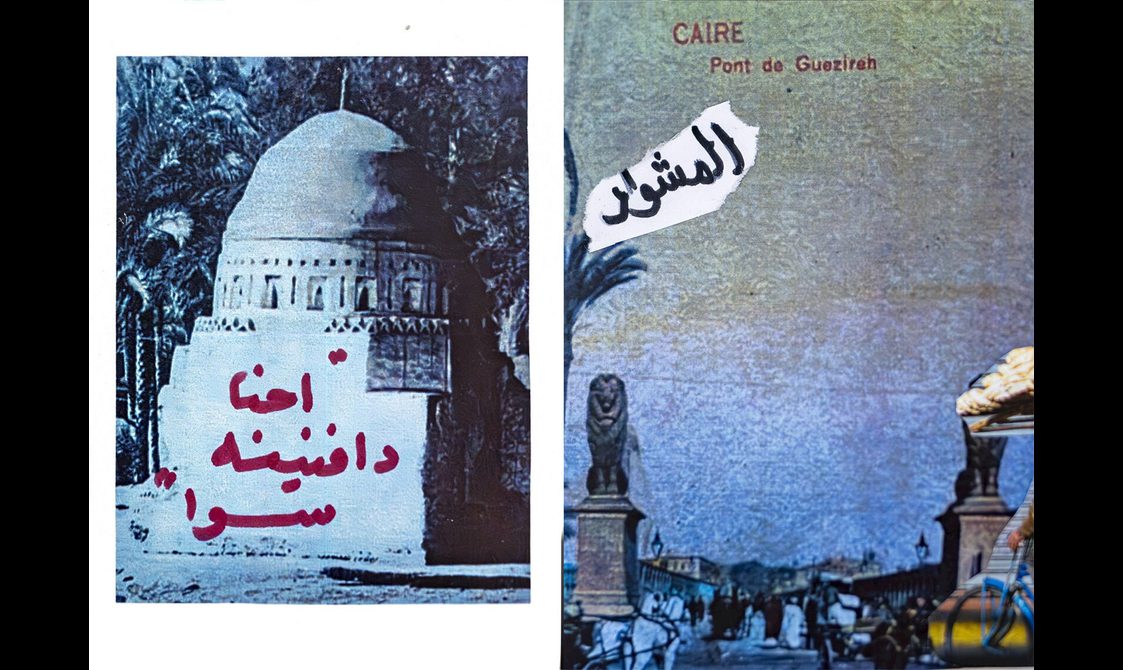
Collective Zine Two pages 2-3
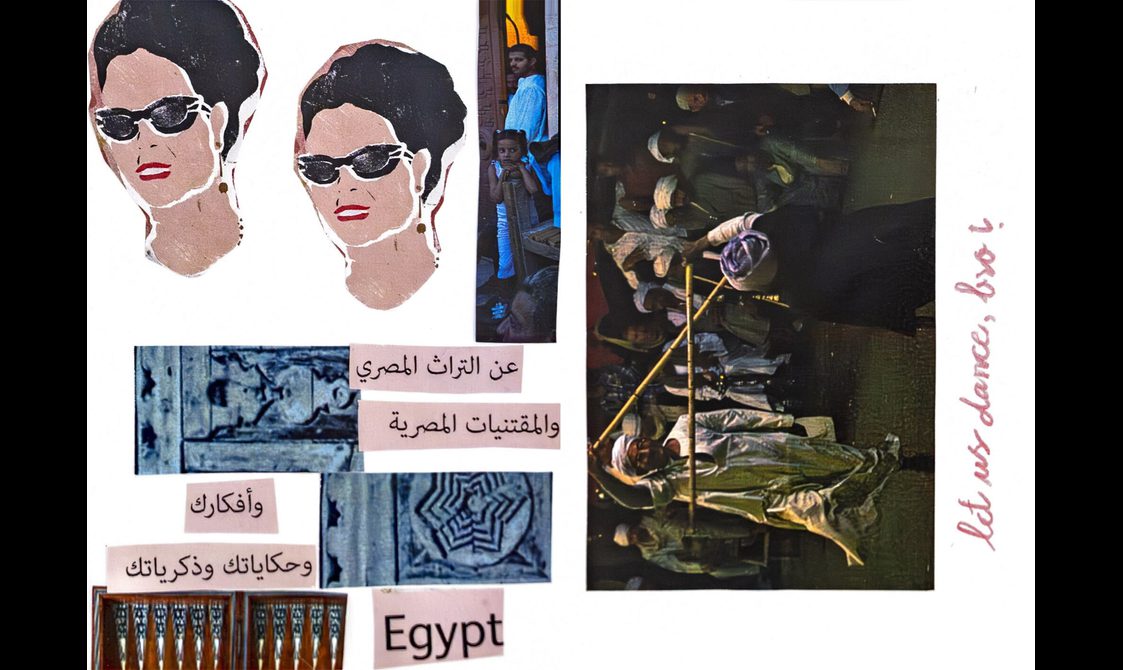
Collective Zine Two pages 4-5
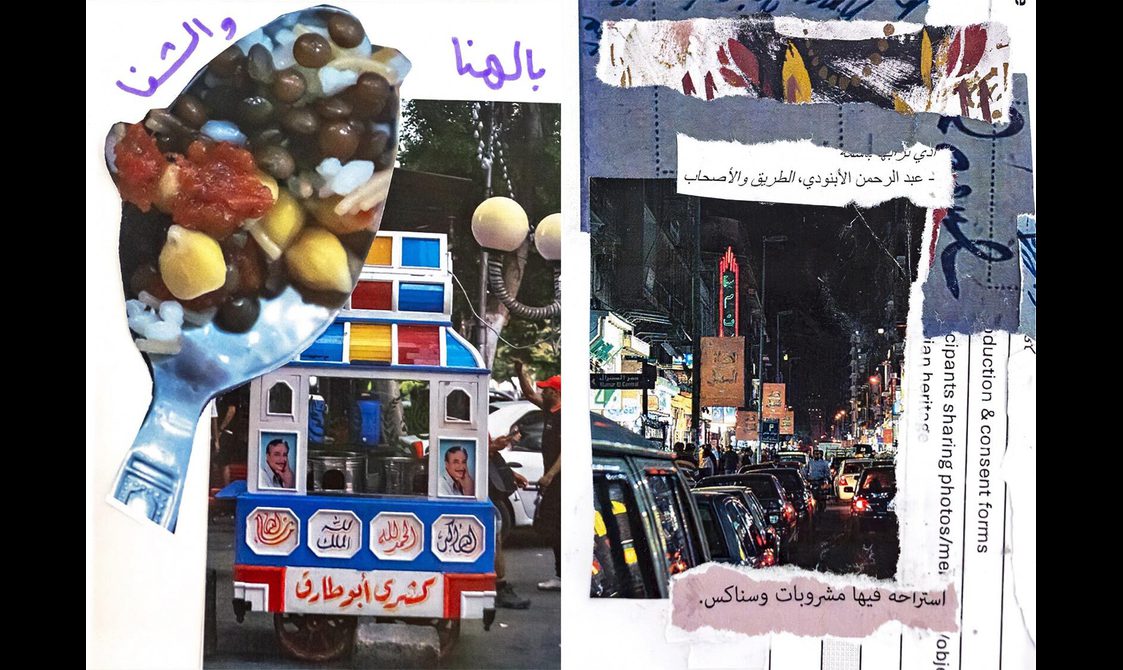
Collective Zine Two pages 6-7
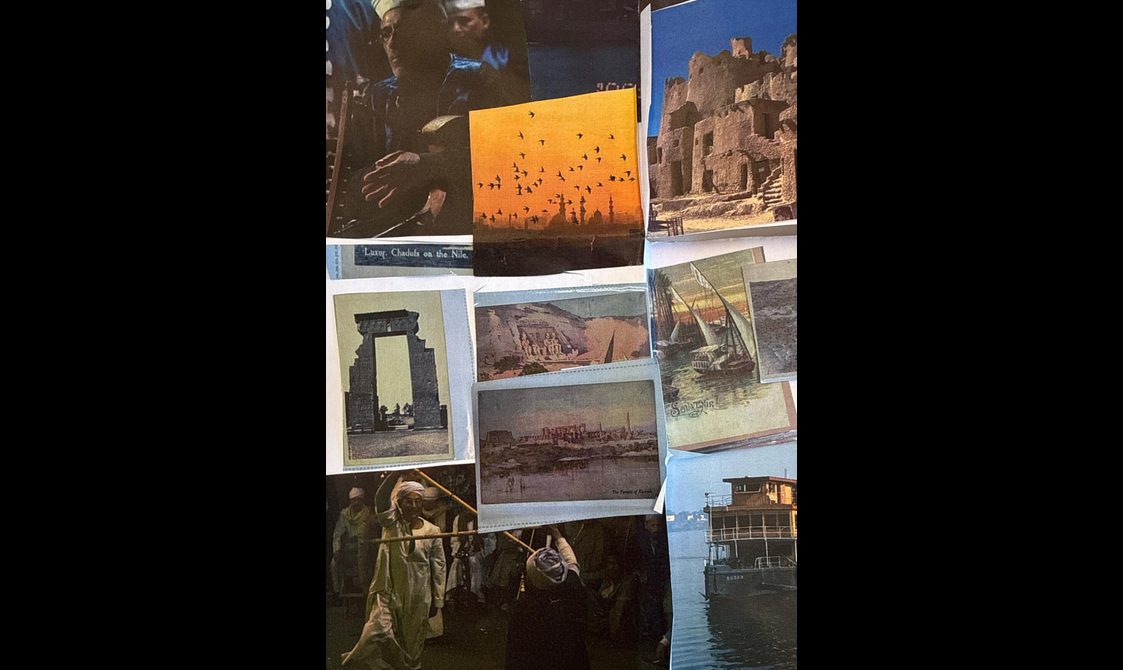
Collective Zine Two back cover
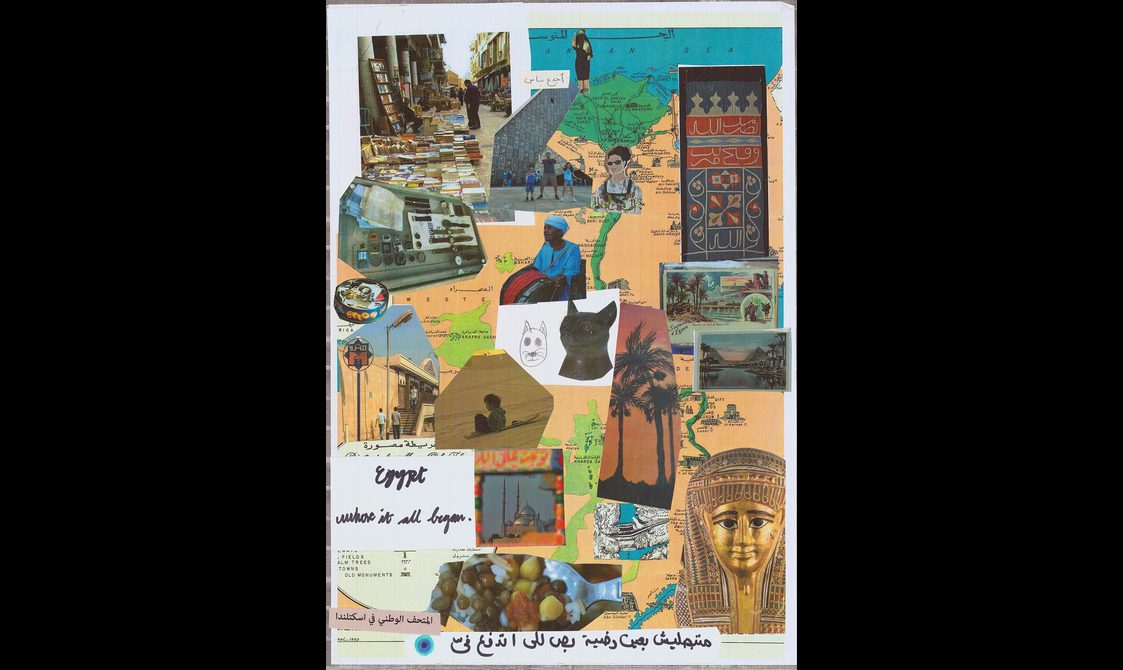
The map of Egypt on the reverse of the collective zines produced collaboratively by the project participants.
Finally, as a conclusion to the project, participants were invited to reflect on Egyptian heritage and write sentences to summarise their thoughts on the connections between Egypt past and present. For example, one participant submitted a relevant verse from the Holy Quran:
ادْخُلُوا مِصْرَ إِن شَاءَ اللَّهُ آمِنِينَ
سورة يوسف، آية ٩٩
‘Enter Egypt, God willing, safe and secure.’
— Quran 12:99
Participants then voted on their favourite sentences, with the most popular statement speaking to the diversity of Egypt's history and culture.
Today Egyptian culture reflects a blend of many cultures, including Pharaonic, Coptic, Arab, African, Greek, and Islamic.
Top-voted sentence by participants
Key outcomes
Relevant insights gathered throughout the project will be added to the museum’s collections database, subject to participants’ consent.
Furthermore, National Museums Scotland has commissioned Mohamed Tonsy to make a ceramic vessel inscribed in both Egyptian Arabic and English, materialising the community responses as a tangible output of the project.
Participants’ contributions will also help inform the interpretation and display of Egyptian collections in the future, as well as planned contemporary collecting.
I personally would love to see [contemporary Egyptian objects] in the gallery so that people would know more about modern Egypt alongside with ancient Egypt.
Workshop participant
Feedback from participants was positive, highlighting how they valued being able to reconnect with their identity and home, and to be creative, as well as having the opportunity to connect with the museum, its Egyptian collections, and with each other.
It has been the highlight of my year! I felt respected and appreciated.
Workshop participant
The relationships we have built with the Egyptian community in Scotland and the insights that they have provided have shifted how Egyptian collections are understood within the museum, providing a new appreciation from more personal perspectives.
The participants brought ancient Egyptian collections to life again by revealing their relevance to today, and expanded what is valued as ‘Egyptian’ in the museum context to incorporate the contemporary and the personal. Across all three workshops, the discussions and creative activities reaffirmed both the diversity of Egyptian culture and heritage and the continuity that exists between past and present.
The past still exists in most of Egyptian daily life.
Workshop participant
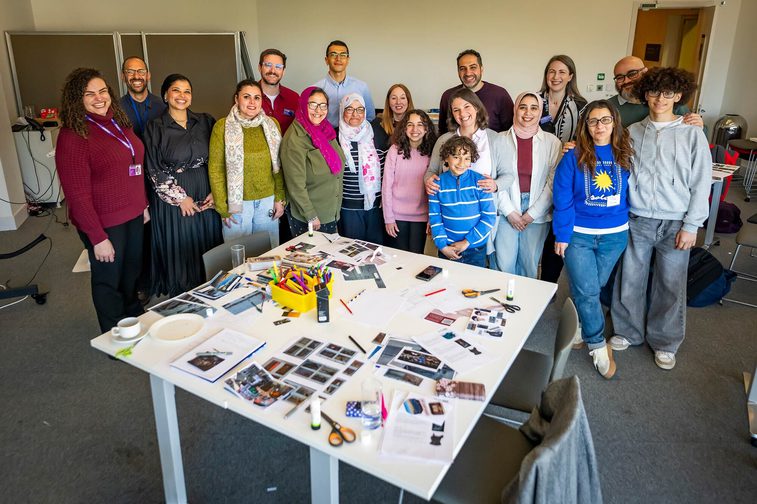
Project leads and participants (left to right): Lama Said, Mohamed Tonsy, anonymous, Sara Shaltout, Dan Potter, Abeer Eladany, Mohamed AboelEla, Hala Eladany, Jane Miller, anonymous, Khaled El Messiry, Soha El Hindawi, anonymous, Eman Abualfadl, Margaret Maitland, anonymous, Islam Noaman, anonymous.
Project contact
Dr Margaret Maitland
Supported by
Glasgow Archaeological Society
James Kinnoch Thomson Bequest