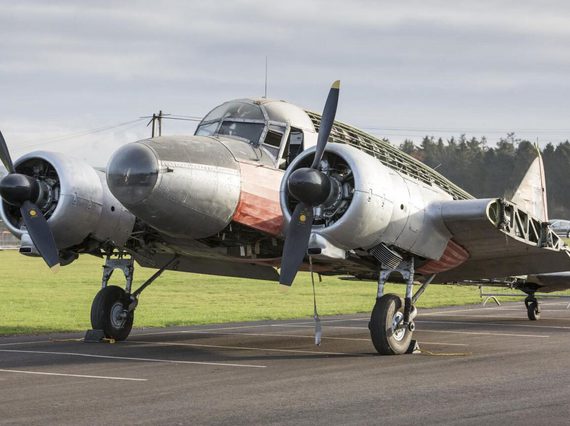
Faithful Annie: A brief history of the Avro Anson aircraft
When the Avro Anson first flew in 1935, it used tried and tested technology to produce a strong, robust structure that minimised the need for maintenance.
Constructing the Avro Anson
The fuselage was constructed from metal tubing covered in fabric and the wings were made entirely of wood. Despite the relatively uncomplicated construction, it did feature one major innovation: the Anson was the first aircraft with retractable main undercarriage to enter service with the Royal Air Force.
To operate its landing gear, early Ansons required a hand crank to be manually turned no less than 140 times by the pilot prior to landing. More than 11,000 Ansons were built in total. The aircraft was used widely during the Second World War by the Royal Air Force and Fleet Air Arm as well as the air forces of Canada, South Africa, Australia, New Zealand, India and the USA. It continued to be manufactured until 1952 and remained in use with both civilian and military operators.
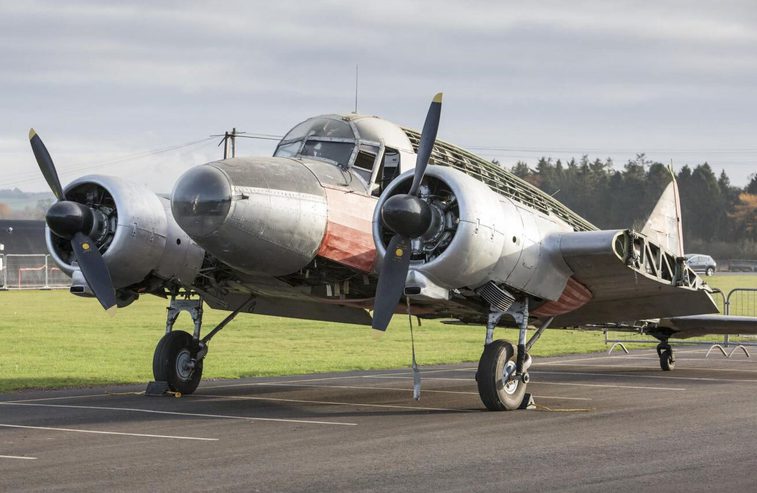
The Avro Anson at the National Museum of Flight. (T.1977.95.1)
Faithful Annie
Originally designed as a passenger aircraft for Imperial Airways, Avro proposed a modified version of the airliner to meet a need for coastal maritime reconnaissance for the Royal Air Force. Nicknamed 'Faithful Annie' by her crews, the Anson entered service with the Royal Air Force in 1936.
The type served with Coastal Command with great distinction as a capable search and rescue machine, but found a niche as a trainer for crews allocated to fly in multi-engine bomber aircraft, in the navigator, air gunner or wireless operator roles. After the end of the Second World War, Ansons were primarily used for charter and executive purposes and eventually withdrawn from service in 1968.
Today only three Ansons remain flying out of the 11,000 built, one in Czechia (formerly the Czech Republic) and two in the UK. One of these, serial number WD413, is privately owned but previously flew with Air Atlantique Classic Flight and displayed as part of the Airshow at the National Museum of Flight in July 2012.
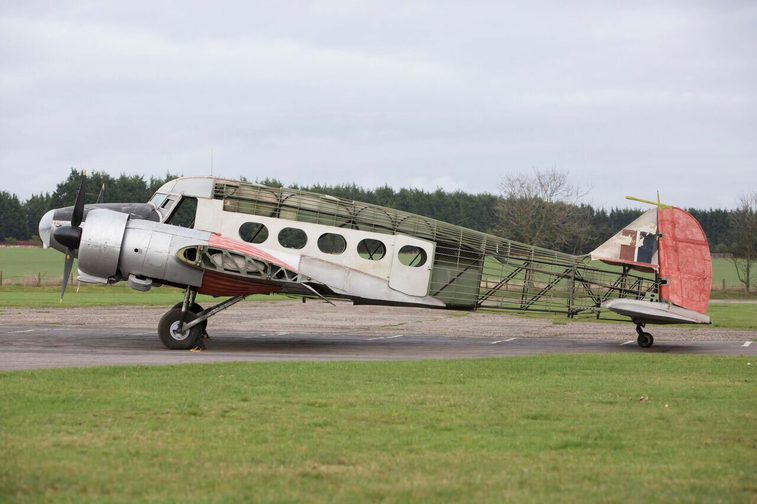
The Avro Anson at the East Fortune airfield. This aircraft is located in the Civil Aviation hangar. (T.1977.95.1)
Avro Anson at National Museum of Flight
The museum's Anson was built in 1947 at the Avro Shadow Factory at Yeadon Aerodrome, now better known as Leeds Bradford International Airport. This Avro Anson is a C.19, very different in appearance from the original military Mk. I aircraft used by the RAF during the Second Word War.
Just over 250 C.19 Ansons were built. Our aircraft was given the civil aircraft registration G-APHV, but originally had the military serial VM360. This plane had capacity for 2 pilots and 6 passengers. It could fly at a top speed of 190 mph (306 km/h) and had a range of 610 miles (982 km).
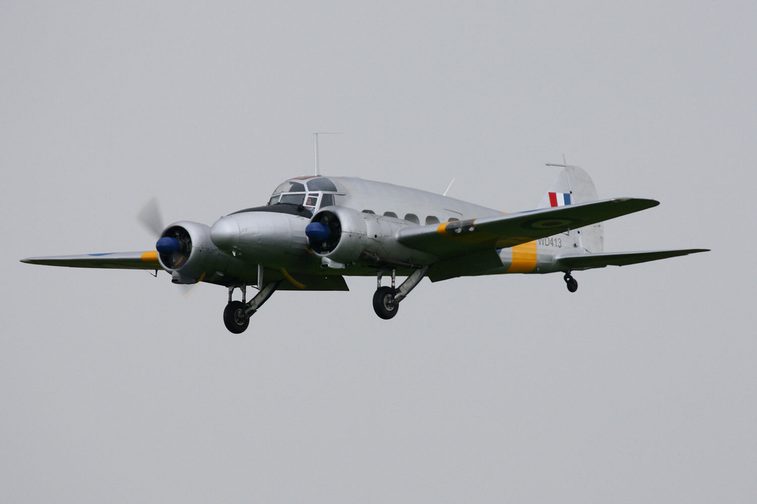
Avro Anson flying over East Fortune on Saturday 28 July 2012.
The Avro Anson is on display in the Civil Aviation hangar at the National Museum of Flight.
Written by

Ian Brown
Assistant Curator of Aviation
You might also like
Avro Vulcan: A Cold War defence
Science and technology
The story behind V bombers and their role in Britain's nuclear defence strategy during the Cold War.
An introduction to Red Arrows Hawk
Science and technology
This iconic Red Arrows Hawk T.1A was flown by the Royal Air Force (RAF) Aerobatic Team, the Red Arrows.The aircraft was donated by the Ministry of Defence through RAF Heritage. It is on permanent display at the National Museum of Flight,…
The world's first passenger jet: Comet 4C
Science and technology
The Comet was the world's first passenger jet, a much faster aircraft powered by jet engines. It made its debut in 1952, but problems quickly arose.