Inspiring women: Helen Monro Turner
Helen Monro Turner (1901 – 1977) was a distinguished Scottish glass engraver, designer, educator, and illustrator. An important figure in the development of glass art, Monro Turner was an early role model for women working in glass, and one who paved the way for future generations in the field.
Sarah Rothwell, Senior Curator of Modern & Contemporary Design, introduces this remarkable Scottish pioneer whose work is held within our collections.
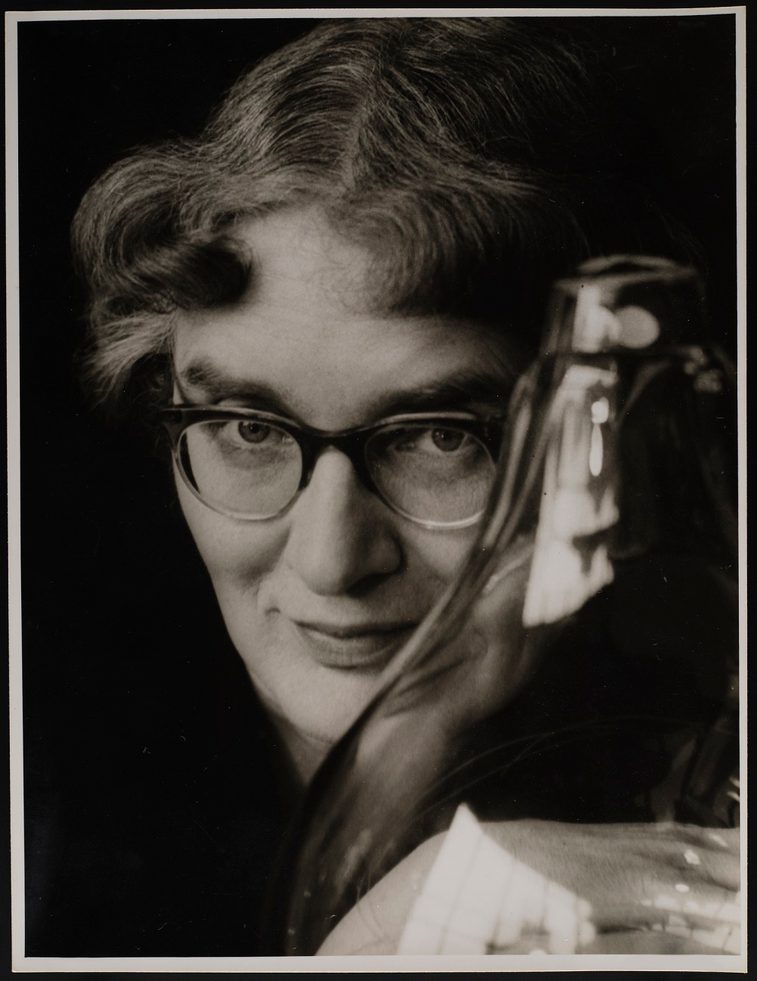
Portrait of Helen Monro Turner, by Paul Shillabeer, Edinburgh, c.1950s. Museum reference K.2006.4.3.202.
Helen Monro Turner's is best remembered for her important educational work at Edinburgh College of Art (ECA), where she established a glass-engraving studio in 1941 and the Department of Glass Design in 1943. She was one of the most significant figures in British twentieth-century glass education and nurtured some of the leading names in glass artistry and design. This included the father of the British Studio Movement Sam Herman, and acclaimed Scottish glass artist Alison Kinnaird.
Born in Calcutta where her father was a newspaper editor, Monro Turner was raised in Edinburgh. She attended George Watson’s Ladies College before studying Moral Philosophy and Art at the University of Edinburgh, graduating in 1922. She went on to earn a Diploma in Design and Crafts from Edinburgh College of Art in 1927, specialising in woodcut print design and illustration. Soon after, Monro Turner secured a role designing book covers, illustrations and endpapers for publishers Thomas Nelson & Sons, one of the most successful publishing companies in the UK at the start of the 20th century.
Discovering glass
Despite not being trained in glass design, Monro Turner became captivated by the medium after spending time sketching workers at the Edinburgh and Leith Glassworks for a promotional advertising campaign and illustrated booklet that was created in the late 1920s. Inspired by the experience, she submitted glass designs to the company for consideration.
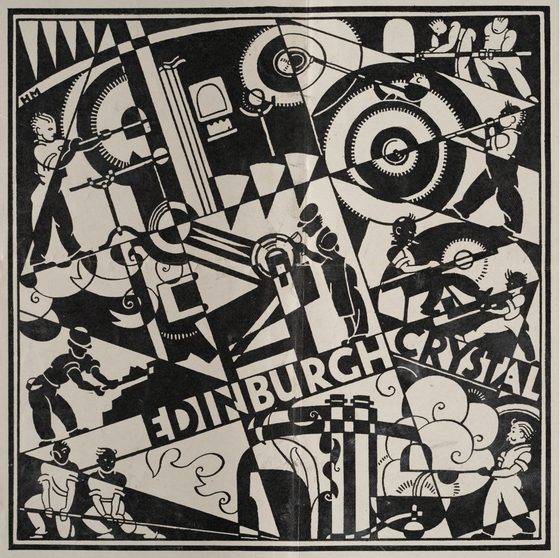
Artists’ Proof for the advertising campaign commissioned by the Edinburgh and Leith Flint Glass Works, c.1929. Museum reference K.2006.4.3.226.

Booklet cover, 'Edinburgh Crystal Craftmanship in Glassmaking' featuring Turner’s illustration commissioned by the Edinburgh and Leith Flint Glass Works, c.1929. Museum reference K.2006.4.3.221.
However, her submissions were not always met with enthusiasm. The design department of the Edinburgh and Leith Glassworks were recorded as stating that her designs were not viable.
“…cannot be done [as] it has never been done before . . . this is too new, too unfamiliar. It will not sell.”
Extract from a memo from the Director of Webb’s Crystal Glass Co. LTD, dated Oct. 24th, 1929
Despite being understandably frustrated with their comments, she persisted. Eventually, the company recognised her “considerable promise” and her designs were exhibited at the '1935 British Art in Industry Exhibition' at the Royal Academy in London.
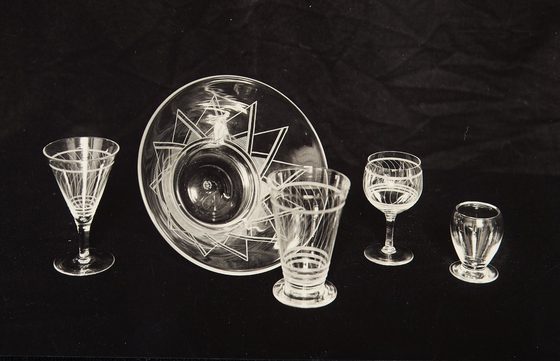
Glass by the Edinburgh and Leith Flint Glass Works, designed by Helen Monro; shown at Exhibition of Industrial Art, Royal Academy, London.
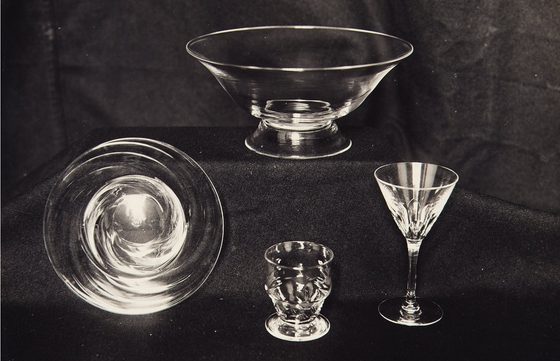
Glass by the Edinburgh and Leith Flint Glass Works, designed by Helen Monro; shown at Exhibition of Industrial Art, Royal Academy, London.
Two of her designs, believed to have been exhibited at Burlington House, were donated to our collections. One with an optic twist is quite traditional, so was probably met with approval from the Edinburgh and Leith Glassworks design room.
The other featured a bold graphic zigzag, that shows the influence of the 'Style Moderne' during this period.
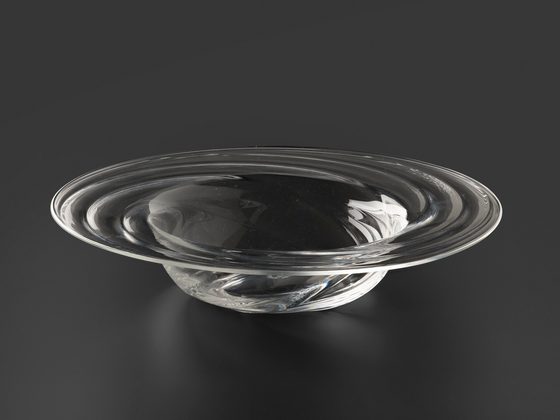
Bowl, exhibited at the British Art in Industry Exhibition, Burlington House, 1935. Designed by Helen Monro, for Edinburgh Crystal, E&L Company ( Museum reference V.2022.212.
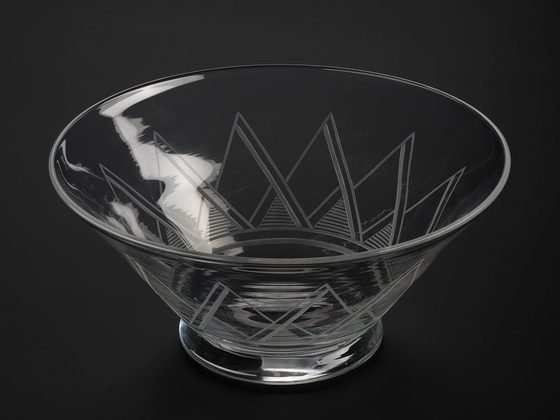
Fruit dish, exhibited at the British Art in Industry Exhibition, Burlington House, 1935. Designed by Helen Monro, for Edinburgh Crystal, E&L Company. Museum reference V.2022.211.
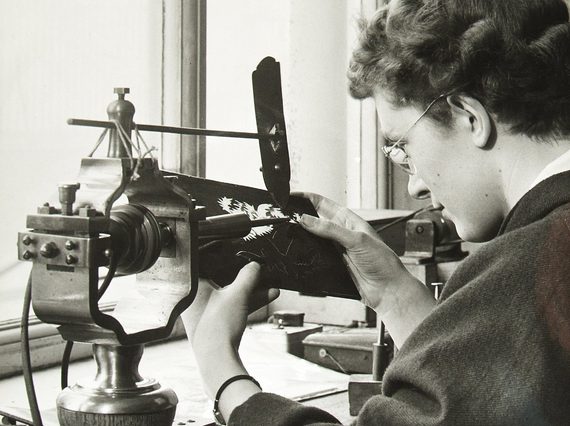
Quite remarkably for a time when there were few women employed in the glass industry, Monro Turner was not content being a passive designer relying on another to realise her work. Instead, she wanted to engage directly with glass.
“the best teacher of glass design is glass itself, and the best training is that which brings the student into closest actual contact with the medium, and into an inquisitive awareness of its latent possibilities.”
Helen Monro Turner
On that basis, in 1938, she was successfully awarded an Andrew Grant Fellowship to study glass engraving, cutting, and etching at the Kunstgewerbeschule in Stuttgart. Unfortunately, her studies here were cut short by the declaration of war. But she was able to complete her studies at the Department of Glass Technology at Sheffield University.
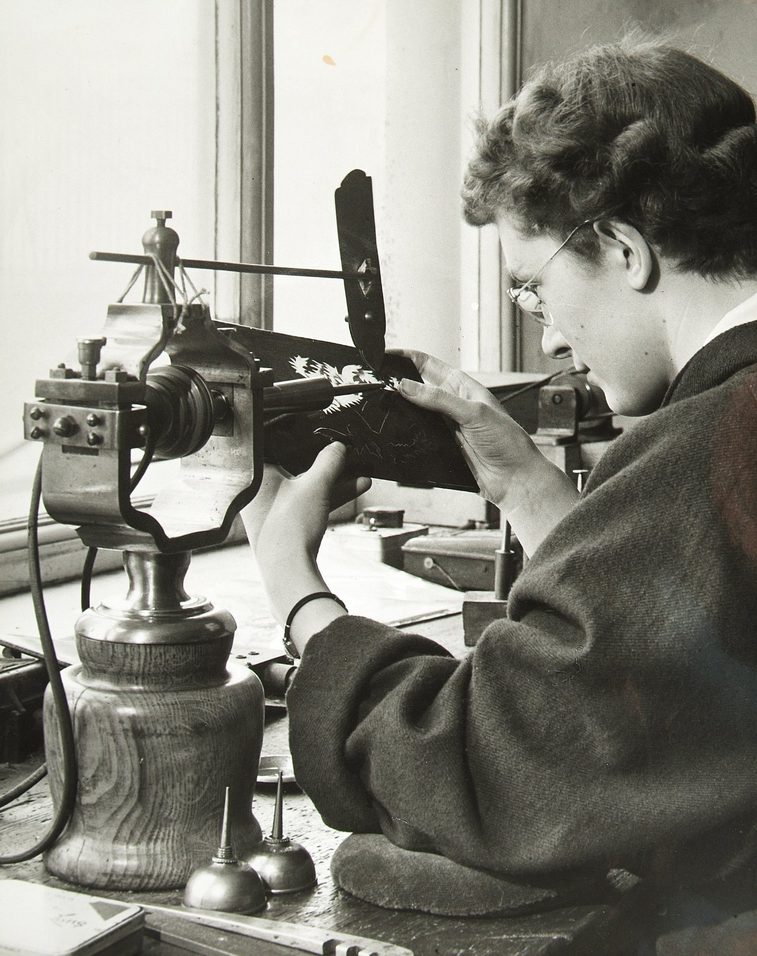
Helen Monro working at her lathe, c. the late 1930s.
Setting up her studio
The experience gained during this period in both Europe and the UK was pivotal. It shaped her expertise in the field, both through hand on experience and the contacts in the glass industry she made. On her return to Edinburgh in 1940 she established her first glass studio on Queen Street, with a copper wheel engraving lathe once used at the Holyrood Glass Works. She soon gained a reputation for her beautiful engraved glass artwork, receiving commissions from both private and commercial ventures, including the Edinburgh and Leith Glassworks who retained her as a “Consultant Designer”.
Another notable employment was with Hadeland Glass in Norway. She worked there between 1947 and 1951 to instruct trainee engravers, develop designs for manufacture, and assist in the reconstruction of the Norwegian glass industry, which had been virtually destroyed during the war.
Image gallery
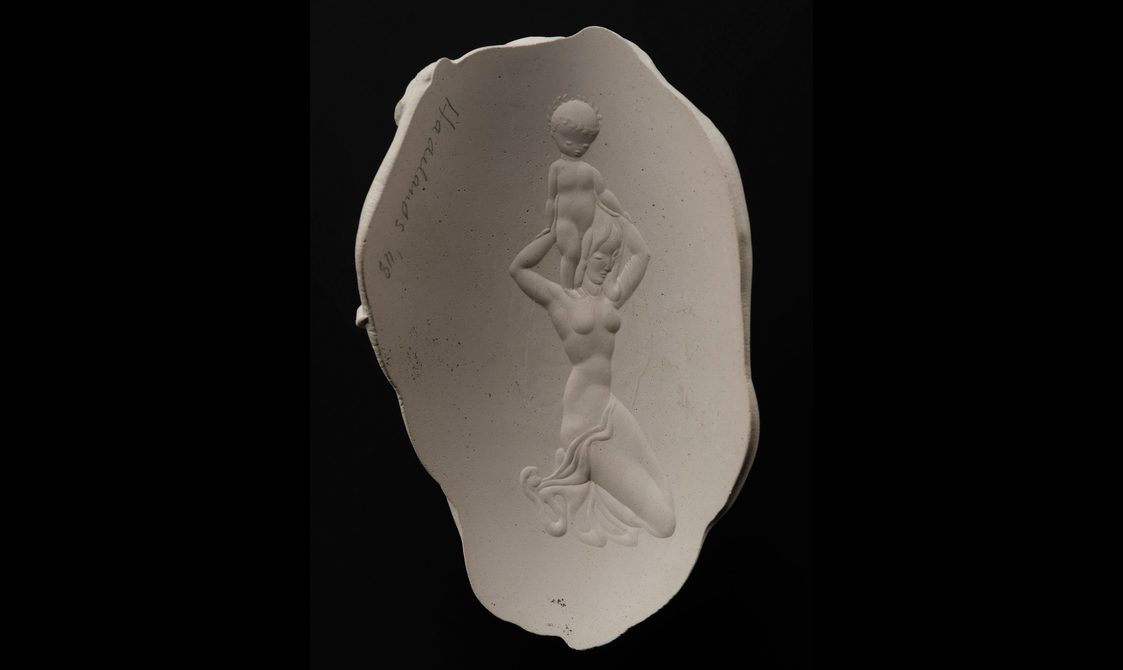
One of three plaster casts showing completed commissions by Helen Monro Turner for Hadeland Glass in Norway, 1948. Museum reference K.2006.4.2.10.
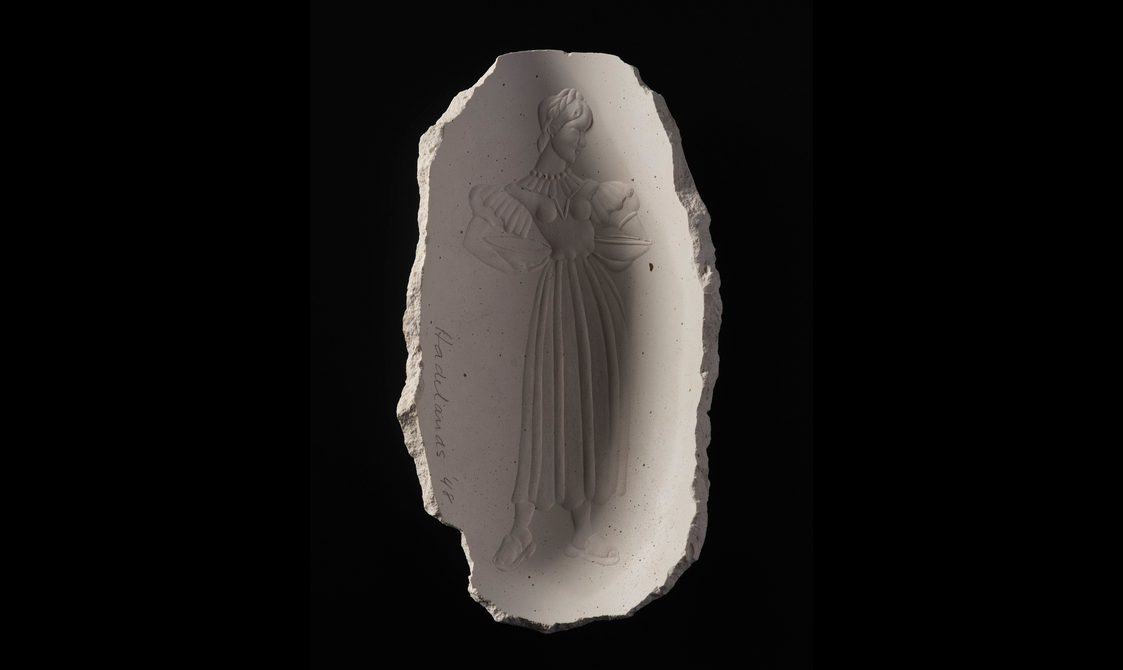
One of three plaster casts showing completed commissions by Helen Monro Turner for Hadeland Glass in Norway, 1948. Museum reference K.2006.4.2.9.
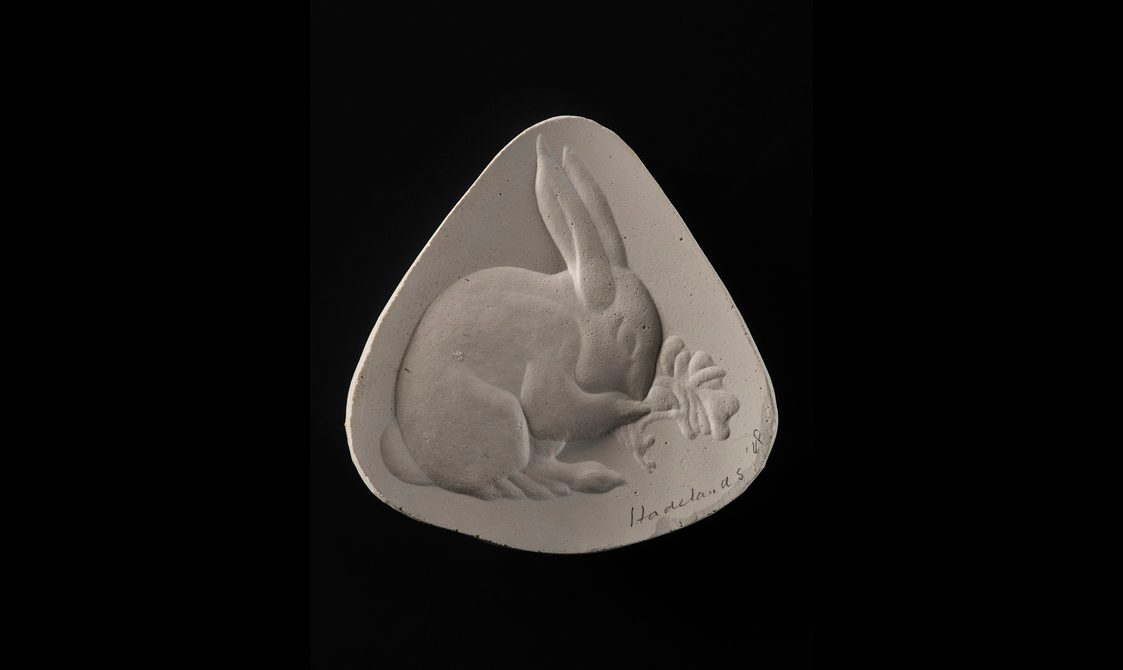
One of three plaster casts showing completed commissions by Helen Monro Turner for Hadeland Glass in Norway, 1948. Museum reference K.2006.4.2.4.
Glassmaking for all
Monro Turner’s biggest passion was education. Brian Blench, former Keeper of Decorative Art at Kelvingrove Art Gallery and Museum, who has written several articles on her, once said of her that,
“Artists have frequently been forced into the role of teacher in order to make a living in order to pursue their artistic activities. Few, however, have been so driven with a desire to interest, encourage and develop a love of their chosen medium as Helen Monro Turner.”
She was first invited to establish a department of glass engraving at Edinburgh College of Art. However, her vision was for a glass department that should cover all aspects of glass design, making, and decoration. She believed that all students, regardless of gender, should have the opportunity to work directly with glass in all capacities.
The department started off with just four female students and two glass lathes in January 1941. Lampworking, sandblasting, and diamond-cutting lathes were soon added to the studio. Glass blowing was taught on visits to Stourbridge until 1958, when a small furnace was installed at ECA for experimental glass making. A larger furnace was added in 1965.
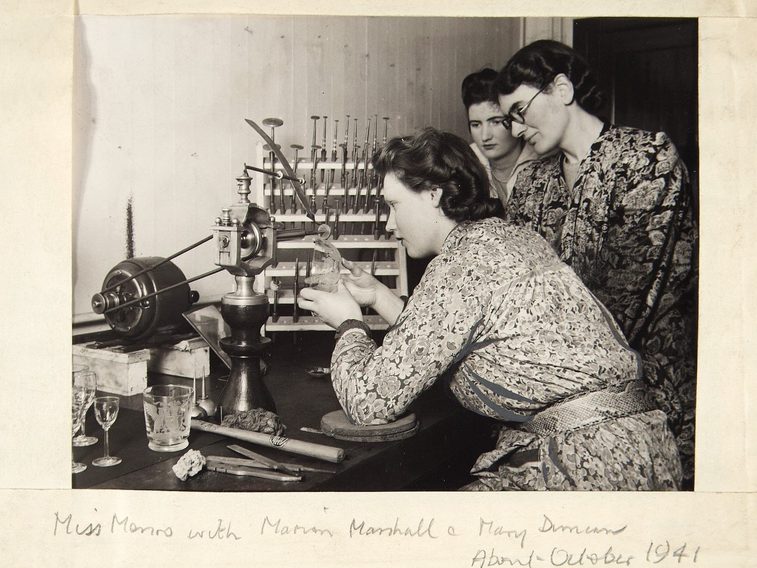
Miss Monro with two of her first students Marion Marshall and Mary Duncan at Edinburgh College of Art, around October 1941.
Monro Turner was the first woman to head a glass department in the UK, and through her tenacity and foresight, she established one of the best-equipped and influential educational departments in the field. From this impressive achievement came a stream of glass artists who transformed the industry in post-war Scotland and had a significant impact on the British studio glass movement.
Her influence didn’t stop there. In 1956, she established the Juniper Green Workshop on the outskirts of Edinburgh. This created opportunities for several of her ex-students to continue to develop their oeuvre at a time when post-graduate glass training wasn’t available. Impressively, Monro Turner achieved all this while facilitating exhibition opportunities both in the UK and America, while also producing major commissions from royalty, public institutions, and private individuals.
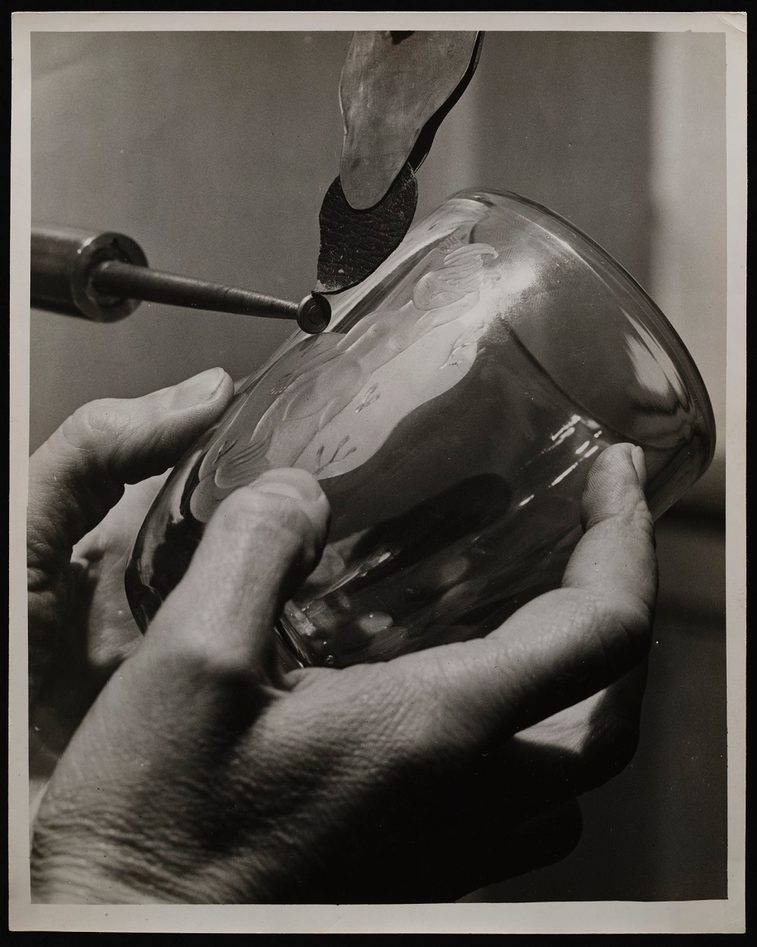
Helen Monro working on a design at the lathe, c.1950s. Museum reference K.2006.4.3.205.
Pioneering and influential
Even though there may be no publications on Helen Monro Turner’s influence, as there are for many of her male peers. I think she was a remarkable woman who deserves celebration and recognition for all she achieved.
Her dedication to glass, even extended to her choosing to wear a fibre glass dress on her wedding day. She married Professor William E. S. Turner, a British chemist, pioneer of scientific glass technology, founder of the Turner Museum of Glass at Sheffield University, on the 1st of July 1943 at St Giles Cathedral in Edinburgh. I can’t even imagine how itchy that must have been!
Finally, any discussion on her legacy would be incomplete without recognising how she created opportunities for anyone who excelled in, or had a passion for, glass – regardless of gender. So, despite the widespread cuts to craft courses in modern higher education, it is a fitting tribute to Helen Monro Turner, that glass teaching continues here in Edinburgh to this day.
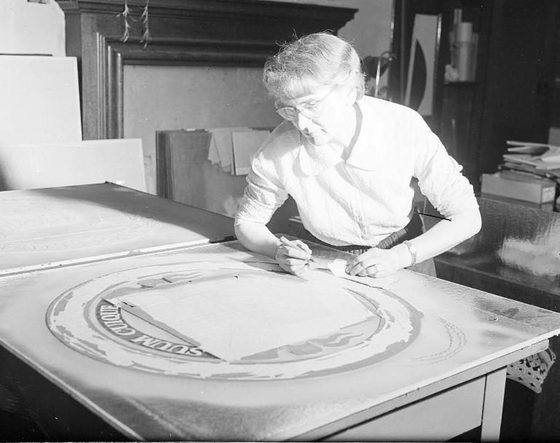
Helen Monro Turner prepares a glass engraving for the National Library of Scotland.
Written by
You might also like
Restoring a rare Iranian tile panel
Art and design, History and cultures
Written by Friederike VoigtA rare ceramic wall panel illuminates the importance of gardens in 17th century Iran.
Edinburgh physicist James Clerk Maxwell’s explorations in colour
Science and technology, Scotland
James Clerk Maxwell is particularly acknowledged among scientists for combining the theories of electricity and magnetism into electromagnetism, described by Maxwell’s equations. However, his research was very wide ranging, including an…
The story of the Lewis chess pieces
History and cultures, Scotland
This group of eleven medieval chess pieces were part of a large hoard buried on the Isle of Lewis, Scotland. The hoard contained 93 gaming pieces in total, including from at least four chess sets as well as other games.The chess pieces…