
What is the Blyth Hoard?
News Story
Bronze Age objects are frequently discovered through metal detecting and excavations in Scotland. It is far rarer to find the raw materials and clay moulds that made these objects. A unique discovery from the Scottish Borders is shedding new light on the making of objects in Scotland.
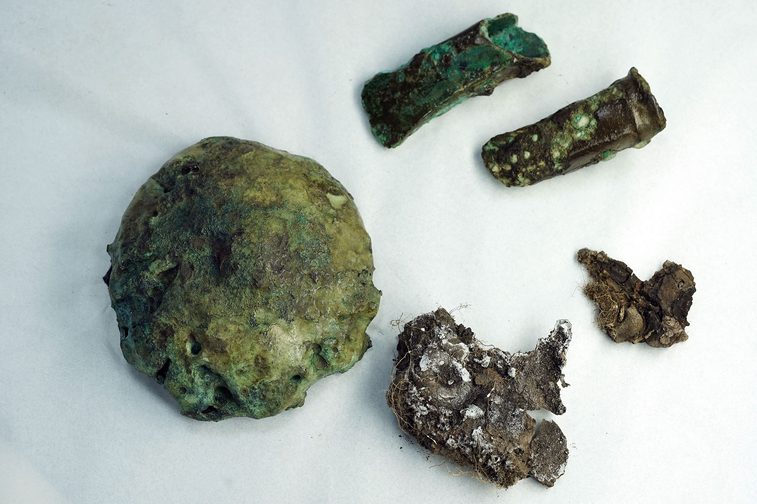
The Blyth Hoard.
Discovery and excavation
In 2022, metal detectorist, Marisuz Stępień, was surveying an area near Blyth Bridge in the Scottish Borders when he uncovered a 3000-year-old Bronze Age socketed axehead. This was the first glimpse of what is now known as the Blyth Hoard. Mr Stępień spotted there were other bronze objects in the ground and reported the finds to the Treasure Trove Unit, who then alerted National Museums Scotland.
Excavation by archaeologists from the museum found that the metal objects were in an ancient stone cairn. It seems people in the past removed stones to deliberately insert the objects into the cairn and then covered them again.
A small trench was opened and revealed a small collection of objects. This included a second bronze socketed axehead and a complete copper ingot – the first of its kind from Scotland. It also included the remains of degraded clay mould material, as well as a layer of burnt material. This all dates to the Late Bronze Age, c.1150–800 BC.
Once excavated, this hoard was allocated to National Museums Scotland and subjected to careful conservation. This involved cautious cleaning and removal of loose corrosion. On all three objects much of the original surfaces have corroded away, but that which remained were preserved and consolidated to allow safe handling, study and display. These objects may not seem like much at first glance, but they have fascinating stories to tell.
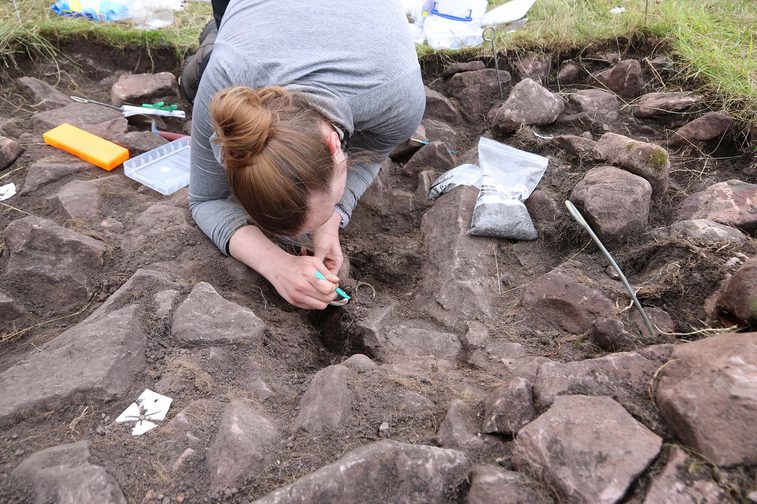
The Blyth Hoard under excavation.
The ingot
The copper ingot is complete and is the first of its kind from Scotland. Ingots are more common in southern Britain, particularly on the south coast, but have never been found north of the Border. It is important evidence that raw material was being imported into Scotland 3000 years ago. People weren’t simply recycling existing objects – there was a supply of fresh metal into the area. We know that metal in the Bronze Age could sometimes travel great distances. Future analysis by National Museums Scotland will focus on finding out where this copper came from. This can then tell us about the wide trade and exchange networks people were part of.
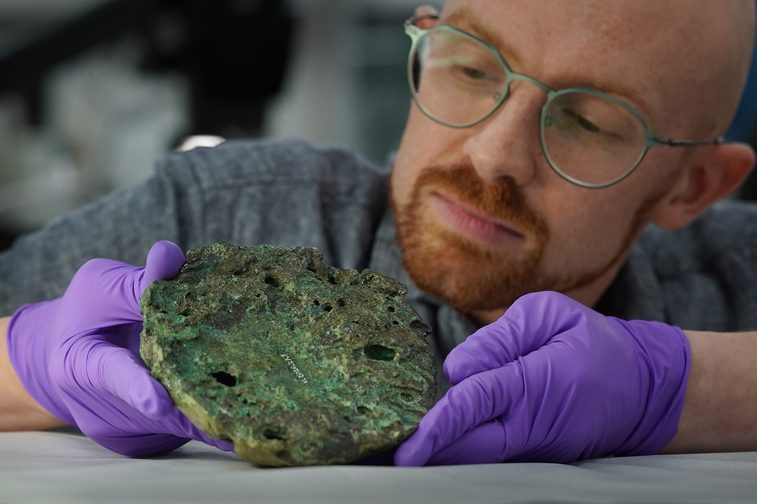
Curator, Matthew Knight, with the copper ingot.
Remains of moulds
The moulds are also an important survival. In the Late Bronze Age, bronze objects were made by casting liquid metal into a clay or sand mould. Despite the hundreds of bronze objects known from Bronze Age Scotland, relatively few moulds survive. This is usually because the materials don’t survive 3000 years in the ground.
The remains of two, if not three, clay moulds or cores for moulds survive in the Blyth Hoard. They are very fragile and it is possible more material was once present that no longer survives. Photogrammetry was used to capture a 3D model of the hoard in the ground. Conservation materials were then used to try and preserve the mould material.
Late Bronze Age moulds are often for producing swords, axeheads and other tools. The Blyth moulds are for something else though…
Moulds for unique objects
The moulds from the Blyth Hoard are incomplete. However, they have a distinctive shape that hints at an incredible link. These moulds appear to represent the cores or models for making bronze fittings found in the Late Bronze Age hoard from Peebles.
The Peebles Hoard was found in 2020, only c.7 miles to the south east of the Blyth Hoard, and it contains many unique objects. By an incredible coincidence, the Peebles Hoard and the Blyth Hoard were both discovered by the same finder, 2 years apart.
It is rare to find any moulds that link to specific objects from the Bronze Age. This makes the discovery at Blyth quite exceptional. Given the unique nature of the Peebles Hoard fittings, it is highly probable that whoever buried the Blyth Hoard may have been involved in making some, or all, of the Peebles Hoard fittings. This is especially striking given the presence of an ingot.
Image gallery
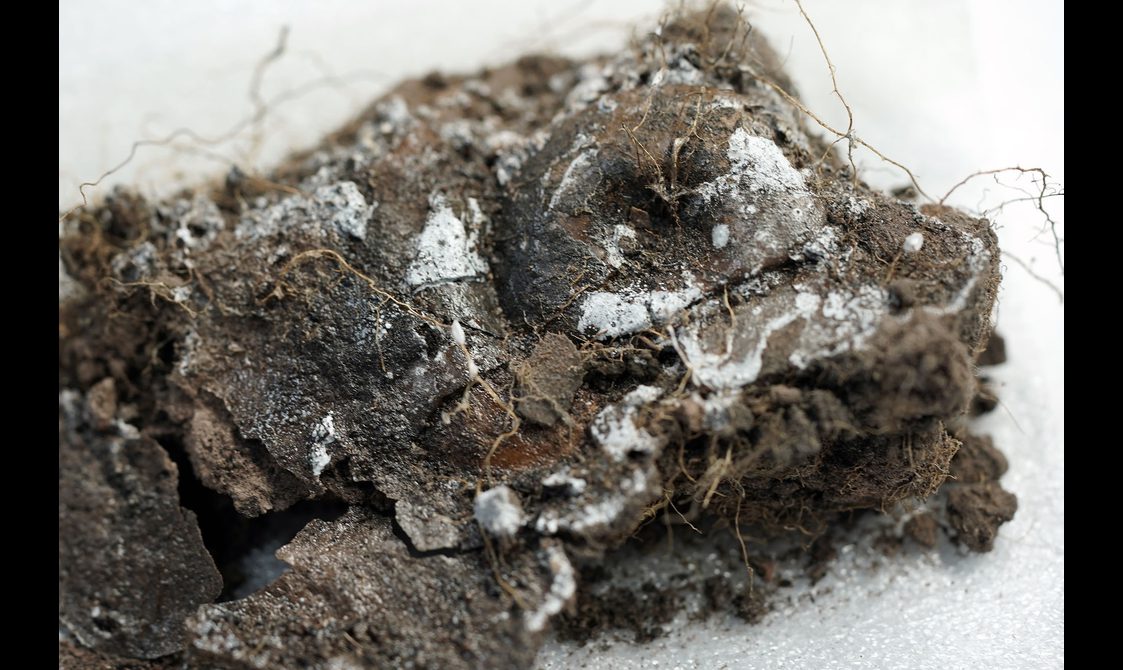
One of the Blyth Hoard moulds.
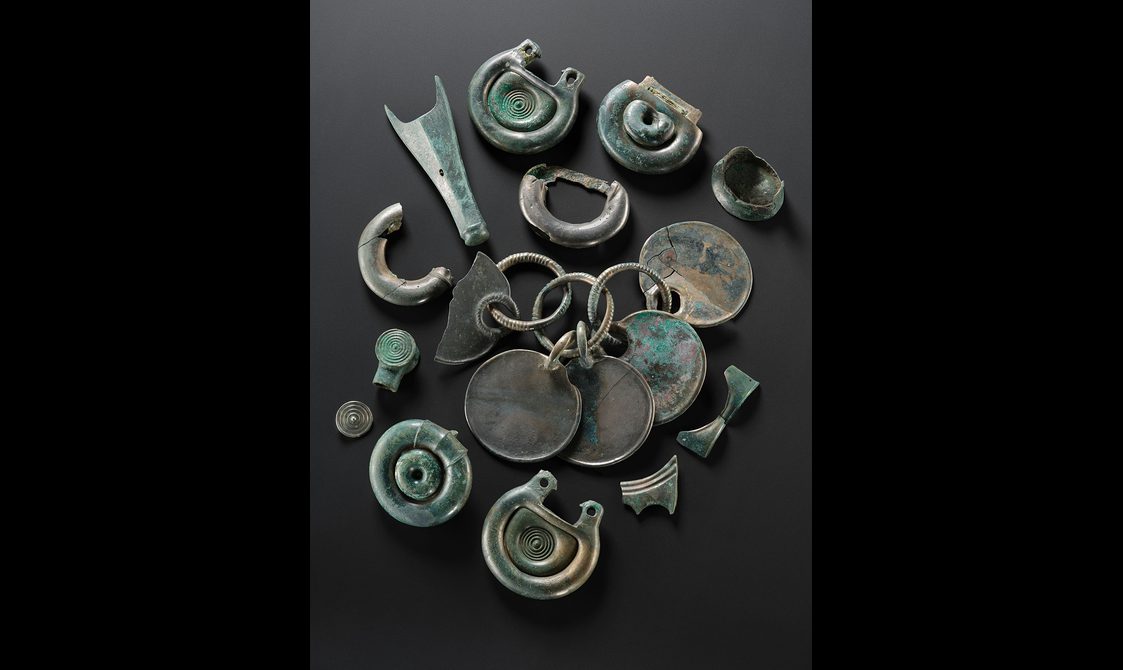
Part of the Peebles Hoard.
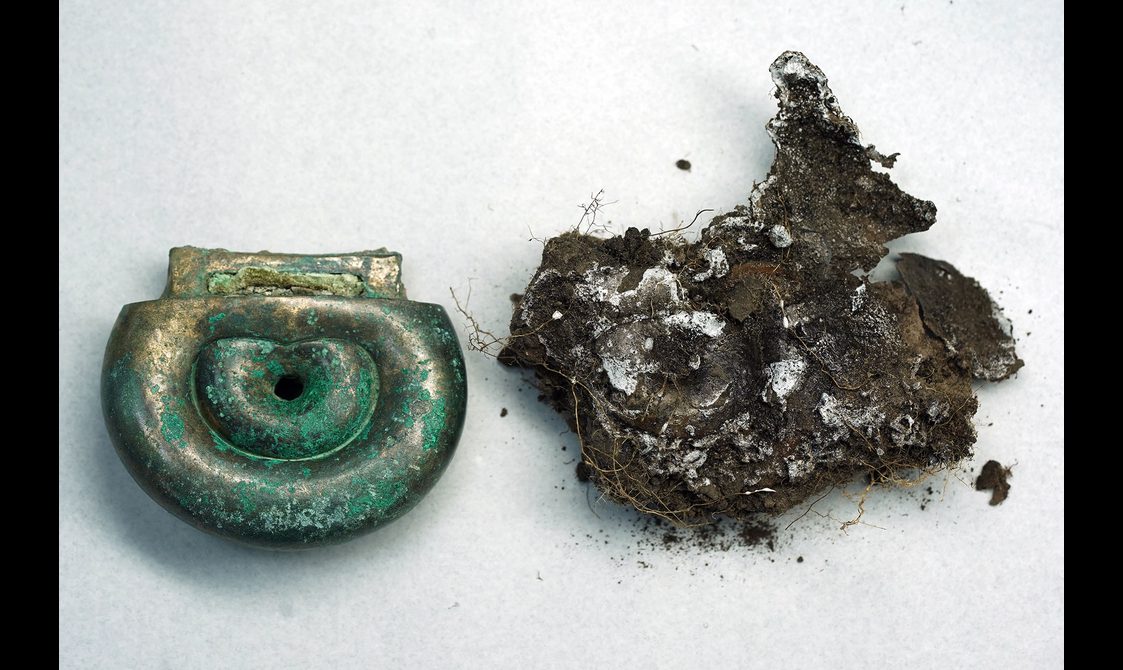
The Blyth mould fragments next to objects from the Peebles Hoard.
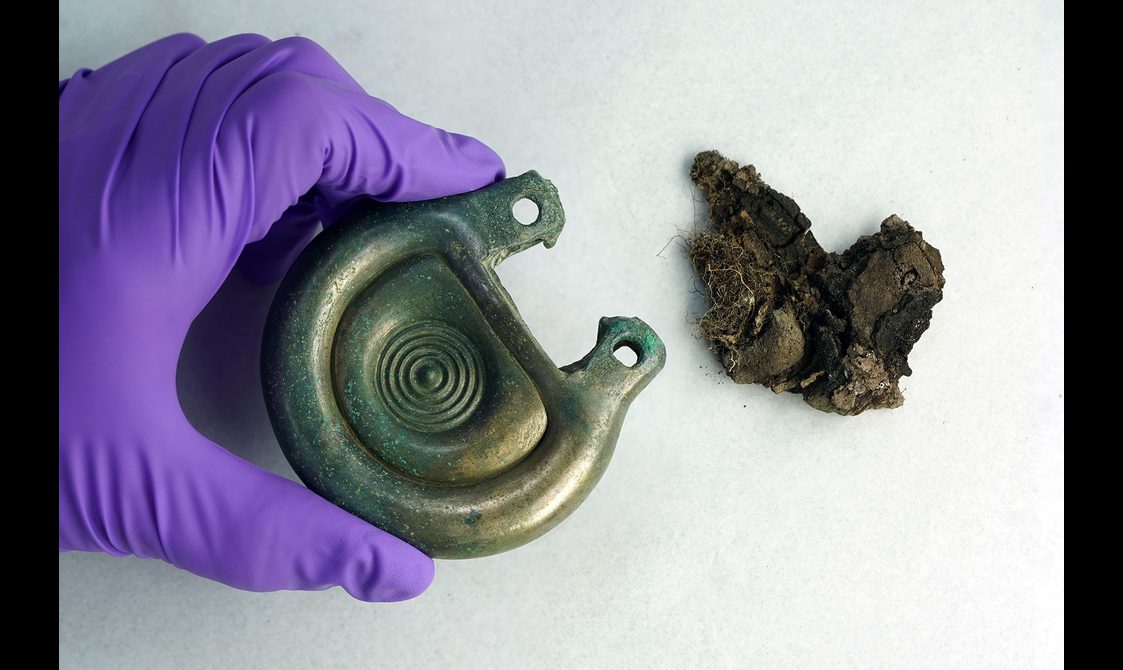
The Blyth mould fragments next to objects from the Peebles Hoard.
Why was the Blyth Hoard buried? What can it tell us?
The survival of metalwork and the remains of manufacturing materials together is rare in Britain, and previously unknown in Scotland. The Blyth Hoard is an opportunity to examine some of the relationships between metal objects, production and deposition. The socketed axeheads and ingot may represent the raw material for casting into new objects, such as the Peebles-style fittings. The person (or people) who buried the Blyth Hoard may have been a metalworker, skilled at making moulds and casting objects.
Excavation revealed a layer of burnt material with the objects. This may have helped preserve some of the mould material that would normally decay over time. Was this a place where moulds were being fired?
It is hard to interpret the reasons why this material was buried. The fact that it was deposited in an already ancient stone cairn might show that this was a special place for burying the objects. Alternatively, the cairn may have served as a marker for the site of the hoard. Maybe somebody intended to come back for the moulds and materials, but couldn’t for whatever reason.
Research continues into this fascinating collections of objects and its links with the Peebles Hoard.
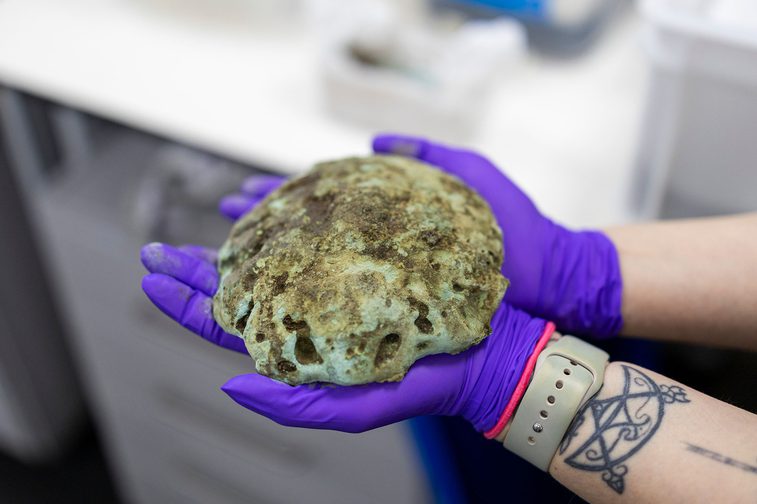
The Blyth copper ingot.
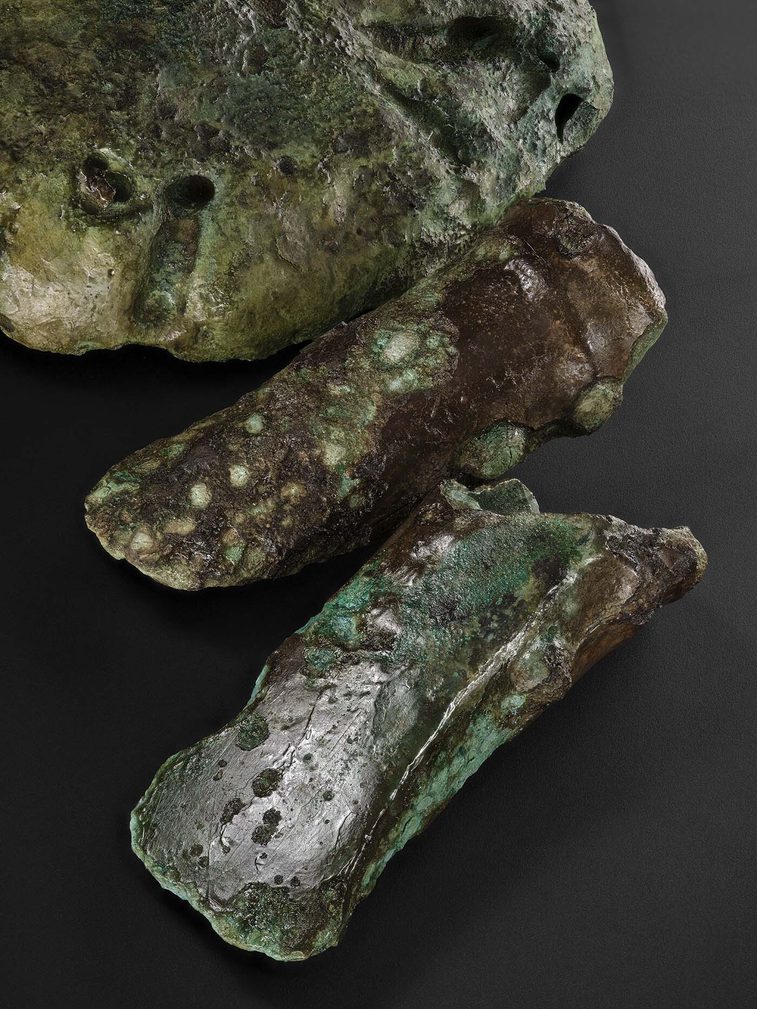
The Blyth Hoard.
Written by

You might also like
A runic revelation: Who owned the Galloway hoard?
Archaeology
With any hoard, some of the most common questions are about who buried it, and why. Usually, Viking-age hoards of silver are a mix of anonymous ornaments, often hacked into pieces. If we’re lucky, there may be coins which at least help us…
What is the Peebles Hoard?
Archaeology, Scotland
The Peebles Hoard is a spectacular collection of bronze, leather and wooden material. Dating to the Late Bronze Age (c.1000-800 BCE), it contains several hundred elements from a complex set of objects. A complete sword in a wooden scabbard…
A treasure in its own right: The Galloway Hoard vessel
Archaeology, Scotland
The lidded vessel in the Galloway Hoard is like a hoard within a hoard. It was carefully packed to the brim with 27 objects. But the vessel is a treasure in its own right.