Sacrifice or scrap? The Bronze Age weapons from Duddingston Loch
Matthew Knight, Senior Curator of Prehistory, explores the possible reasons why a 3000-year-old hoard of objects was deliberately destroyed and sunk into a loch in Edinburgh.
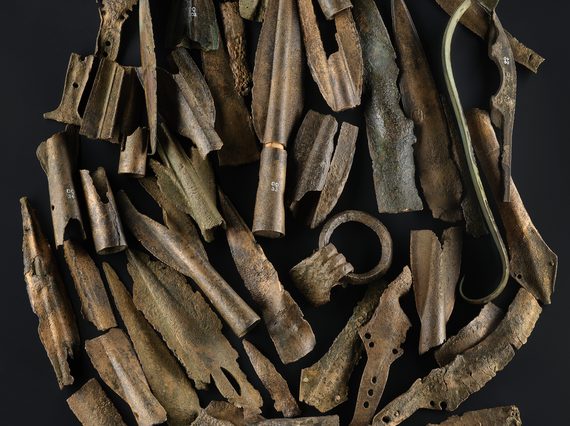
During the Late Bronze Age, between 1100–900 BC, a collection of 54 pieces of bronze swords, spears and other artefacts were bent, burnt, broken and deposited into Duddingston Loch at the base of Arthur’s Seat. There the objects stayed until, in 1778, a dredger pulled them up from the depths.
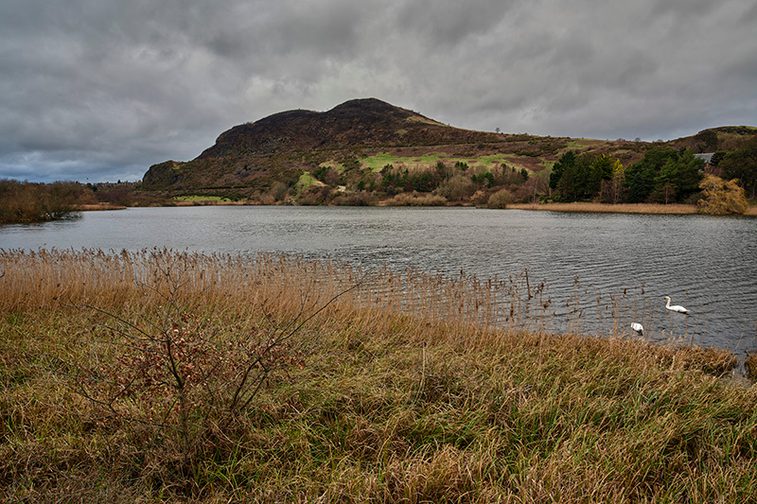
View of Duddingston Loch
The first museum donation
This group of objects was the very first donation to the Society of Antiquaries of Scotland in 1781. That collection became the foundation for the present Scottish History and Archaeology collection. The Society of Antiquaries of Scotland records from 1781 state the donation as:
“A quantity of Roman arms consisting of 23 pieces of the heads of the hasta and jaculum; 20 pieces of the blades, and nine of the handles of the gladius and pugio; a ring three inches in diameter, fastened to the end of a staple; and a mass of different pieces of these arms, run together by fire; sculls and other human bones, together with the horns of animals of the deer and elk species, dragged out of the middle of a bed of shell marl at the bottom of his loch of Duddingston.”
This account misidentified the items as Roman, but gave crucial details of the original discovery. Importantly, it highlights that the whereabouts of some of the objects are now unknown. The “sculls and other human bones” and animal remains were presented to the Society but never made their way into our permanent collection.
Other bronze objects were presented to King George III or kept by the landowner of the loch and are now lost. However, we still have 54 bronze objects in the collection. This includes:
- 34 damaged or broken swords and blades, representing a minimum of 11 swords or blades
- 18 fragments of at least 15 spearheads
- a handle of a bronze bucket
Image gallery
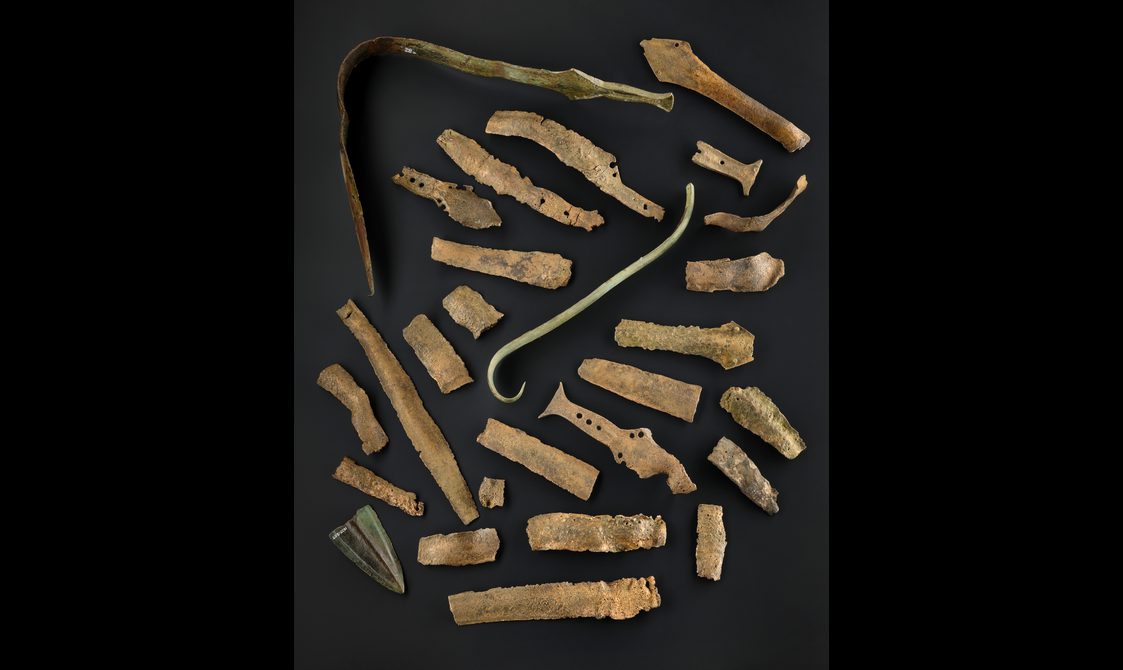
Bent, burnt and broken swords and spearhead from Duddingston Loch.
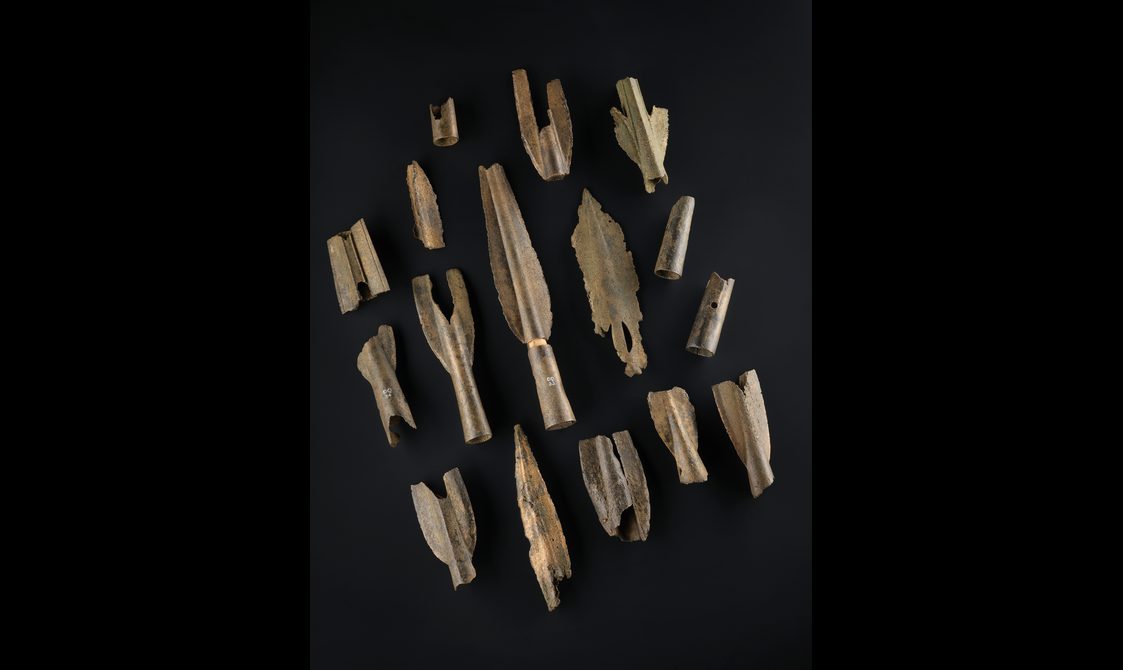
Bent, burnt and broken spearheads from Duddingston Loch.
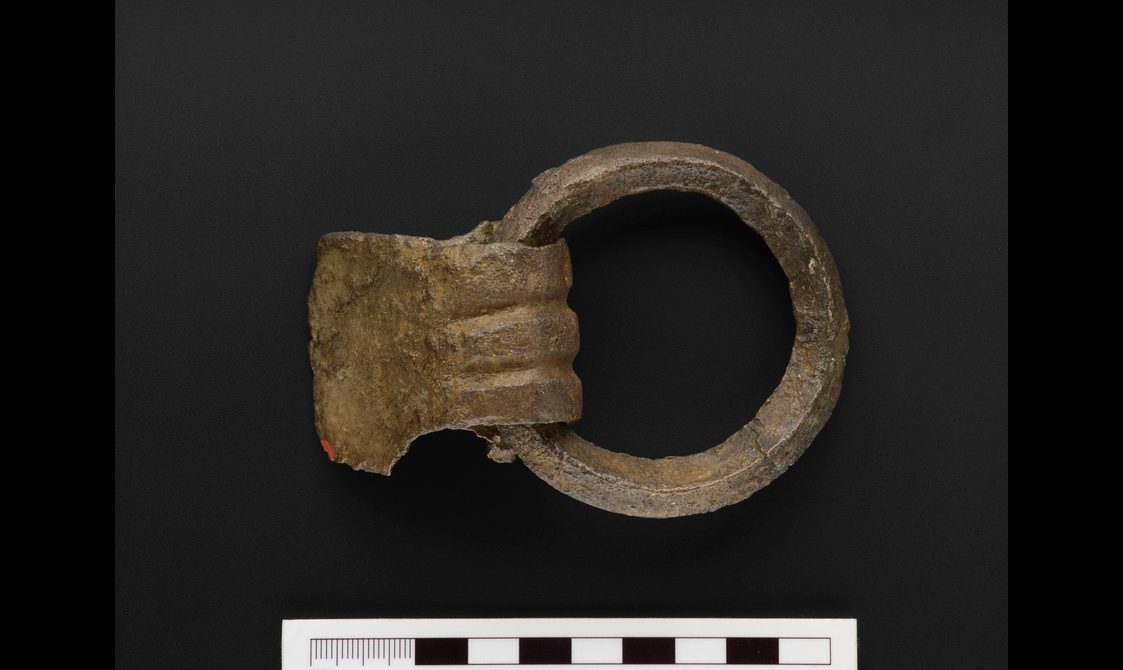
The bronze bucket handle from Duddingston Loch.
Use and abuse
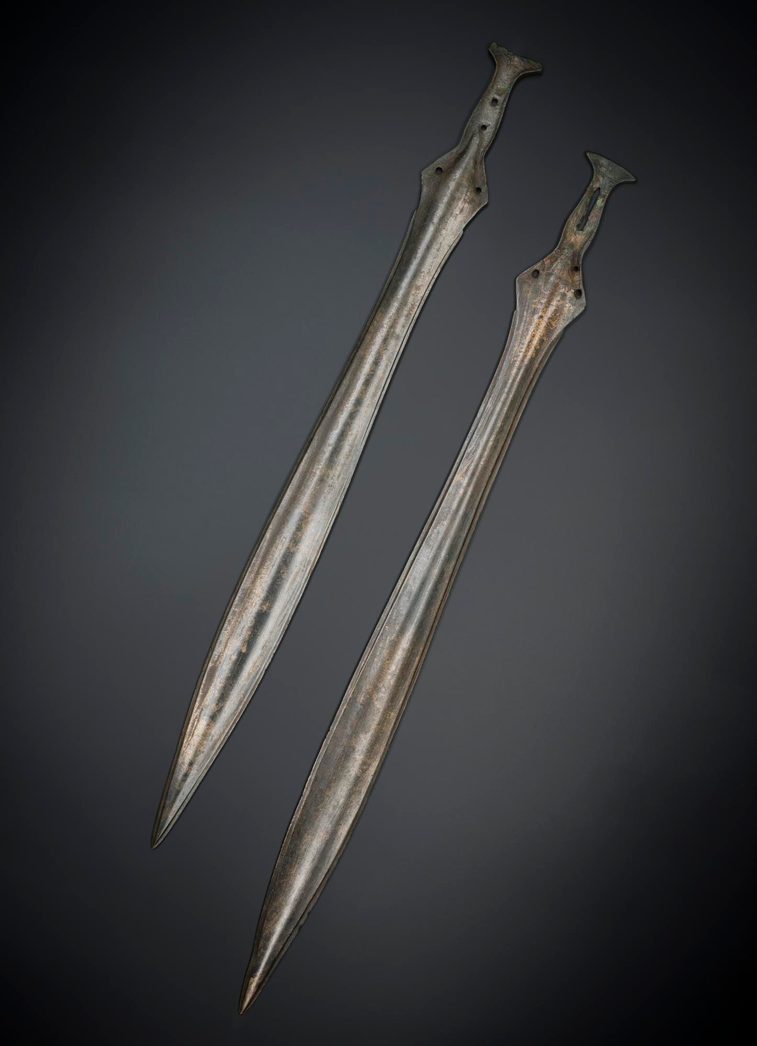
Many of these objects bear the traces of ancient use and destruction. Notching along the edges of some may come from use in combat against other weapons. All spears and all swords (with one exception) are broken, with pieces missing. The surviving complete sword has been sharply bent to remove its functionality. None of these would have been usable again. Most bear traces of having been subjected to extreme heat, probably while on a pyre. Warped, bubbled and melted surfaces suggest these weapons were exposed to temperatures close to melting point, c.1100 degrees Celsius. At such temperatures bronze can break and snap, which may explain why so many are broken. All of this suggests that while the weapons may once have been used to fight with, they were deliberately damaged beyond repair before they were buried in the loch.
This destructive event probably didn’t require a skilled individual, such as a metalworker. However, knowledge of the behaviour of bronze would have been useful, as well as making a fire capable of reaching these temperatures (though building good fires was an essential prehistoric skill). The number of objects suggests these were gathered from multiple individuals or communities. Burning and breaking so many weapons together may have been part of a ceremonial event and public spectacle.
More than scrap
Hoards such as this always spark many questions for archaeologists, with the most obvious ones starting with: why? Why were they gathered? Why were they destroyed? And why were they sunk into the loch?
The site of Duddingston Loch is a dramatic one, overlooked by the volcanic outcrop of Arthur's Seat. Historically, the Duddingston Loch assemblage has been interpreted as a pile of scrap metal that was abandoned in the Bronze Age. The intense exposure to heat may have been part of the scrapping or recycling process. But if this were the case, why did this assemblage survive for dredgers to recover?
Original accounts highlight that the hoard was found 150 yards (c.137 metres) from the shore of the loch. This suggests that the material was gathered after destruction and transported to the middle of the loch for depositing. As we understand more about how the hoard was treated, this view of the material as ‘scrap’ is changing.
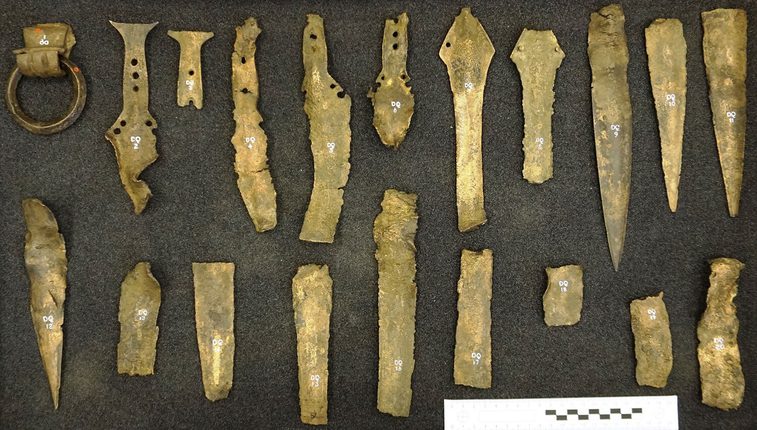
Melted and broken fragments of swords.
Weapon sacrifices
We now recognise that the Duddingston Loch assemblage fits into a broader trend of deliberately destroying and depositing large numbers of swords, spears and other weapons around 1100–900 BC in Britain. Other weapon hoards, many with signs of fire treatment, have also been recovered from watery places, like springs and bogs. A similar hoard of burnt and broken spears and swords was found in a reclaimed marsh at Peelhill, South Lanarkshire.
For some, the large number of swords and spearheads in these hoards suggests these represent the equipment of a band of warriors. Dr Tobias Mörtz has suggested these hoards might be considered “weapon sacrifices”. Bronze Age communities may have been deliberately destroying and sacrificing their weapons, or the weapons of their enemies, to remove their functionality in the afterlife. It may be that weapons used in combat were seen as polluted and needed to be ceremonially destroyed or removed from circulation. This was done in a dramatic way that ensured the objects were beyond repair and were totally irretrievable.
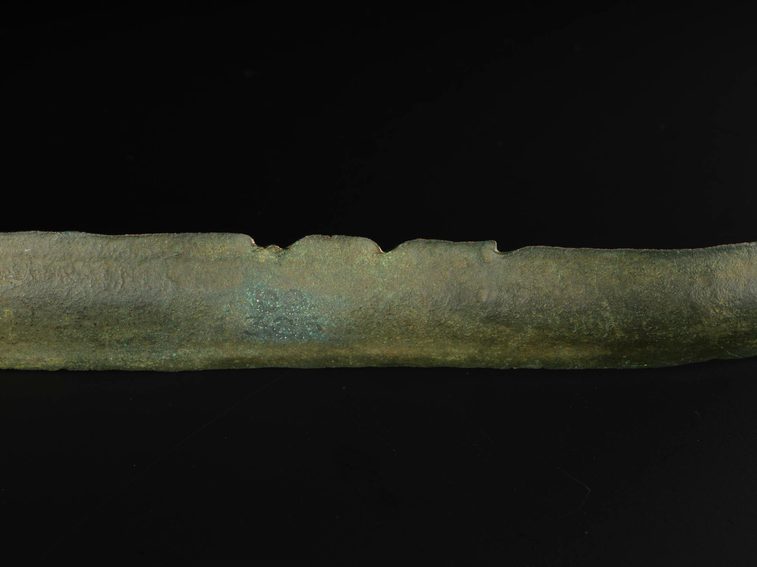
Notching or hacking along a sword edge. Museum reference X.DQ 305.
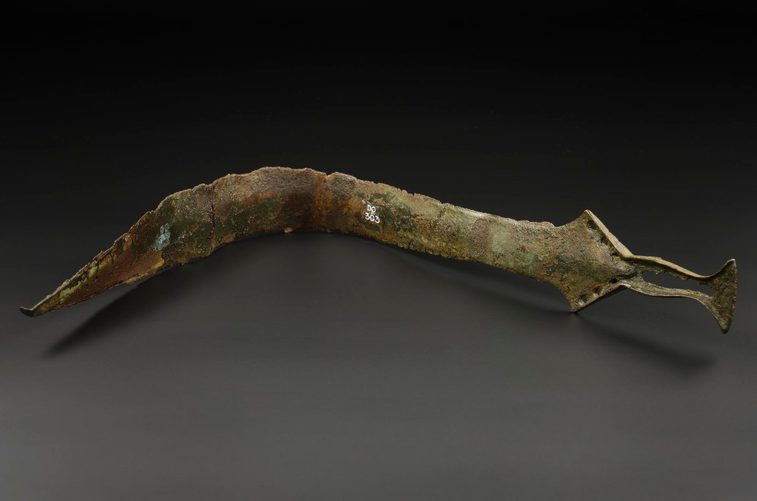
The only complete sword have been bent in half. Museum reference X.DQ 303.
We can compare this to the treatment of other weapons around the same time. Very near Duddingston Loch, two complete, undamaged swords were recovered from Arthur’s Seat, overlooking the loch. From Angus, excavators uncovered the Carnoustie Hoard, containing a sword in a scabbard and a spearhead with a gold-band, wrapped in fabrics and animal skins, and buried next to a structure. Unlike at Duddingston Loch, the Carnoustie objects were carefully treated and assembled for deposition. The burial of complete weapons suggests a completely different rationale for these actions and reflects how different communities felt about these objects.
Unravelling the mysteries
Whatever the intent behind the Duddingston Loch hoard, depositing the weapons in the loch was a significant abandonment of material. The total weight of the surviving hoard is about seven kilograms. That is a lot of bronze that could be recycled into other objects, such as tools, jewellery, or more weapons. This is important for telling us that the reasons for sacrificing these objects must have outweighed the material value of the bronze.
As research into this hoard continues, we hope to unravel more of its mysteries. Remarkably, despite 240 years in our collections, it remains one of our most intriguing and significant Scottish Bronze Age hoards.
It will continue to spark debate and shed light onto the actions of communities 3000 years ago.
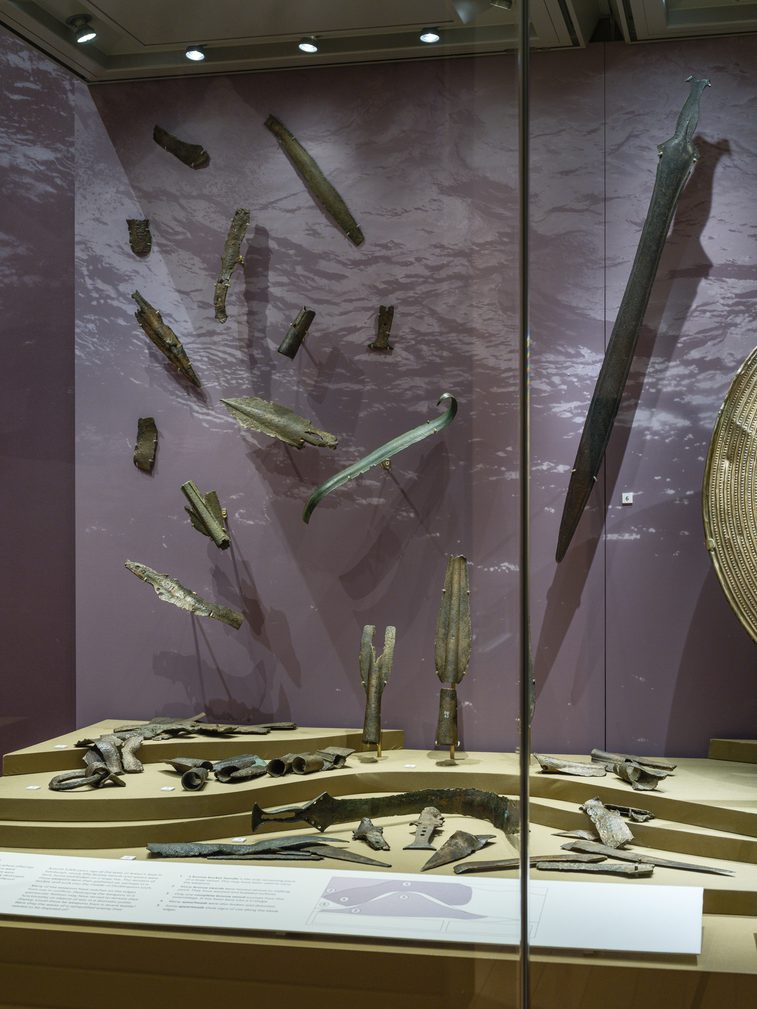
The Duddingston Loch assemblage on display as part of the Scotland's First Warriors exhibition.
The Duddingston Loch hoard is on display in Scotland's First Warriors at the National Museum of Scotland from 27 June 2026 to 16 May 2027.
Written by

Dr Matthew Knight
Senior Curator, Early Prehistory
You might also like

Flora MacDonald: An unlikely Jacobite heroine
History and cultures, Scotland
Flora MacDonald famously helped Charles Edward Stuart escape Scotland after the 1745 rising was crushed. A silver snuffbox, a treasured heirloom of her clan, links the romantic pair.
Geology to Jewellery: The history and science of Cairngorm quartz
Natural world, Scotland
Written by Emily Brown & Dr Sarah LaurensonThere is a whole fascinating world of Scottish minerals, reflecting the large variation in the country’s geology and physical landscape.The sheer variety is expressed beautifully by John Ruskin. In 1884 he described Scotland as ‘a country…
Snow Hunter: Collecting Scotland's vanishing ice
Natural world, Scotland
Written by Dr Sarah Laurenson & Iain CameronWhat can patches of snow across Scotland tell us about the global environmental challenge?