
The Second World War and the end of kilts on the battlefield
On 1 June 1940, the last remnants of the 1st Battalion Queen’s Own Cameron Highlanders were evacuated from Dunkirk. By the time the Battalion reformed in Yorkshire, there were only around 150 men left of nearly 700.
And yet, as these soldiers embarked on their boats in Dunkirk, they were proudly dressed in their kilts, fully-armed and retained the discipline and order that they had been trained to maintain.
Boarding one of those boats was Second Lieutenant (later Major) Donald Callander with the remaining 12 men of his Anti-Tank Platoon. Just days before, Donald and his men had been engaged in fierce fighting against General Rommel’s Panzer Divisions at La Bassée Canal in the outer defensive perimeter around Dunkirk. They were part of the 5th Infantry Brigade which in 1940 included:
- 1st Battalion Queen's Own Cameron Highlanders
- 2nd Battalion Dorsetshire Regiment
- 7th Battalion Worcestershire Regiment.
Donald's platoon was credited with taking out 21 German tanks, slowing their advance. These actions helped ensure countless British and French soldiers could evacuate before the German army reached the beaches. This was the last time that the kilt was worn in battle by a Highland regiment. Through the generosity of Donald Callander’s sons, their father’s kilt is now part of the National Collection.
Wearing a kilt in the Second World War
However, this story started the previous year. In January 1939, a 20 year old Donald was commissioned as a Second Lieutenant in the Queen’s Own Cameron Highlanders. His official picture from this time shows him in his dress uniform. He is shown wearing his kilt, sporran, plaid, basket-hilted sword and holding his feathered bonnet.
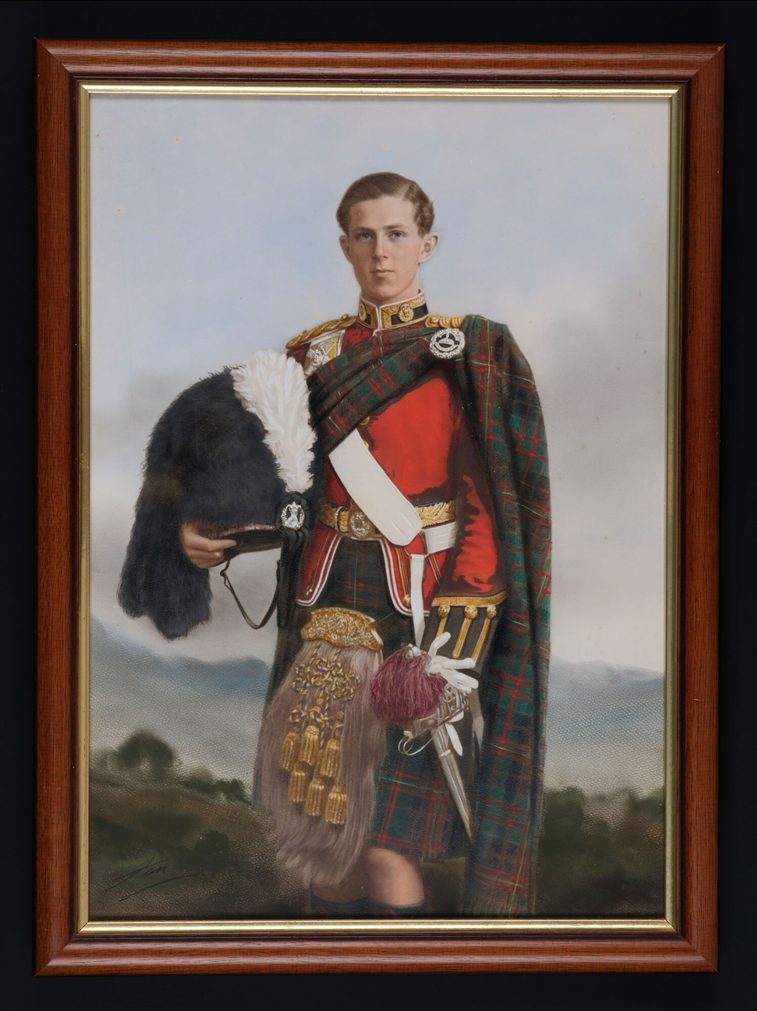
Hand coloured photo lithograph of Major Donald Fraser Callander OBE MC. Object reference: M.2026.2.31
On 3 September 1939 Britain declared war on Germany. On 23 September, the 1st Battalion Cameron Highlanders travelled to France as part of the British Expeditionary Force. Not long after they arrived, the order came from the War Office that all Highland regiments were to replace their kilts with battledress trousers. These were deemed more appropriate to modern warfare and easier to supply to troops.
These same orders had been given during the First World War and had later been rescinded. The Commanding Officer of the Battalion, Lieutenant Colonel Douglas Wimberley, fought to get the kilt reinstated. He ordered the Battalion to wear their kilts at all times and that is exactly what they did until they left France in 1940.
In 1952, Donald recalled:
“The kilt, as usual, was the dress for all purposes, whether unloading trains, mixing concrete, or the more normal digging. The only trousered personnel who left the billet area were the M. T. [Motor Transport] drivers, and they, in most instances, wore tartan trews.
Even the padre, Frank Maclauchlan (now minister of the Old High Church, Inverness), was to be seen taking the air dressed in his Cameron kilt. It was not until the end of February, 1940, that the threatened battle dress arrived in the QM’s [quartermaster’s] store – and there the trousers were to stay!” ('The Blue Hackle, Tartan Patches and the Kilt’, The 79th News, Sept 1952, p. 215)
Donald recounted how the only part of modern warfare that the War Office could have been worried about was mustard gas attacking men’s nether regions. However, the Camerons had already worked out how to counter this by pulling on anti-gas pants and hose-tops (like stockings). In a 1980 interview for the BBC, Donald recalled one time he thought he had been caught out when he felt burning after crouching down:
“Aged 21 and my love life was over. But when I plucked up courage to look, I’d been stung by nettles.” (‘Ladies from Hell’, BBC 1, 1980)
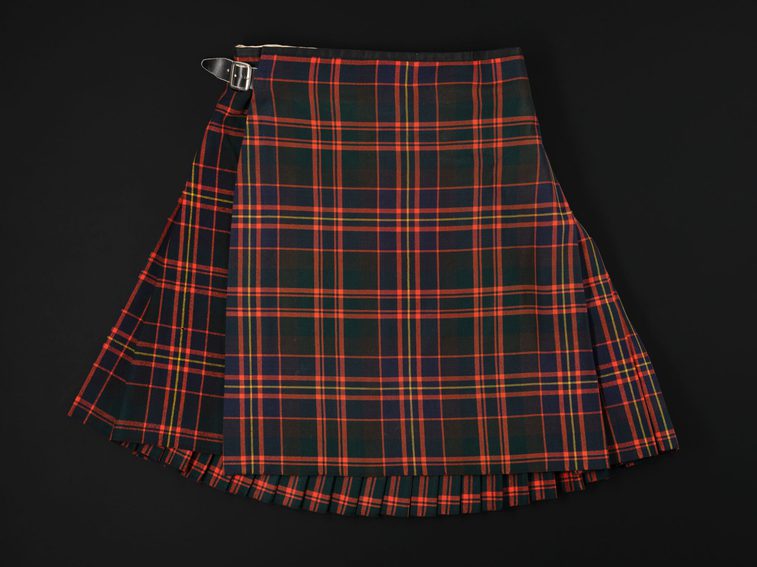
Queen's Own Cameron Highlanders kilt owned by Major Donald Fraser Callander OBE MC. Object reference: M.2026.2.1
In the 1980 interview, he also pointed out the good and bad points to wearing a kilt. It wasn’t the best to sleep in and could get caught when going over barbed wire. Also, if the pleats froze, they could cut the back of your legs. However, it was warm, gave freedom of movement when marching, dried easily and was an important part of a soldier’s pride in his regiment. It was also recognised by and boosted the morale of any Allied troops they fought beside.
The retreat to Dunkirk
The Camerons spent most of their time from 1939 to 1940 near the Belgian border training and building defences. When the Allies were forced to retreat, Donald's platoon with its Hotchkiss 25mm guns was used to provide anti-tank defence to other regiments.
In 1952, Donald remembered how his platoon was received during the retreat to Dunkirk:
“The English Regiments were always overwhelming in the confidence they placed in the fighting qualities of the Jocks, and it is no exaggeration to say that the mere arrival of twenty kilted Camerons with their three small guns often had the effect of restoring the confidence of already rather badly shaken Infantry.” ('The Blue Hackle, Tartan Patches and the Kilt’, p. 216)
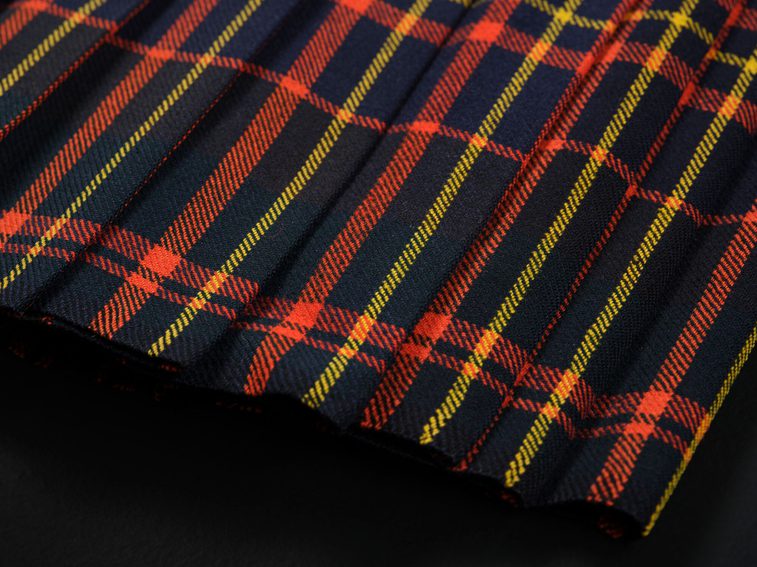
Close up of kilt pleats showing the Queen's Own Cameron Highlanders tartan. Object reference: M.2026.2.1
On 27 May 1940, Donald and his platoon rejoined their Battalion and fought alongside the rest of the 5th Infantry Brigade. They fought against General Rommel’s tanks at the village of Violaines in France, where the Germans were trying to cross La Bassée Canal. The three guns of Donald’s platoon were dug in within the hedgerows in front and either side of the farm where headquarters had been set up by the Battalion. They were able to inflict considerable damage to the advancing German tanks as the gunners fired at their flanks.
Unfortunately, the tanks then swung around to face the anti-tank guns head-on. A shell took out the gun that Donald was bringing ammunition to and machine-gun fire was showering them all with bullets. At that point, Donald reported to his Commanding Officer, Lieutenant Colonel Pat Miller, who was directing operations from the cellar of the farmhouse:
“Sir I think we ought to withdraw because there’s a German tank in the garden. And can I withdraw because I’m afraid I’ve lost that gun, I’m out of touch with my left hand gun and my right hand gun and the German tanks have now come all round us?” (Interview of Donald Callander at the Imperial War Museum)
His platoon’s withdrawal was agreed and Donald collected his men and used a vehicle to take them to a place of safety to conduct a roll call. At this point, he realised that one gun crew was missing, so he went back to try and find them. He managed to pick up two men, but the German tanks were everywhere and the rest of the surviving Cameron Highlanders were cut off up on the canal bank. Donald and his remaining platoon were sent to the new brigade headquarters. They were then ordered to retreat to Dunkirk, marching 40 miles to the beaches.
When they arrived, the sight of their kilts and the way they maintained discipline was latched onto by tired men waiting on the beaches. Donald took charge of gathering supplies and helping with loading people onto the boats. People were looking for a leader. The 12 men that Donald arrived with from the Camerons became 60 as other men asked to join him, including 18 men from the Welsh Guards. Donald was awarded a Military Cross for his courage and leadership at La Bassée.
Standing out from the crowd
Regimental pride and identification on the battlefield were important to the Cameron Highlanders. These are some reasons why they had wanted to keep their kilts as part of battledress in 1939. After the Camerons returned from Dunkirk, kilts were never worn in battle again.
In early 1940, soldiers of the regiment had started wearing Cameron tartan arm patches and the blue hackle behind the cap badge in their balmorals. This practice continued after the kilt was no longer allowed in June 1940. Originally, the tartan patches were worn as a large patch just above the elbow. But they eventually became smaller and were moved to the shoulder by 1944.
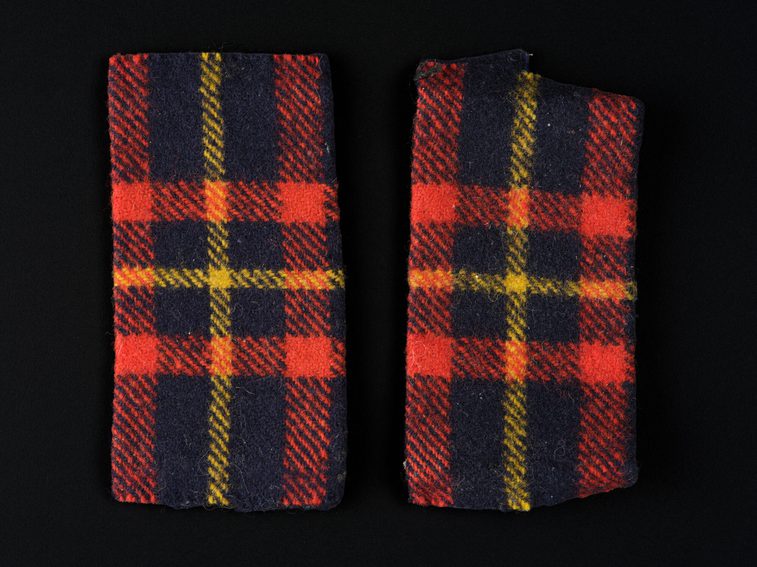
A pair of tartan patches owned by Major Donald Fraser Callander OBE MC. Object reference M.2026.2.20
The blue hackle had only been informally approved by King George VI in December 1939. This is when it was requested by Lieutenant Colonel Wimberley. During the war, the blue hackle was initially withdrawn as it had not been authorised by the War Office. Eventually, it was made an official part of the Cameron Highlander uniform in 1951.
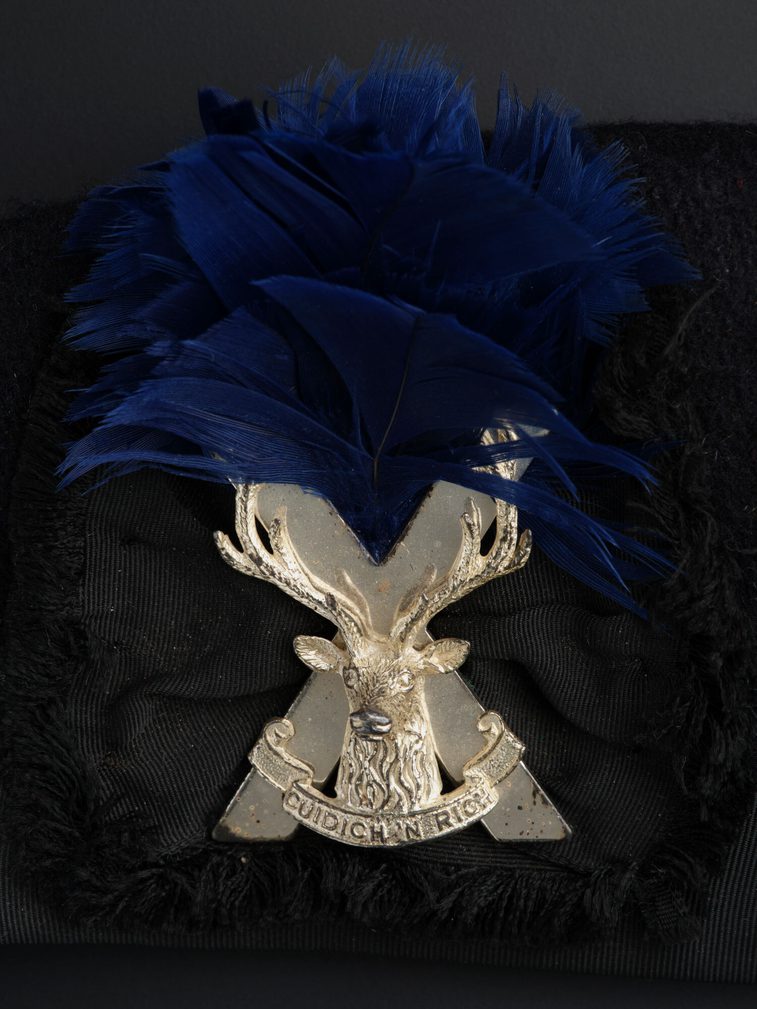
Close up of blue hackle and cap badge worn by Major Donald Fraser Callander OBE MC during the last two years of his military career in 1961-3, when the Queen’s Own Cameron Highlanders and the Seaforth Highlanders had been amalgamated to form the Queen’s Own Highlanders. Object reference M.2026.2.14
Major Donald Callander's legacy
Donald fought until the end of the Second World War and had a successful military career after the war ended. He always remained a proud Cameron Highlander and he spoke and wrote about his experiences at Dunkirk and the last time kilts were worn in battle.
Along with Donald’s kilt, the collection donated by his sons contains a variety of uniform and equipment connected to Donald’s career during and after the Second World War. These objects and their stories can now be enjoyed by those who have an interest in the history of Scotland’s Highland regiments.
Written by

You might also like
Prisoners of war at East Kilbride
History and cultures, Scotland
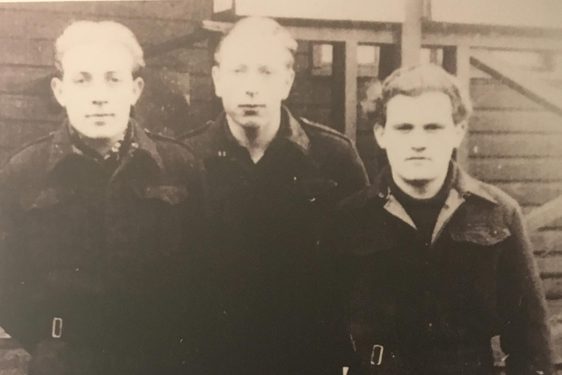
During and directly after the Second World War, the Reid family at Wester Kittochside, East Kilbride, employed Italian and German prisoners of war (POW) to work on their farm.One of these prisoners was Heinrich Lückel, born in Germany in…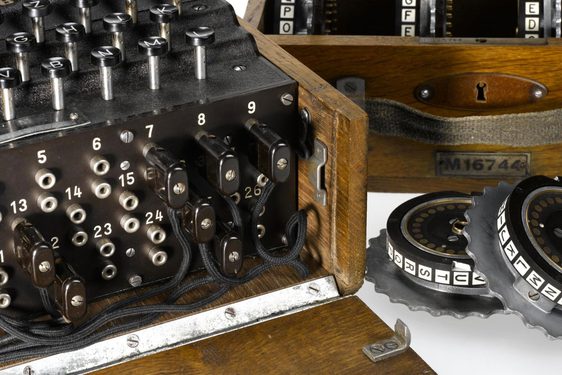
The role of the Enigma encoding machine in World War 2
History and cultures, Science and technology
Written by Dr Tacye PhillipsonThis model of Enigma machine was the most famous device used by the German Navy to encode and decode military messages during World War 2. At the time, it was considered a very complex device, and the code it produced, unbreakable.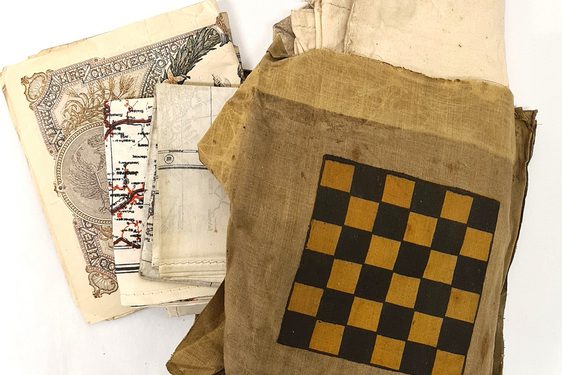
Escape and Evade: How to avoid capture in the Second World War
Science and technology
In 1939, a secret department of Military Intelligence (MI9) was formed. It employed the inventor Christopher Clayton Hutton and former magician Jasper Maskelyne. Their remit was to devise ingenious ways to smuggle maps, compasses, money…