Get to know Robert the Bruce through 10 objects
News Story
Robert I, also known as Robert the Bruce, was king of Scots from 1306 to 1329. The first in a new royal line, Bruce gained the throne by controversial and violent means. As king, he needed to establish his legitimacy and Scotland’s independent authority as a kingdom.
As well as a significant programme of written propaganda, some of the ways he achieved this can be seen in surviving objects from the period. His descendants built on this foundation, adding to the myth, and gaining from their dynastic connection. Over the centuries, many stories and objects were drawn into the Bruce legend, testament to the continuing relevance and reimagining of this king of Scots.
Succession crisis
Alexander III, King of Scotland, died in 1286. His appointed heir, his granddaughter Margaret Maid of Norway, died in 1290 leaving Scotland in a succession crisis. Thirteen rival claimants sought the Crown in what became known as the Great Cause. Two main competitors emerged: Bruce’s grandfather, the fifth Lord of Annandale, and John Balliol, Lord of Galloway. In 1292, the Bruce claim was formally rejected in favour of John Balliol. Balliol was duly crowned king of Scots, but his reign was short-lived.
Edward I's invasion of Scotland in 1296 forced Balliol's abdication. In late 1298, the future King Robert Bruce and John Comyn, Balliol's nephew, were appointed Guardians of Scotland. Several years later they met in 1306 at Greyfriars Church in Dumfries to discuss the future rule of Scotland. During this meeting Bruce lost his patience and killed Comyn. Six weeks later he was crowned King Robert I at Scone, Perthshire.
1. Great Seal
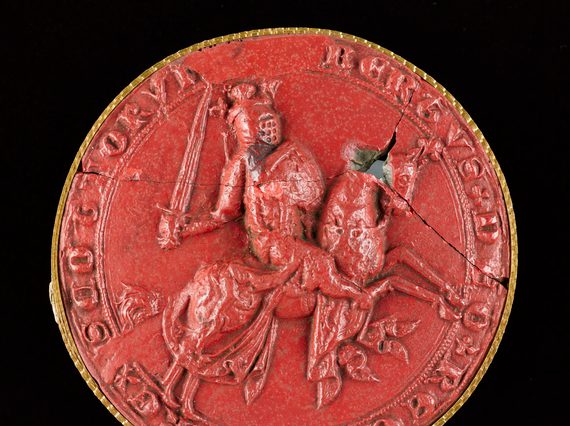
Bruce's accession to the crown was controversial, and many saw him as a violent usurper. As king, he needed to establish his authority and Scotland's independence as a kingdom. An essential tool for asserting medieval authority and governance was the seal. Wax seals were attached to documents to authenticate and legitimise the contents.
To underline his legitimacy and military might, Robert I's Great Seal drew deliberate connections with the past. Like earlier kings, he is shown mounted on a horse and bearing arms. Unlike previous kings, he is turned to face the viewer in a combative, aggressive posture. This has been read as a challenge to England’s King Edward I and to his opponents in Scotland.
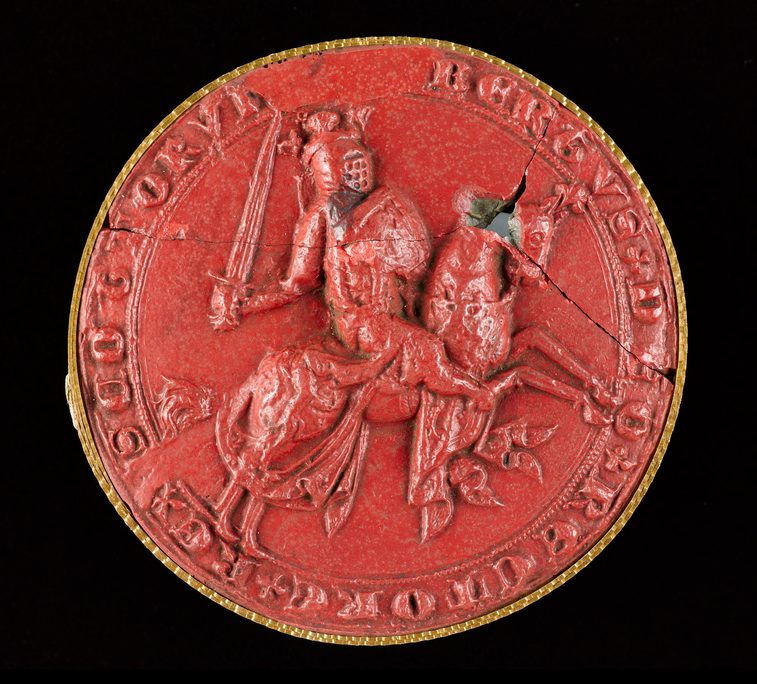
Seal impression in red sulphur, of the reverse of the first Great Seal of Robert I (Bruce) of Scotland, depicting the king as a knight on horseback, c. 1306. Museum reference K.1999.743.
2. Bute Mazer
The Bute Mazer, also known as the Bannatyne Mazer, is a communal drinking cup. The lid, the bowl and most of the silver fittings date from the early 16th century. They were probably made for Ninian Bannatyne of Kames, who is named on the bowl’s rim. The mount inside the bowl is two hundred years older and was made during the lifetime of Robert I.
A lion dominates the design of the mount. Scottish monarchs had adopted the lion symbol in the early 12th century, using it on their royal coats of arms. Royal heraldry showed the lion standing ‘rampant’ on its hind legs. On the mazer, the lion is lying down, but it was probably still intended to represent the king, at rest and surrounded by the symbols of his supporters. The heraldic shields of powerful figures from south-west Scotland, the region of Bruce's own lordship, surround the lion. Between its paws are the arms of Walter Stewart, the King's son-in-law. Other shields include the arms of Sir James Douglas, a close ally of the king.
After the death of Robert I in 1329, Douglas pledged to take the King's heart on pilgrimage to the Holy Land. The Douglas coat of arms gained a heart symbol in recognition, and its absence here confirms the mount was made during Bruce’s lifetime.
Image gallery
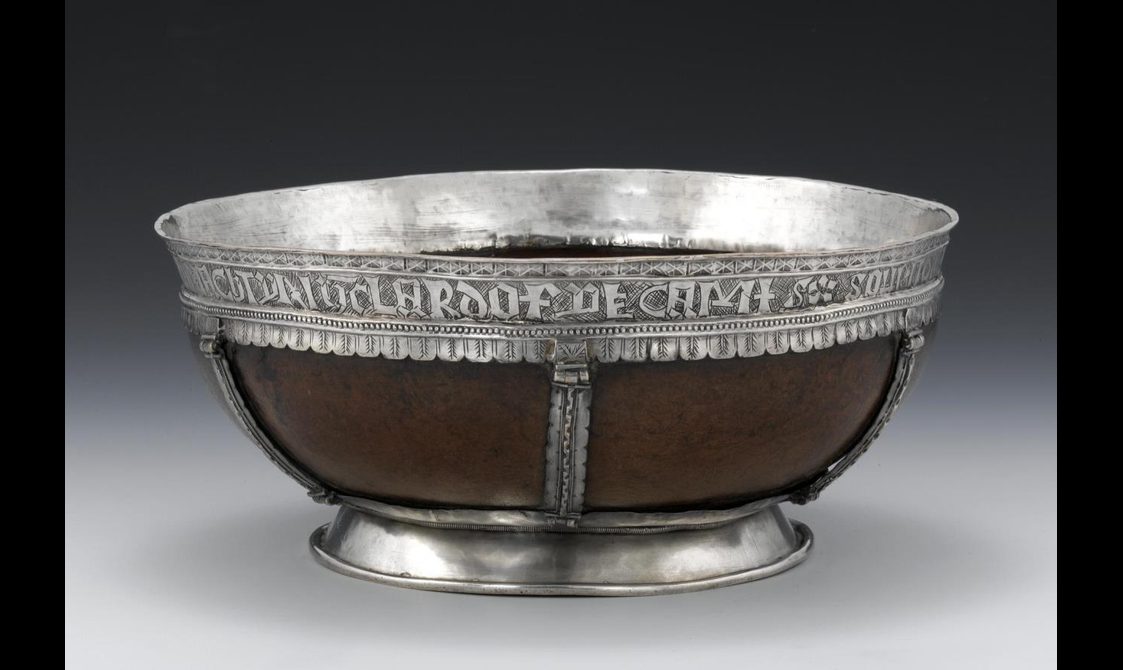
The Bute mazer, on loan from The Bute Collection at Mount Stuart. Museum reference IL.2001.182.1.1.
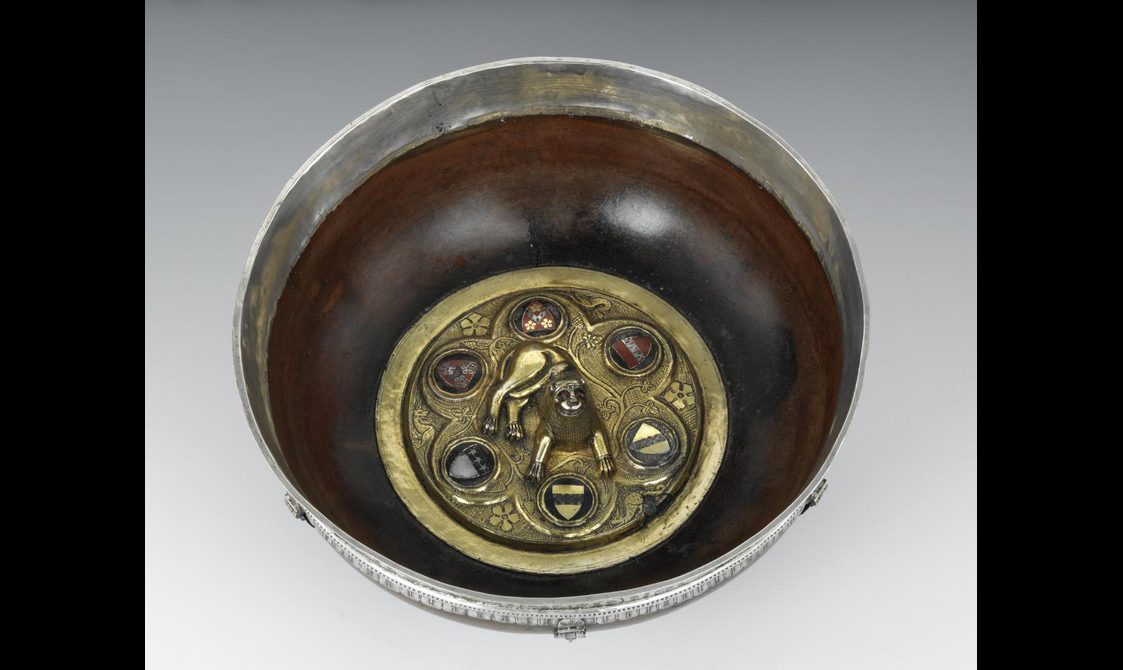
Inside the Bute Mazer. Museum reference IL.2001.182.1.1.
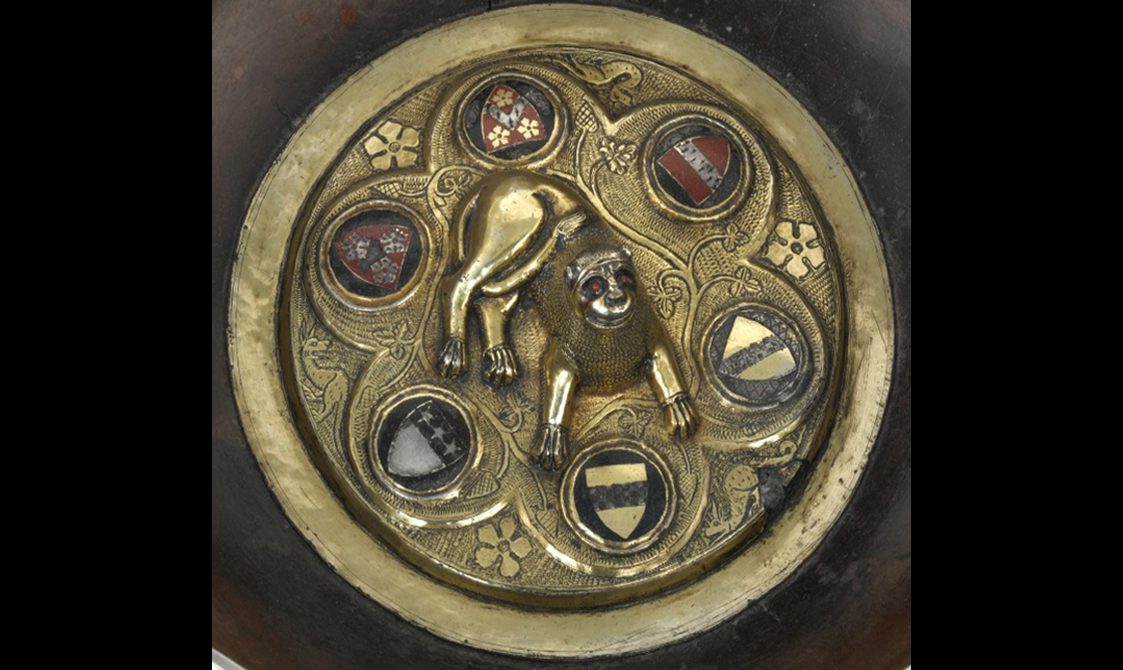
Detailed close-up of the Bute Mazer. Museum reference IL.2001.182.1.1.
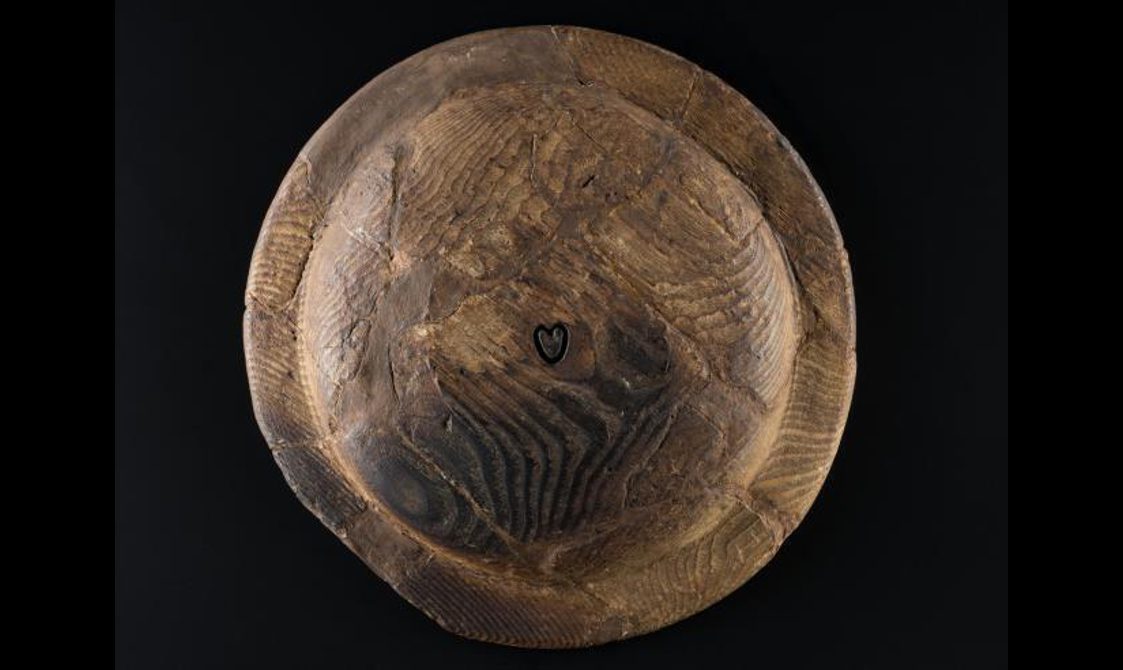
Wooden plate with the Douglas motif, the heart, burnt into the base, from Threave Castle, Kirkcudbrightshire, 14th to 15th century. Museum reference H.HXA 173.
3. Silver farthing
This silver farthing was minted between 1318 and 1329, possibly at Berwick, and was worth a quarter of a penny. The obverse bears a crowned head and sceptre. The Latin inscription translates as: 'Robert, by the Grace of God.' It is thought that no coins were issued in Robert I's name for at least the first 12 years of his reign. Robert’s ability to mint coinage from around 1318 may be linked to the Scots' recapture of Berwick-upon-Tweed from England.
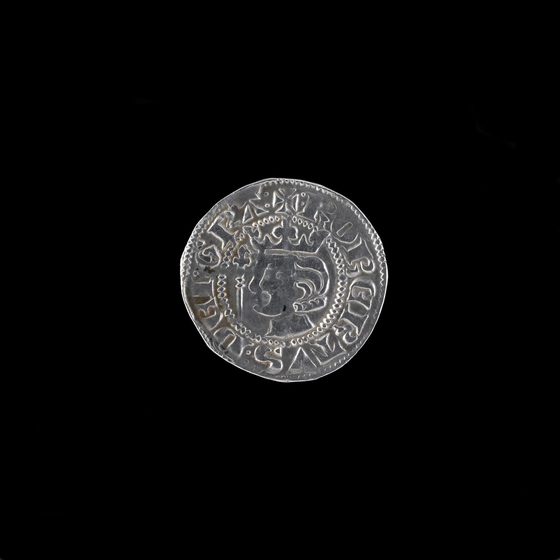
Robert I silver penny, possibly Berwick, 1318 - 1329. Museum reference H.C4145.

Robert I silver penny, reverse side, possibly Berwick, 1318 - 1329. Museum reference H.C4145.
4. Declaration of Arbroath
Despite the Scots’ success at the Battle of Bannockburn in 1314, neither Edward II nor Pope John XXII recognised Robert I as king. The Pope desired peace between England and Scotland, so both kingdoms could help in a crusade to the Holy Land. In Scotland there was a fear that the Pope would acknowledge England’s sovereignty over Scotland as the basis for this peace settlement.
In 1320, Bruce summoned a parliament at Newbattle Abbey to plan a response to papal demands. Three letters were sent to the Pope in Avignon: one from the King, one from the Church, and one from the barons of the realm. The barons’ letter was written up at Arbroath Abbey, and since the mid-20th century the file copy kept in Scotland has been known as the Declaration of Arbroath.
Only 19 of the 50 or so seals affixed to the Declaration survive. Most of the seals were from magnates based in south-east Scotland or close to Newbattle, suggesting the letter was written as a matter of urgency. Though it features many powerful nobles, an attempted coup later that year underlines that support for Robert I was not as strong as the letter suggests.
After receiving the letters, the Pope urged reconciliation between the warring sides. There was no immediate peace between the kingdoms, but papal replies in summer 1320 did address Robert I as ‘illustrious king of Scotland’. In 1323 England and Scotland agreed to a truce and a peace treaty was signed in March 1328. The Pope issued a papal bull the following year to permit the anointing and crowning of a King of Scots. The peace was short-lived, and the Second War of Independence broke out in 1332.
The surviving document is a copy that was kept in Scotland for the chancery’s records (the original had been dispatched to the Pope). This iconic and fragile document, cared for and preserved for future generations by National Records of Scotland, can only be displayed occasionally to ensure its long-term preservation. The last public display was at the National Museum of Scotland in 2023. You can view a transcript of the Declaration of Arbroath by National Records of Scotland.
Image gallery
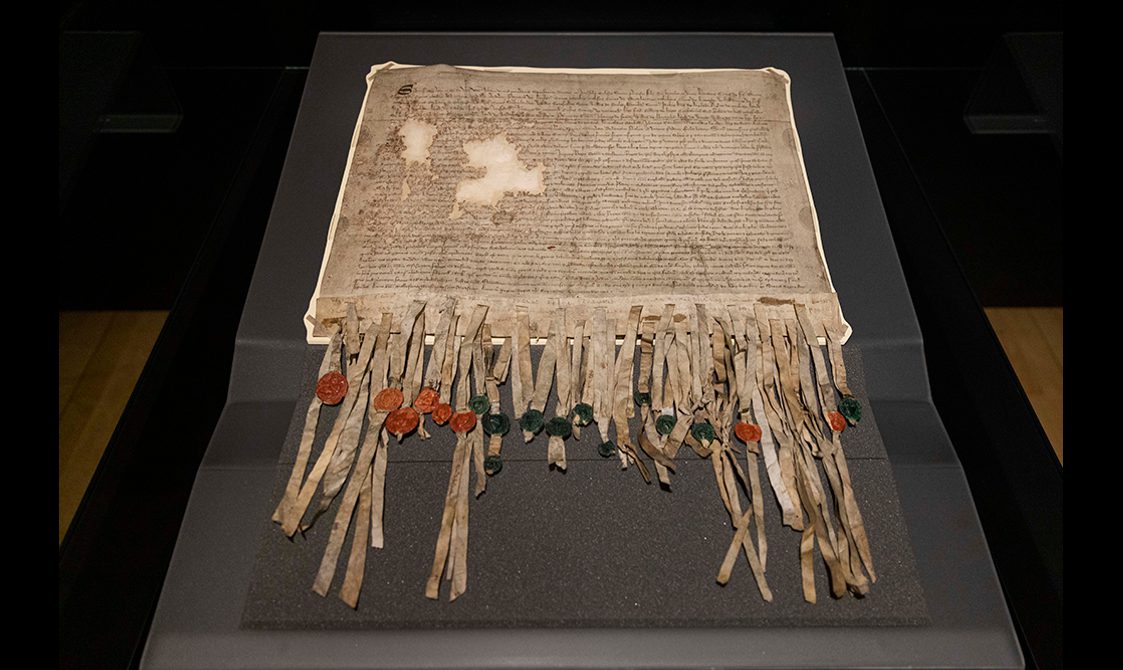
The Declaration of Arbroath when previously on display at the National Museum of Scotland in 2023. The Declaration of Arbroath is held by the National Records of Scotland.

Close up view of the Declaration of Arbroath.
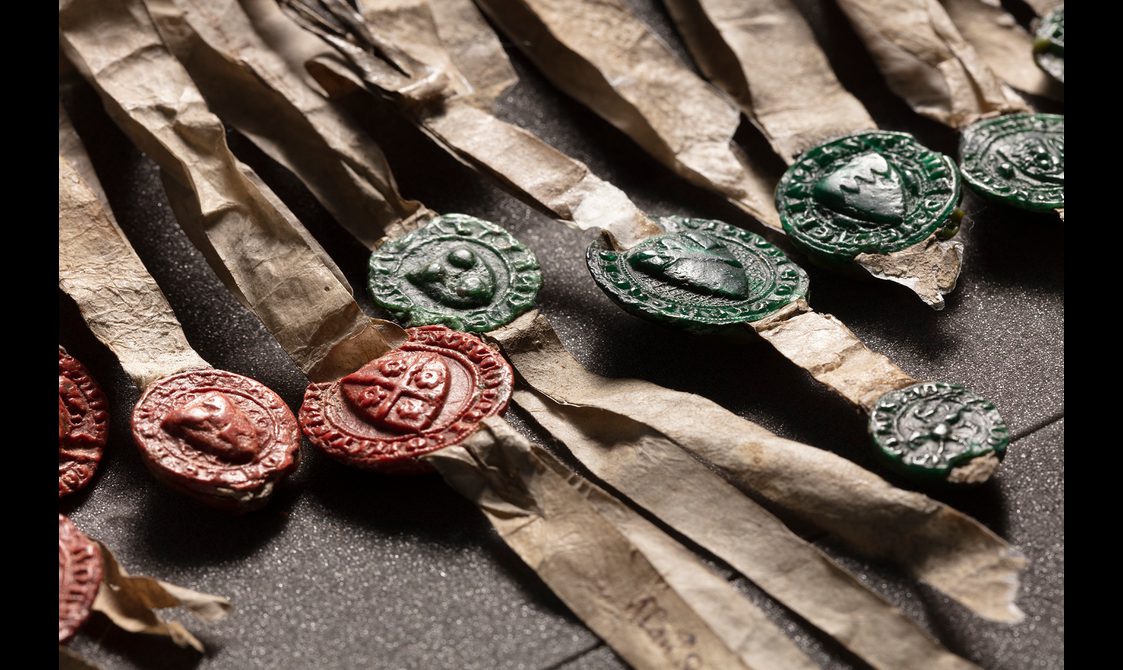
Close up view of some of the Declaration of Arbroath seals.
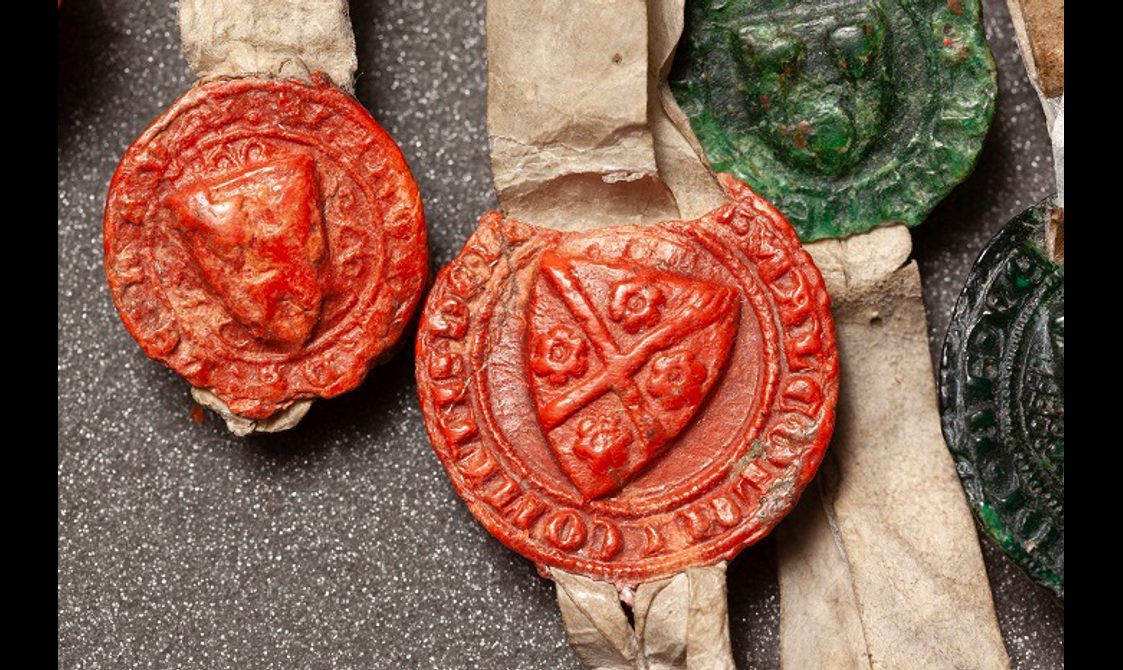
Close up view of the Declaration of Arbroath seals.
5. Fragments from the tomb of Robert I
Robert I died on 7 June 1329 at his house in Cardross, following a lengthy period of illness. On his deathbed, Robert asked for his heart to be removed and taken to the Holy Land by Sir James Douglas. Following the death of Douglas in a battle in Spain, Bruce's heart was returned to Scotland and buried at Melrose Abbey. In 1996 excavations at the Abbey uncovered a small lead container. Inside was a smaller container and a plaque recording that a heart had been found when it had been opened in 1921. Though this was an intriguing link to Robert I, burying a heart separately from the body was relatively common for royal burials at the time, and there was no way to confirm whether this was Bruce’s heart. The casket was reburied at Melrose in 1998.
The rest of Robert I's body was buried within Dunfermline Abbey, the resting place of Scottish rulers since the early 12th century. An elaborate gilded marble tomb carved in France marked his resting place in the abbey’s choir. This tomb was destroyed during the Reformation, though fragments of alabaster found at Dunfermline may have belonged to it.
Image gallery
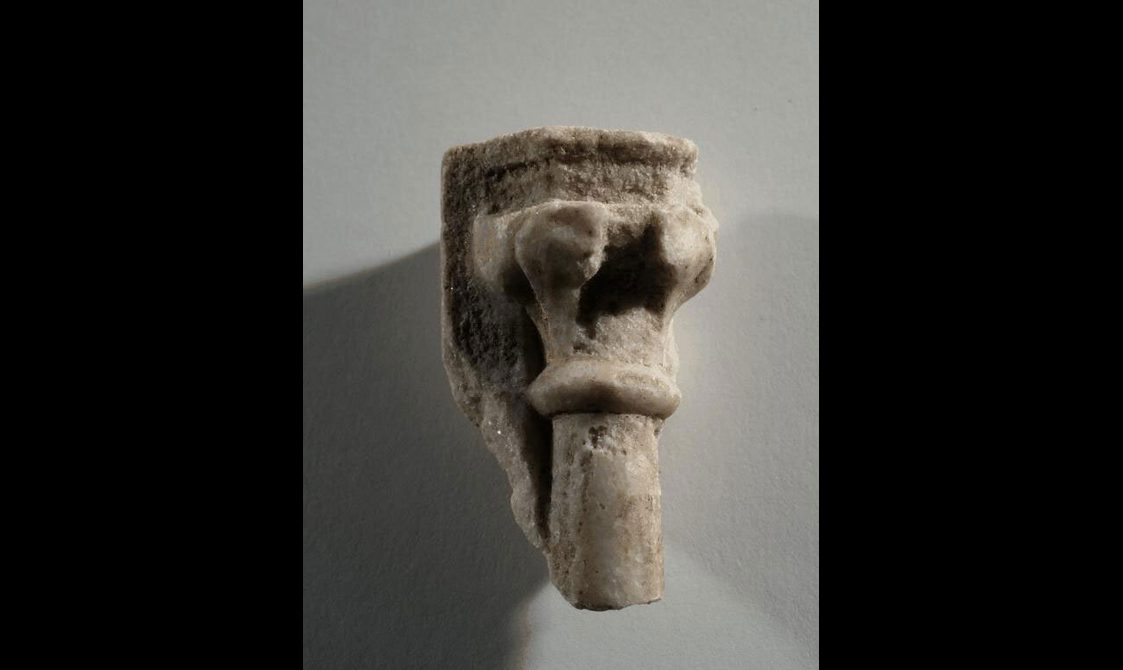
One of ten carved alabaster fragments from the tomb of King Robert the Bruce in Dunfermline Abbey, 14th century. Museum reference H.KG 65.
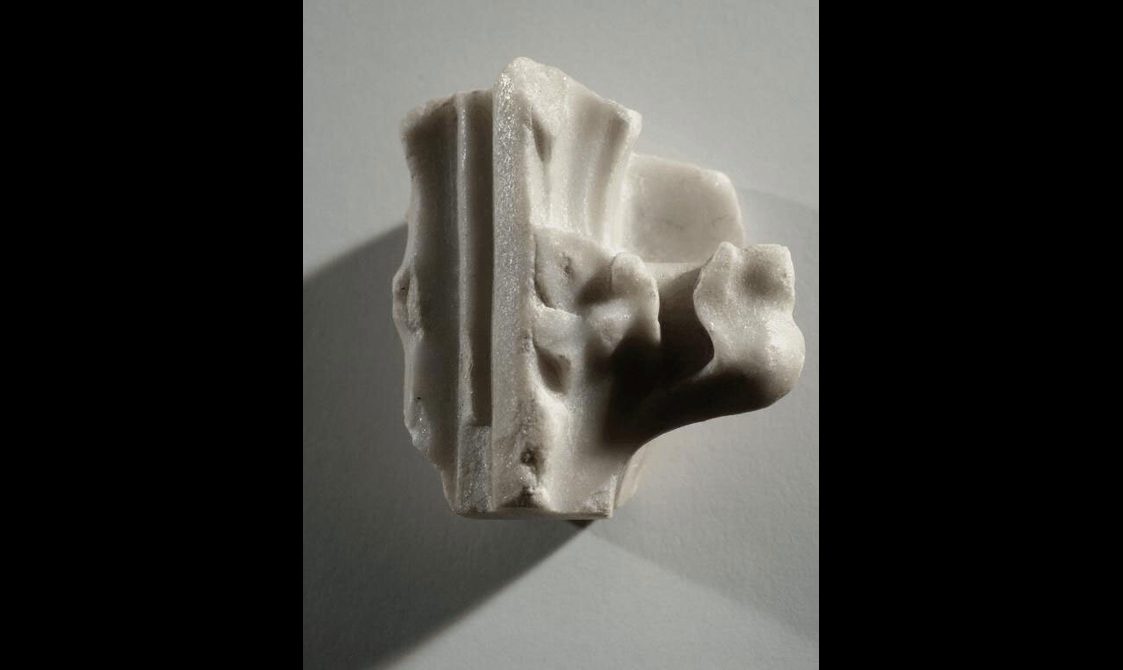
One of ten carved alabaster fragments from the tomb of King Robert the Bruce in Dunfermline Abbey, 14th century. Museum reference H.KG 67.
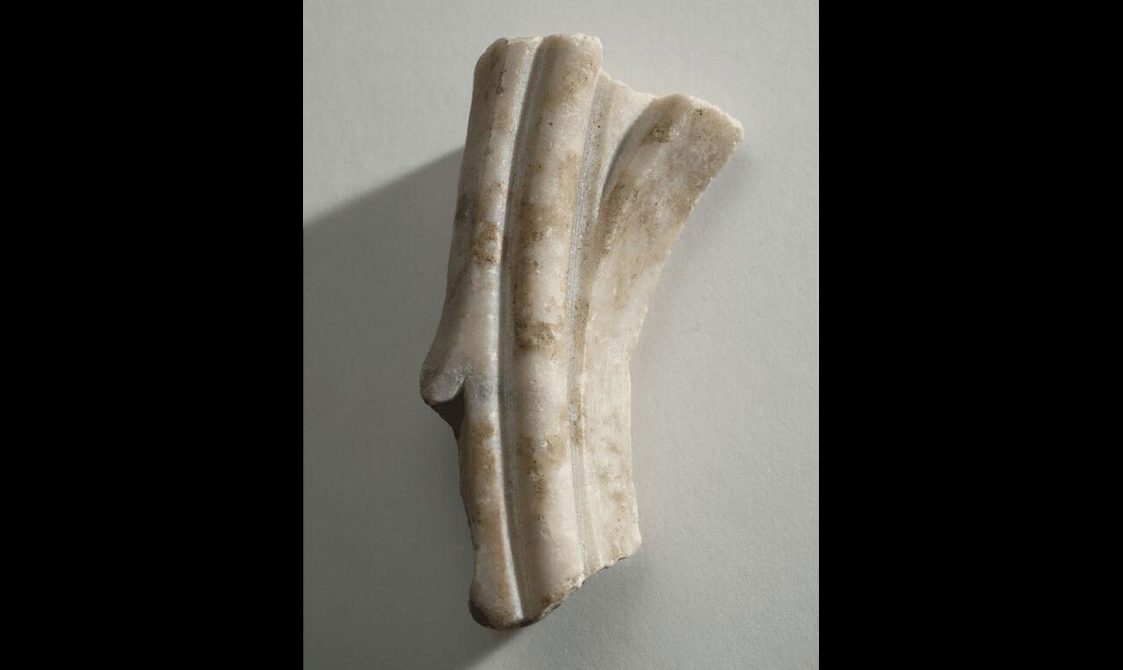
One of ten carved alabaster fragments from the tomb of King Robert the Bruce in Dunfermline Abbey, 14th century. Museum reference H.KG 73.
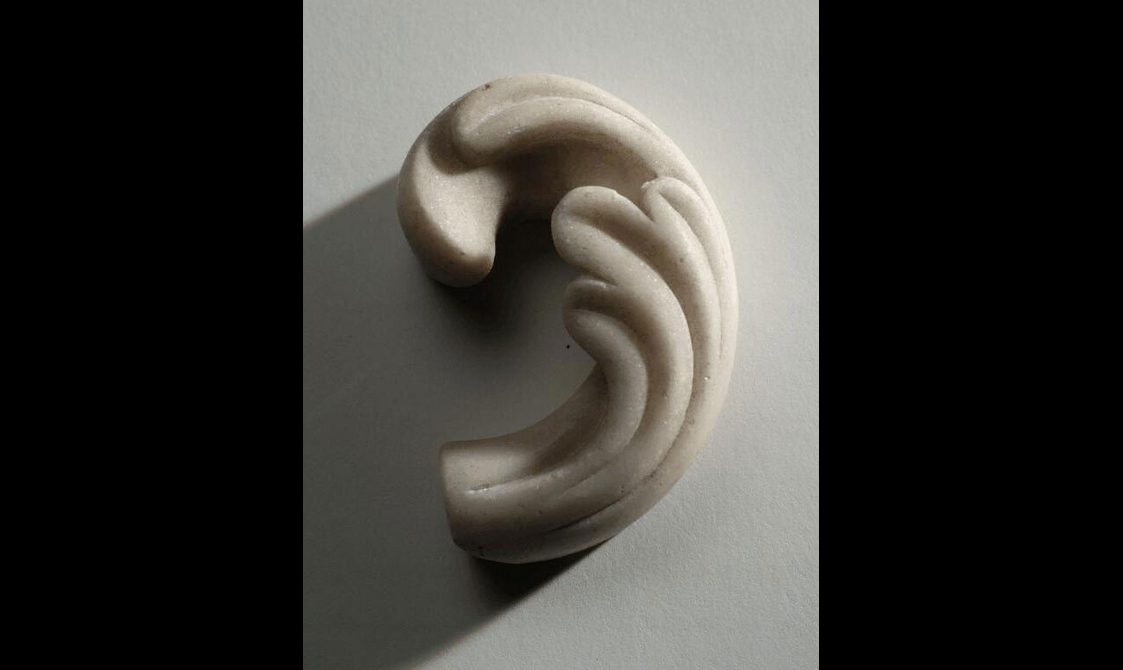
One of ten carved alabaster fragments from the tomb of King Robert the Bruce in Dunfermline Abbey, 14th century. Museum reference H.KG 74.
6. Gold cloth from the tomb of Robert I
A burial was unearthed during alterations to Dunfermline Abbey in 1818. The skeleton was encased in lead and buried in a decayed wooden coffin with remains of golden silk cloth. The skeleton bore indications that the chest had been opened to remove the heart. After a cast of the skull was made, the remains were reburied in the church. This may have been the burial of Robert I, but other kings were certainly buried in this part of the Abbey.

Fragments of gold cloth, possibly from the tomb of Robert I. Museum reference H.KJ 149.
7. The Brus
Bruce’s descendants built on his reputation, gaining from their association with his heroic exploits. His grandson, Robert II, commissioned John Barbour to write an epic narrative poem, ‘The Brus’. It is an extensive account of the Battle of Bannockburn, casting Bruce as a chivalric hero. This masterpiece of propaganda has coloured perceptions of Bruce ever since.
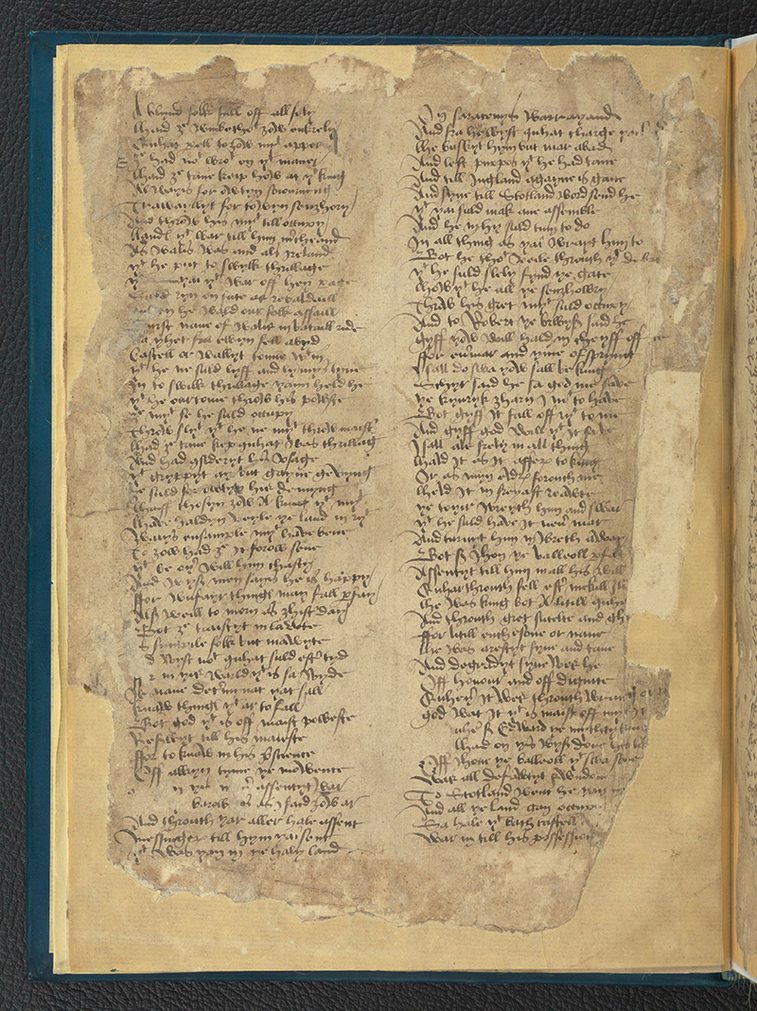
A page from a 1489 copy of 'The Brus' by John Barbour held by the National Library of Scotland.
8. Brooches associated with Robert the Bruce
The Brooch of Lorn is one of three ‘turreted’ brooches, all with similar striking features. The Brooch of Lorn was originally owned by the MacDougalls of Lorn. Crafted from silver, it features a large scalloped ‘tower’ holding a prominent rock crystal in a silver setting. Eight turrets rise up from the base plate, each grasping a pearl. This large and imposing brooch was said to have been taken from Bruce in 1306 as he fled retribution for the murder of John Comyn. However, the style of the brooch shows that it was made at least a hundred years after Bruce died, and refashioned in later centuries.
The Ugadale Brooch, also known as the Lossit Brooch, was originally owned by the Mackays of Ugadale (Kintyre). It features a large central stone, framed by eight turrets topped by coral beads and pearls. According to tradition, the brooch was given to the MacKays by Robert Bruce after he stayed at Ugadale. In its present form, however, the brooch is also considerably later than Bruce's time.
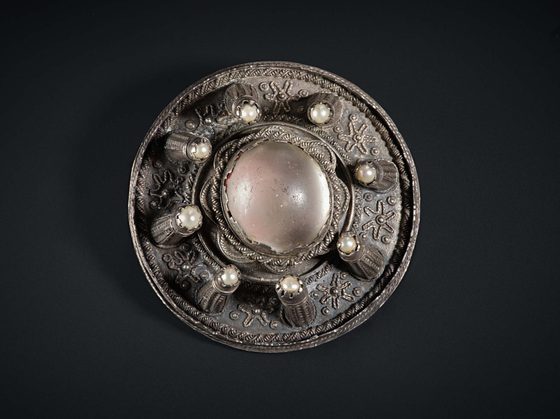
The Brooch of Lorn, top view (diameter: 90mm). Museum reference IL.2012.62.

Electrotype facsimile of the Ugadale, or Lossit, brooch, on display at the National Museum of Scotland. Museum reference H.NGD 11.
9. Hawthornden Sword
The Hawthornden Sword is a two-handed claymore with four down-pointing quillons and a curved tusk grip. Said to have belonged to Robert the Bruce, it actually dates from the late 16th century. Objects like the sword that date to the centuries after his death are linked to the continuing importance and reimagination of the legend of Robert I.
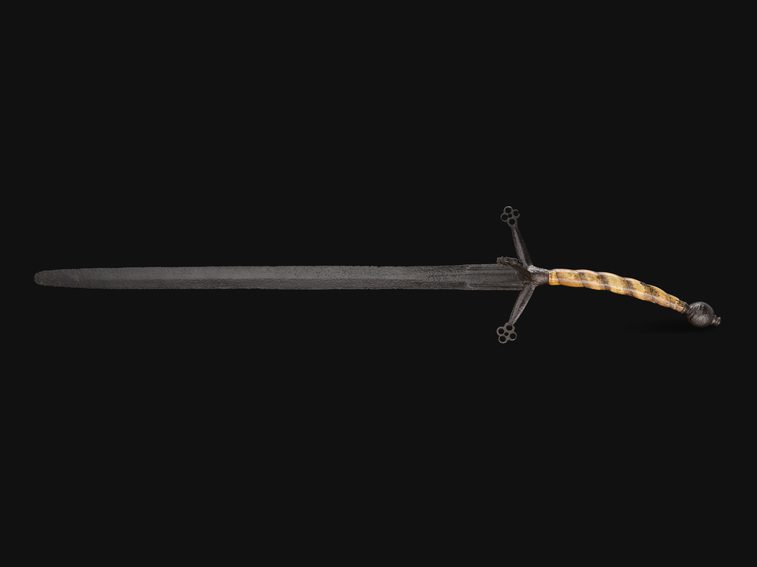
The Hawthornden Sword said to have belonged to Robert the Bruce, but actually late 16th century. Museum reference H.LA 160.
10. Monymusk Reliquary
Objects much older than Bruce were also drawn into his story. When the 8th-century Monymusk Reliquary was discovered in the 19th century, a legend quickly grew up linking it to Bruce. Medieval sources referred to a battle standard associated with St Columba that was carried by Bruce’s forces at the Battle of Bannockburn. 19th-century scholars suggested the standard was not a flag or banner but a reliquary containing bones of the saint. Around the same time, the Monymusk reliquary came to attention, and the two became linked in 19th-century writings.
Recently, historians have revisited this story and found no evidence to connect Bruce, Bannockburn or St Columba to the Monymusk Reliquary.
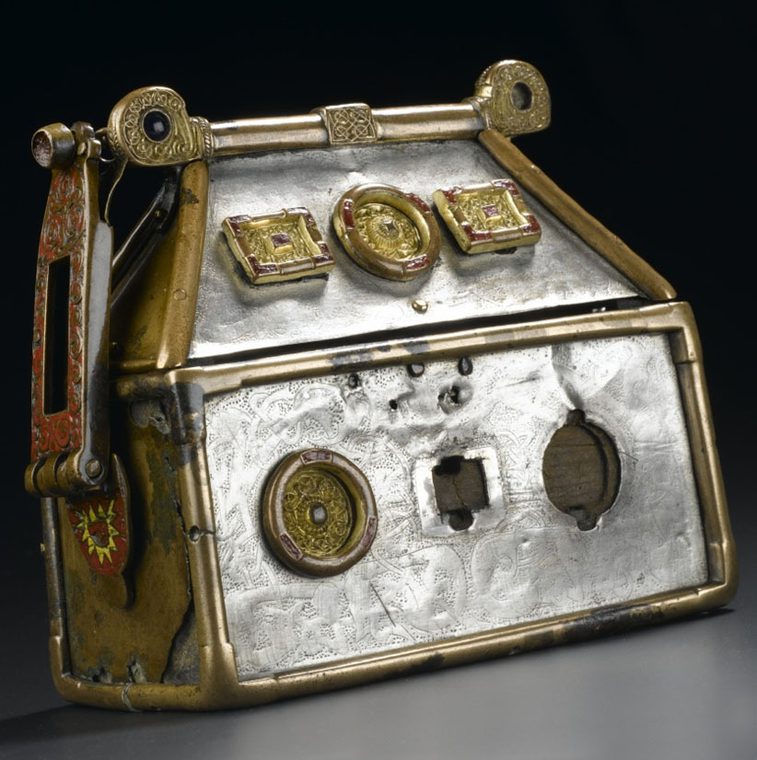
Monymusk Reliquary, possibly once containing a relic of St Columba, from around the 8th century AD. Museum reference H.KE 14.
You might also like
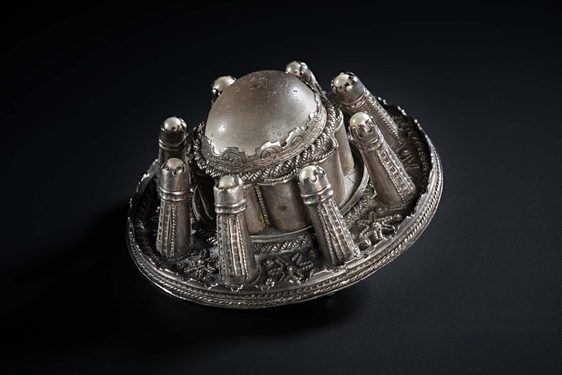
The mysterious Brooch of Lorn
History and cultures, Scotland
When Sir Walter Scott described the Brooch of Lorn in his 1815 poem The Lord of the Isles, the brooch itself had been missing for over 150 years. Here, we take an in-depth look at this intricate and intriguing object.
Fan favourites: 5 decorative souvenir fans
Art and design, Fashion and textiles
Written by Dr Emily Taylor & Carys WilkinsHand-held folding fans are a lightweight portable accessory. Although their practical function is to keep you cool, the decoration and materials used to make fans communicate much, much more.Fans make ideal souvenirs, intended to be…
A Viking Age boatyard on Eigg
Archaeology
Written by Dr Adrián MaldonadoTwo oak boat stems dating to 880-1050 AD from the isle of Eigg show the arrival of Scandinavian seafaring technology to Scotland.These rare survivals reveal how the Viking Age forever changed Scotland's seaways.Vikings and the seaWe tend…