Telescopes: from tiny lens to the largest mirrors
People throughout history have looked up to the sky for answers: to measure time, mark seasons, and navigate oceans. The sky at night also inspires with a sense of vast distances and the sublime.
The invention and development of the telescope powerfully increased our view of the night sky. Many notable pioneers were both astronomers and inventors, experimenting with telescope design, developing powerful new lenses and mirrors, and even discovering new planets in the process.
The first telescopes
The telescope was probably invented in the Netherlands in 1608, when a spectacle-maker, Hans Lipperhey, put two glass lenses together in a tube, effectively creating a ‘refracting’ telescope. These use lenses to bend light and form a magnified image.
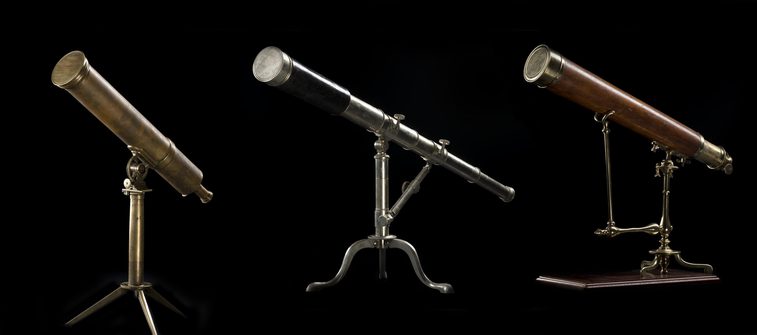
A collection of refracting telescopes.
In 1609, Italian mathematician Galileo Galilei heard of this optical device and created refracting telescopes with larger magnifications, able to observe the moon’s surface, phases of Venus and Jupiter’s largest moons. However, there were drawbacks: despite advances in optical craftsmanship, image quality remained limited until the mid-18th century, due to distortions created by the lenses, such as chromatic and spherical aberration.
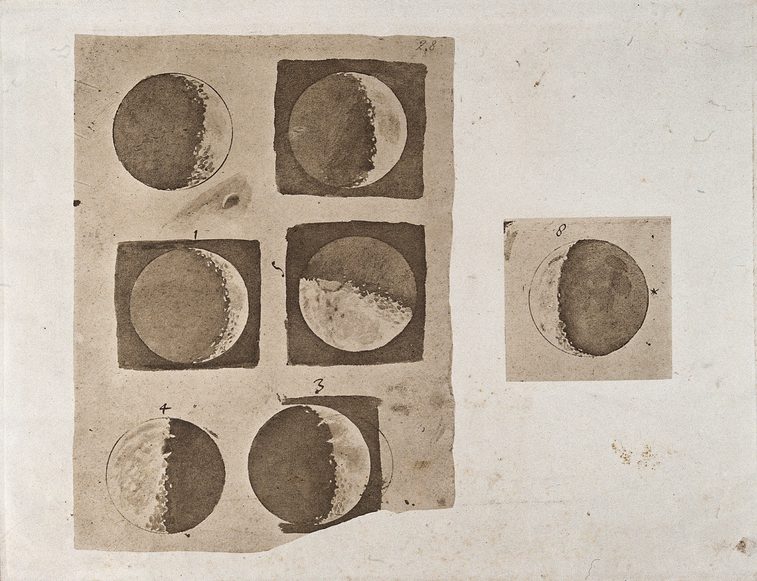
'Astronomy: five diagrams of the surface of the moon, during its phases'. Aquatint after Galileo Galilei. Wellcome Collection. (46269i)
From refractive lenses to reflective mirrors
In 1663, Scottish mathematician and astronomer James Gregory published an innovative design for a ‘reflecting’ telescope that used mirrors to form the image, instead of glass lenses used in the refracting telescope. A few years later, Isaac Newton made a reflecting telescope with a different arrangement of mirrors and lenses.
After solving various technical problems, this approach produced more compact telescopes with sharper images, since mirrors do not produce the same optical aberrations.
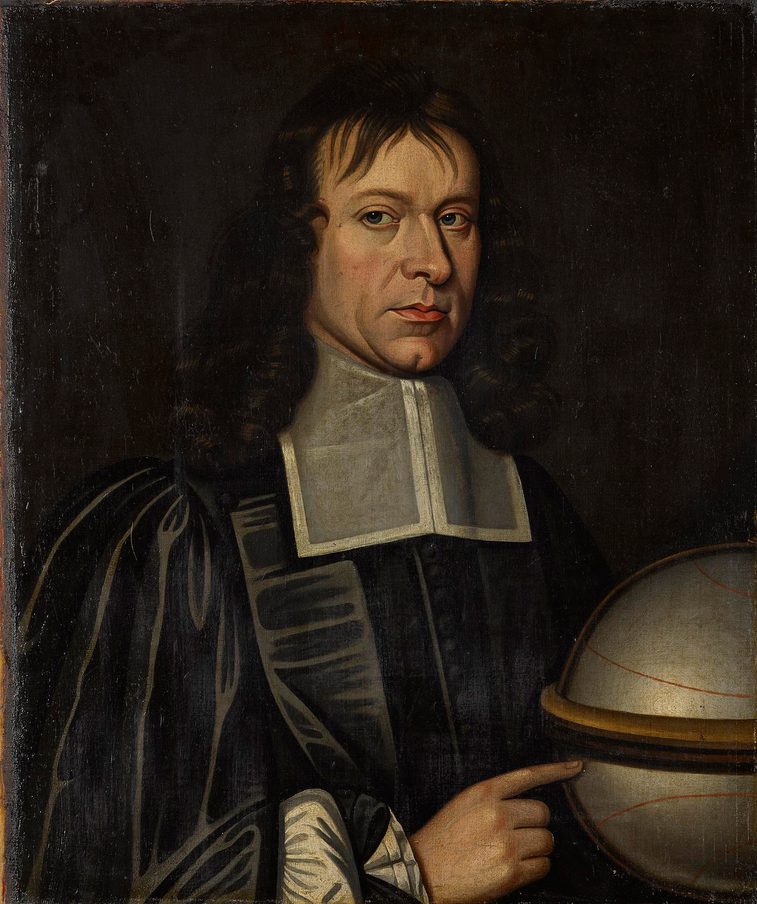
Portrait in oils of James Gregory, mathematician and inventor of the reflecting telescope, attributed to Richard Waitt, 1708 - 1732. (T.1974.204)
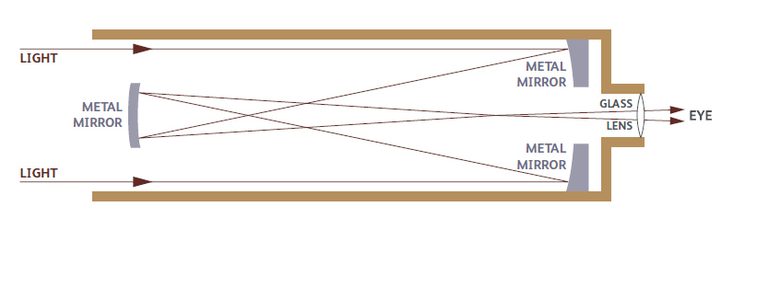
A diagram of how light is bounced through a Gregorian reflective telescope using mirrors at each end.
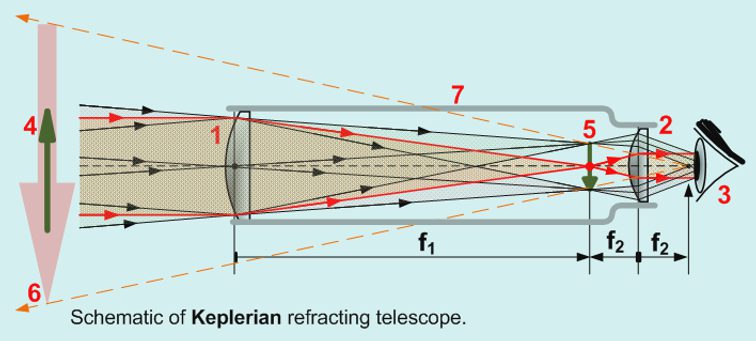
A diagram showing how light is bounced through a Keplerian refracting telescope.

The competitive centuries
By the early 18th century, astronomy and other branches of science were becoming increasingly popular. Throughout the 18th and 19th centuries, there was intense competition amongst specialist astronomy tool makers to design, build, and sell the most attractive, accurate and innovative tools for observing the night sky.
In the 1730s, Benjamin Martin popularised astronomy through public lectures on 'experimental philosophy' (later named 'science'), writing books, as well as devising and making affordable instruments for demonstration and sale. He opened his famous Fleet Street shop in London in 1756, which became a hub for amateur astronomers and enthusiasts.
Rival in this competitive market, Scottish mathematician James Short, sold 'Gregorian' reflecting telescopes that produced clear images from his highly polished metal specula (mirrors).
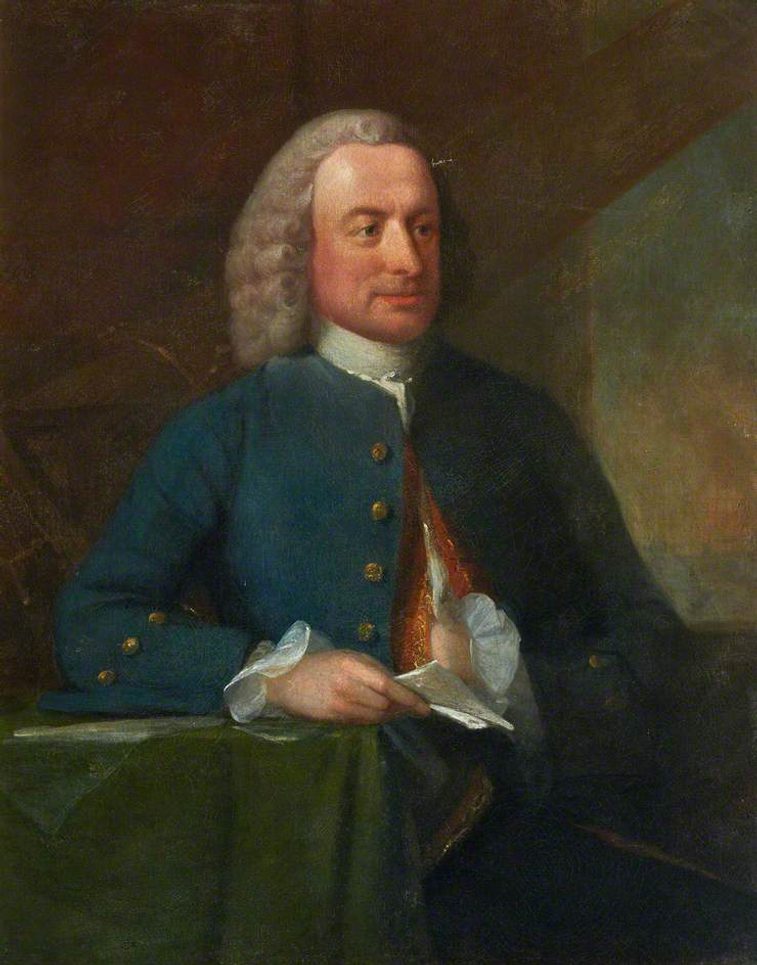
James Short, attributed to Benjamin Wilson.
A growing business
Short’s technical skill was largely self-taught, but Colin Maclaurin, Professor of Mathematics at the University of Edinburgh, fostered his interest in practical optics after he attended his courses. Through Maclaurin’s patronage, and that of the Earl of Morton, Short was able to sell telescopes to a growing number of customers.
In 1738 Short moved to London, where he could reach a larger market. He was able to concentrate on polishing the mirrors of his instruments, while buying in the rest of the brasswork. By the 1740s and 1750s, he was the leading telescope maker in Britain, producing instruments worldwide for wealthy patrons, universities, and observatories including ones in Paris, St Petersburg, Harvard and Uppsala.
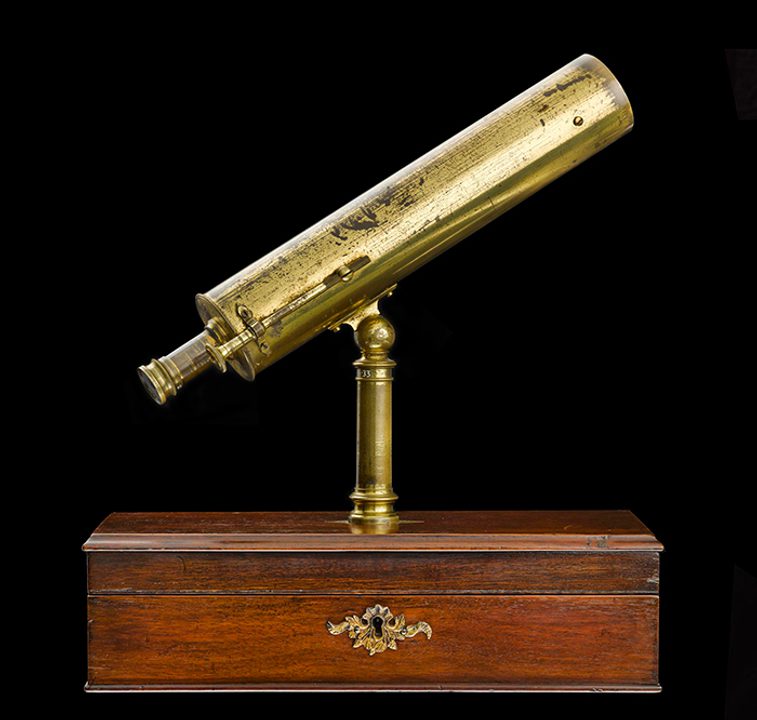
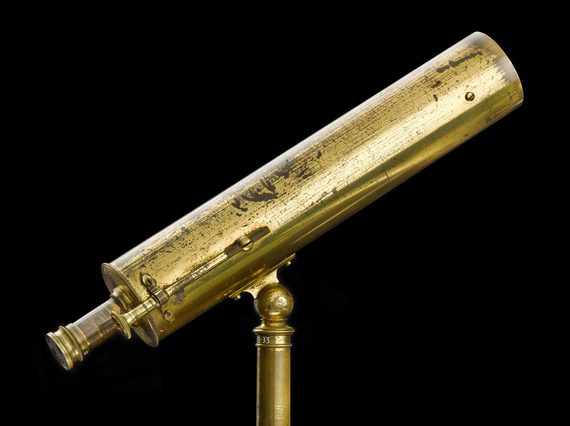
2 1/4 inch reflecting telescope of brass, made by James Short of London, c. 1765. (T.1984.33)
Several telescopes produced by James Short went on voyages to observe the transits of Venus in 1761 and 1769, including that of Captain James Cook.
Short never took an assistant, and his self-taught skills died with him. At the time of his death, he left an estate worth over £20,000 (well over £2 million today). His business was inherited by his brother Thomas Short, who later brought one of the largest telescopes, with an aperture of 12 inches, to Edinburgh as a central attraction at his popular observatory on Calton Hill.
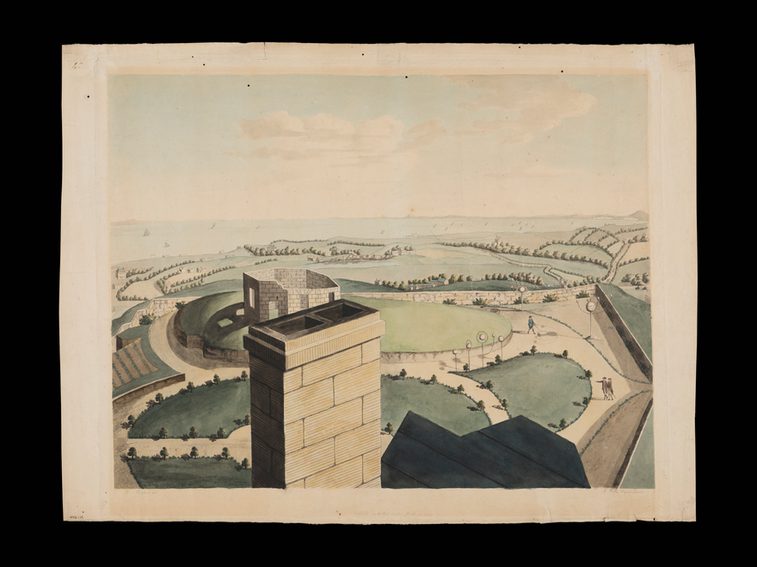
Hand-coloured aquatint showing the unfinished observatory designed for the large telescope on Calton Hill in Edinburgh, Robert Barker, 1790. Aquatint is a printmaking technique that produces areas of tones rather than lines. (T.1972.19)
The Herschels
Innovators and prolific astronomers of the late 18th century included the German-born William Herschel and his sister Caroline. Like Short, William became exceptionally skilled at grinding specula for reflecting telescopes and made groundbreaking discoveries using his instruments, including the planet Uranus, and was elected a Fellow of the Royal Society.
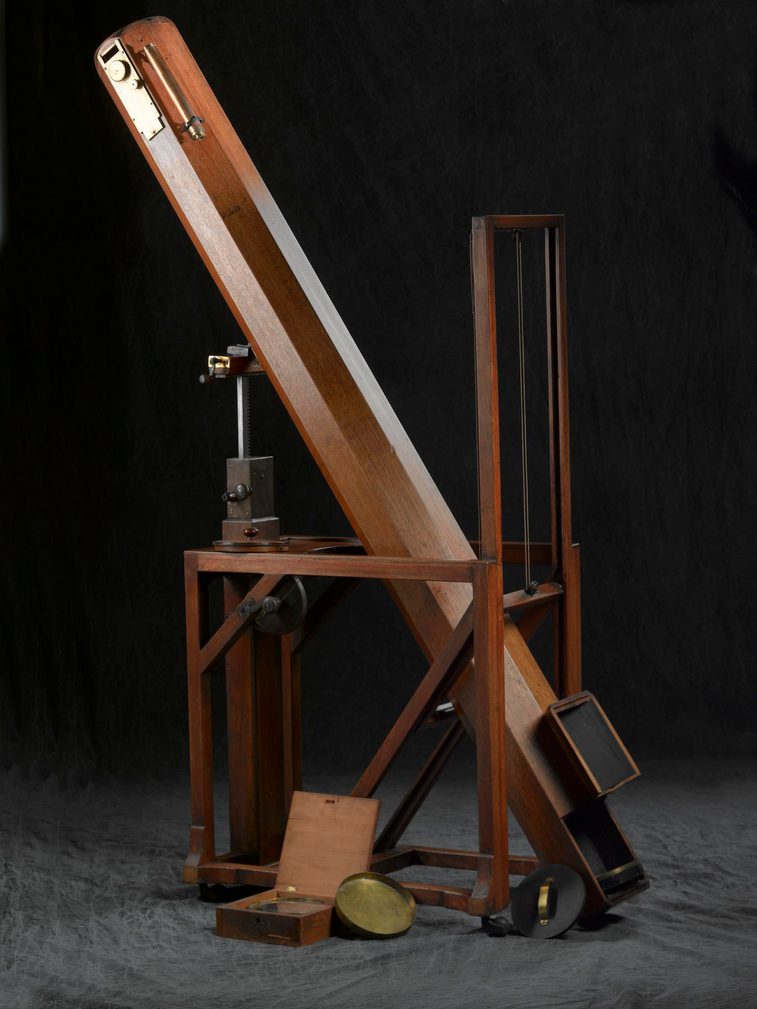
Telescope and speculum attributed to William Herschel, c1760. (T.2001.157)
William realised that he needed a telescope with considerable light‑gathering power to make the images of very distant objects bright and large enough to be visible to the observer. He constructed a 40-foot telescope, with a speculum mirror of nearly 50 inches at Slough. Completed in 1789, this revealed the sixth and seventh satellites of Saturn.
Caroline worked closely alongside her brother and went on to discover eight comets using the instruments she built with him.
Herschel’s 7-foot Newtonian reflecting telescopes earned an international reputation for their remarkable quality and performance.
Return of the refractors
The 18th-century improvements to reflecting telescopes were matched by those to refracting instruments. Key was the development of achromatic lenses, which corrected chromatic and spherical aberration by combining two kinds of glass. Several London-based instrument makers experimented on such lenses in the 1730s-40s, and they were commercially produced by John Dollond from the 1750s.
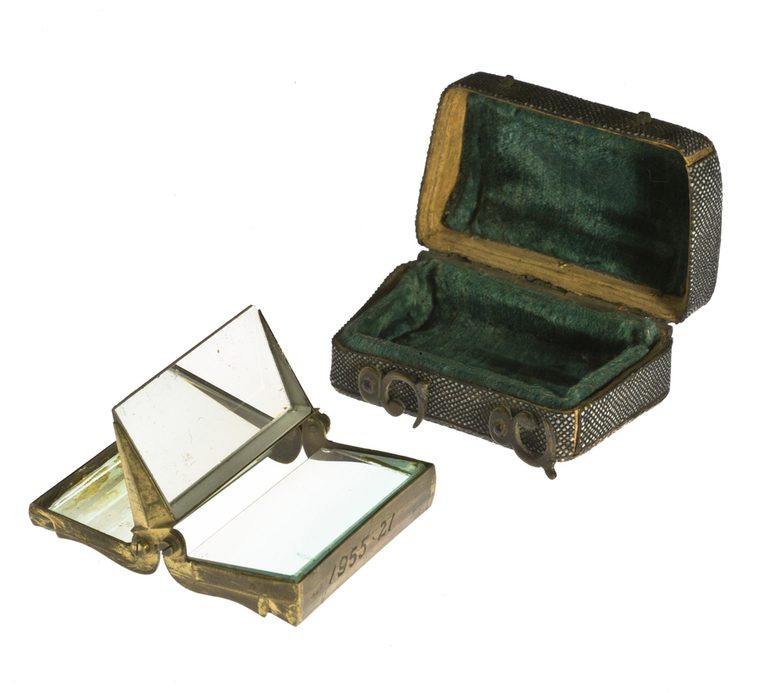
Compound prism in a shagreen case, patented by John Dollond in 1758, probably made by Dollond, England, c. 1760. It demonstrates how prisms made of two kinds of glass (crown and flint) can be combined to correct chromatic aberration. (T.1955.21)
Further improvements
The quality of glass and lenses were further improved in the later 18th and early 19th centuries, particularly by instrument makers on the Continent. One important maker in Germany was Joseph von Fraunhofer, and it was to him that the new Royal Observatory, Edinburgh, applied for their transit telescope in the 1830s.
The later 19th century saw competition to make, host or use the largest refracting telescopes in the world. In the 1860s the largest objective lens was 21 inches. This was made by James Buckingham and was shown at the 1868 Great International Exhibition. In the 1890s-1920s, it was placed in a dome in Edinburgh’s City Observatory.
By the end of the century there were refractors of nearly twice this size. The largest ever constructed, shown at the Great Paris Exhibition of 1900, had a lens of 49 inches and a focal length of 187 feet. The lens of the largest refractor still in use, at Yerkes Observatory in the USA, is 40 inches.
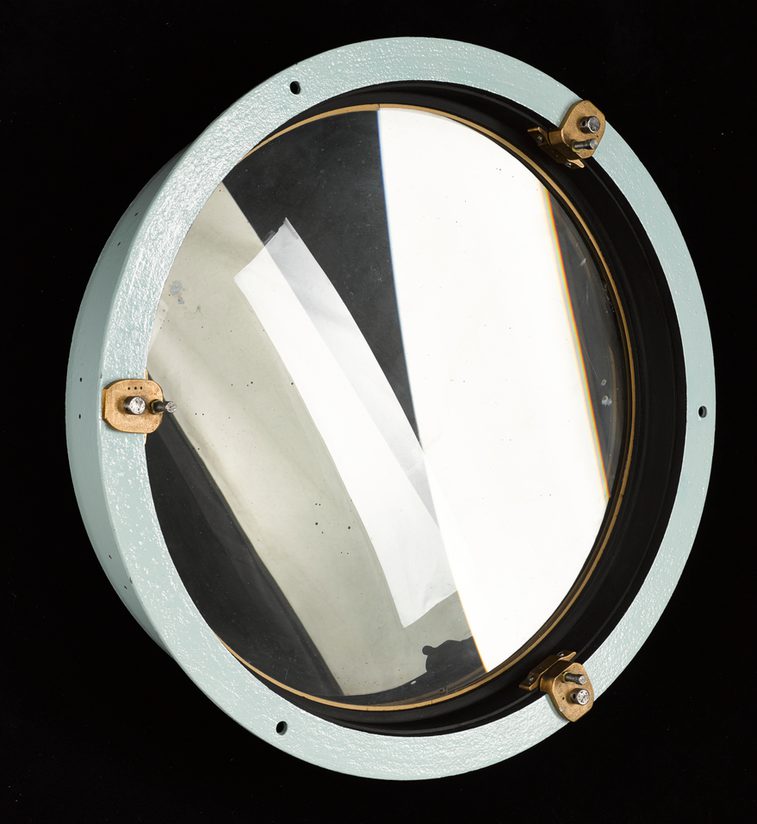
The 21 inch telescope objective lens made by James Buckingham of London, 1862, assisted by William Wray. (T.1988.69)
Revenge of the reflectors
A fresh wave of invention in Britain occurred in the mid to late 19th century, marked by the refinement and wider availability of powerful silver-on-glass mirrors. Unlike metal finishes, a silver layer on glass was not only more reflective and longer lasting, but it could also be removed and replaced without damaging or altering the curve of the glass.
Amateur astronomers like the Rev. Henry Cooper Key advanced mirror-making techniques and shared his technique with others. George H. With became one of the leading speculum mirror makers, pioneering the silver-on-glass method, helping advance the way for home-based telescopes. George Calver followed on by producing affordable and powerful telescopes for the amateur market.
This particular speculum was apparently acquired from Cooper Key, and has With’s signature and the date 1878 scratched on it.
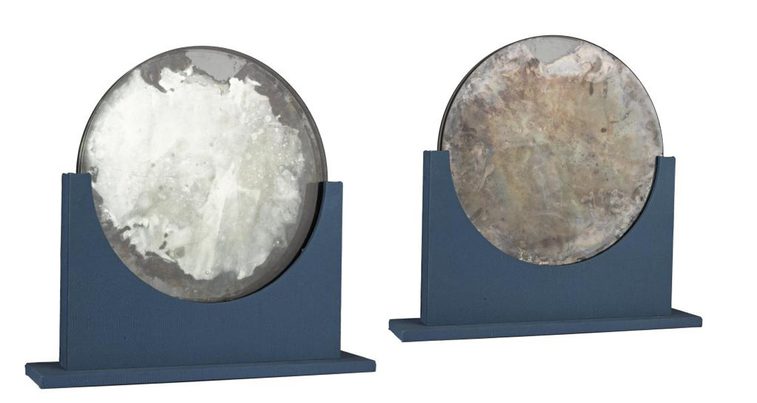
18-inch silvered glass telescope speculum, George H. With, 1878. (T.1999.373)
Unlike refracting telescopes, professionally used reflectors continued to get larger and larger, in part because they can be built from multiple mirrors. This technique is behind the aptly named Very Large Telescope (VLT) and Extremely Large Telescope (ELT) in Chile and the James Webb Space Telescope in orbit.
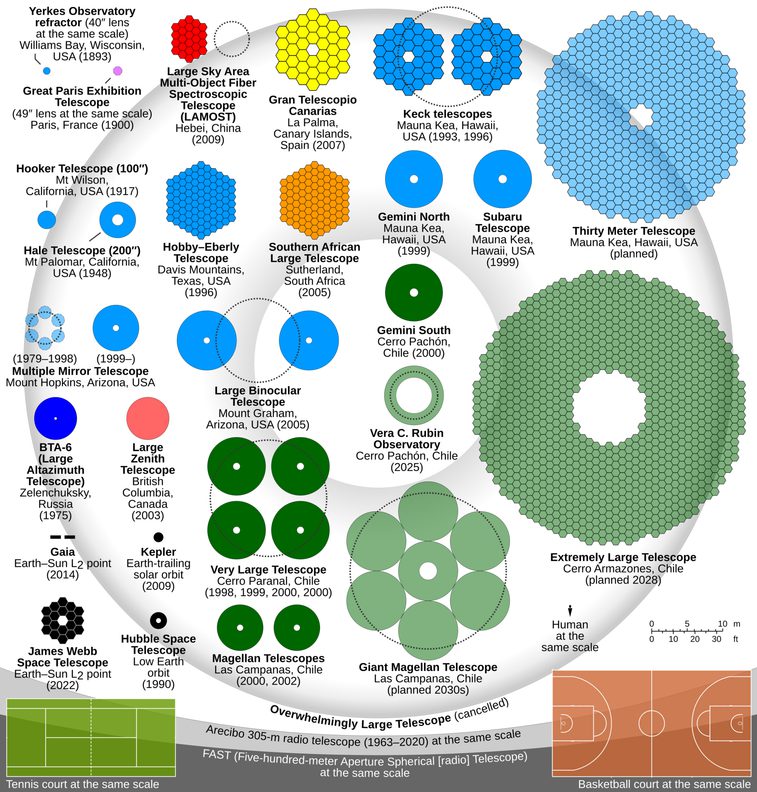
Comparison of nominal sizes of apertures of the Great Paris Exhibition Telescope of 1900 and some notable optical telescopes. The Yerkes and Great Paris Exhibition telescopes are top left, tiny in comparison to the VLT, ELT and JWST (bottom left). A higher resolution file can be viewed on Wikipedia.

Through their rivalry, passion, and skill, these innovators and enthusiasts developed reflecting telescopes into instruments that revolutionised astronomy. They enabled both professional and amateur astronomers to explore and understand the night sky in greater depth than ever before.
The compound prism is on display in the Enquire gallery within the Science and Technology galleries at the National Museum of Scotland.
Written by

Dr Rebekah Higgitt
Principal Curator of Science
You might also like
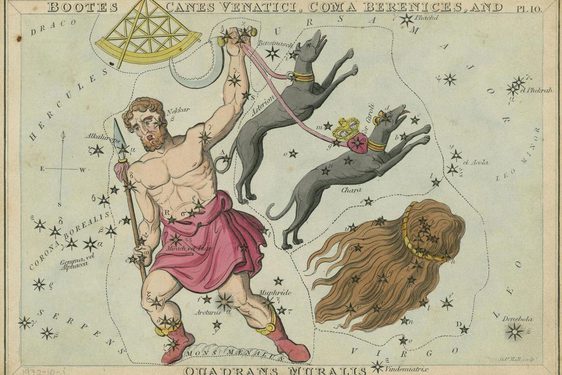
A 19th century guide to constellations
Art and design, Natural world, Science and technology
Written by Dr Rebekah HiggittHow well do you know your stars? Learn how to identify constellations like an aspiring astronomer in the 1800s with help from Urania’s Mirror.
Typewriters, women, and the advancement of workplace equality
Science and technology
The introduction of the typewriter to 19th century workplaces had a significant impact on the role of women. It transformed the world of work and created new opportunities in business for women, as employers and employees. Find out how the…
Did Alexander Graham Bell invent the telephone?
Science and technology, Scotland
The box telephone was the first model of telephone to go on sale. But can its creator, Alexander Graham Bell, truly lay claim to the title ‘inventor of the telephone’?